We leave for Jozani forest at 11am, so I go over the road to Kuumba while Bill works. Sample exercises Sameer puts me through. (He paired exercises up - one set of one, then a set of the other, and you do both sets 3 times) Here are two exercises I paired up. I did each one three times.
Then I swam. I had the pool to myself. Have never loved the gym and the pool so much.
We go to Jozani Forest with Idriss, our driver. We stop to get petrol. No rules about how many you can fit in the back of the truck here. There is a rule that they must be sitting, though, apparently.
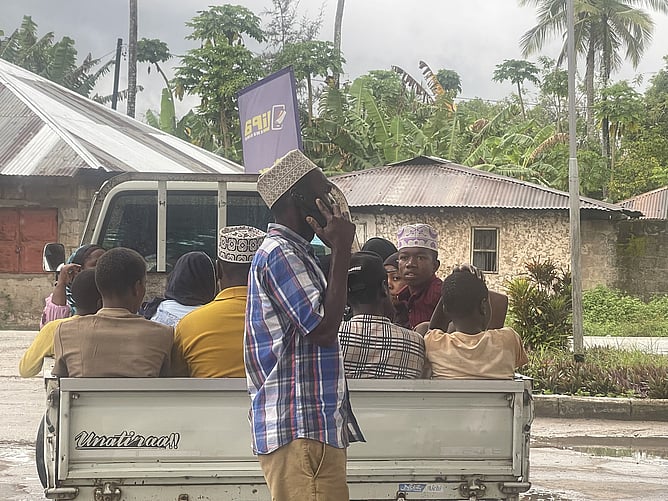
It is Saturday and super busy. Idriss organised our tickets. Idriss is in the kaftan.
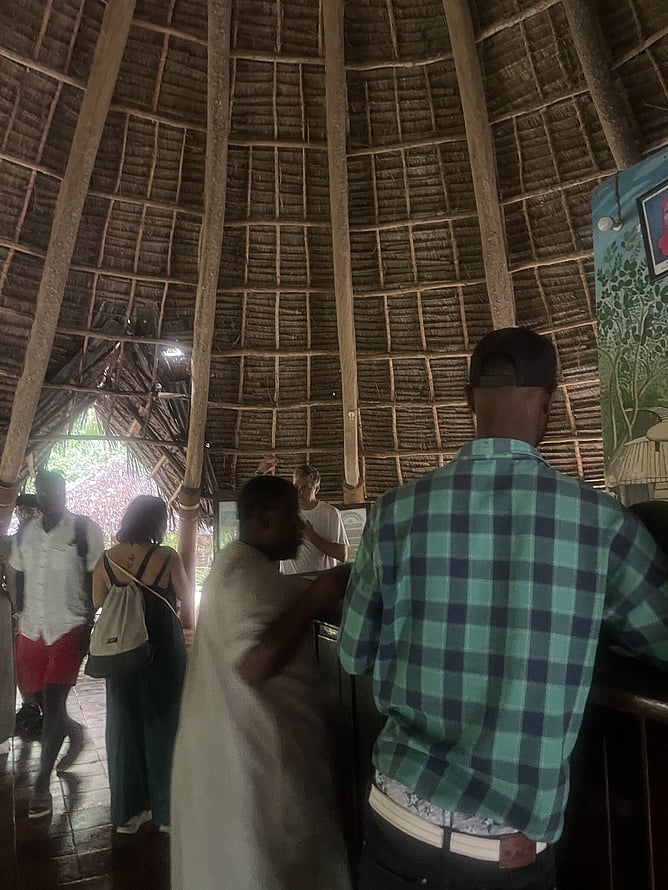
This is our guide for the forest walk, though I don’t remember his name. First stop. He is very clear. It is very wet underfoot. From ChatGPT: Jozani Forest is a tropical forest, although it is more accurate to describe it as part of a tropical forest ecosystem rather than simply calling the whole area a rainforest.
The lush Jozani forest where you see the Zanzibar red colobus monkeys certainly has that wonderful rainforest-like feeling — dense, green, humid and full of life. 🌿🐒.
Idriss tells us it can be raining here but not in Paje, 18-20 km away. It has rained here, he said, every day for the last week. We have about 20 people in our group. I move towards the front.
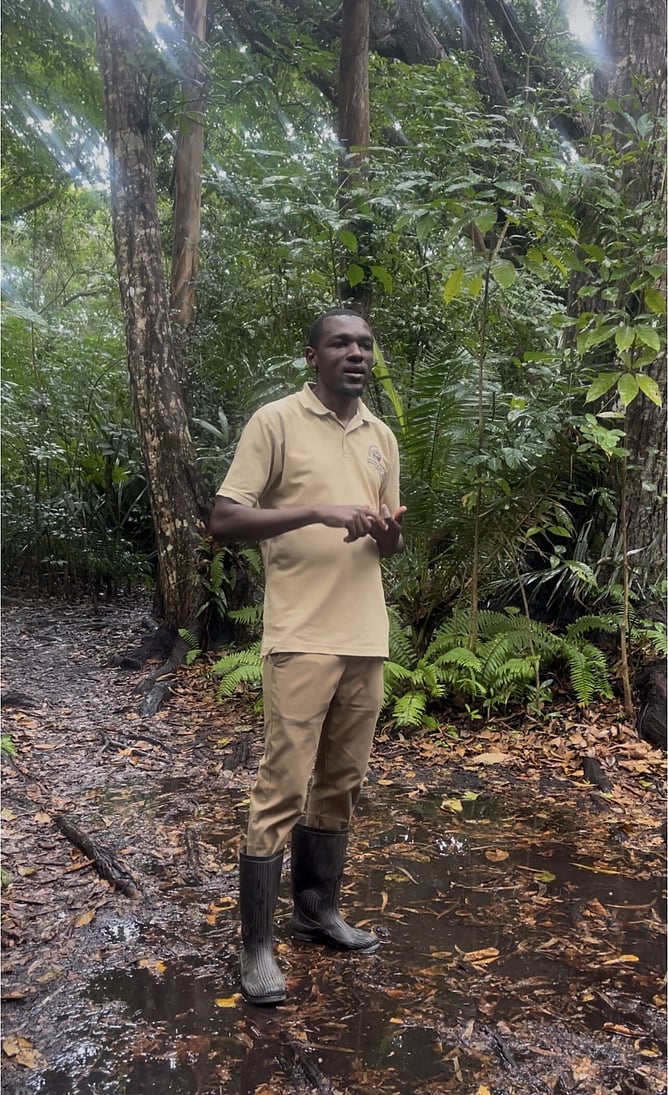
Our guide introduces Jozani: Jozani is special because it protects one of the last substantial areas of natural forest on Zanzibar, as well as animals and plants found in very few other places. Jozani became protected in the early 1900s. The forest itself is, of course, much older than the protected area.
Parts of Jozani were being commercially logged. The Zanzibar government acquired the forest in 1952, began replanting areas that had been cut down, and, in 1960, formally gazetted Jozani as a Forest Reserve. Then, in 2004, the much larger Jozani–Chwaka Bay area became Zanzibar’s first - and still its only - national park.
Jozani contains several different habitats remarkably close together: groundwater forest, coral-rag forest, mangroves, salt marsh and nearby seagrass habitat.
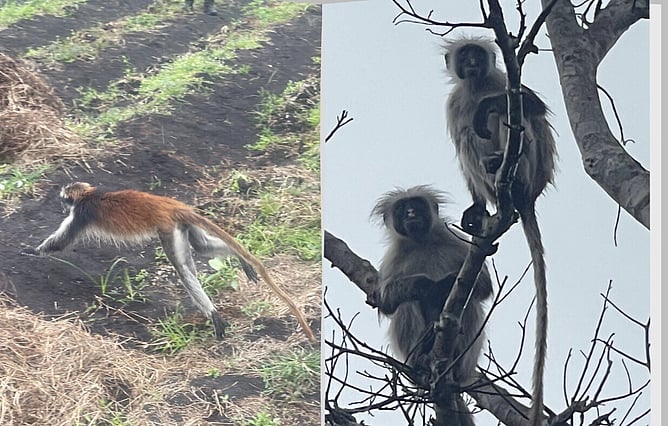
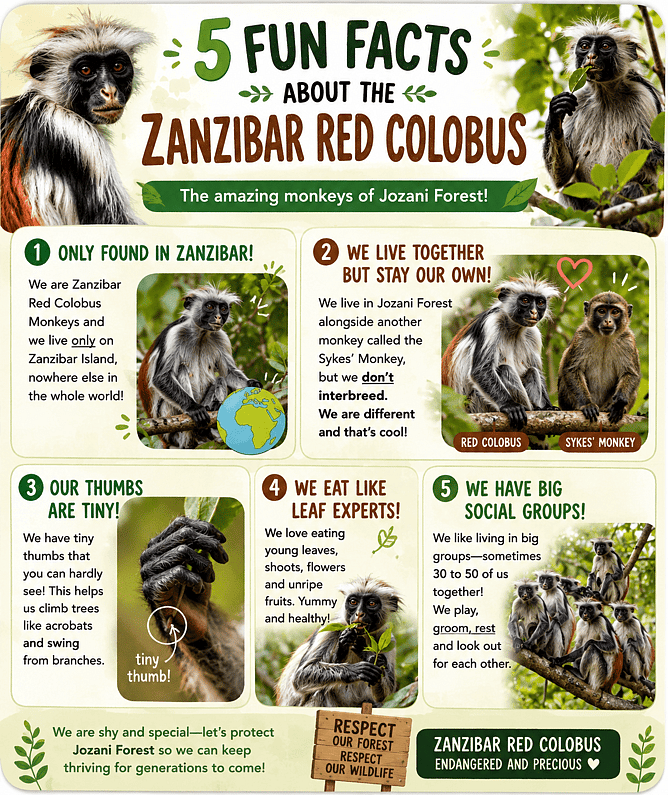
Most famously, it provides crucial habitat for the Zanzibar red colobus monkey — an animal endemic to Zanzibar. Protecting Jozani also protects many other species, including birds, butterflies and small mammals, as well as the mangrove ecosystem.
“You are standing in one of the few places on Earth where this monkey can live in the wild.” That changes seeing a monkey into something much bigger.
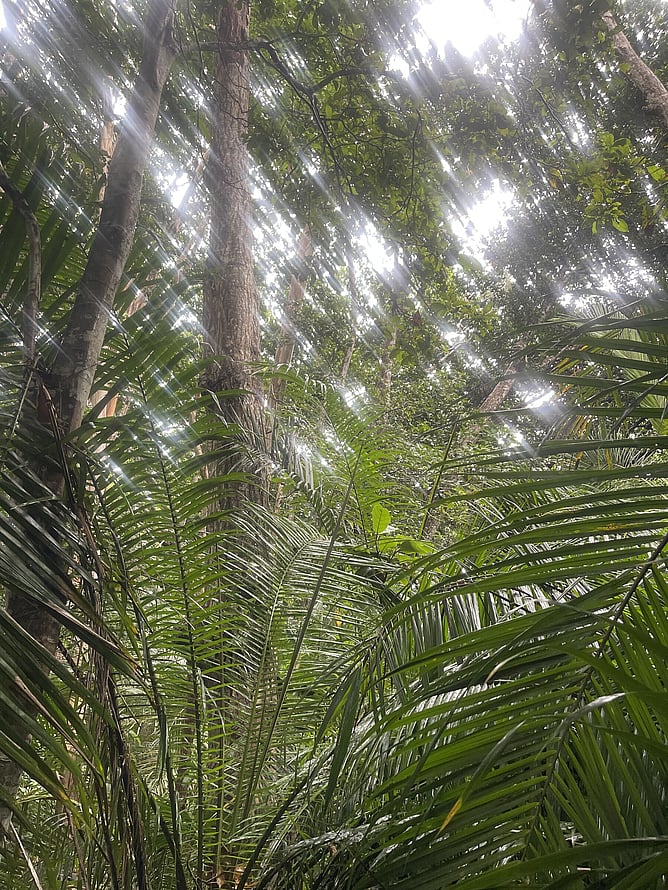
Not sure why this photo is a bit streaky. There was a lot of moisture in the air.
The trees have shallow root systems because the water table is just a few feet down. This one fell ~3 years ago. The guide explains there are not too many decomposers around so it is still pretty much as it fell.
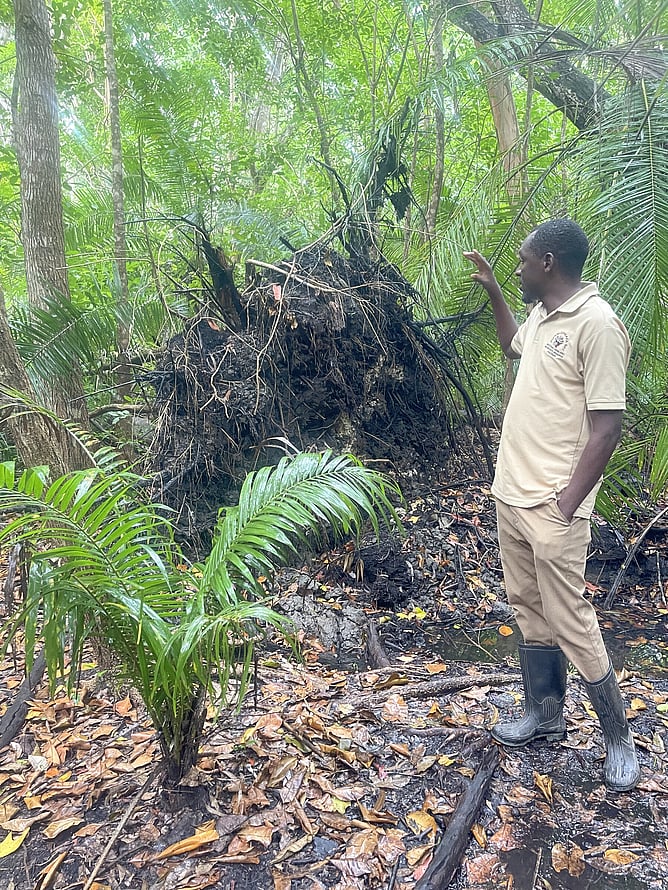
It is easier to just give you our guide's talks. We thought he was so good. Here are.his talks. Everyone has to go with a guide.
In this one he was talking about how eucalyptus is an invasive species in the Zanzibar forests.
It starts to drizzle with rain. Our guide is worried we won't see the monkeys because of the rain, so we walk fast to where he hopes we will find them.
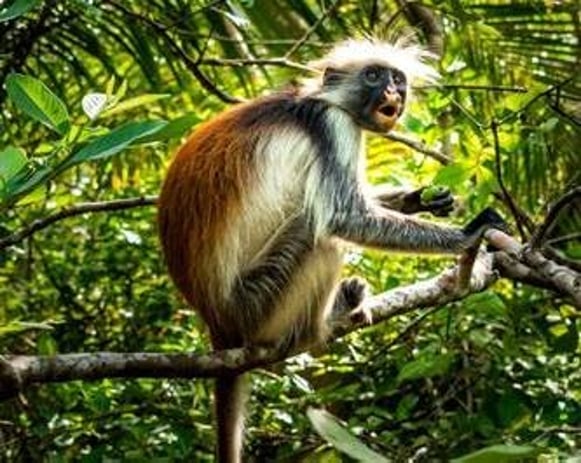
We get there, and there are about 50 people looking at them. It is quite beautiful in the rain.
Some other interesting species are:
🦌 Ader’s duiker – It is a tiny forest antelope and is one of Zanzibar’s most threatened native mammals. Jozani is an important refuge for it.
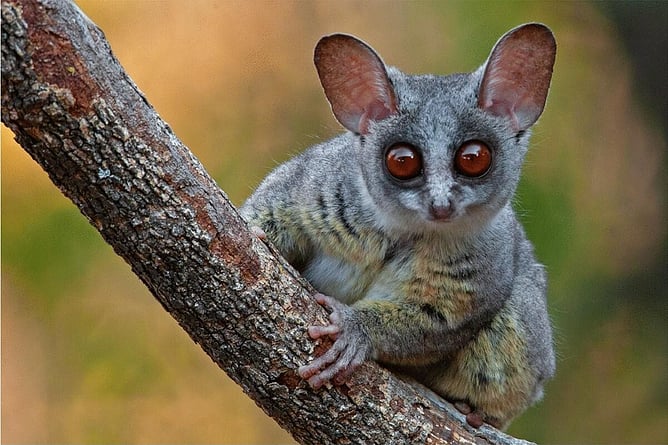
🌙 Bushbabies (galagos) – small, nocturnal primates with enormous eyes. During the daytime, they generally hide and sleep, so you are much more likely to hear or see them after dark.
🦋 Butterflies and other insects – the forest supports a huge community of small creatures, including pollinators and decomposers that keep the forest functioning.
🦎 Reptiles and amphibians – Jozani has snakes, lizards, geckos, frogs and other small animals.
🐦 Forest birds – Jozani is internationally recognised as an Important Bird Area. The combination of forests, wetlands and mangroves provides birds with several distinct habitats.
🦀 Mangrove creatures – if you walk the Jozani mangrove boardwalk, look down as well as up. The mangrove ecosystem supports crabs, mud-dwelling animals, insects and juvenile marine life.
This is a bushbaby, also called a galago. Its enormous eyes help it see at night, while its large ears can detect insects moving in the darkness. This was off ChatGPT. We did not see one. 🐾
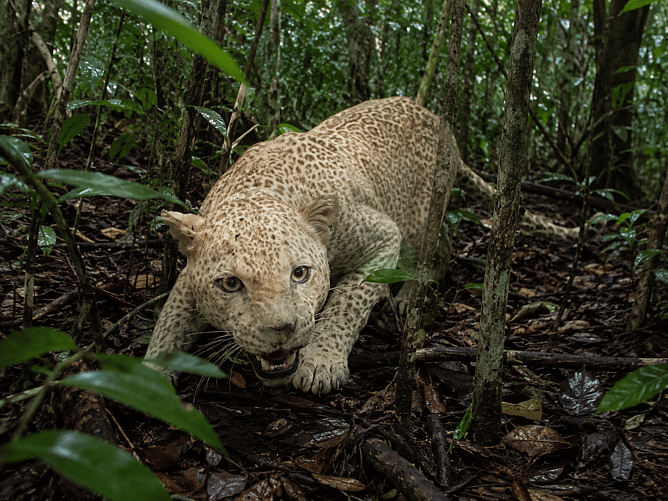
There used to be leopards on Zanzibar, but now they are extinct. This is from a museum picture.
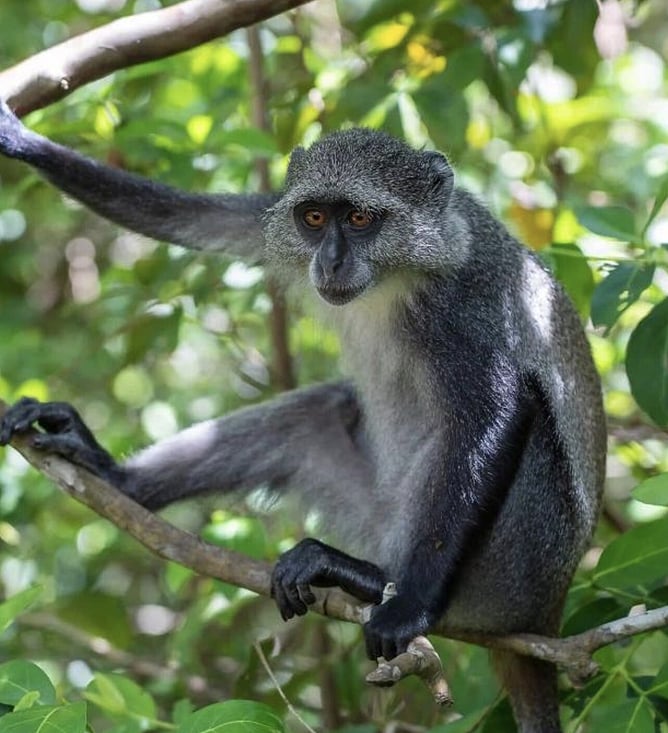
Sykes or blue monkeys are the other monkeys you see around Jozani. They can live in the same forest as the red colobus, but they are a different species and do not interbreed with them.
The Giant african millipedes are quite common in Jozani Forest, particularly the large ones. They thrive there because the forest floor provides exactly what they need: shade, moisture and lots of dead leaves and other decaying plant material. Rather than being pests, they are important recyclers — they eat decomposing vegetation and return nutrients to the soil. It can grow to over 30 cm long, making it one of the world’s largest millipedes.
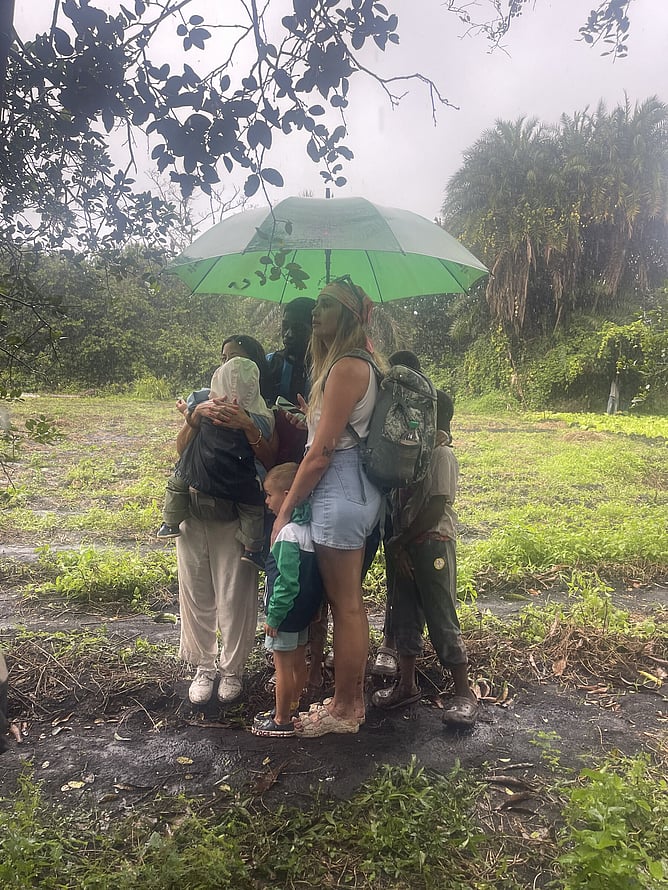
This is to show you how wet it was. We got thoroughly soaked (no umbrellas), but it is still warm.
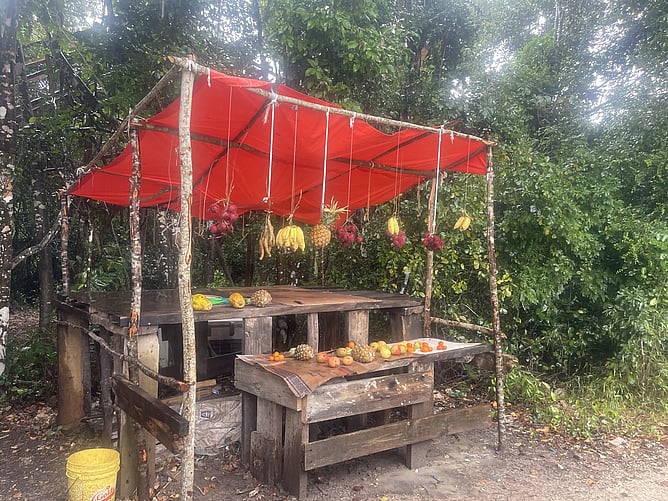
A stall just before we went in to the mangroves.
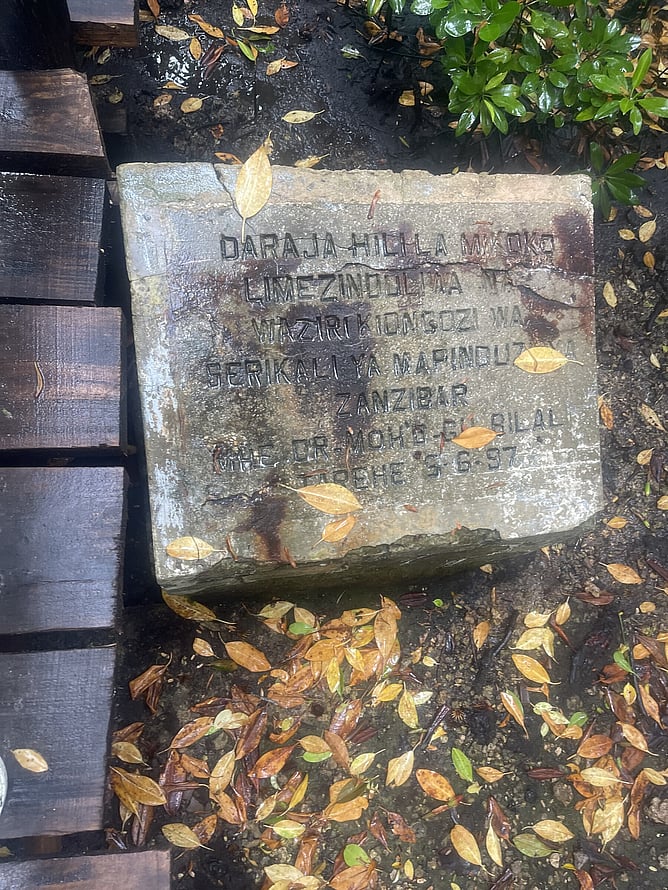
This below has a Swahili inscription - “DARAJA HILI LA MNOKO".
The important parts here translate roughly as: “This Mnoko bridge was built … under the leadership of the Revolutionary Government of Zanzibar. Hon. Dr Mohamed Gharib Bilal. Date: 5 June 1997.”
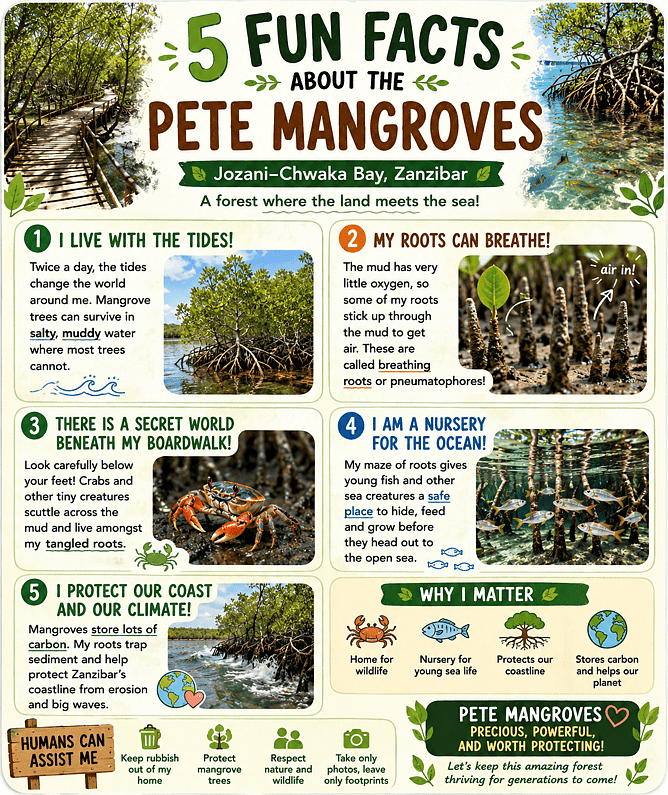
The community built it so tourists could enjoy it and generate revenue to put back into conservation. They needed to conserve the mangroves, as locals were cutting them for firewood.
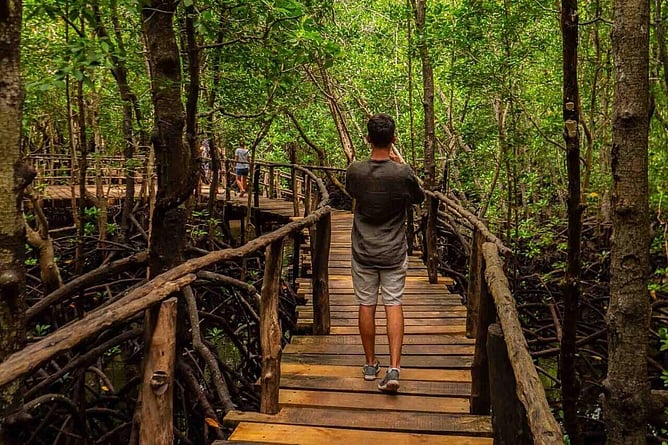
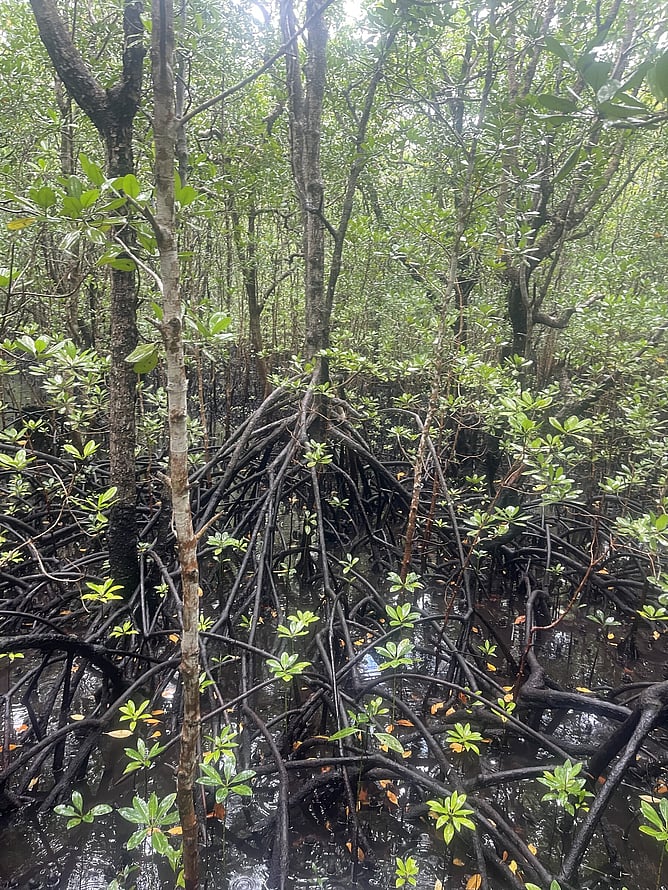
There are four kinds 0f mangrove trees here.
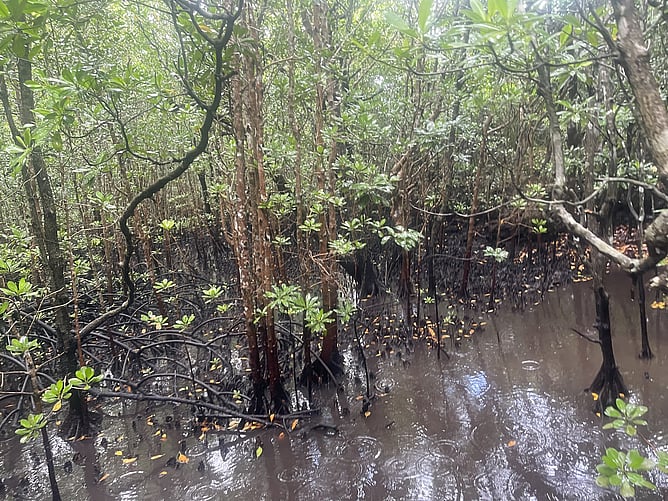
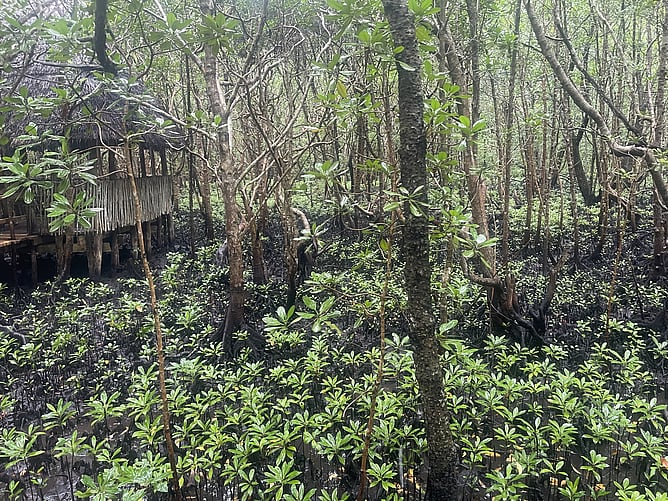
Pretty uninviting in the wet, and interesting how much carbon mangroves absorb - a lot - 3-5 times more than the tropical Jozani Forest. We are visiting at low tide.
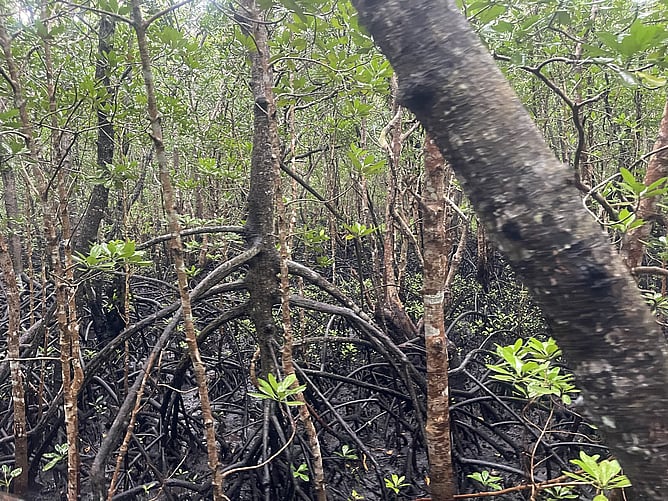
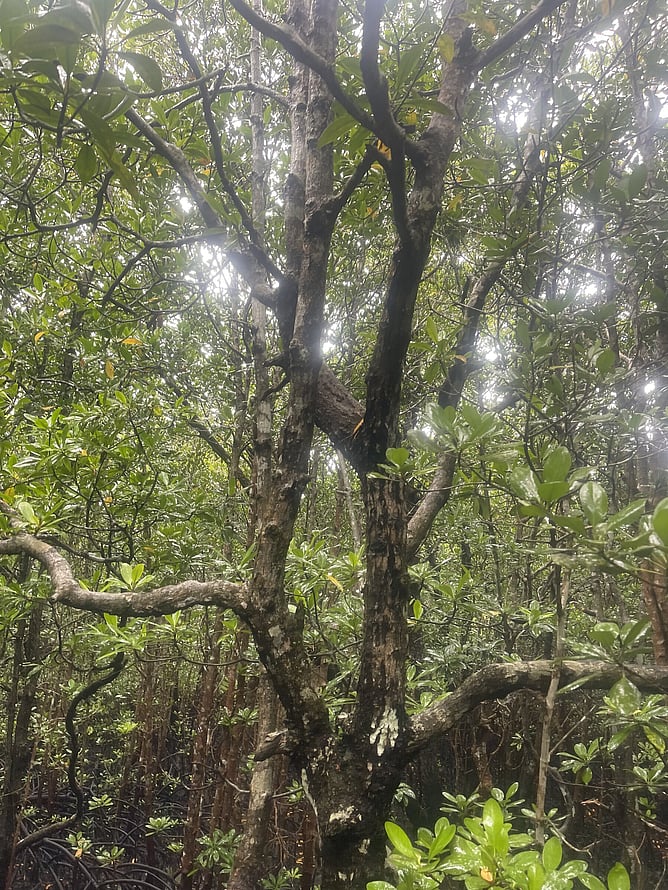
They take a long time to grow. Not all of these little seedlings survive. But some live up to 200 years, and can grow as high as 25 metres.
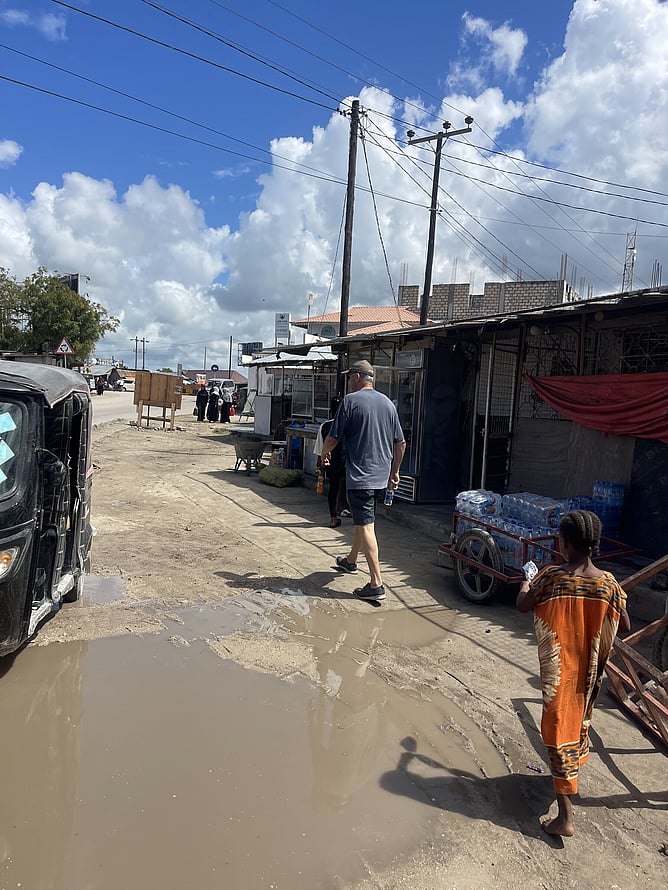
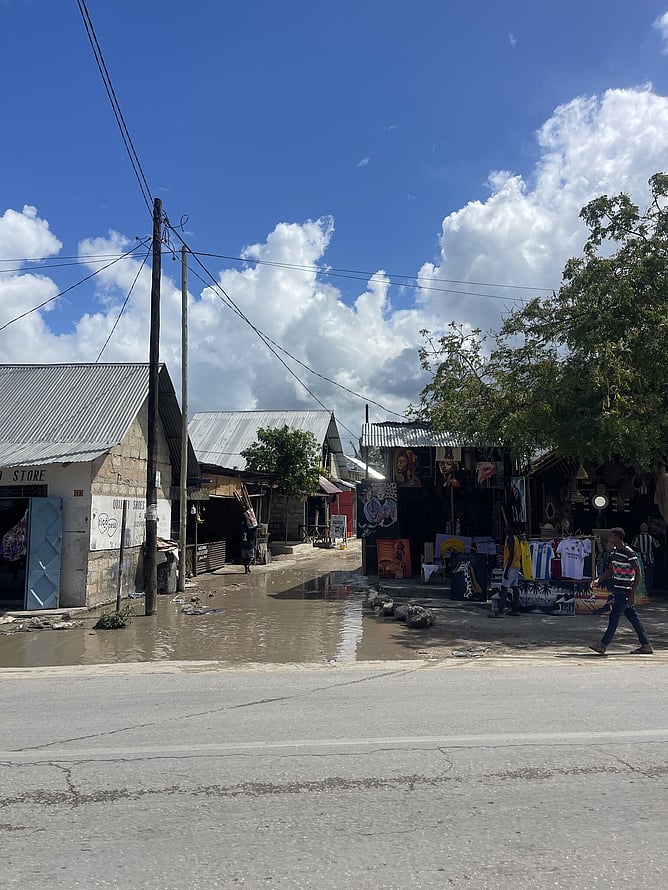
Then Idriss drives us back to Paje, where the sun was shining, although it had been raining here too, unusually Idriss told us. Idriss dropped us off in 'downtown Paje', below. We do the 30 minute walk back to Samawa to dry out.