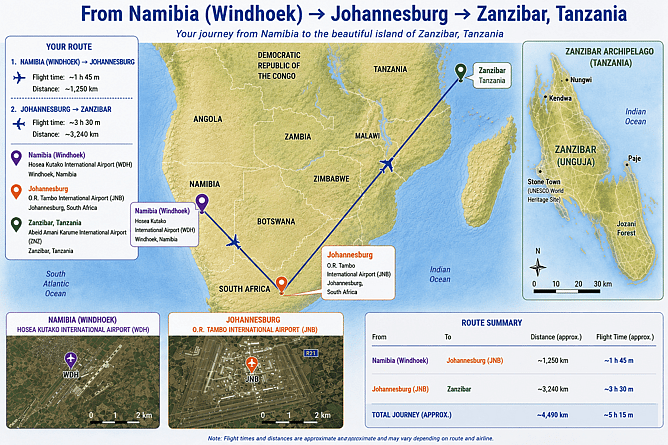
We are off to Zanzibar. This is the route we take, stopping in Johannesburg for a few hours, changing flights, then off to Zanzibar.
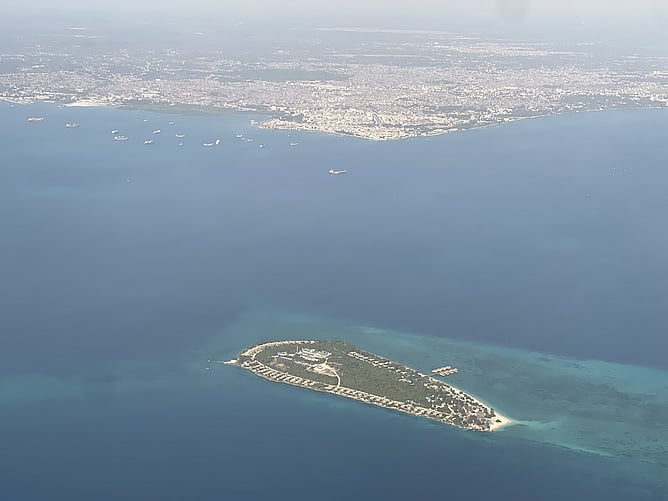
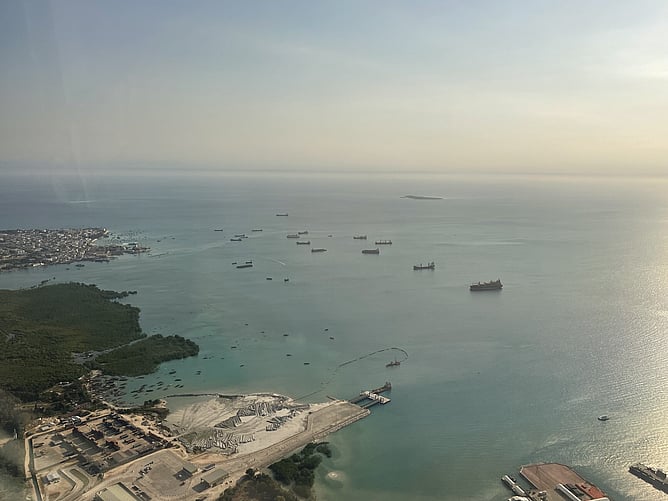
Flying over Stone Town (the point on the mainland), where we will be staying our first night.
A little bit about Zanzibar:
Zanzibar is a group of islands. The main island's proper name is Unguja.
People have traded across the Indian Ocean here for more than 1,000 years.
Zanzibar became famous for cloves and spices.
Stone Town's buildings mix African, Arab, Indian and European influences.
Stone Town became a UNESCO World Heritage Site in 2000 because its streets and buildings preserve the extraordinary meeting of cultures around the Indian Ocean.
Zanzibar was the site of the shortest recorded war in history.
Freddie Mercury was born here.
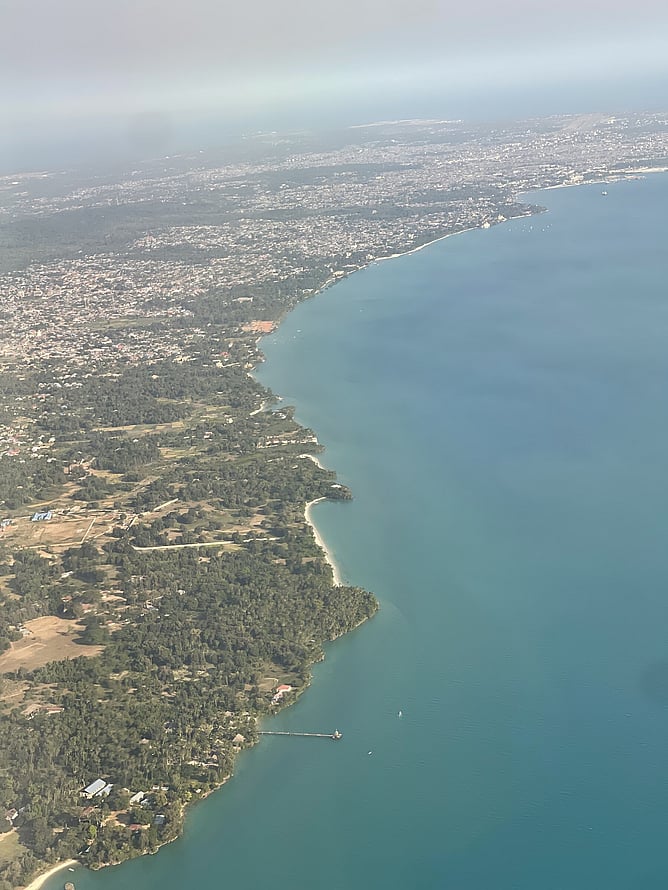
For more than 1,000 years, people sailed here from different parts of the world. African, Arab, Persian, Indian and later European traders all left their mark. That mixture helped create the distinctive Swahili culture that you can still see, hear and taste today. Zanzibar became an important stopping place where people traded goods such as ivory, spices and other products. The sailors didn't just bring things — they brought languages, religions, food, architecture and ideas.
That's one reason Stone Town feels unlike almost anywhere else.
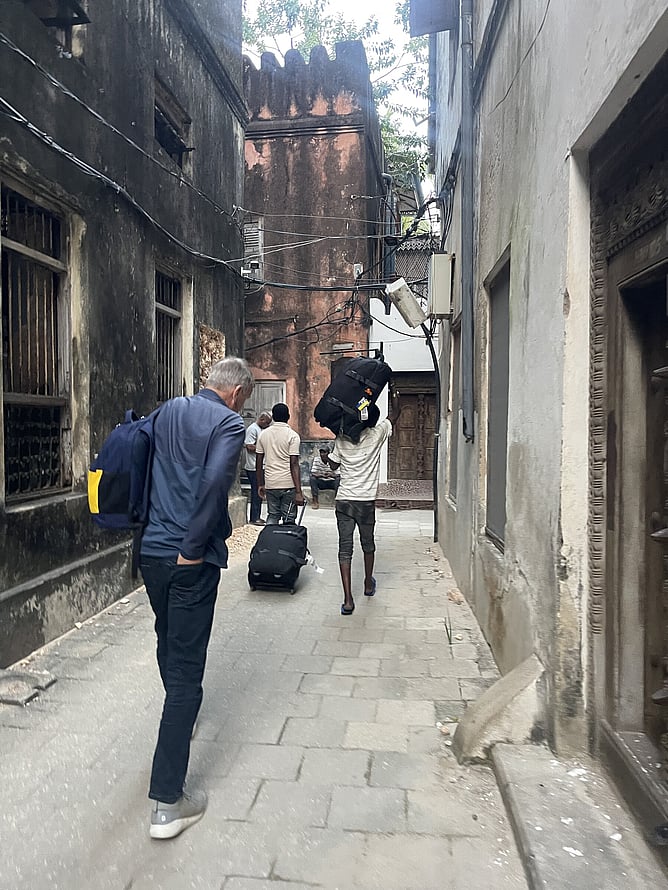
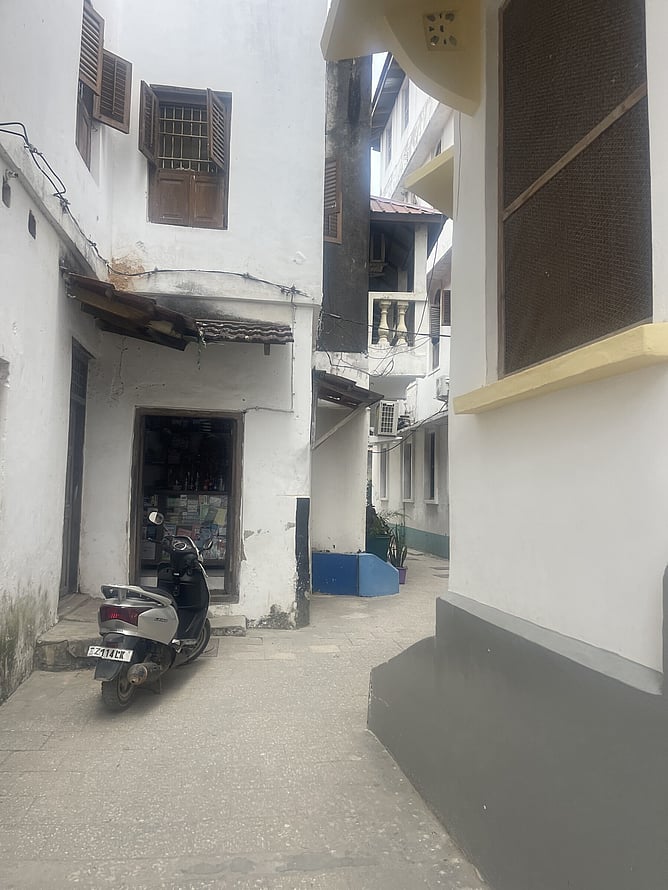
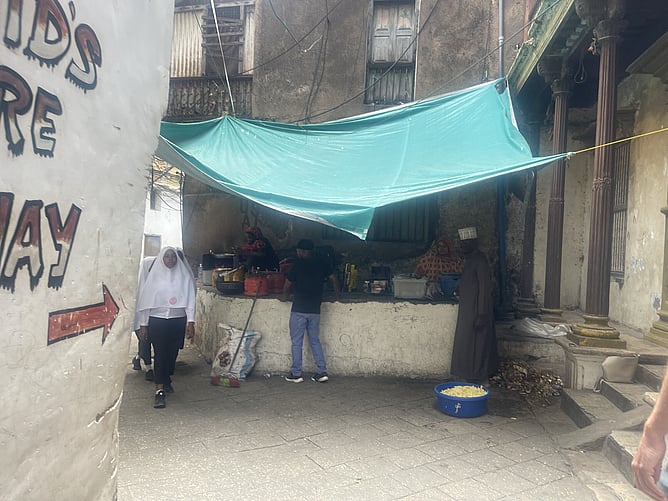
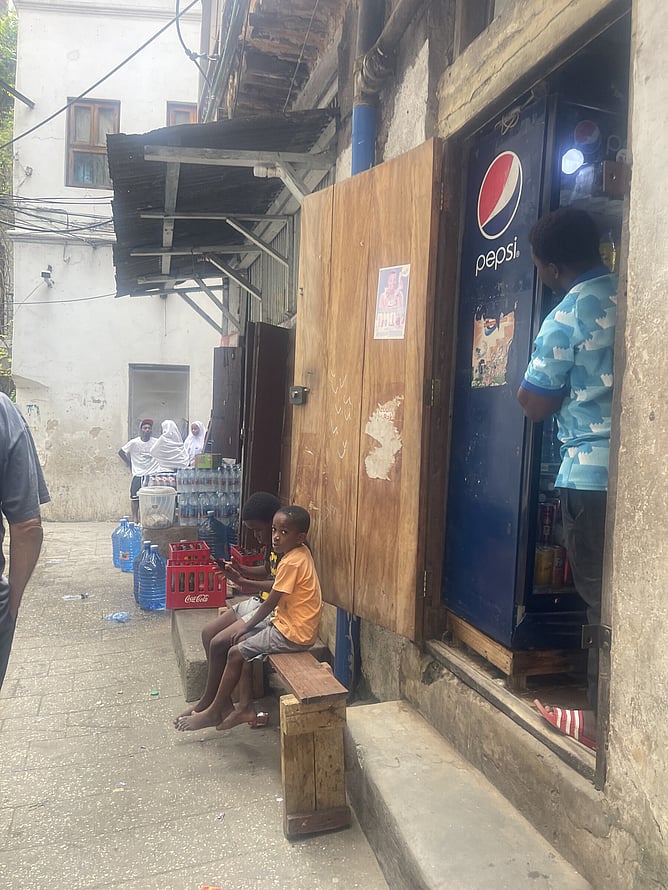
Stone Town has become a maze of: tiny alleyways → secret courtyards → mosques → markets → palaces → shops → enormous carved doors. The buildings combine African, Arab, Indian and European influences.
We arrive, and our taxi man and someone he finds take our bags down some alleyways.
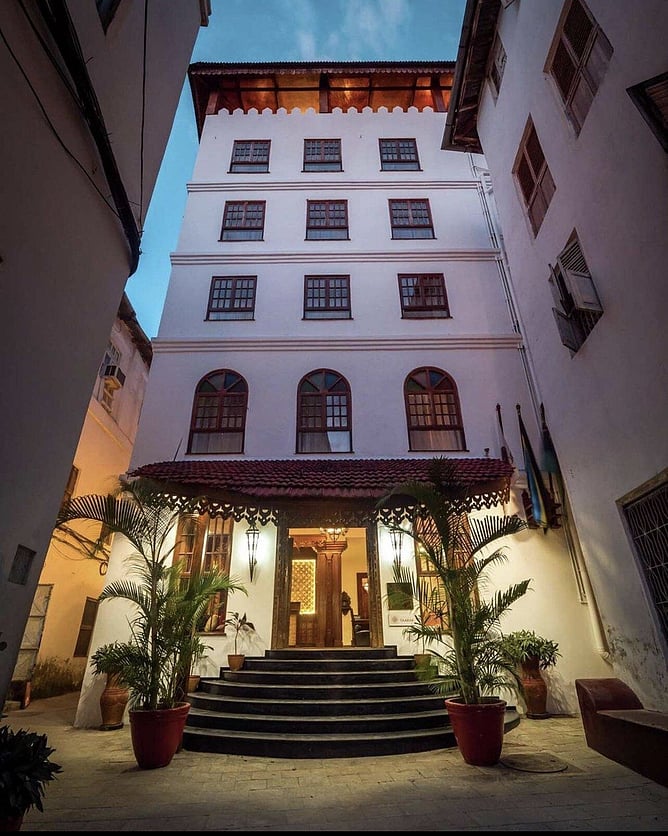
The hotel from the front - later we discover the lights at the top are where the restaurant is.
We head out to explore our surroundings. We had better learn some phrases.
Jambo — Hello / Hi
Jambo jambo — Hello, hello! A warm, enthusiastic greeting.
Mambo — How are things? / What’s up? Very common and informal.
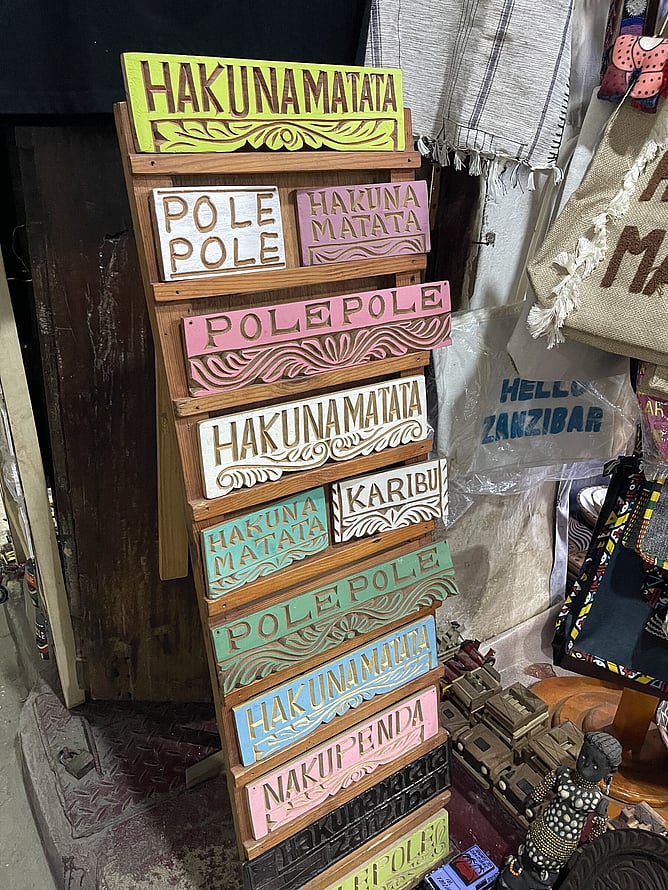
Hakuna matata — No worries / No problem
Pole pole — Slowly, slowly / Take it easy / No rush — a very Zanzibar expression!
Asante sana — Thank you very much.
Karibu - welcome
We arrived about 4pm, so we go out for a walk and maybe a bite to eat at the food night market.
A lot of boats, like in the Hormuz Strait .
A self-entertainment area.
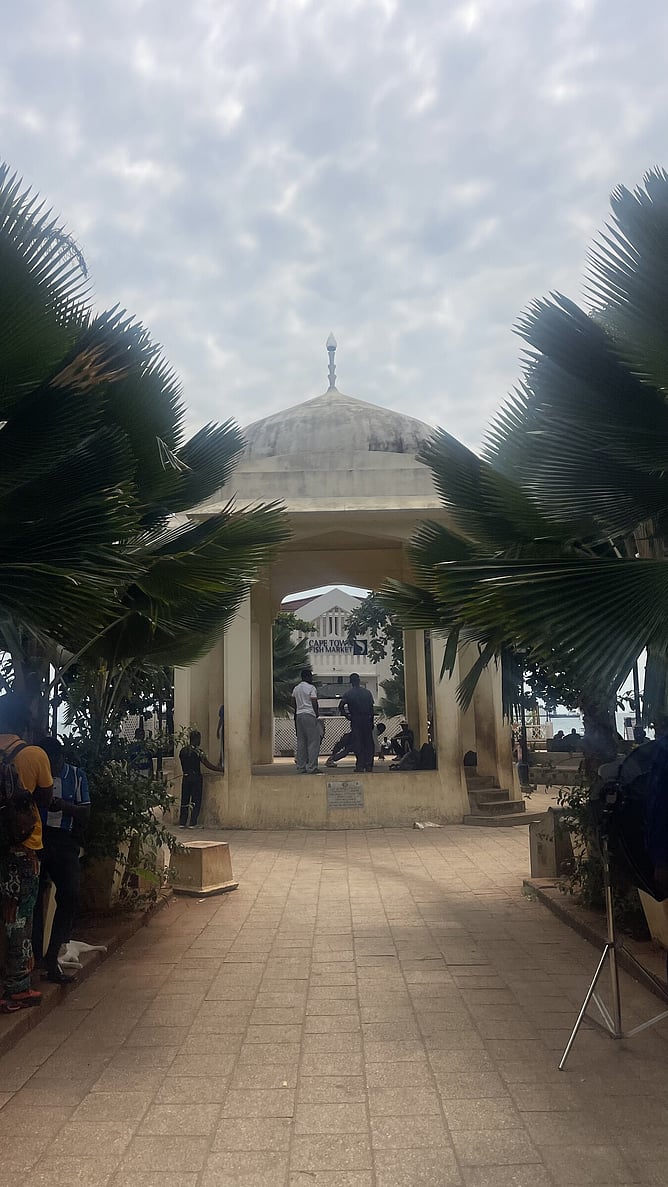
We feel like everyone wants us to buy something. We walk about. Second thoughts we won't get something to eat at the market. We want somewhere quiet.
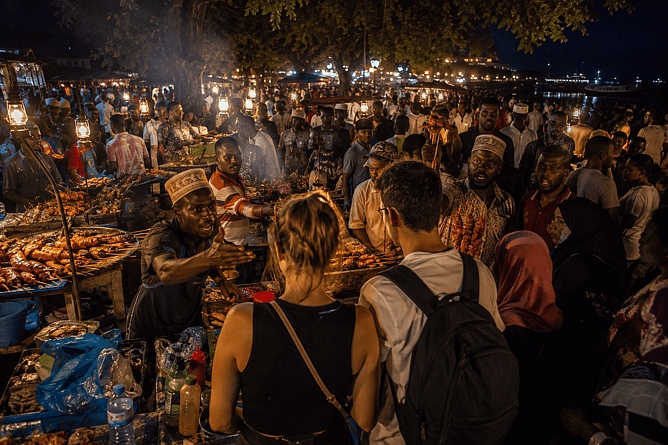
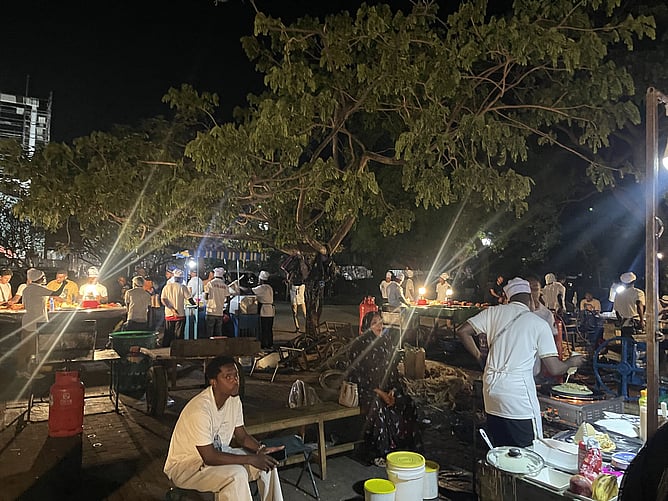
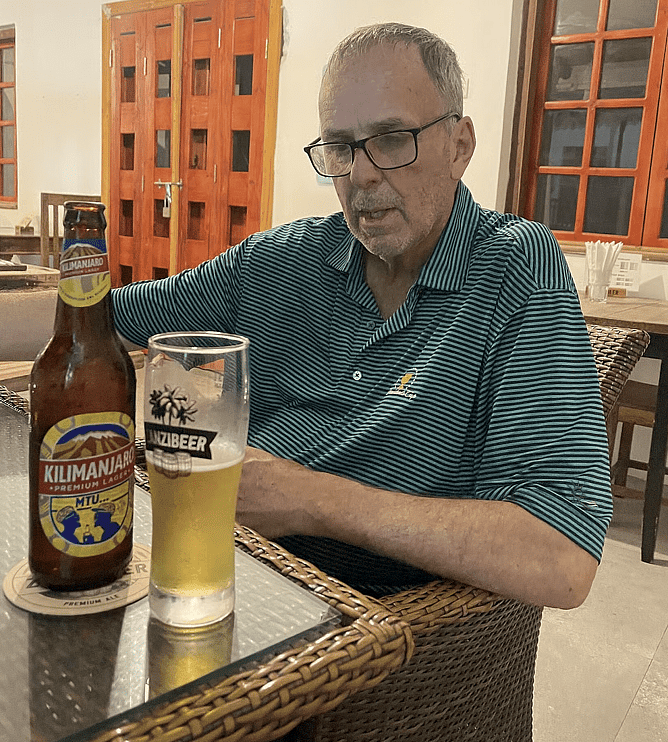
So Bill finds a quiet sushi place. This is a drink we have both enjoyed throughout Africa. Low in alcohol and yum. We are at Masa. The sushi was amazing.
Then the walk back to the hotel. Seems like the flashest street in Stone Town. We wonder why?
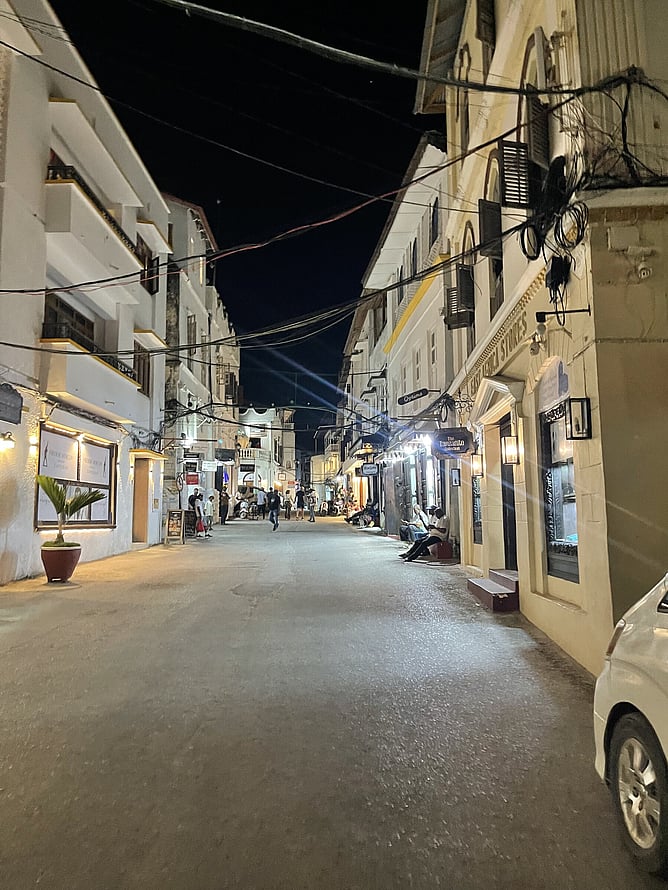
Then we see.
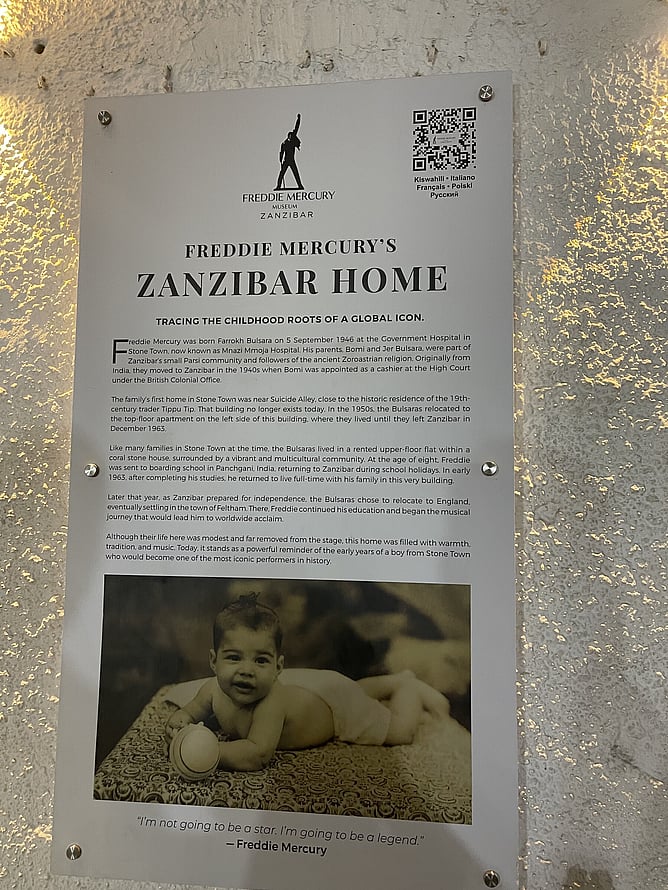
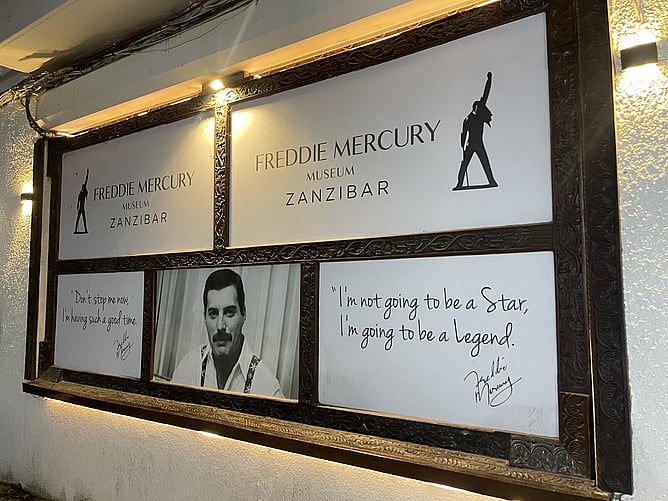
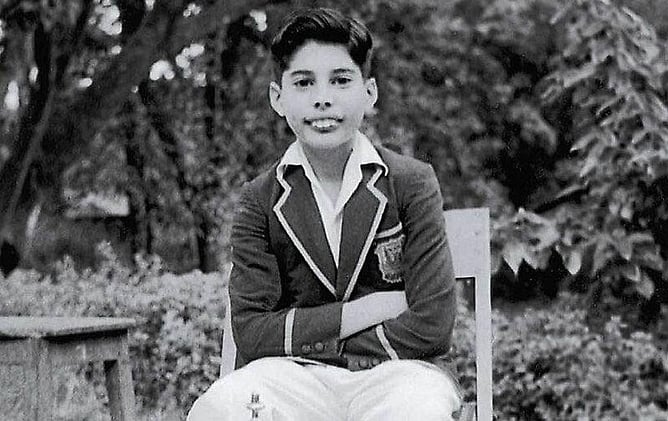
Bill and I saw Queen live at Wembley in London in 1985. The legendary lead singer of Queen was born in Stone Town in 1946. His birth name was Farrokh Bulsara. (That will be hard to remember in a Trivial Pursuits game.) So one of the world's most famous rock singers began life right here in Zanzibar.
The next morning, we enjoy the view from the hotel restaurant.
Then we walk, via the market space again. It is easier to navigate with fewer people trying to sell you things.
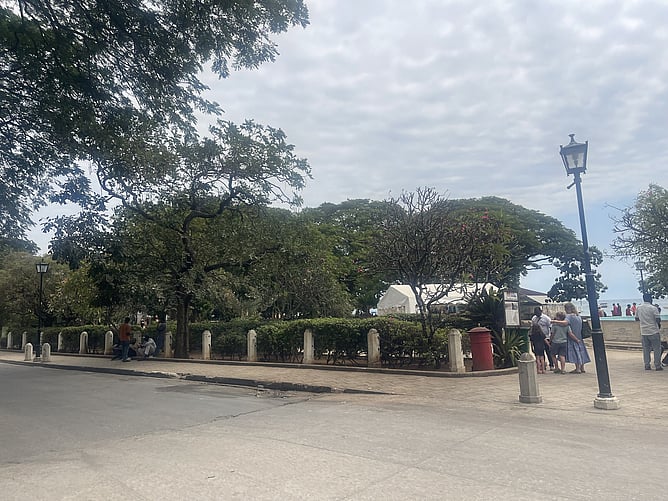
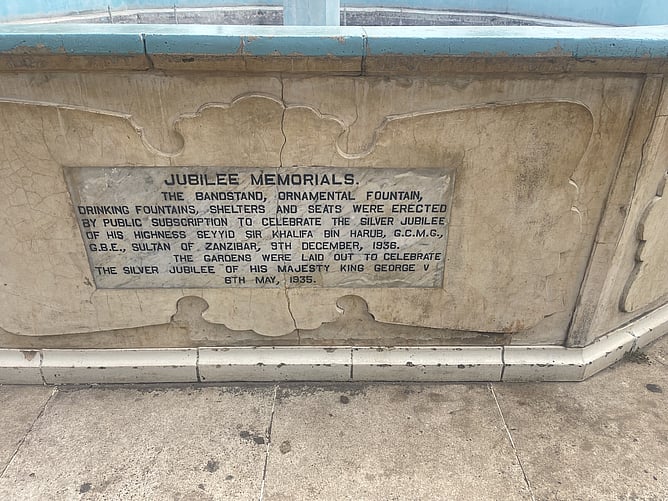
I spotted a Jubilee Memorials plaque. I wondered what this plaque meant and got curious. ChatGPT:
"There are actually two Silver Jubilees being remembered here. A Silver Jubilee means 25 years as a ruler. In 1935, the gardens were laid out to celebrate King George V of Britain's 25 years as king. Zanzibar was a British protectorate at the time, although it still had its own Sultan.
Then, in 1936, Zanzibar celebrated another 25-year anniversary — that of Sultan Seyyid Sir Khalifa bin Harub, who had become Sultan in 1911. To mark his Silver Jubilee, local people contributed money ("public subscription") for the bandstand, ornamental fountain, drinking fountains, shelters and seats mentioned on your plaque."
We were standing in what was originally called the Jubilee Gardens. I did a bit of homework and went back 100 years.
There was no night food market yet. Zanzibar had a Sultan, Britain had a King, and people decided to create beautiful gardens by the sea to celebrate 25 years of their rulers' rule.
They built a bandstand where musicians could play, fountains where people could drink, shelters from the hot Zanzibar sun and seats overlooking the Indian Ocean.
Nearly a century later, people are still meeting in exactly the same place — only now, at night, it fills with smoke from grills, seafood, Zanzibar pizzas, sugar-cane juice, families, tourists and children jumping into the sea.
The plaque connected the Stone Town I am seeing today with the Stone Town of the 1930s. It is actually telling me about three different Zanzibars in one place: the Sultan's Zanzibar, British-era Zanzibar, and today's Zanzibar.
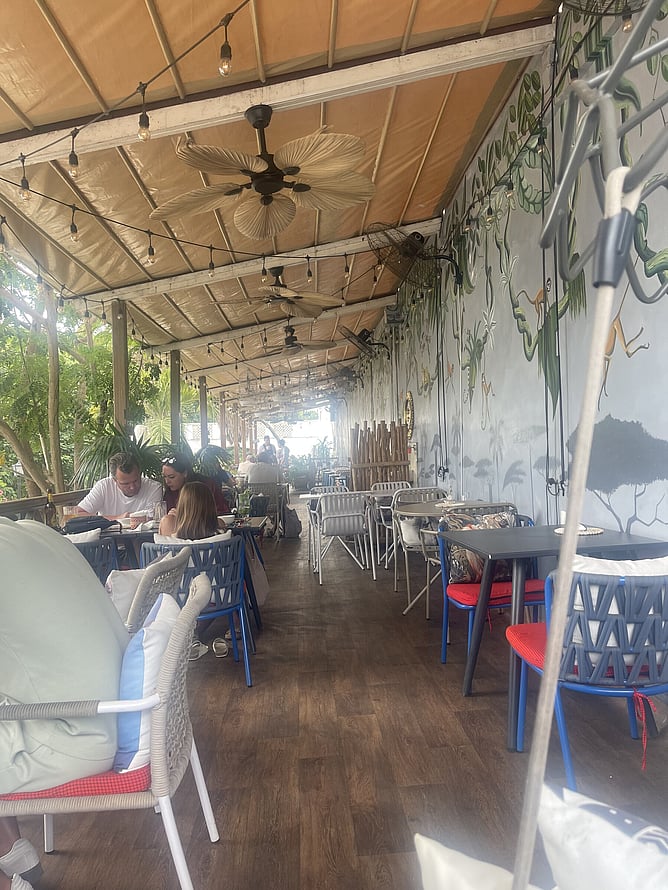
We go to Out of Afrika restaurant for lunch.
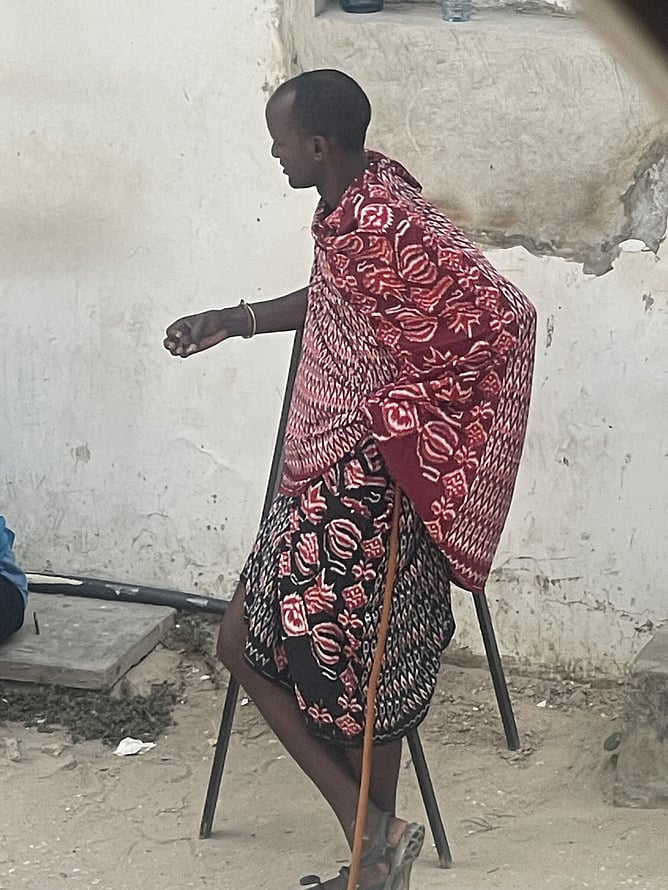
Another view. This time of a Masai - though I did not know at this point that they are everywhere.
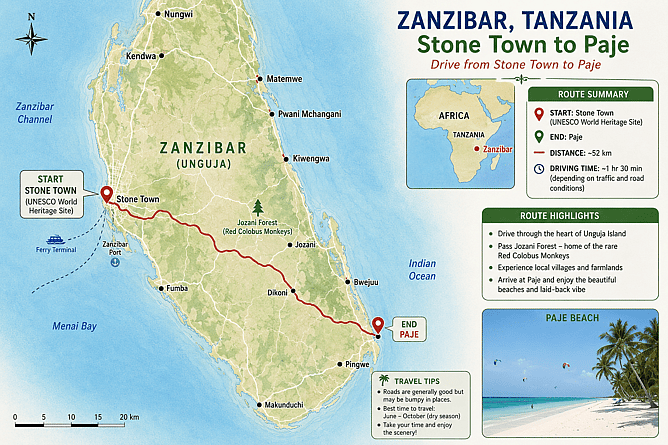
We have just the one night in Stone Town and have booked a taxi (a ride) to Paje, where we will stay for ten days. (The map below providing a strong case for using Google Maps rather than ChatGPT for directions, Ed.)
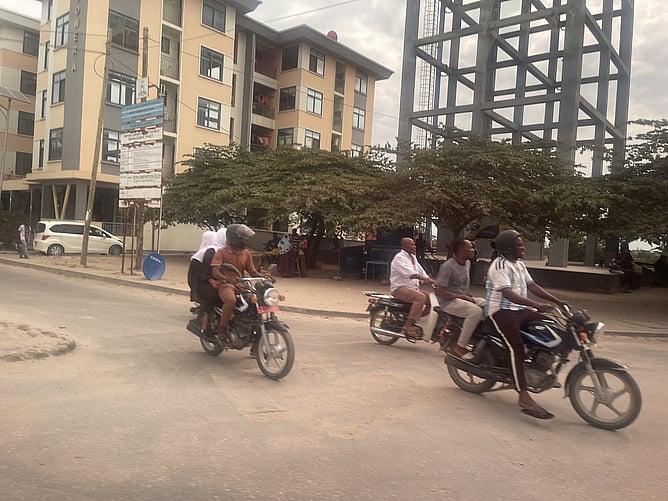
Some trip shots from the taxi van.
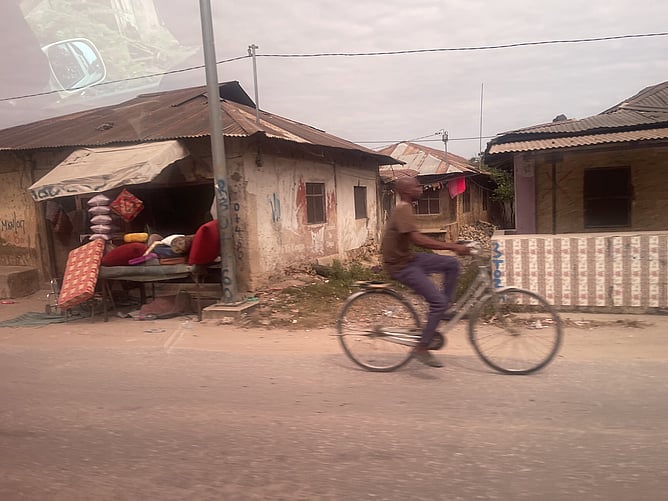
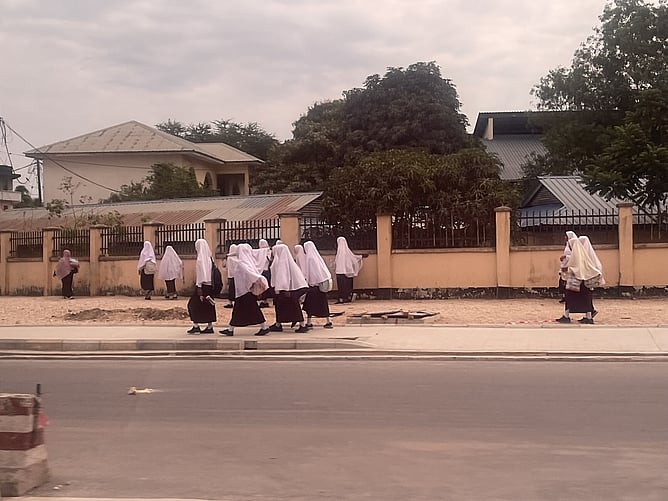
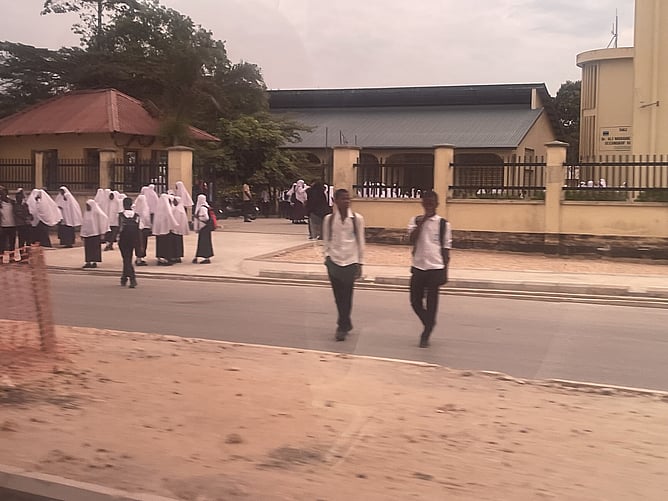
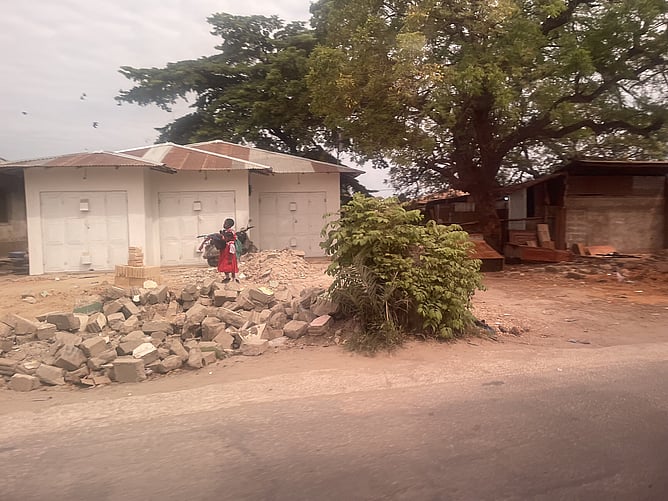
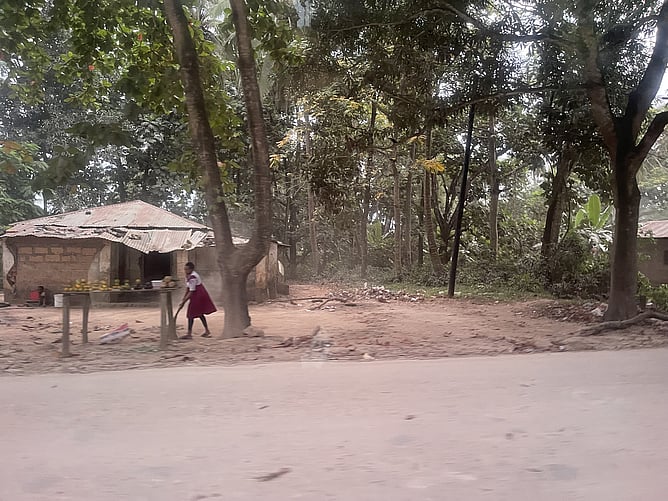
No helmets mostly.
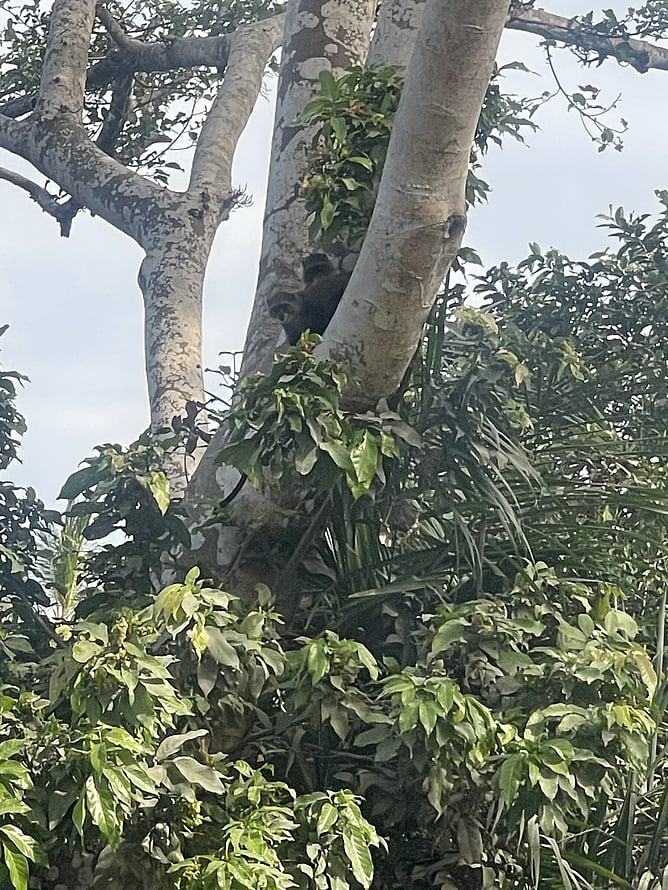
Passing through the Jozani Forest, we spot a Sykes monkey. (To the relief of the driver, who was under quite some pressure to spot one, Ed.) More about Jozani Forest later.
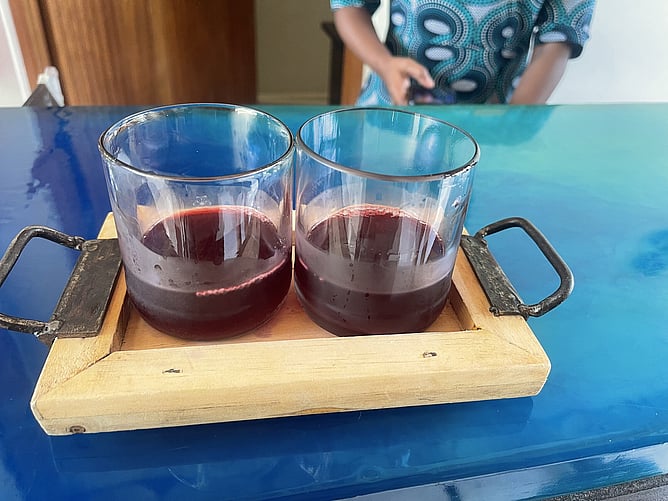
We are welcomed at Samawa wellness boutique hotel in Paje with two beautiful hibiscus drinks. Yum.
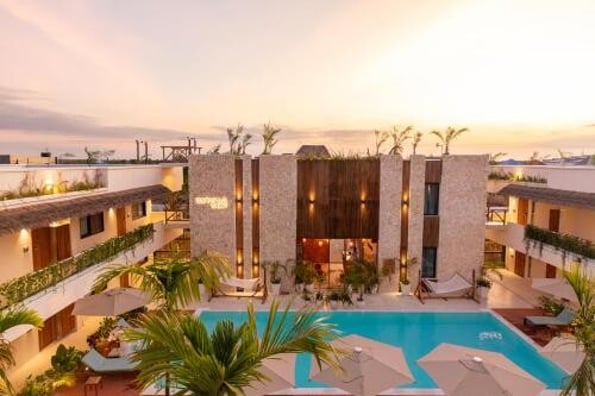
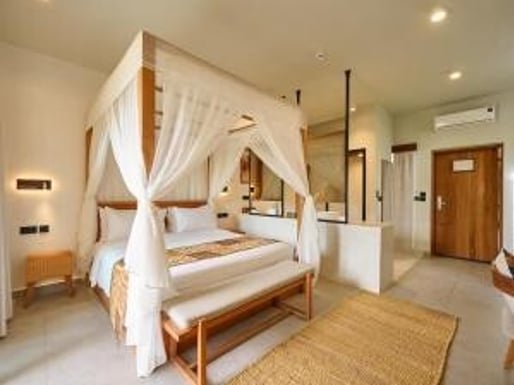
Our room is lovely. There is a pool and a gym and a spa, and the restaurant is on the top floor. No alcohol was a surprise, but we can live with that.
We arrive at about 4pm, and we want to go to the beach, which is about an eight-minute walk. We take this track. There are many to take.
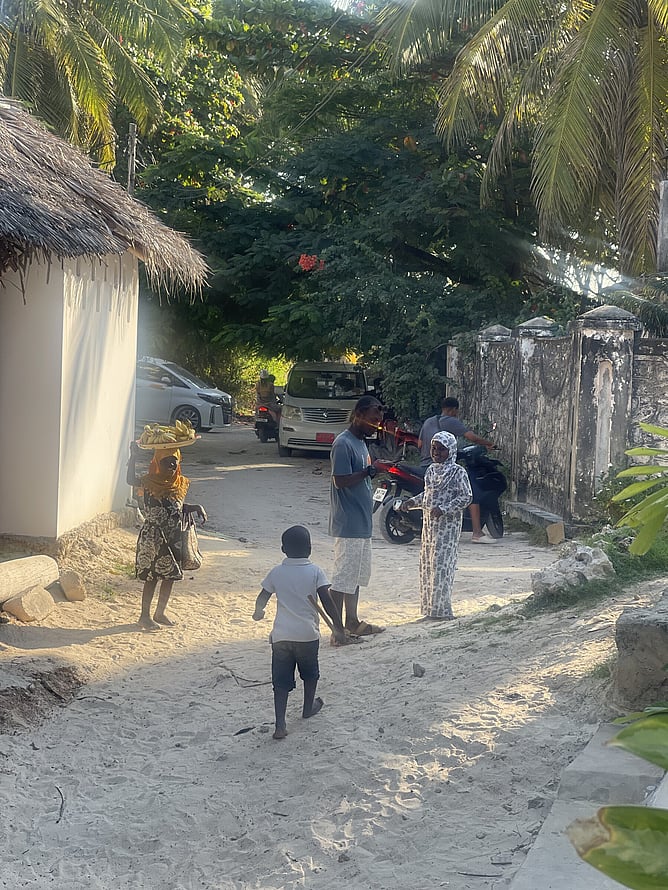
They sell everything on the beach. From jandals to nail polish to peanuts to massages and, of course, all the fun activities you can do on the ocean - kite surfing is the most popular, as well as boat rides, but everything. They are in your face asking. A line I found that worked was: "I want to be on my own", or "I am not interested today; I have something I want to do." Or "GO AWAY." And I add "Thank you."
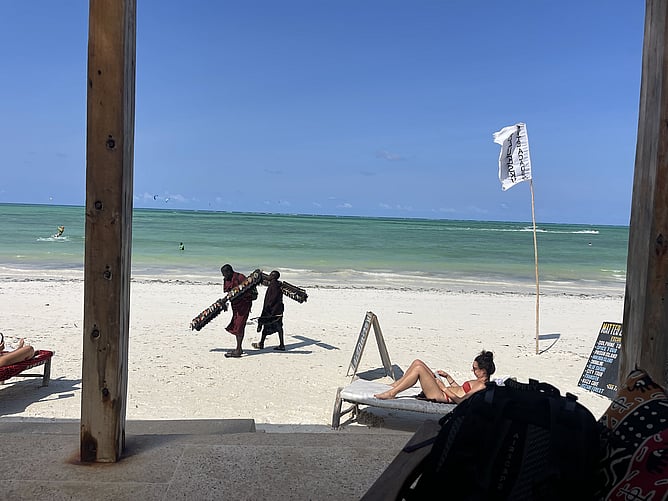
First, walk along Paje Beach. Paje is regarded as the kitesurfing capital of East Africa thanks to its steady trade winds and shallow lagoon. Beginners and experienced riders are well catered for by schools
We went to a cafe called Flow to work a bit. I discovered this massage place right next door when I went to the bathroom. We both had a massage. It was great, and I went back there later.
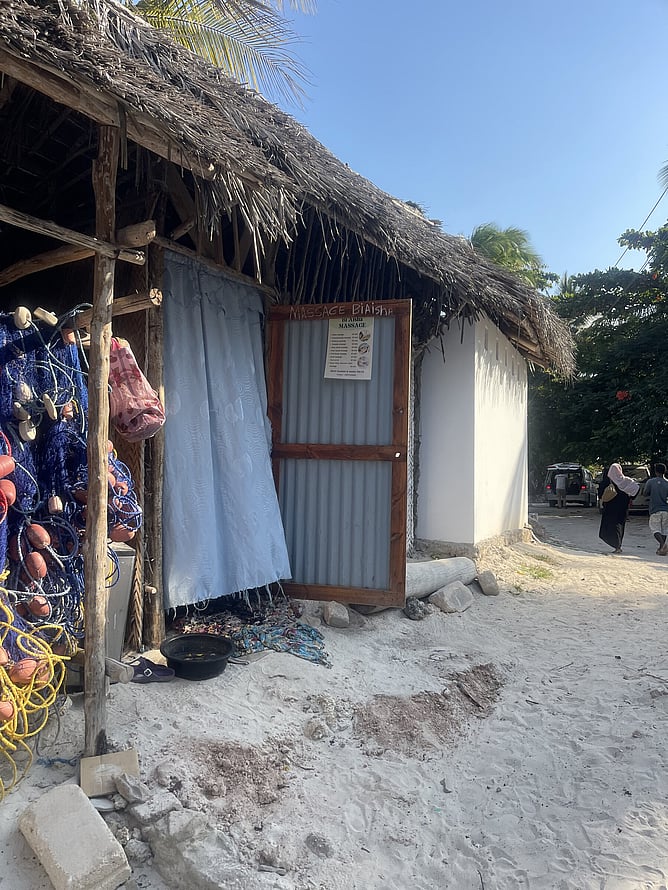
I can't remember her name, and the massage was very strong and good, and she spoke a bit of English.
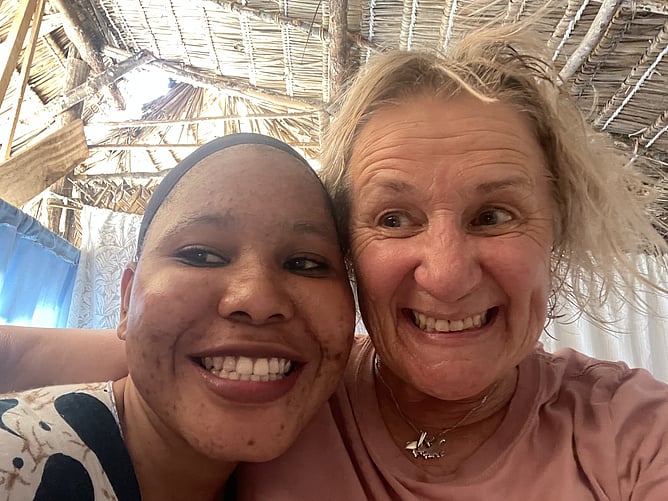
We walk back along the beach. Young ones wander, play, and sell things too.
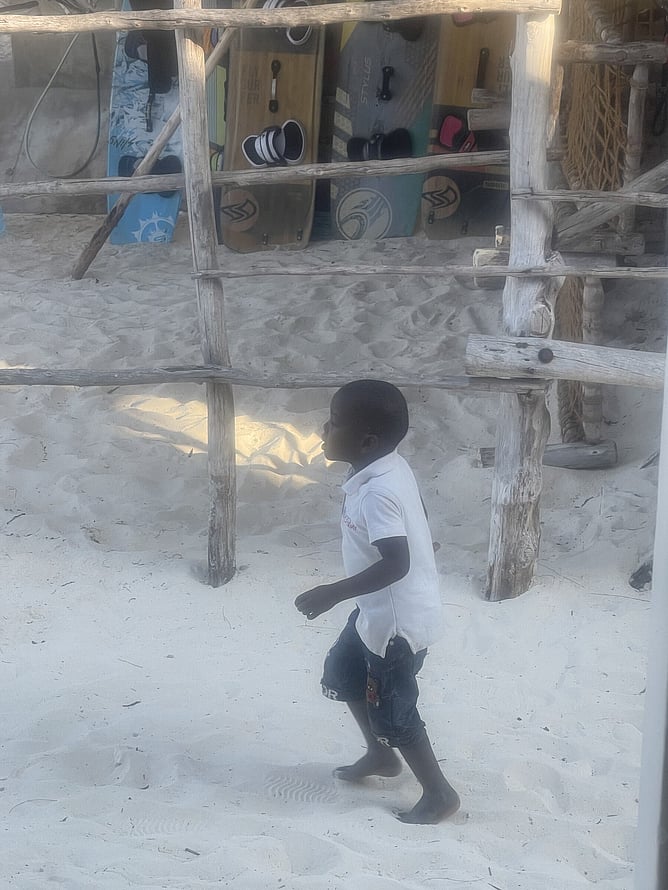
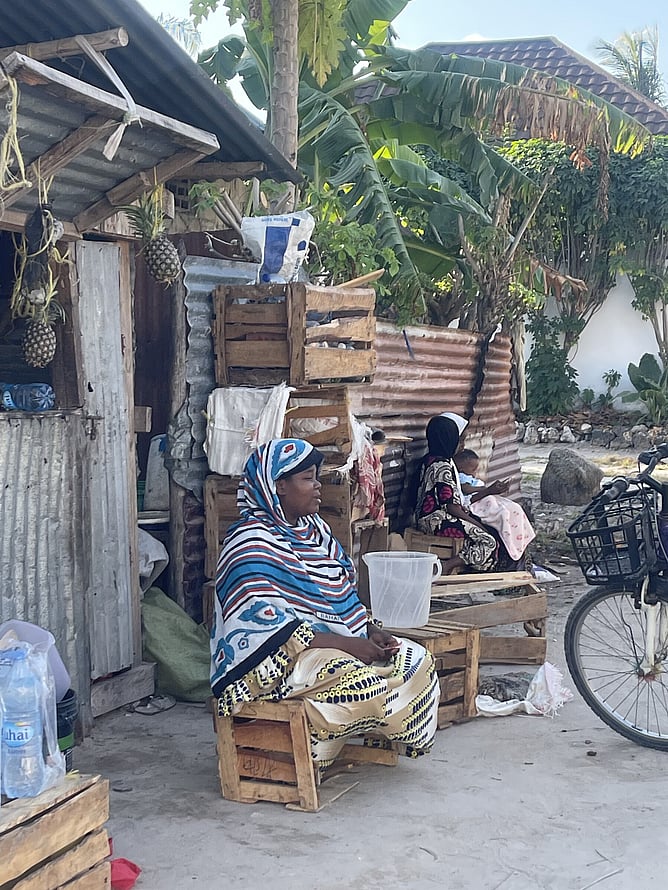
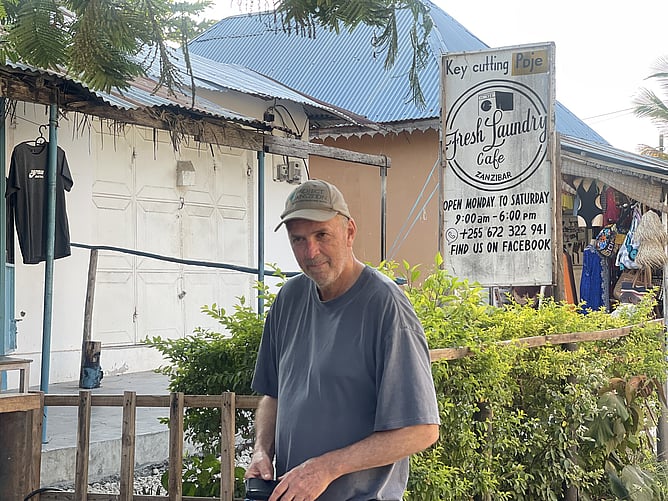
The next day, we drop off our laundry.
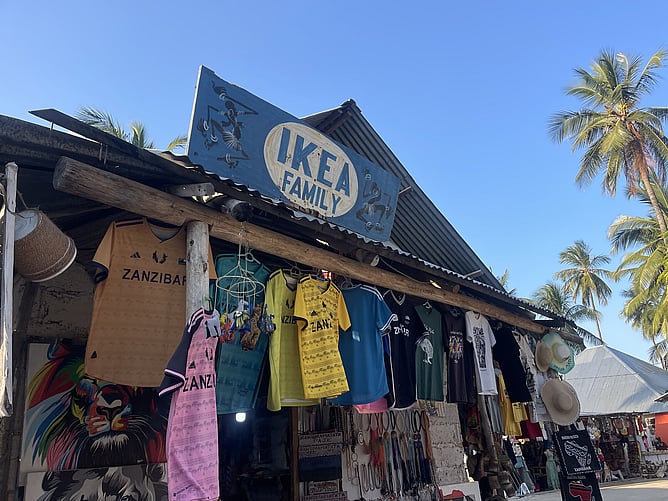
IKEA is everywhere here - and slightly different.
These young ones are playing with boxes on the track..
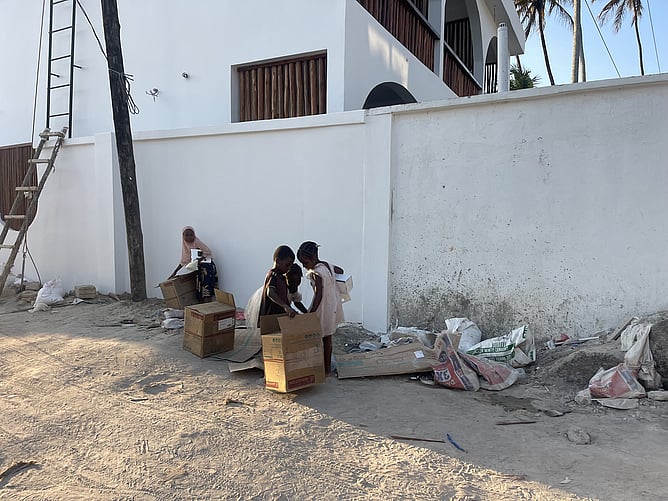
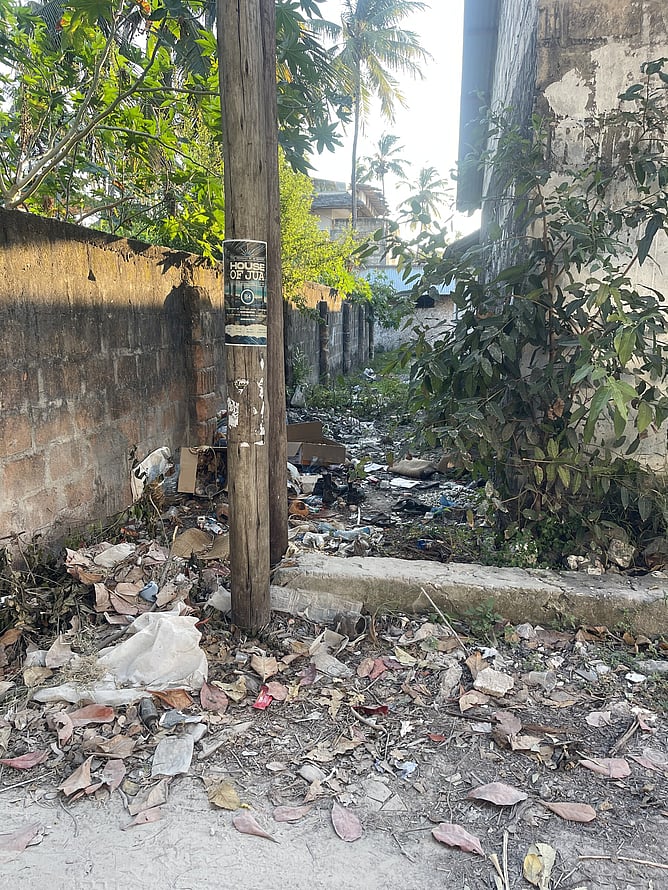
There is no rubbish pick-up in Paje. You have to pay to take your rubbish to a rubbish station, and then it gets taken away. So people don’t have money for that, so it is left on the side of the road and the track. I want to pick it up, but there was so much of it. It is everywhere. It does my head in as this beach is otherwise incredible.
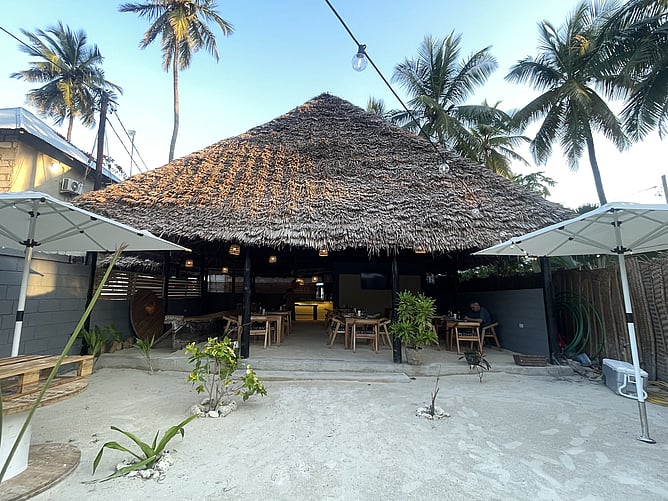
There are lovely restaurants in Paje; this was one of them, Mapishi. We were the only ones there the first time - but we were early, at about 6 o’clock.
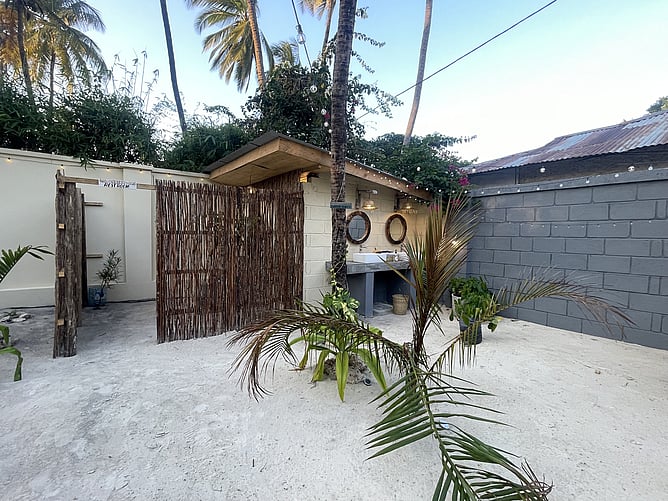
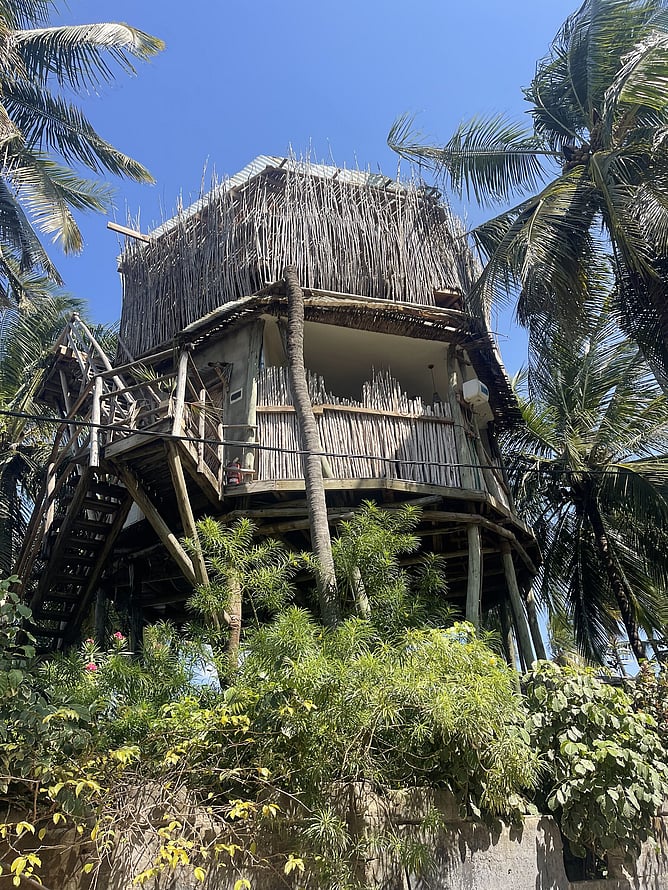
I am not sure what this is. I think it fits into the landscape beautifully.
The next day I go to yoga at the spa, and there are only two of us there. I meet Siobhan. She is a satellite principal at a private school called Bahlool British International School in Baghdad. She lives in Dubai and goes to Baghdad once a month for a week. I am fascinated. The school’s philosophy isn’t solely about academic achievement. It has developed a character curriculum called the Bahlool Builders Character Curriculum.
The idea comes from the school’s founders, who were civil engineers. They use building as a metaphor for educating a young person: just as you need a strong foundation to construct a strong building, children need a strong foundation of knowledge, character, and relationships to build their futures.
She is here on holiday and was particularly drawn to Kuumba, which is a new gym over the road from Samawa. She has signed up for at least 6 days with a personal trainer and general access to the gym.
We share stories. She is on her own. The next day she tells us she doesn't like that everyone wants something from her when she is out walking by herself, and she has booked her flight back to Dubai early.
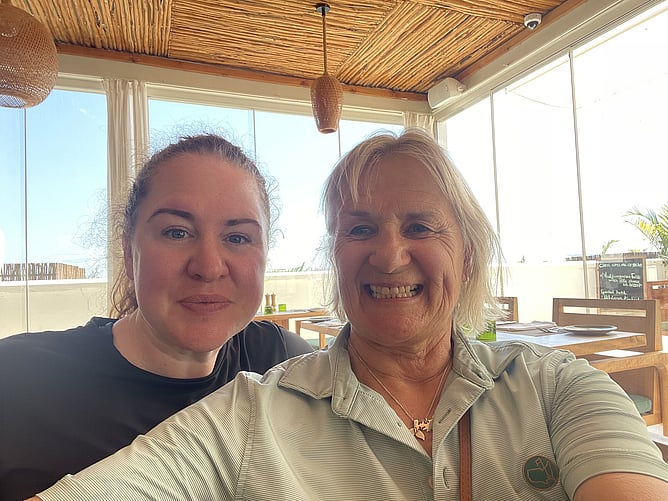
We go to another beach cafe during the day, this time ZanziBarista.
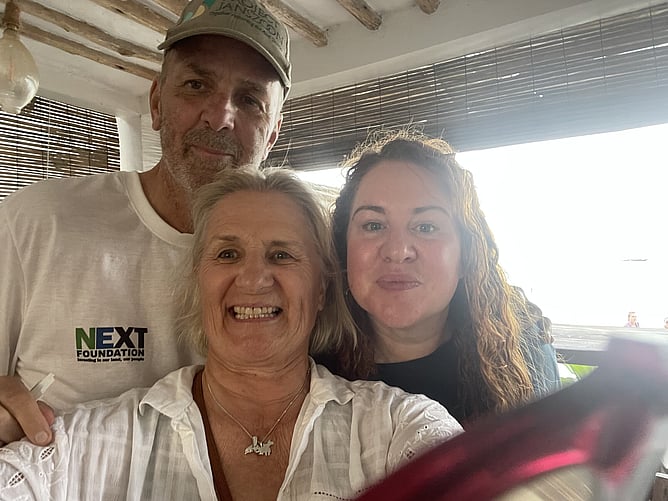
We arranged to meet and have dinner later with Siobhan at Mr Kahawa, a restaurant and hotel along the beach.
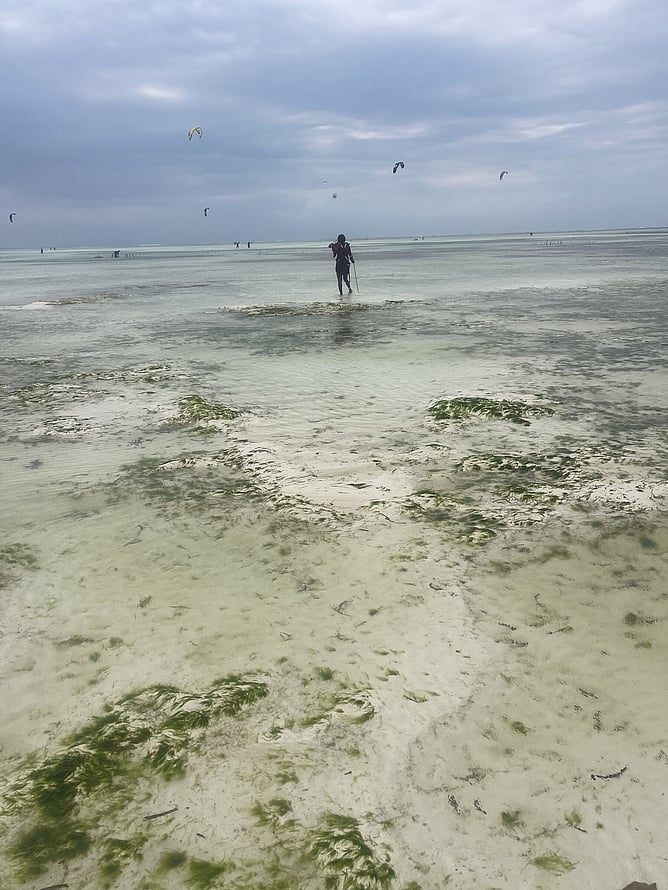
The tide is interesting - because Paje’s lagoon is extremely shallow and flat, the sea retreats 500–800 metres from the beach, and on particularly low spring tides it can appear close to 1 kilometre away.
That’s why when you’re standing on Paje Beach at low tide it can look as though the Indian Ocean has simply disappeared! The enormous exposed area is the reef lagoon, which is why you see people walking far out, tending seaweed farms and collecting things from the shallows.
And then, roughly six hours later, that whole vast area can be underwater again.
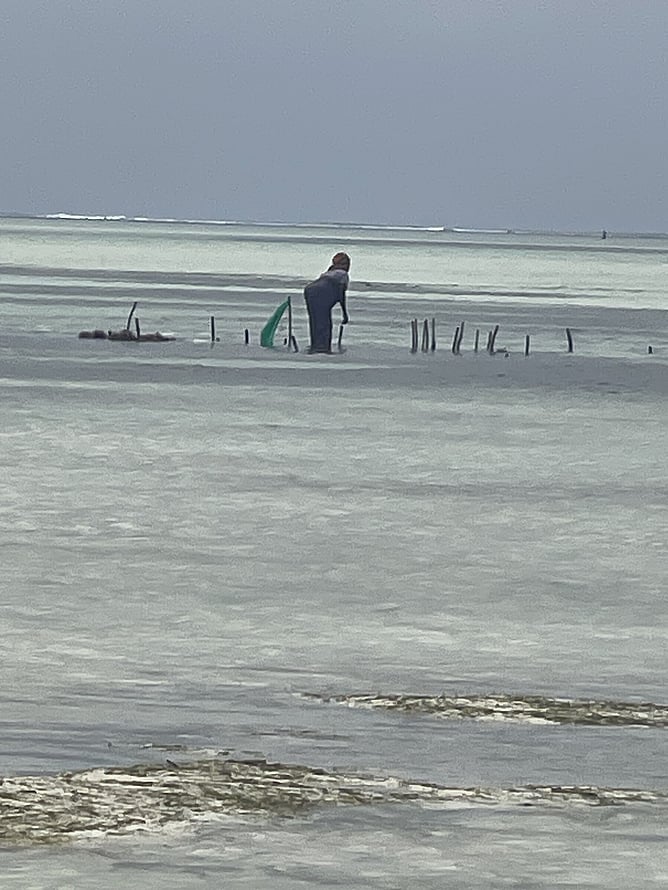
Seaweed farming, by ChatGPT:
"The farmers—mostly local women—grow seaweed like this:
Work at low tide: They walk far across the shallow reef flat when the sea has retreated.
Plant wooden pegs: Two stakes are hammered into the sandy seabed.
Stretch ropes between them: Long nylon ropes are fastened between the pegs.
Attach seaweed cuttings: Small pieces of living red seaweed—called mwani in Swahili—are tied along each rope with thinner “tie-tie” strings. They grow from cuttings rather than seeds.
Let it grow: The tide covers the farm again, bringing sunlight and nutrients. The seaweed generally grows for about six weeks.
Harvest and dry it: The mature seaweed is removed, carried ashore and spread in the sun to dry. Some healthy pieces are kept to begin the next crop.
The dried seaweed can be exported for the extraction of carrageenan, a natural thickener used in foods, toothpaste, cosmetics and medicines. In Paje, women also turn some of it into soaps, oils, creams and other higher-value products.
The little wooden stakes and rows of string you can see at low tide are therefore something like an underwater vegetable garden. Rising sea temperatures are making shallow-water farming harder, so some farmers are experimenting with floating ropes in deeper, cooler water."
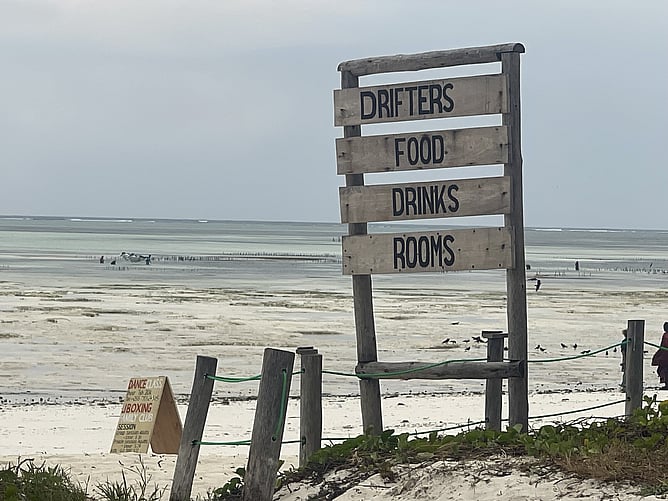
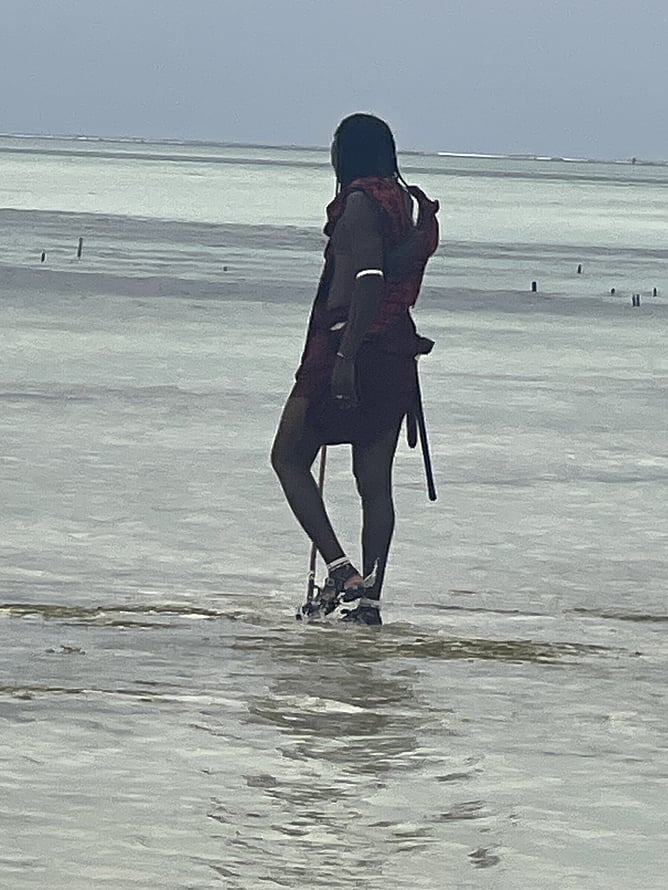
Masai do guided low tide tours.
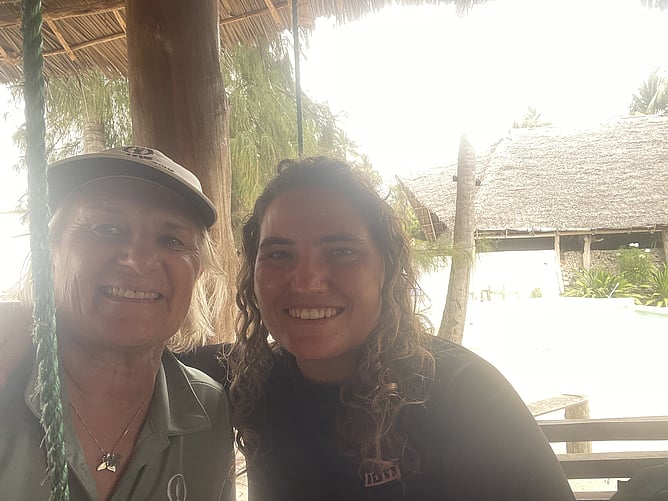
I lost coverage on my phone that I had bought at the airport. I overheard Xenia from Switzerland say to someone that she was a techie. Cheekily, I asked for her assistance. Like that, she fixed it, and gave me Frank's number in case I wanted to go kitesurfing.
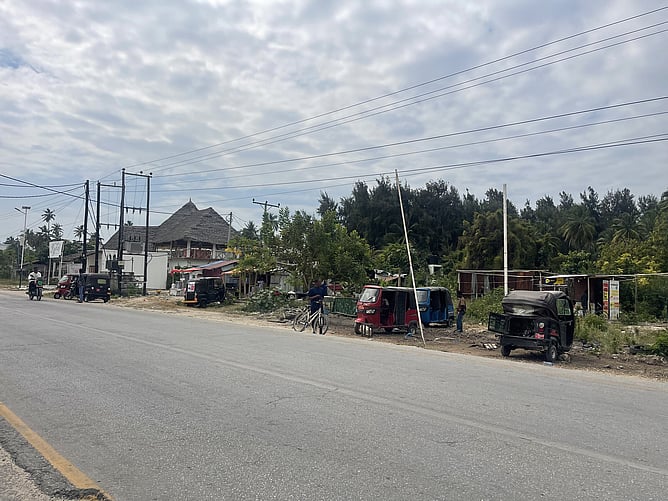
This is on our road, not far from Samawa. The tuk-tuk drivers toot at you constantly to ask you to ride.
The next day we go to the Kuumba gym. Siobhan on leaving early has gifted me her 5 PT's and use of anything for 7 days!
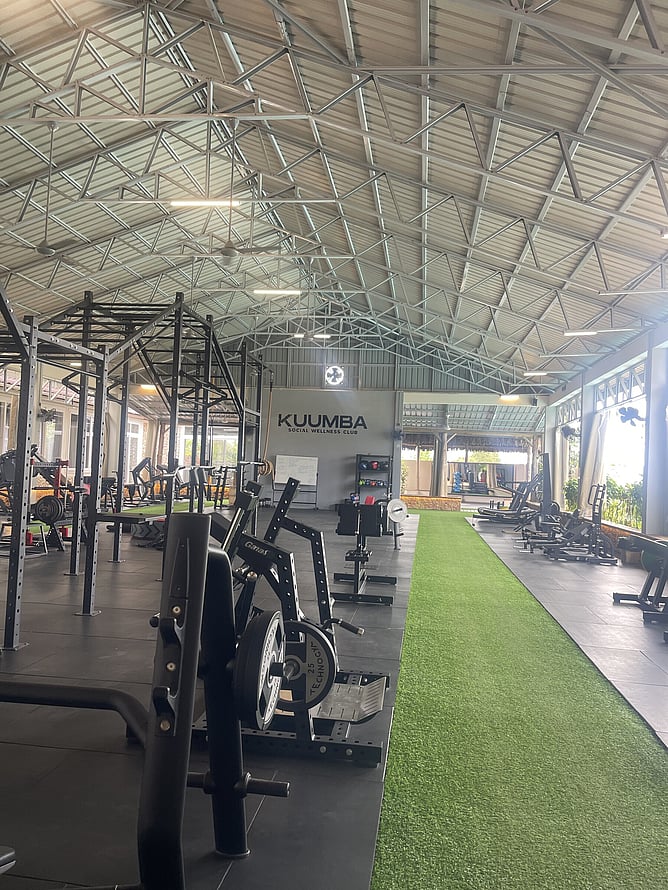
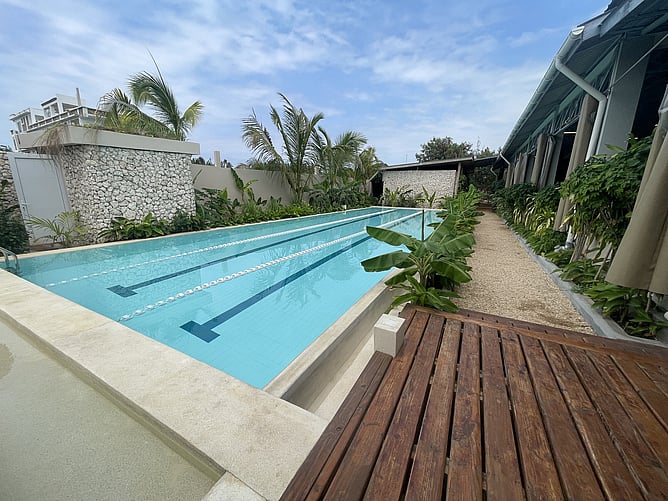
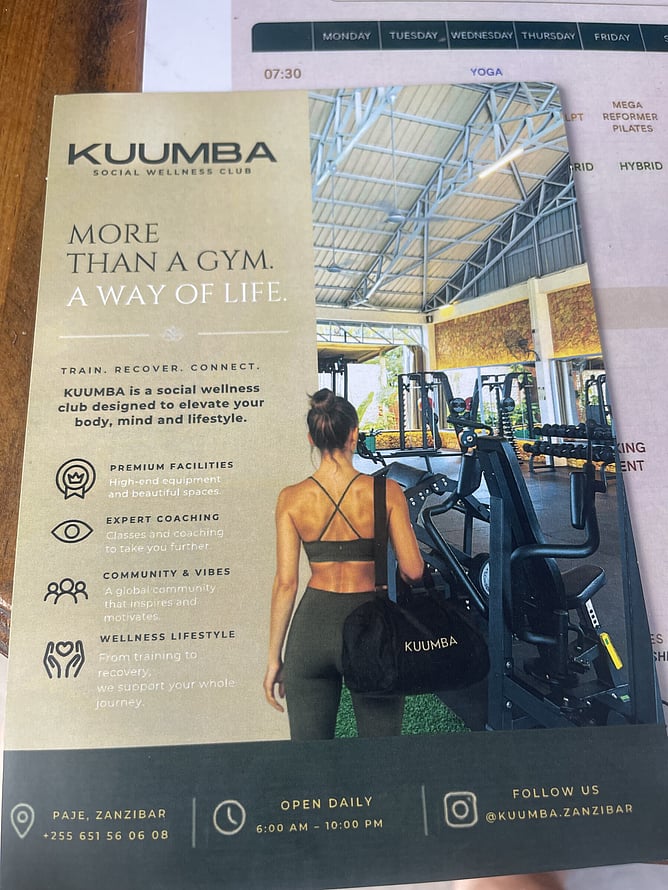
We have her last PT together. Siobhan is a terminator. She jokes that her last PT trainer was 54 and a terminator. Sameer is softer. Siobhan is a gym buff. I don't go to the gym for more than 20 minutes. I love it with Siobhan and Sameer. I swim in the pool after, and I do it for myself.
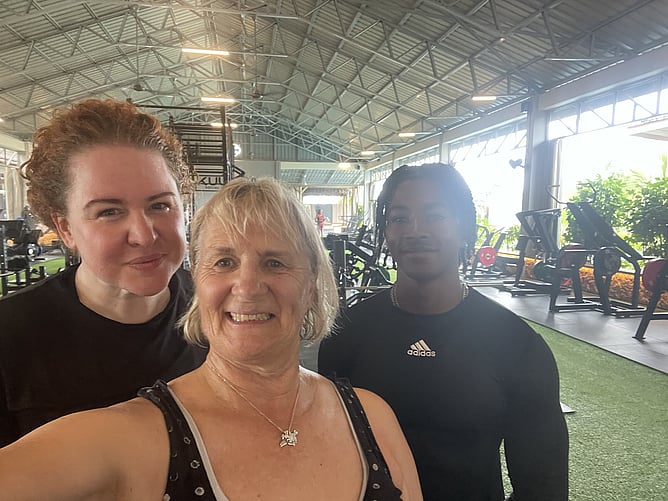
We said goodbye to Siobhan.
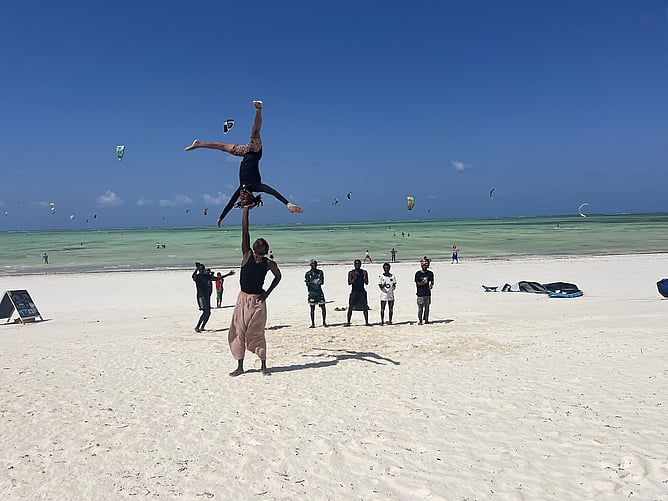
The next day we found another cafe. There is always a lot going on along the beach.
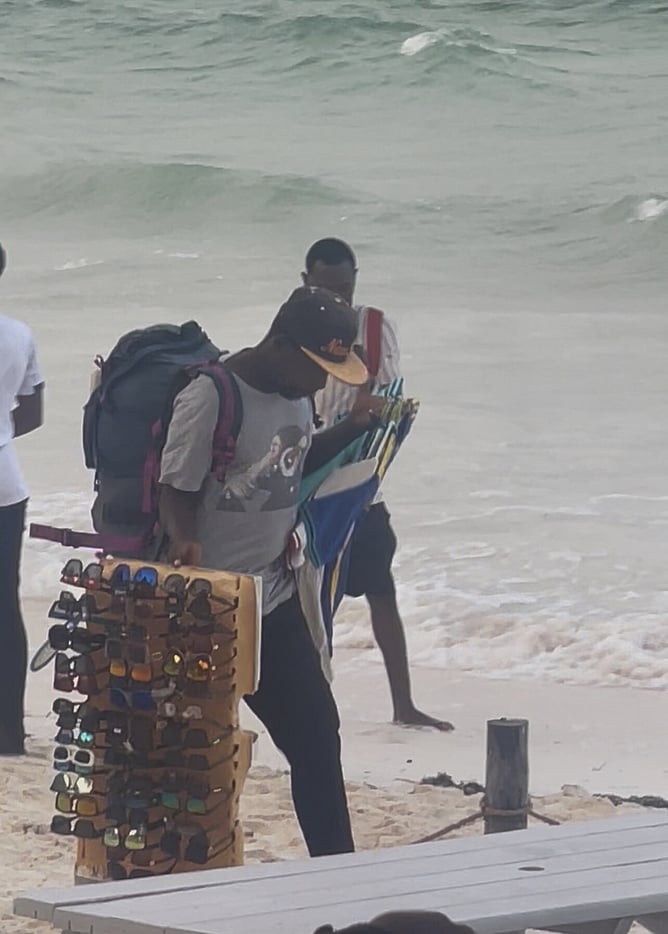
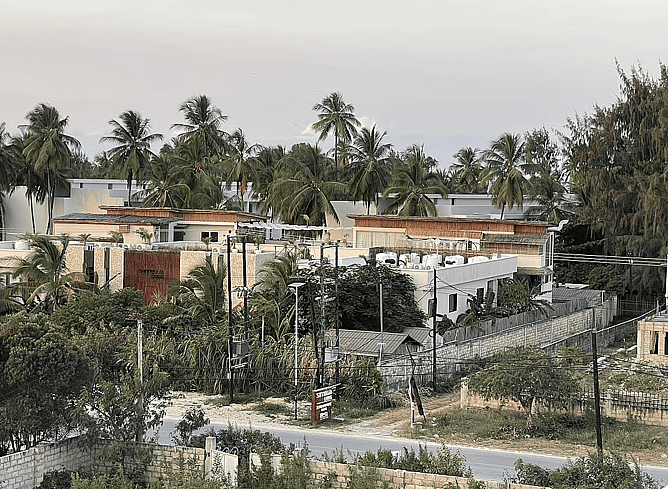
We went over the road to check out a bar for a meal. It was closed. We did get a view of our hotel though.
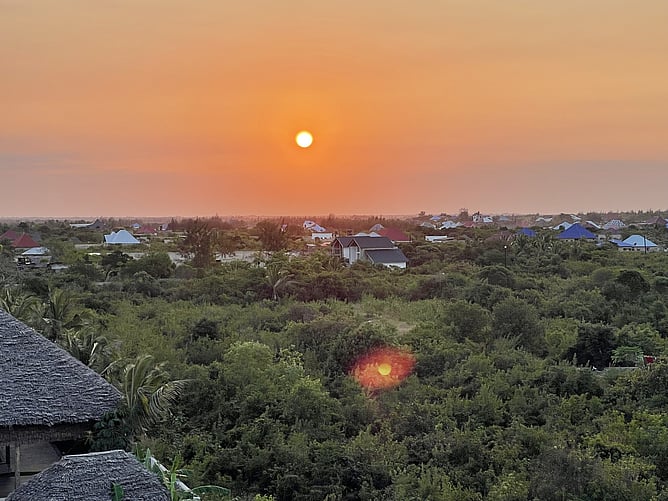
And then the sunset. I think we went back to the hotel to eat. We have 5 more days here. Tomorrow we go to Jozani Forest. So I will end this here and start Jozani Forest and more Paje in the next blog. Watch the weight fall off me at the gym as well.