
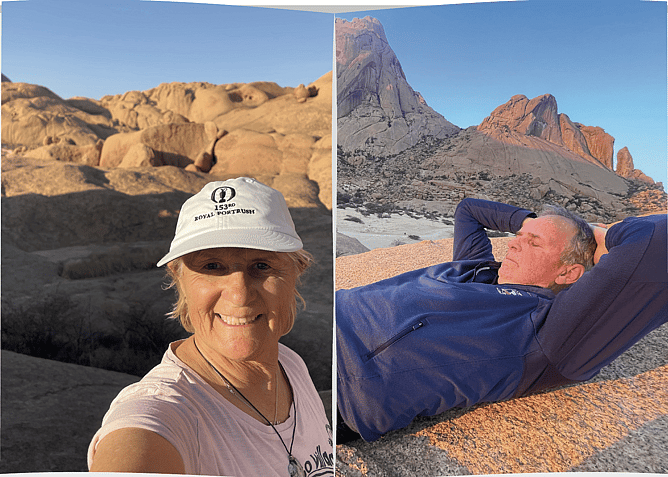
These photos above are to let you know that I sleep in the car, so I’m all go when we get there, and Bill has done all the driving, so he can have a sleep.
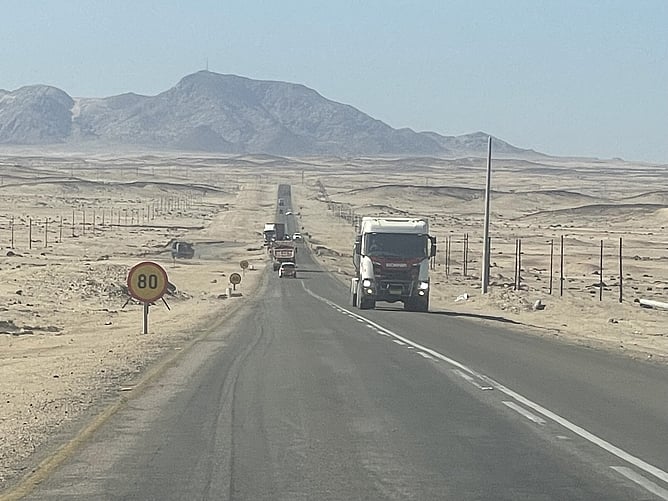
Below is a typical road for this drive - although they don't usually have this much traffic, or a hill. But it is very very straight.
So today we have driven from Swakopmund to Spitzkoppe, and then to Hohenstein Lodge. Tomorrow we will head to near Hosea Kutako Airport for our early morning flight the next day.
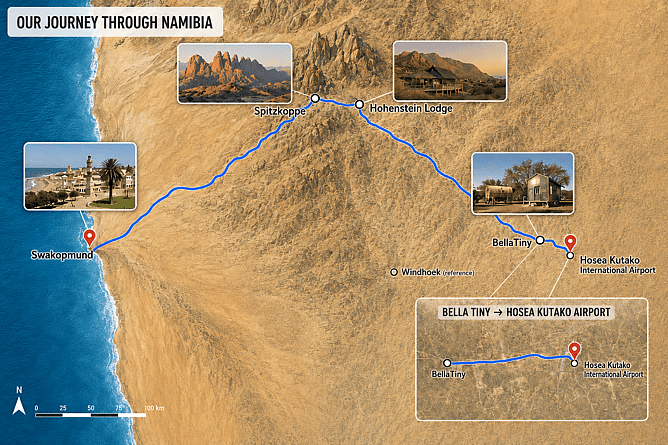
The drive is about 2 hours, approx. 150 km. We are driving to catch the sunset at Spitzkoppe, and then we will go to Hohenstein Lodge to stay the night. The accommodation at Spitzkoppe was all booked up.
We turned off the main road.
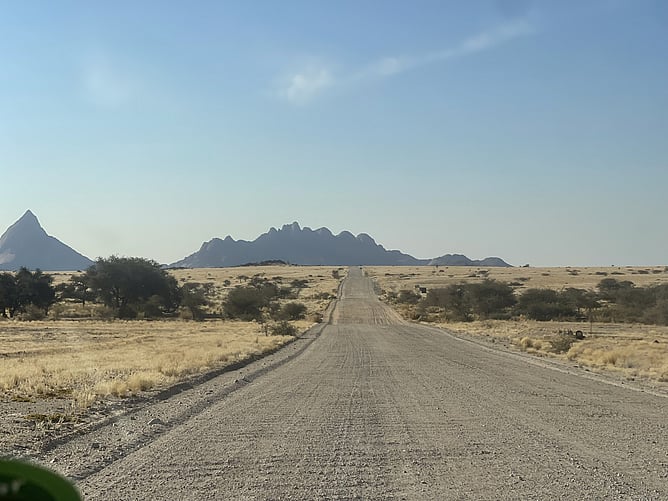
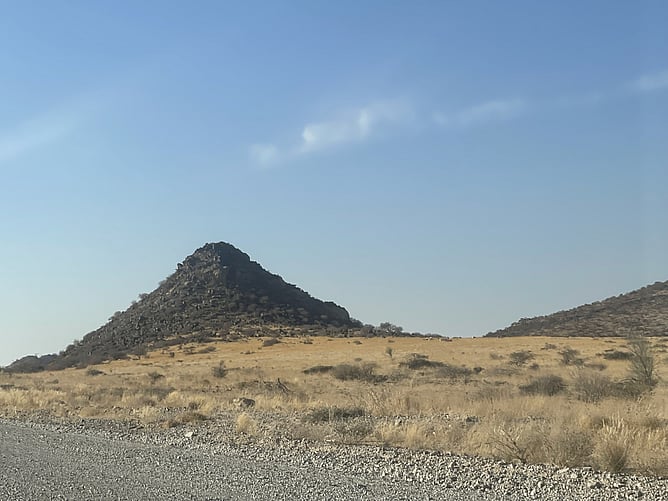
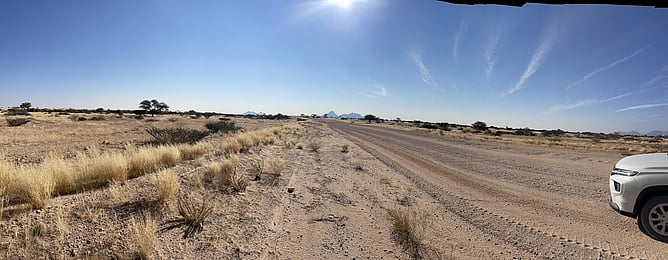
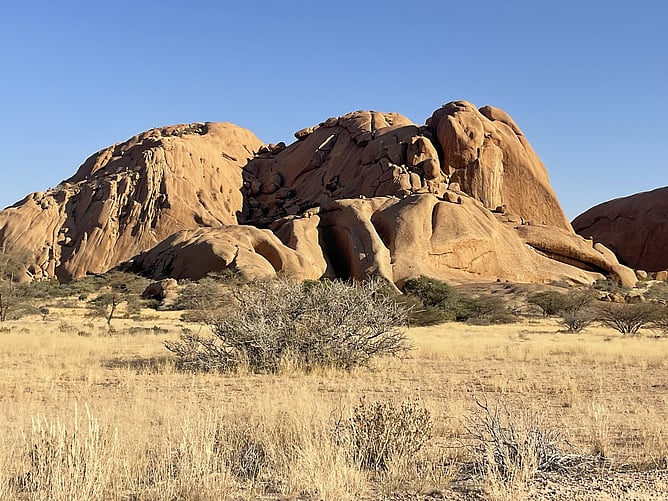
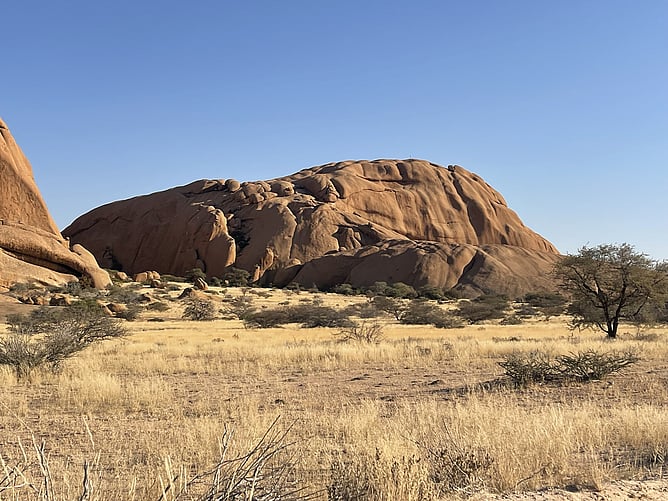
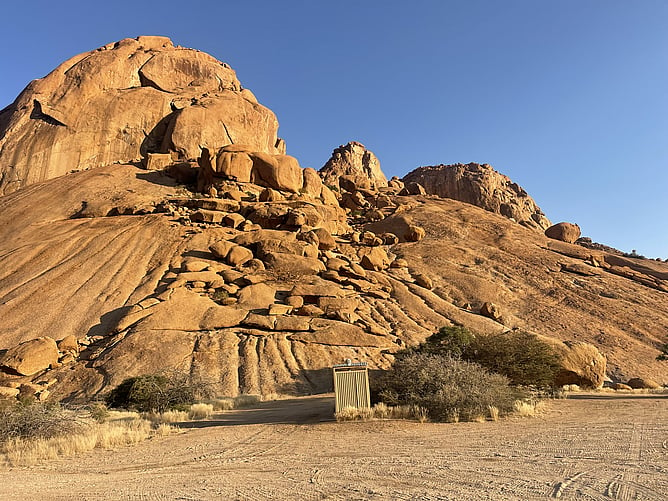
And we arrive in Spitzkoppe.
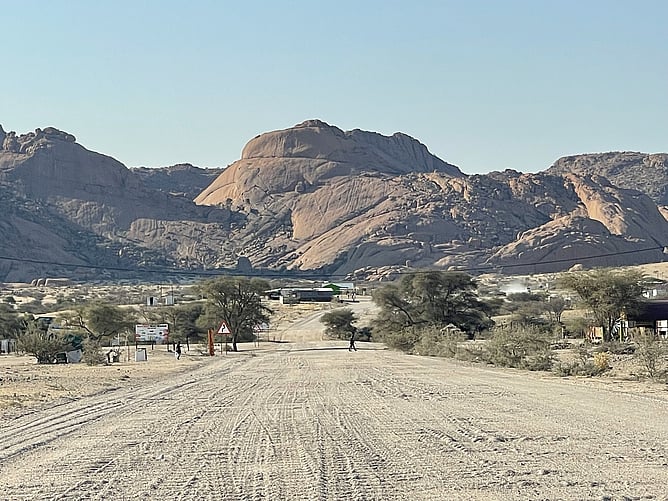
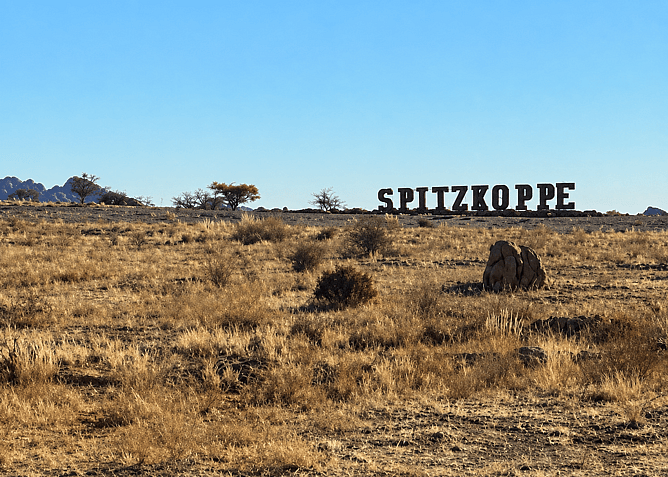
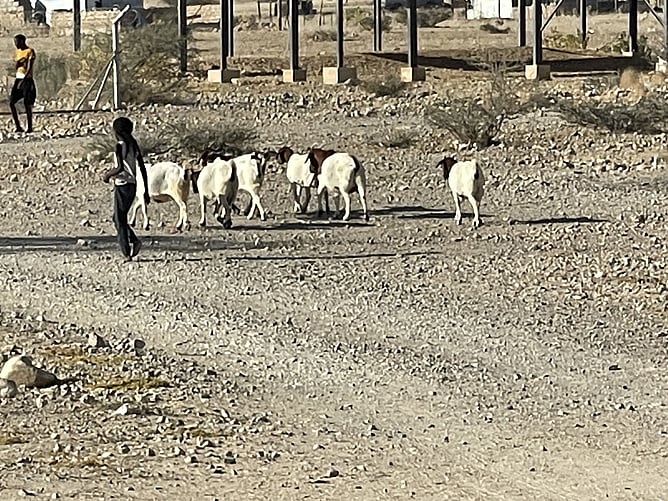
As we came into Spitzkoppe, roadside stalls were selling stuff. We could not work out exactly what they were selling. It looked like sticks, skins and maybe souvenirs. They were also desperate so we didn't hang around.
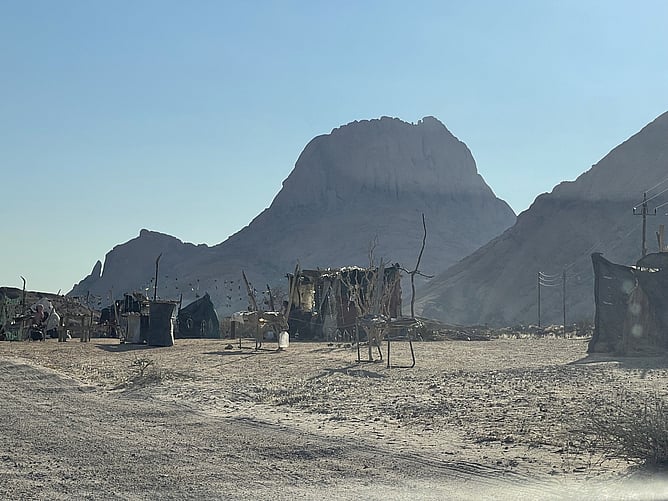
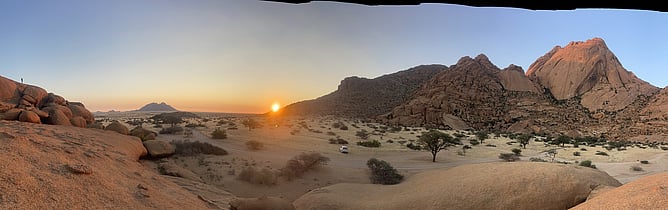
A more colourful picture of Spitskoppe.
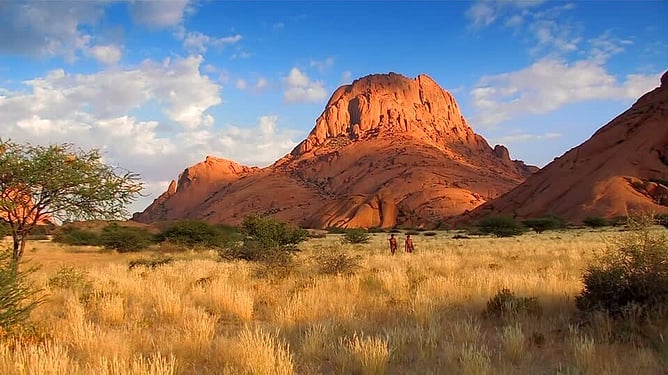
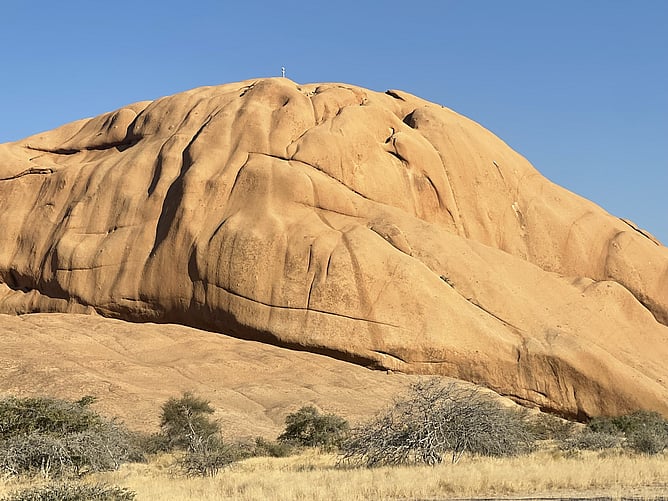
Spitzkoppe is one of Namibia's most spectacular natural landmarks and is often called the "Matterhorn of Namibia" because of its dramatic, pointed granite peaks rising suddenly from the flat desert plains. What makes Spitzkoppe special?
🏔️ Ancient granite mountains
The granite formations are incredibly old—over 120 million years old, with some geological studies suggesting the rock itself formed much earlier.
The highest peak reaches about 1,728–1,784 m above sea level and rises roughly 700 m above the surrounding desert.
🌉 The Famous Rock Arch
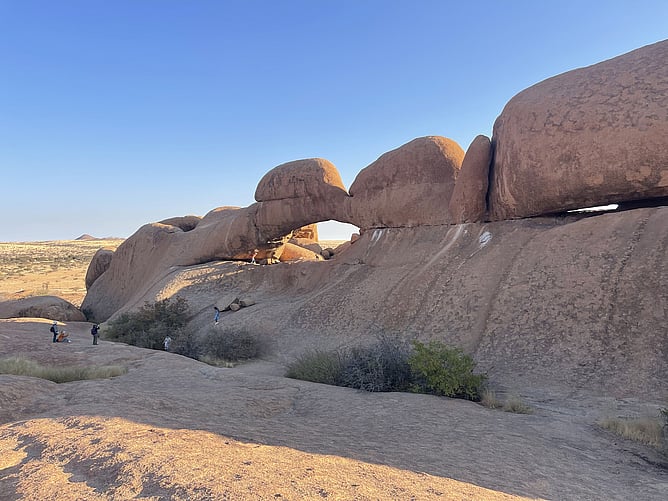
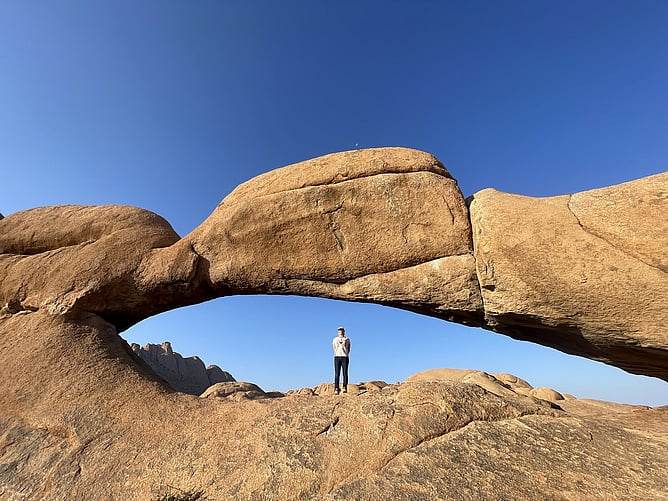
A natural granite arch has become one of Namibia's most photographed locations.
It is only a short walk from the main camping area and is particularly beautiful at sunrise and sunset.
🎨 Ancient San Rock Art
The area contains rock shelters with paintings created by San people thousands of years ago.
One of the best-known sites is Bushman's Paradise, which can be visited with a guide.
🌌 Some of the best stargazing in Africa
With virtually no light pollution, Spitzkoppe is famous for its night skies and Milky Way photography.
Fascinating history: Long before modern visitors arrived, San communities used these rocks as shelters and sacred places. Later, Spitzkoppe became famous among climbers. The first confirmed ascent of the main peak was achieved in 1946 after many failed attempts.
If you are visiting, ChatGPT suggests to -
Arrive mid-afternoon.
Explore the Rock Arch.
Watch sunset from one of the granite domes.
Stay after dark for the stars.
Wake early for sunrise—the rocks glow orange-red as the sun rises.
We will not do 4 and 5.
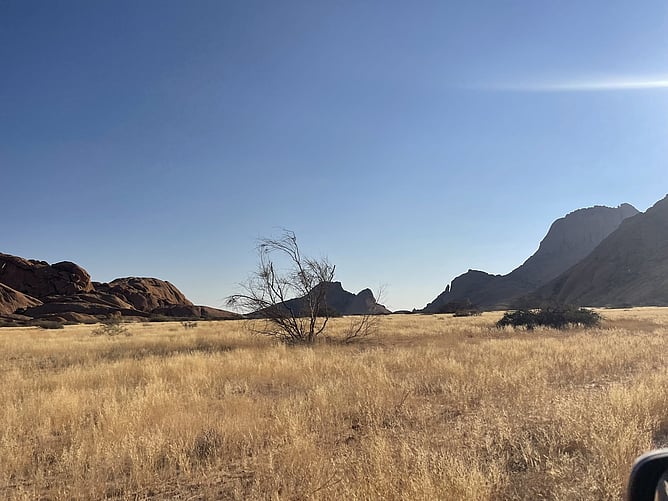
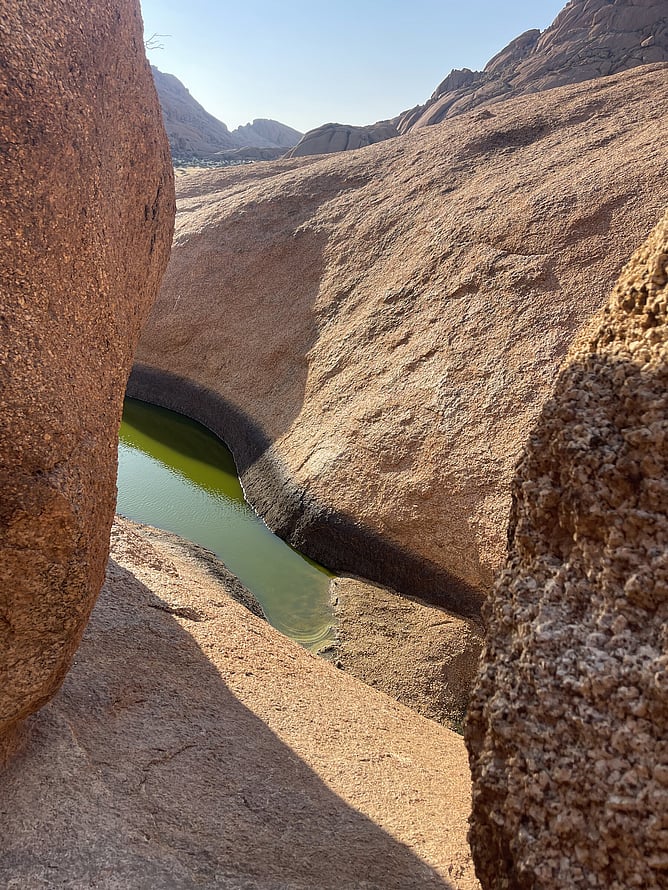
This is the rock pool with very little water.
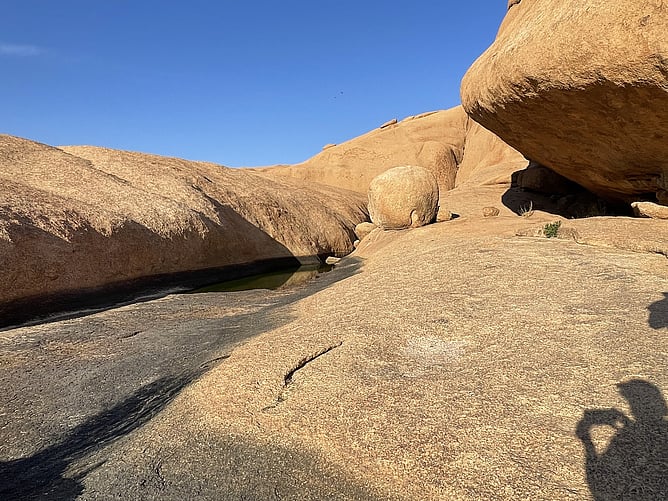
Not much water but we did see an agama lizard.
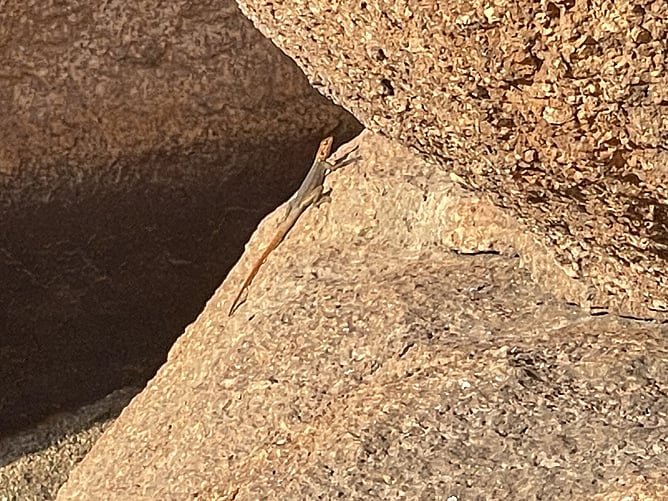
Agama lizard:
🪨 It basks on sun-warmed granite boulders
🦎 It has a broad head, long limbs, and a long tail.
🧡 The orange-red colouring under the throat and along the tail is characteristic of many male agamas, especially during the breeding season.
🌞 Agamas are fast-moving, diurnal (active during the day), and often pause on rocks to watch for insects or predators.
A few interesting facts:
They can sprint surprisingly fast over hot rocks.
They eat insects, spiders, and other small invertebrates.
Males often become much more brightly coloured when defending territories.
They can flatten themselves against rock to absorb heat quickly in the cool morning and then retreat into rock crevices during the hottest part of the day.
The famous Namib Rock Agama is found in rocky habitats in Namibia, and the Ground Agama is also widespread in the region.
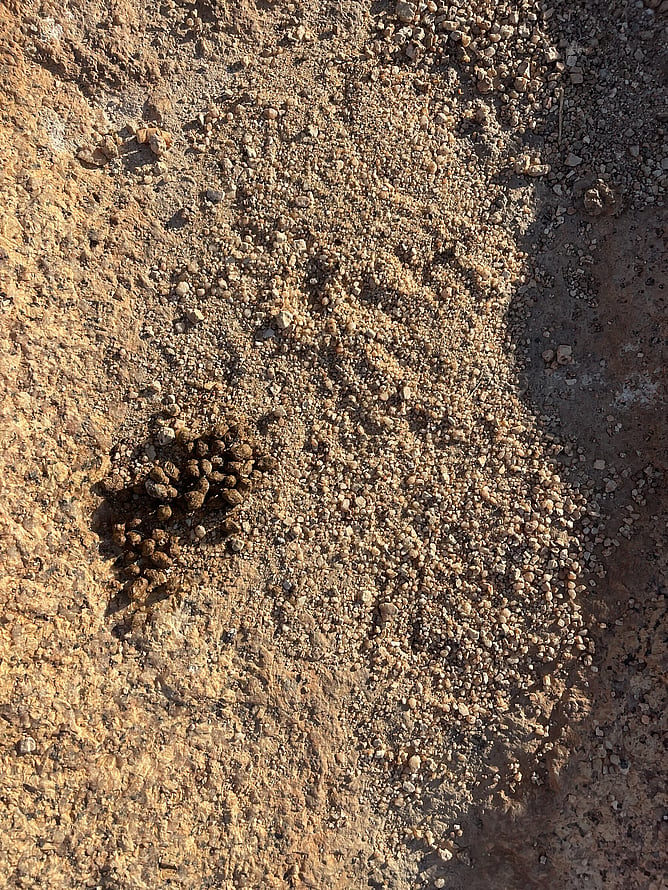
And droppings of the Rock Hyrax (Dassie):
The droppings are small, oval pellets about 1–2 cm long.
Rock hyraxes pile together their scat in one spot rather than scatter it
Rock hyraxes use the same "latrine" site repeatedly, often on sheltered rock ledges and in crevices.
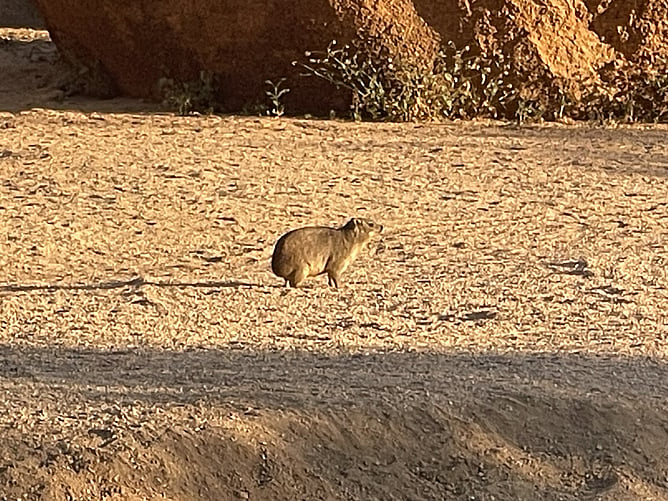
Spitzkoppe is well known for its rock hyrax populations, and they spend much of their lives on the granite boulders.
Hyraxes are fascinating animals. Although they look a bit like guinea pigs, their closest living relatives are actually elephants and manatees. They have rubbery, moist foot pads that help them grip steep granite surfaces, making them excellent climbers.
Hyraxes use the same toilet sites for many years—even centuries. Over time, urine and droppings build up into deposits that scientists can study to learn about past climates in southern Africa. Some hyrax middens preserve environmental records stretching back tens of thousands of years.
So while they may not look remarkable at first glance, they can actually be valuable scientific archives!
The rock pool from another angle.
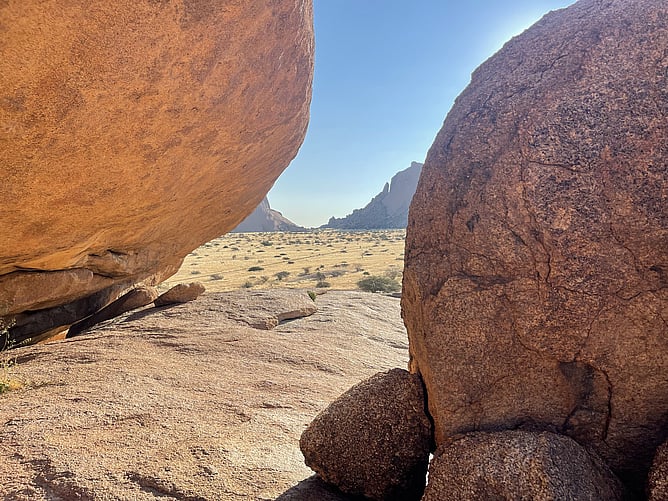
Then we climb among the granite boulders.
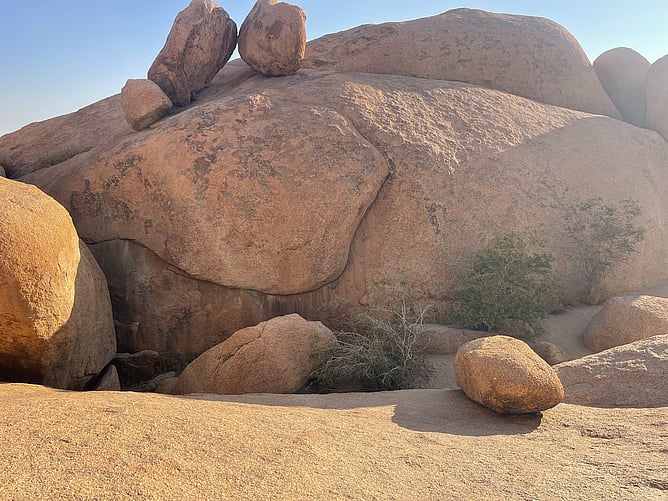

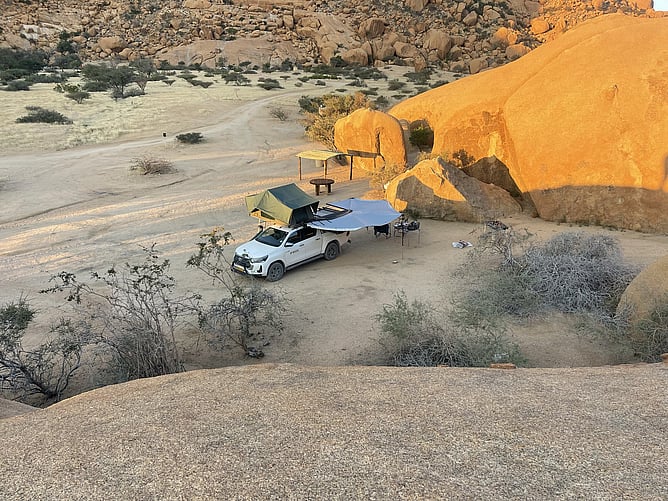
We drive a little further on to wait for the sunset. A camping site.
Then we see the rock hyrax - lots of them.
This is a mobile safari. I would love to do that one day. We all waited for the sunset.
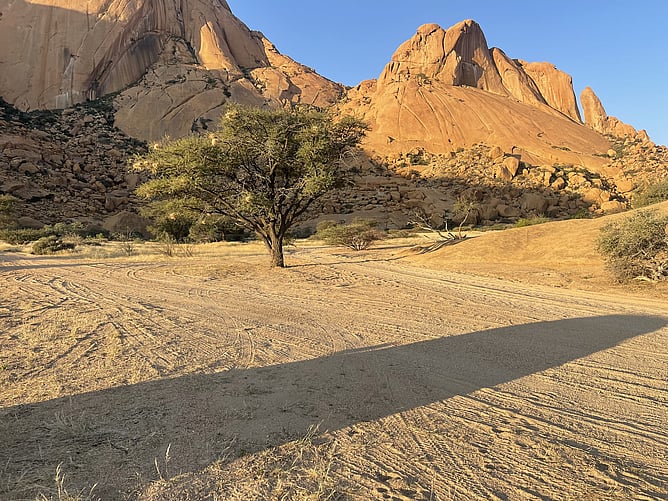
This is the Camelthorn Tree. It has a broad, rounded canopy, typical of mature camelthorns.
It appears to have a single sturdy trunk with branches spreading evenly.
Camelthorns are one of the most common trees growing among granite outcrops and dry riverbeds in the Erongo region.
Their roots can extend many metres down to reach groundwater, allowing them to survive in extremely arid conditions.
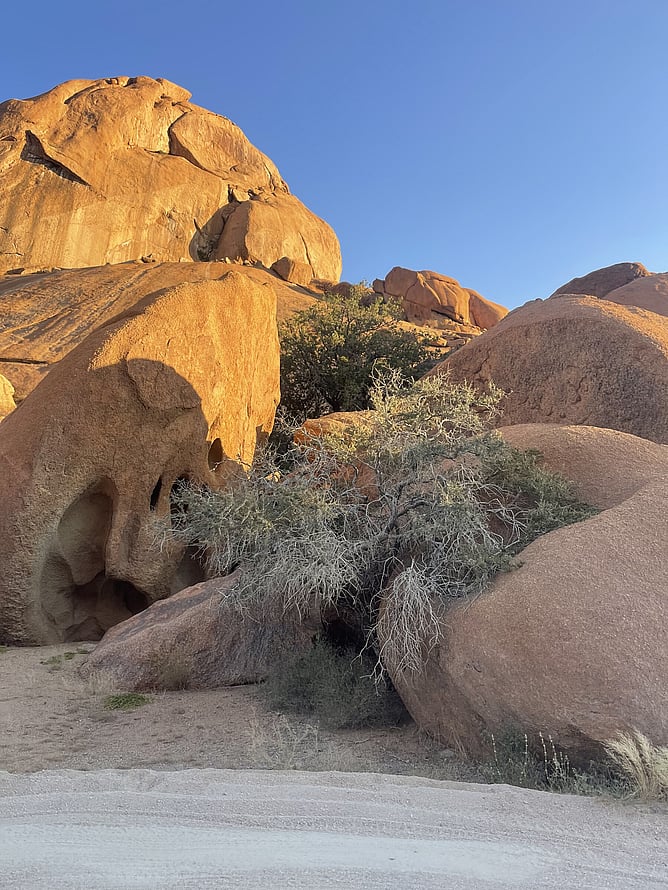
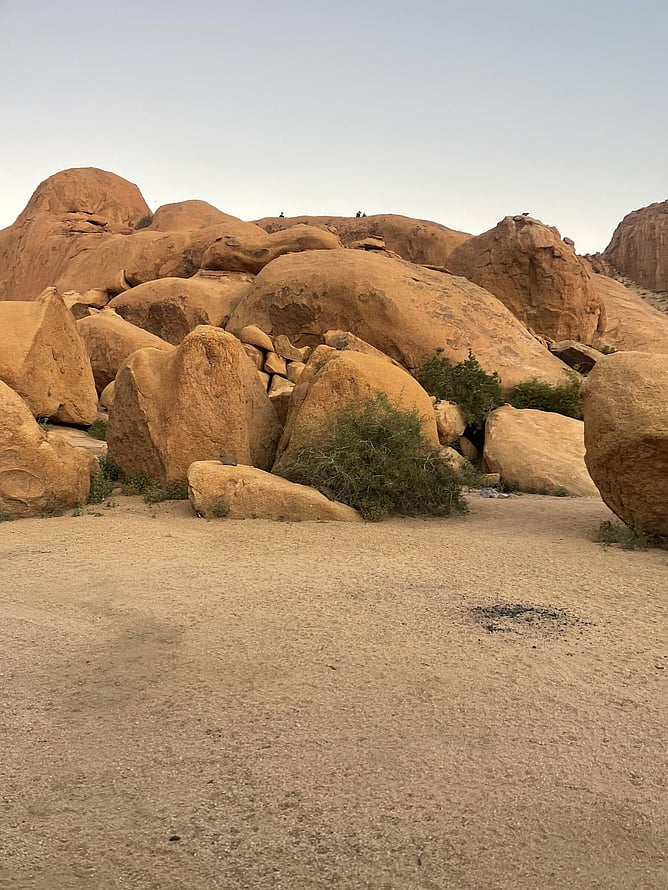
We climb a little to wait for the sunset. Bill has done all the driving, all the bookings. He is allowed a nap.
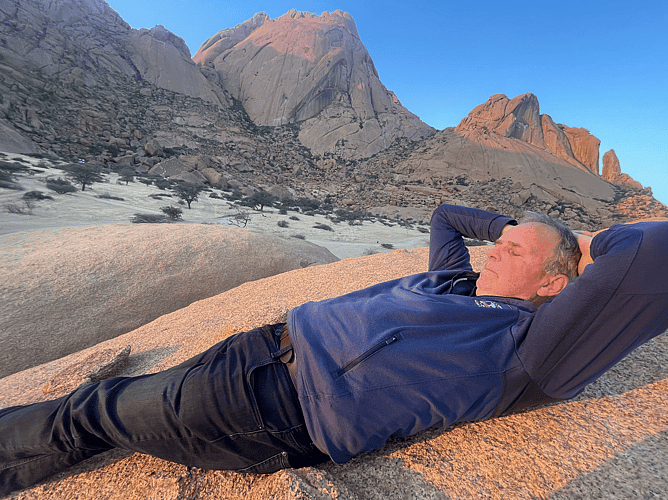
And then Bill woke up.

That is our rental car you can see.
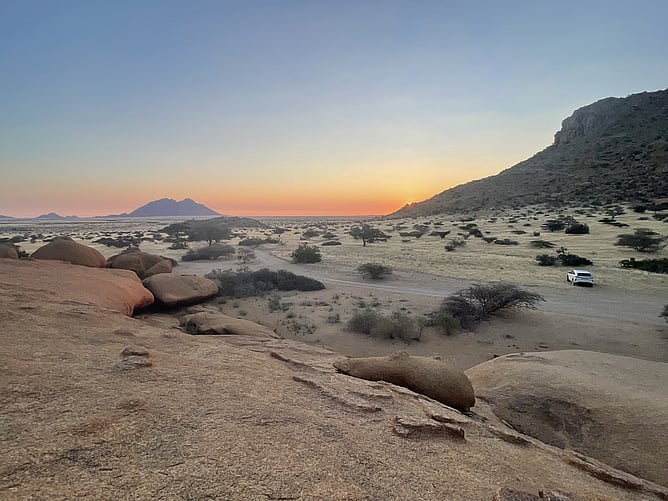
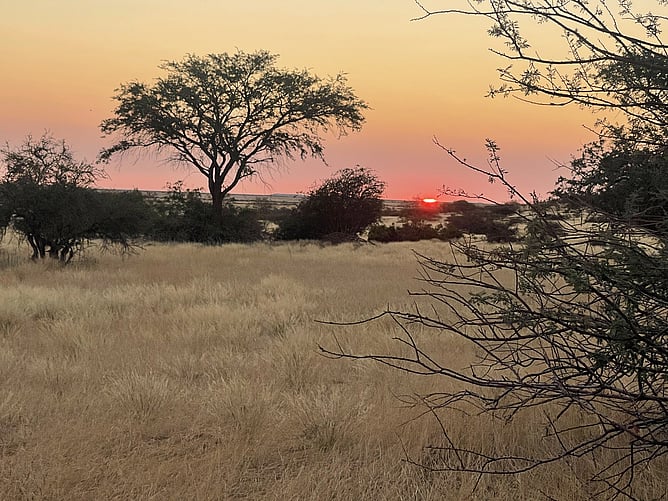
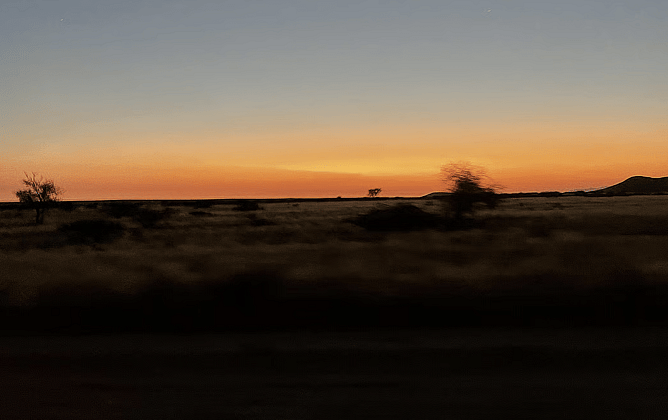
We left before the stars. Bill said the lodge was expecting us for dinner, and he wasn't fussed about doing all the driving in the dark on the rough roads. So we drove to the lodge. It took us an hour and ten minutes. It started as a lovely drive through the Erongo Mountains, then it got dark and we didn't see anything except a very bumpy road. But when we got there the lodge was spectacular.
https://www.facebook.com/watch/?v=895729035004881.
They did indeed have our dinner waiting for us - springbok. It was delicious.

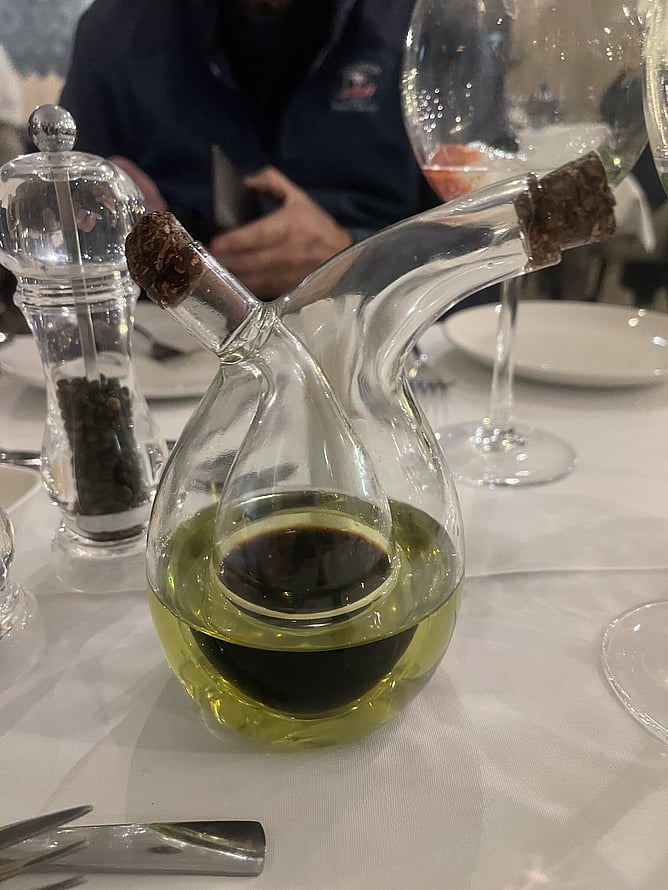
This for olive oil and balsamic vinegar.
Bill said the lodge had also been booked out, except for the honeymoon suite. Oh no, a little over the top. A big treat I thought. Treat it like a honeymoon I thought.
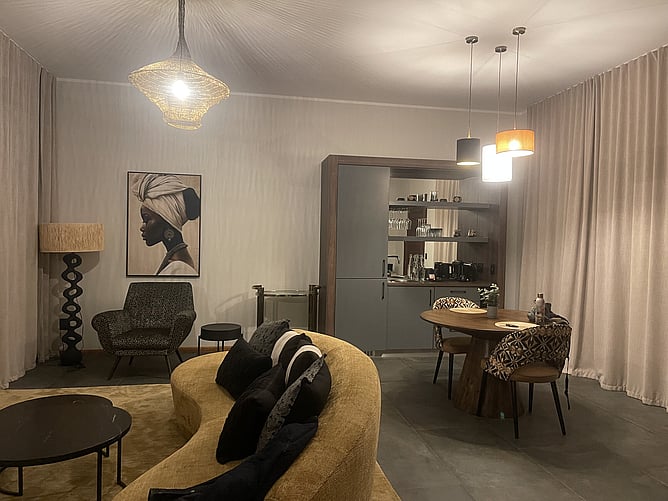
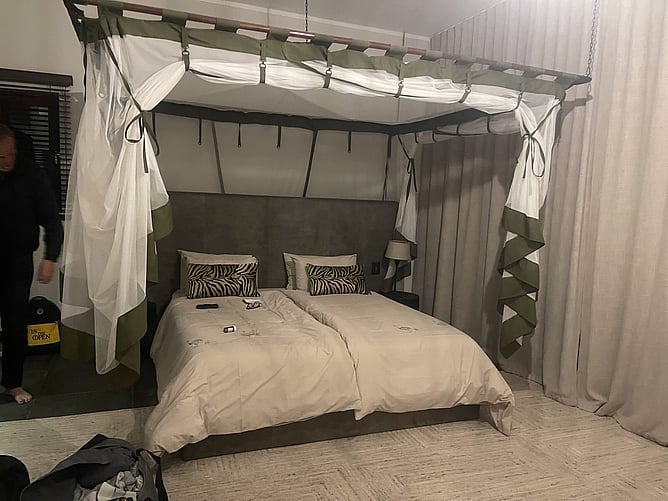
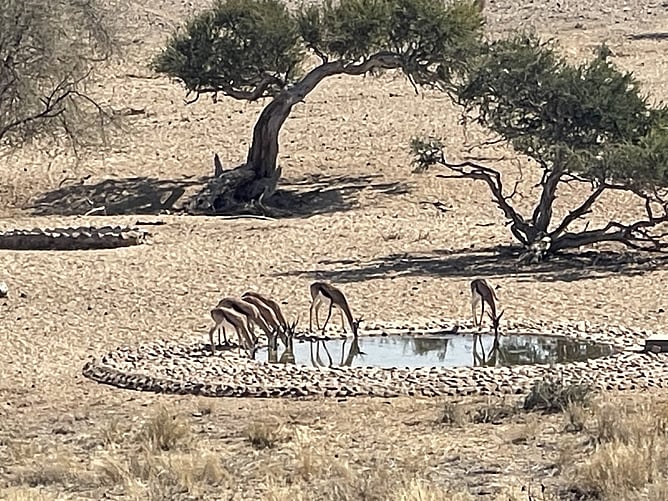
In the morning, we watched the waterhole after breakfast - zebra coming in . . .
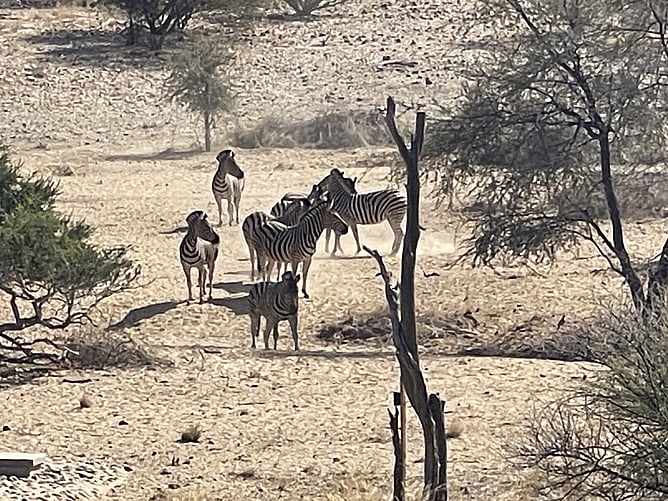
. . . and drinking.
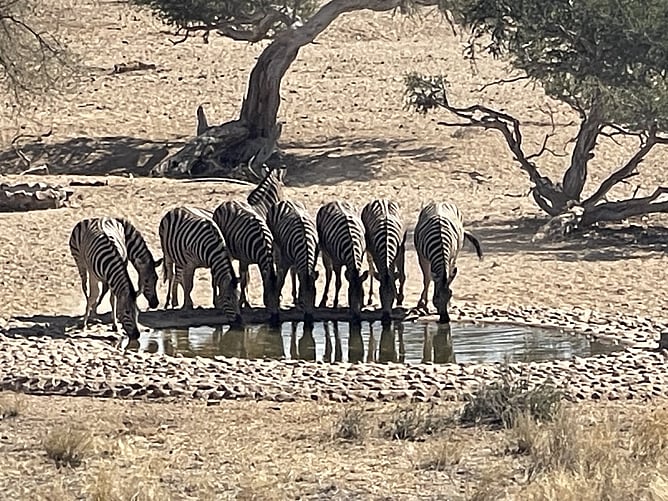
Then springbok are drinking.
They had a lot of good books as you looked out to the waterhole. I found this super interesting given our day before.
Trapped Beneath the Surface
A bornhardt (or inselberg, meaning "island mountain" in German) is a large granite dome that rises suddenly from a flat plain. Spitzkoppe is one of the world's finest examples. Here's how they form:
About 135 million years ago, molten rock (magma) rose from deep within the Earth because of tectonic activity.
Some magma erupted as lava, but some remained trapped several kilometres underground.
This trapped magma cooled very slowly, forming granite with large, visible crystals. These underground granite masses are called plutons.
Over millions of years, wind, rain, and weathering eroded thousands of metres of softer rock above and around the granite.
Because granite is much harder than the surrounding rocks, it remained standing while everything else wore away, leaving isolated domes like Spitzkoppe.
The granite then weathered in a special way called circumdenudation, where outer layers gradually peel away, rather like the layers of an onion. This creates the smooth, rounded shapes that are characteristic of bornhardts.
Why Spitzkoppe is so special: Spitzkoppe is not a volcano. It is the exposed heart of an ancient granite mountain that crystallised deep underground about 135 million years ago. Millions of years of erosion stripped away the softer rocks, revealing the spectacular granite domes we see today.
That is why Spitzkoppe appears to "grow" straight out of the Namib Desert—it is the resistant core of an ancient geological formation that has survived while the surrounding landscape has gradually disappeared.
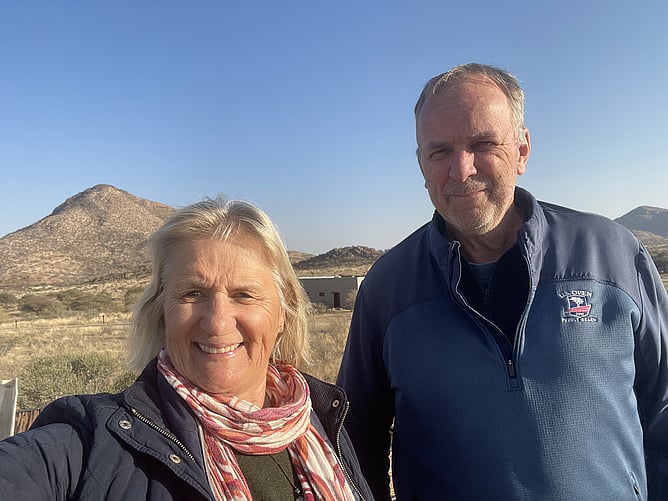
Then it was goodbye to the honeymoon suite and on the road again back to Windhoek. This from our roof, that peak in the middle is Hohenstein Mountain .