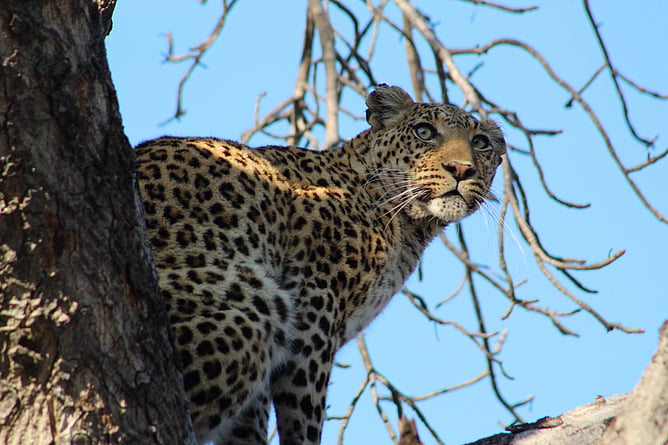
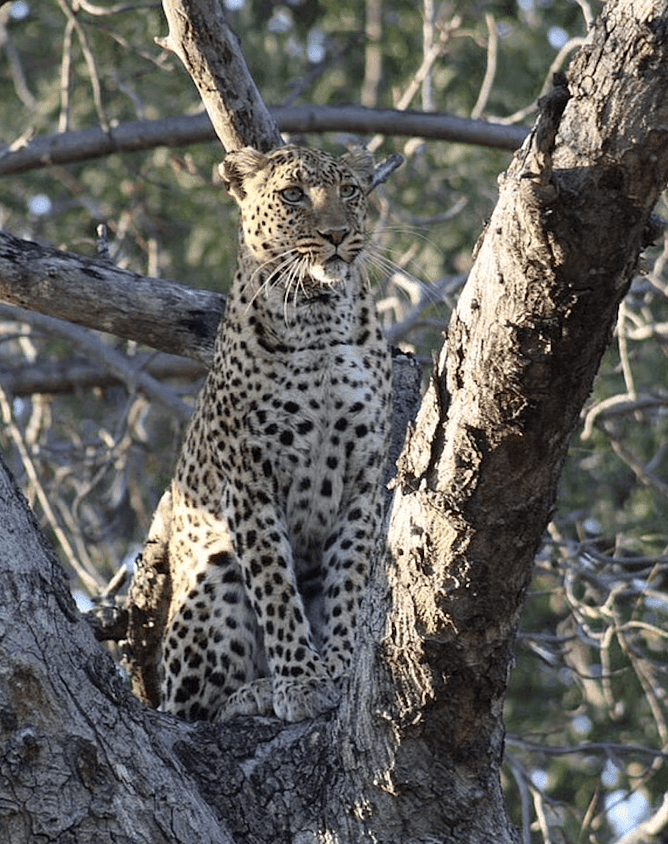
I am a kleptoparasite with these photos. These photos were taken by Gabrielle Brooks (a 19-year-old student from Stellenbosch), who was on safari with us at Camp Xakanaxa.
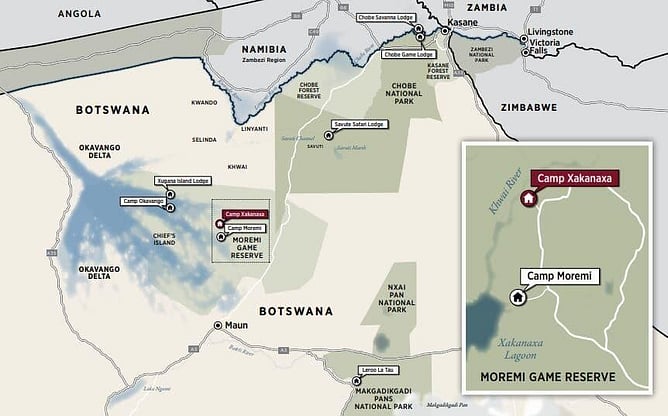
This is where we were.
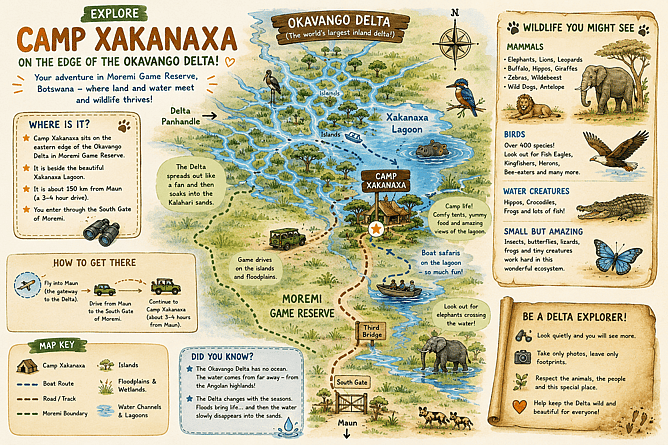
And an adult map below, though I prefer the one for young people. The adult one shows you the bordering countries. We were told there are more han 200 camps in Botswana for safaris. It is well controlled and big business.
A view from the plane flying in (from Camp Okavango). We made two stops.
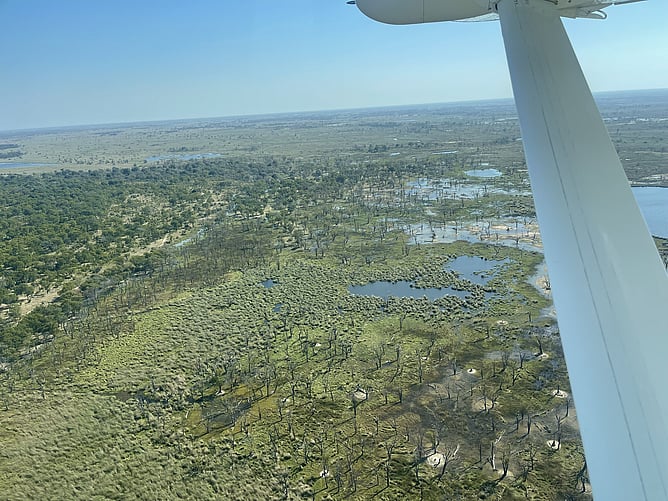
There is more water than usual. "The Okavango Delta is experiencing an exceptionally high flood season in 2026, and there are three main reasons why:
1. Heavy rain fell in the Angolan Highlands: About 95% of the water in the Okavango Delta comes from rain that falls in central Angola, not Botswana. The Cubango and Cuito Rivers carry that water over 1,000 km into Botswana. This year's rainfall in the Angolan Highlands was well above average, sending a much larger flood pulse downstream than usual.
2. Botswana also had excellent local rainfall: Normally, some of the incoming floodwater is absorbed by the dry Kalahari sands. This year, however, Botswana received good summer rains (especially early in 2026), so the ground was already wet. Because the soil was saturated, much more of the incoming Angolan water remained on the surface and spread across the Delta.
3. The flood arrived on an already wet Delta: The 2025 flood had already left many parts of the Delta wetter than usual. When the 2026 flood arrived, it encountered channels, lagoons, and floodplains that were already holding water. This allowed the flood to spread farther and reconnect areas that had been dry for several years.
For wildlife, it is excellent news:
🐘 Elephants can spread out over a much larger area.
🦛 Hippos have more permanent pools and channels.
🐟 Fish breeding improves because floodplains reconnect.
🐦 Waterbirds have many more nesting and feeding sites.
🌾 Wetland plants regenerate after several drier years."
One of the remarkable features of the Okavango is that the flood arrives during Botswana's dry winter. The rain falls in Angola during the summer, but it takes several months for the water to travel south. That's why visitors in June, July, and August often see the Delta at its wettest just when the surrounding countryside is dry.
The first sighting after Kedie picked us up from he airstrip was of impalas.
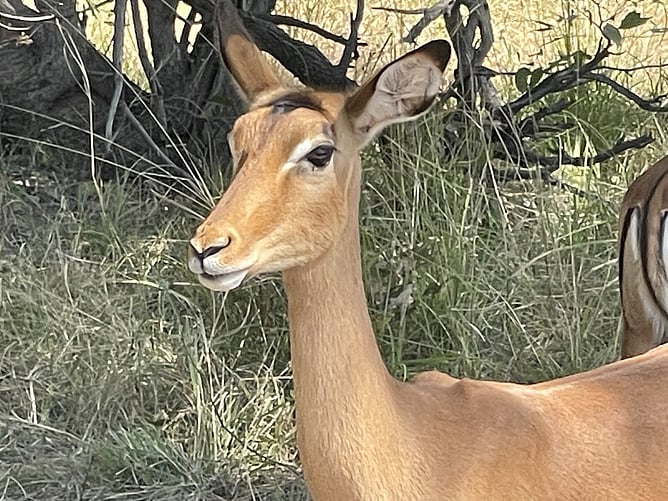
They are just so incredibly tidy-looking and perfect.
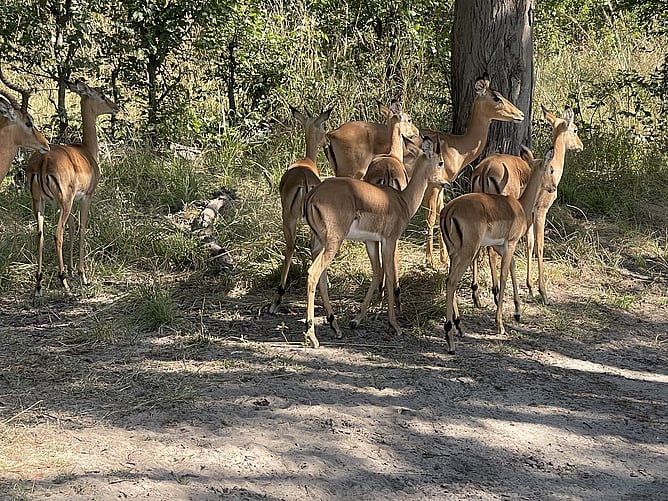
We saw our first elephant here, and then Kedie was radioed to say there were lions on the airstrip. (We went back, to catch the back half of a lion going into the bush. All talk and no photo.)
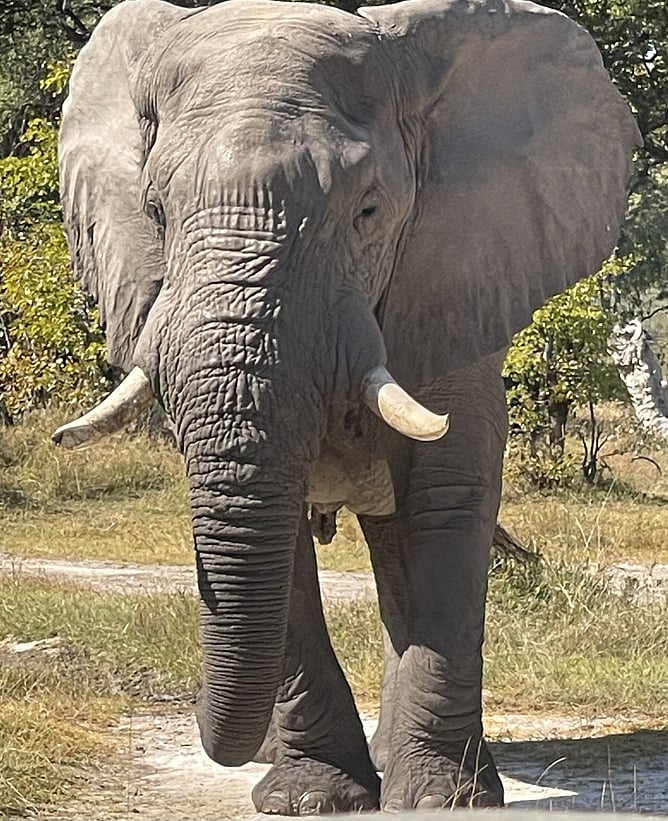
And another. Kedie says they love the water and there is lots of food for them here.
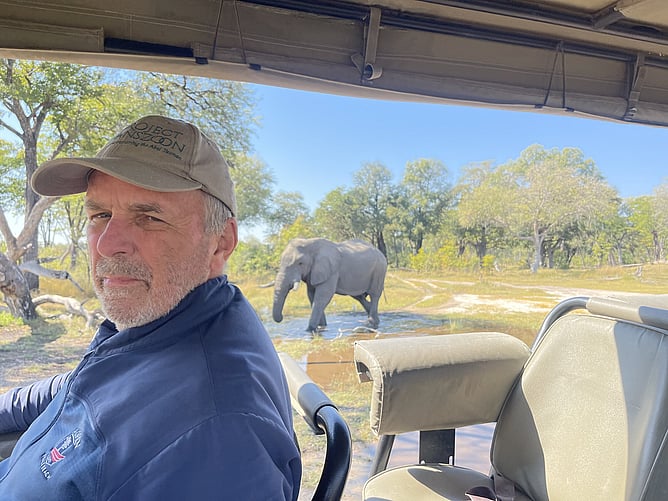
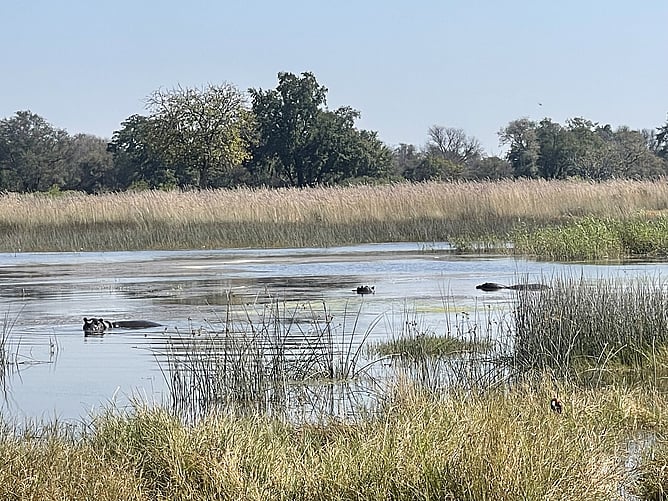
Then hippos. We haven't got to camp yet!
Then we do. We are welcomed at Camp Xakanaxa.
These warthogs live under the swimming pool at Camp Xakanaxa.
After we've setled in at camp (with lunch), we go out for an afternoon drive.
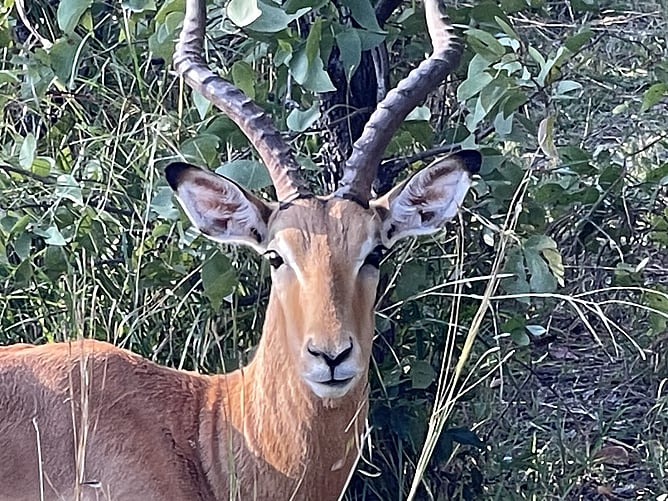
A male impala. "The male impala is one of Africa's greatest athletes! Only males grow the beautiful curved horns they use to compete with rivals during the breeding season. They can run at speeds of up to 80 km/h and leap 3 metres high and 10 metres long to escape predators such as lions and leopards. During the breeding season, a male protects a group of females called a harem, using displays, scent marking, and horn-wrestling to defend his territory. Impalas eat grasses, leaves, flowers and fruit, and their sharp eyesight, large ears and incredible agility help them survive on the African savanna. Young impalas are called lambs, and healthy impala populations are important because they provide food for many of Africa's top predators, helping to keep the ecosystem in balance."
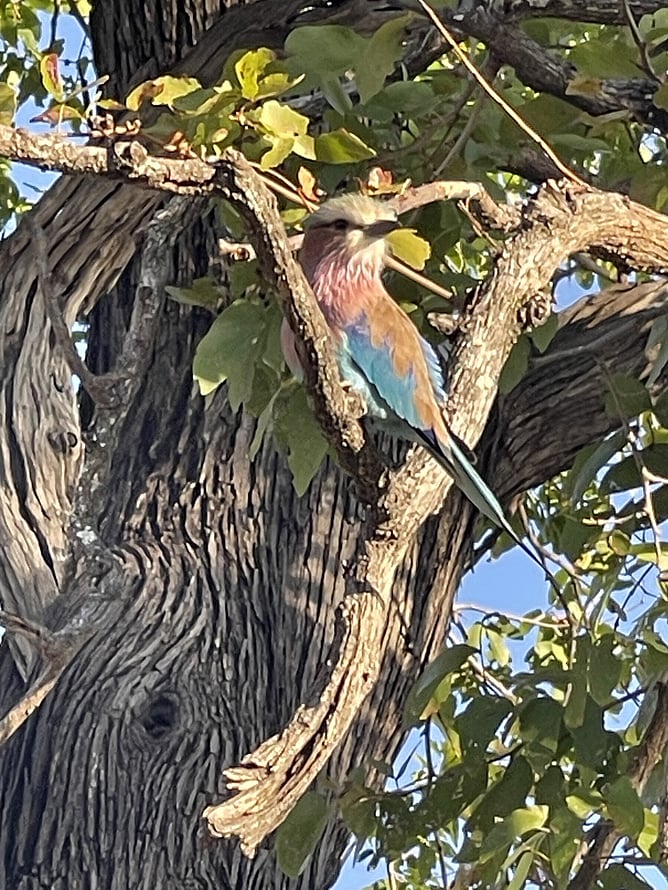
A perfect place for a Lilac-breasted roller.
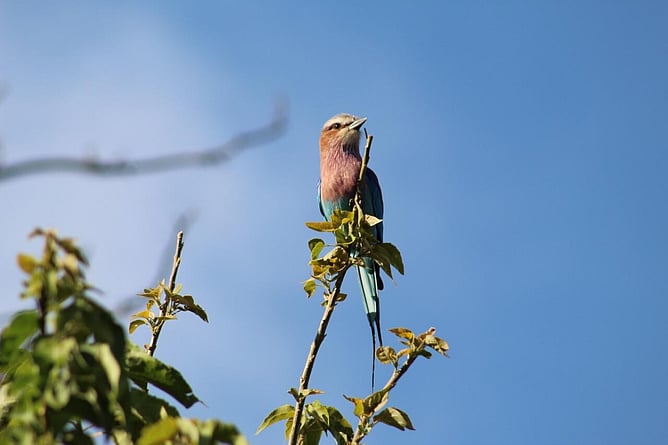
"The Lilac-breasted roller is one of Africa's most colourful birds, with brilliant feathers in shades of lilac, turquoise, blue and green. It is often called the "rainbow bird of Africa" because of its spectacular colours. This amazing bird catches insects, lizards, frogs and even small snakes by swooping down from a tree or fence post. During courtship, the male performs breathtaking aerial displays, rolling, diving and twisting through the sky—this is how the roller got its name!
Although it looks brightly coloured, its feathers help it blend surprisingly well into the dappled light of the African bush. The Lilac-breasted roller can be found across much of eastern and southern Africa, including Namibia, Botswana and South Africa."
We see a family of elephants, with a baby. "In Botswana, female elephants live together in close family herds led by an experienced matriarch. These herds usually include mothers, daughters, sisters and young calves, and they stay together for life, helping to protect and care for one another. Male elephants, however, leave their family when they are about 12–15 years old. Young males often form small bachelor groups for a few years, but as they mature, they spend much of their time alone. Adult bulls usually join female herds only during the breeding season, especially when a female is ready to mate. Afterwards, they return to living mostly on their own or occasionally with other males. This social system helps elephants find mates while reducing competition and keeping family groups safe."
This is an African scops owl.
Sundowner drinks are at the hippo pool.
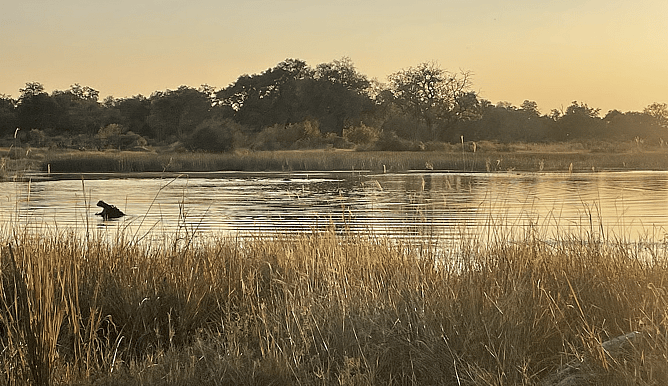
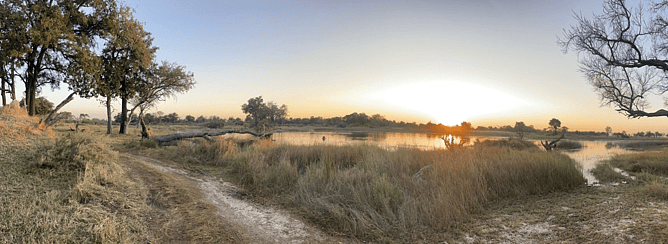
We see the hippos in action. "The hippopotamus is one of Botswana's largest and most powerful animals, spending most of the day resting in rivers, lagoons and the waterways of the Okavango Delta to keep cool under the hot African sun. Even though hippos look slow and gentle, they can run at speeds of up to 30 km/h on land and are excellent swimmers and walkers underwater. At night, they leave the water to graze on grass, sometimes travelling several kilometres in search of food. Hippos live in groups called pods, led by a dominant male that protects his territory. They play an important role in keeping river ecosystems healthy, but they are wild animals and can be very dangerous if disturbed, so they should always be admired from a safe distance."
We see a Rock monitor lizard. "The rock monitor is Africa's second-largest lizard and is commonly found in rocky hills, savannas and dry woodlands across Namibia and Botswana. It can grow up to 2 metres long, although most are smaller. Despite its powerful claws and muscular body, it is usually shy and will run away if disturbed. Rock monitors are excellent climbers and diggers, using their strong claws to search for insects, eggs, rodents, birds and even small reptiles. Their forked tongue flicks constantly to pick up scents, helping them locate food much like a snake. They play an important role in keeping ecosystems healthy by controlling populations of small animals and cleaning up carrion."
We didn't see a Nile monitor lizard. Here are the facts about it in case you see one. "The Nile monitor is Africa's largest monitor lizard and is closely linked to water. It is commonly found along rivers, lagoons and wetlands such as the Okavango Delta. Adults can grow to over 2 metres long and are powerful swimmers, using their long tails to move through the water. Nile monitors eat almost anything they can catch, including fish, frogs, crabs, birds, eggs, snakes and small mammals. They are excellent climbers and often bask on riverbanks before diving into the water if threatened."
Then it was back to camp, for a shower, drinks and dinner!
The next morning starts at 6am, breakfast, and then the morning game drive (with bush baby again happily!)
A spectacular start.
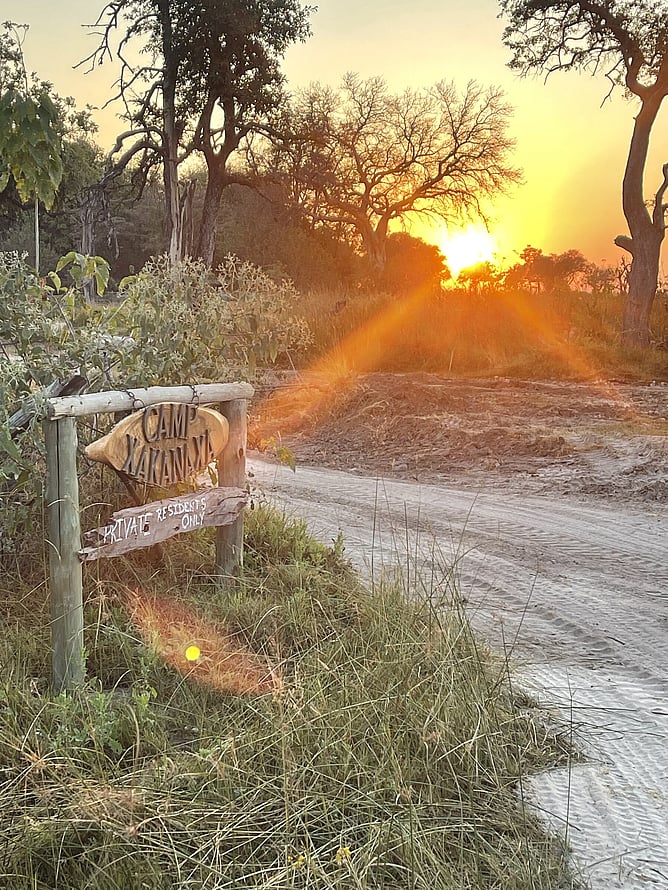
Pretty much straight away, the radio calls Kedi to say that lions are crossing.
They made it to the island. They waited for 10 minutes. Maybe talked amongst themselves.
Then one leads on the next crossing. Were they looking out for crocodiles? There is safety in numbers crossing.
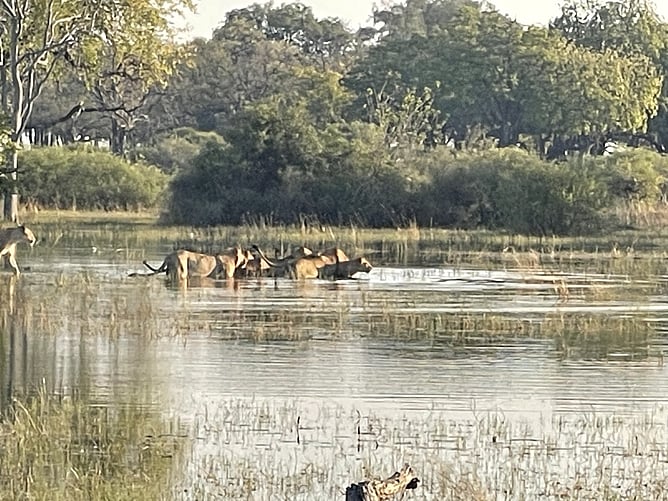
They all made it.
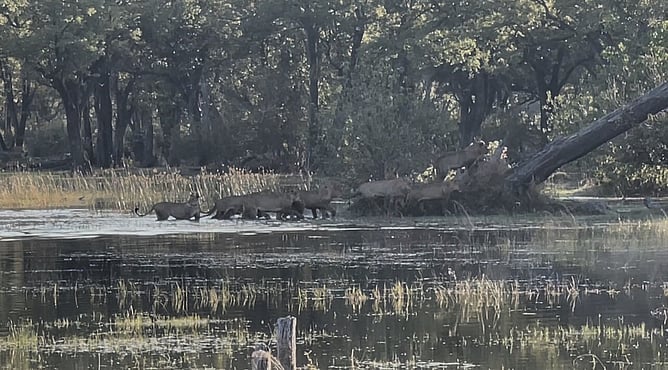
And then they were gone.
We looked for them the next day, but we nor any of the others could find them.
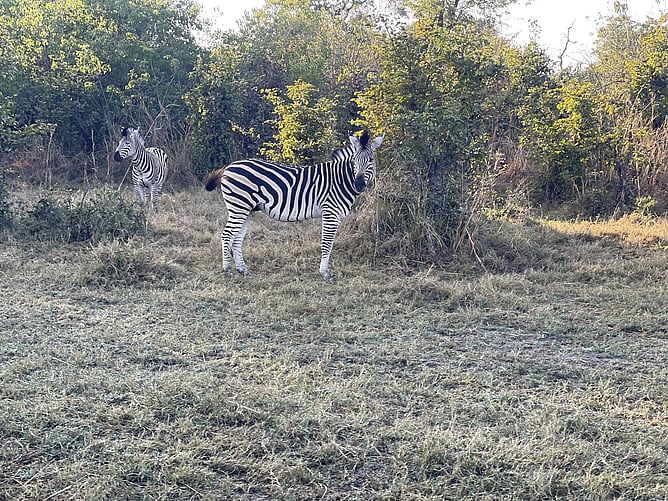
We see zebra.
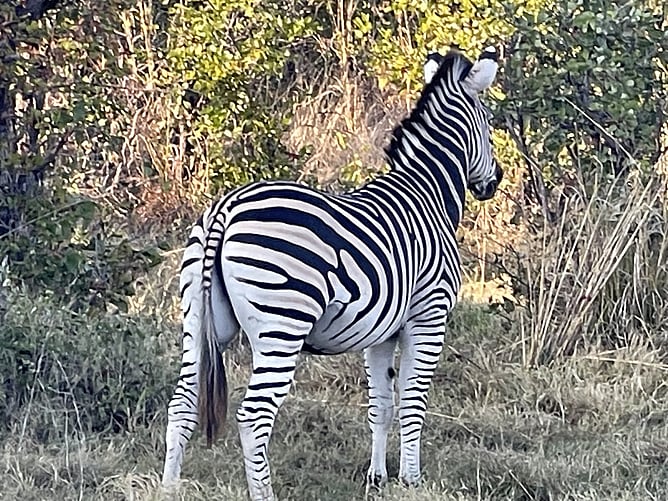
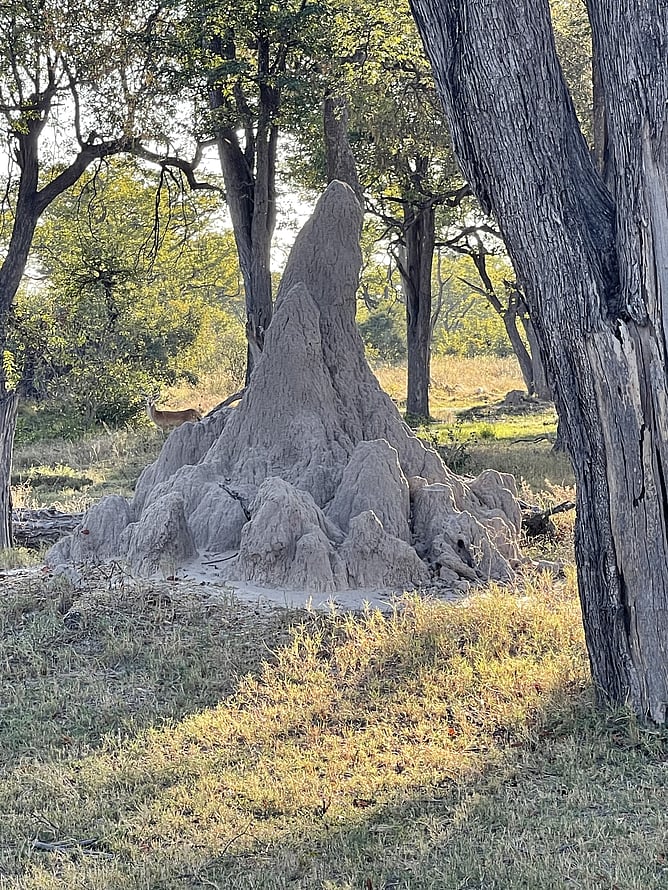
A beautiful termite mound.
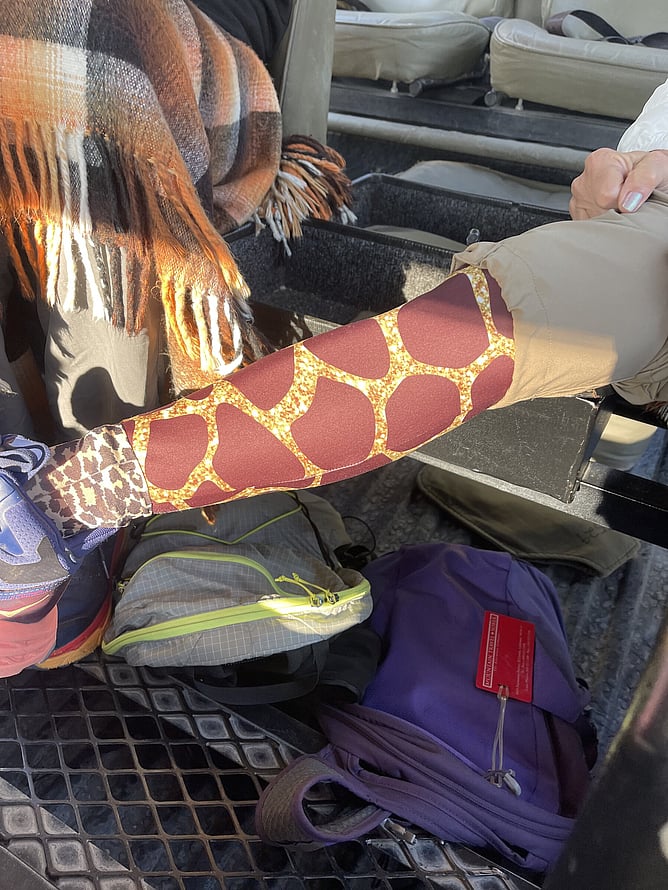
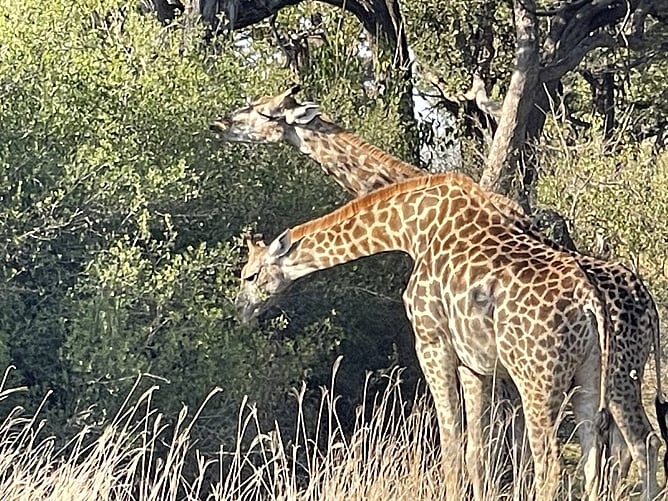
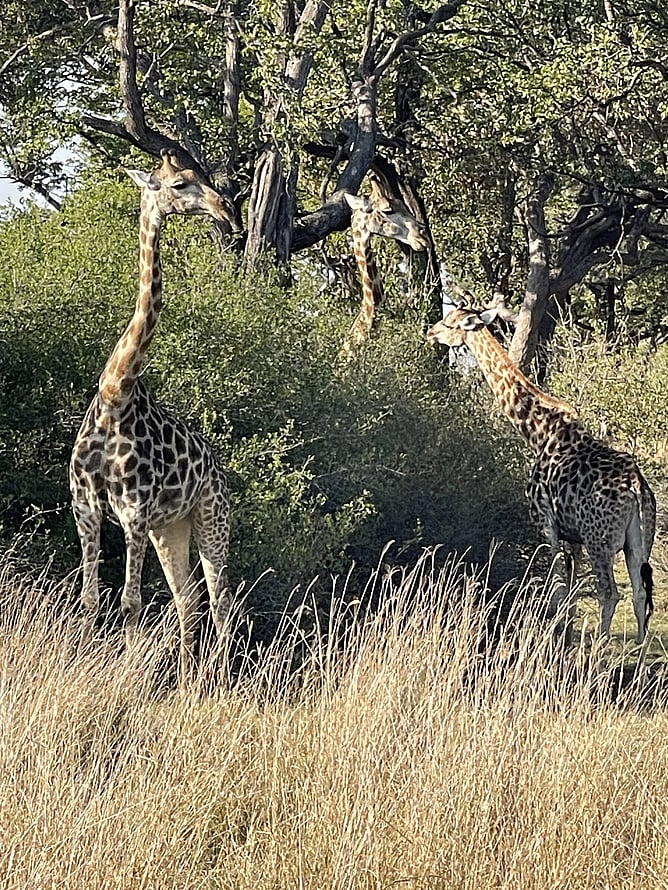
Vikki, in our jeep, shows us the socks she is wearing. Yesterday she had lion socks on, and we saw lions. We are sure we will see giraffes.
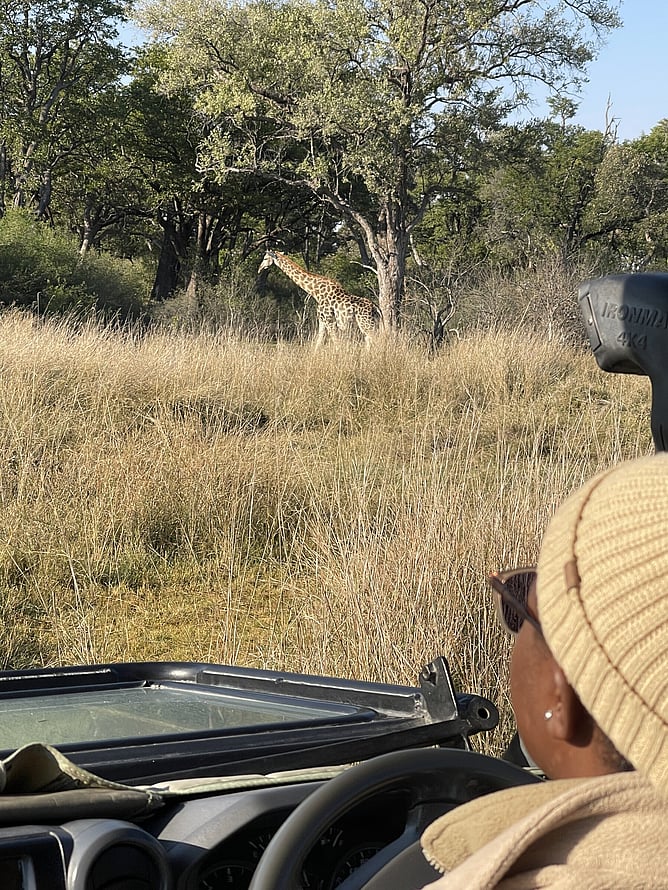
And no kidding. Here they turn up.
Baboons.
Mongoose - "Mongooses are clever, curious mammals that live across much of Africa, including Botswana and Namibia. Most mongooses live in family groups where everyone helps to watch for danger, find food and care for the young. They spend their days searching for insects, spiders, scorpions, eggs, small reptiles and fruit, using their sharp noses and quick reflexes to find meals. Some species are famous for taking on venomous snakes, although they usually prefer easier prey and only fight when necessary. A mongoose will often stand on its back legs to scan the surroundings while the rest of the group feeds, giving an alarm call if it spots a predator. Their teamwork, intelligence and bravery make mongooses one of Africa's most fascinating small mammals."
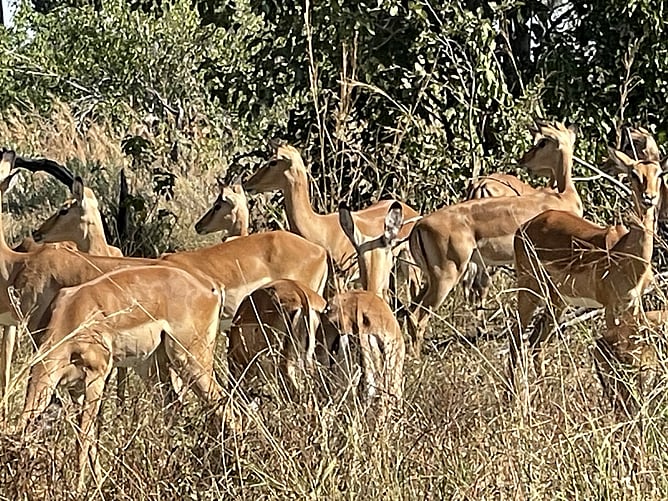
Impala.
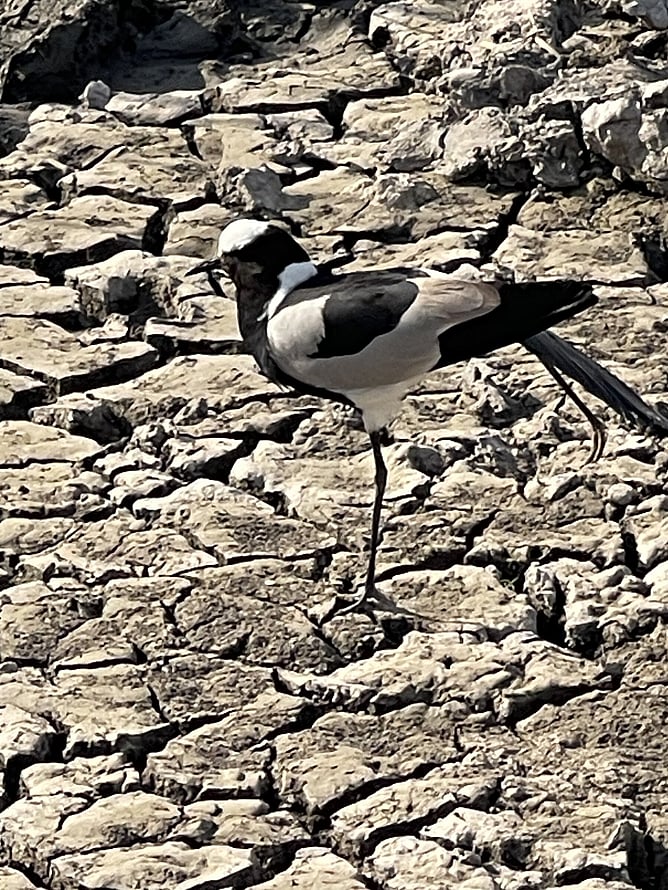
Lots of birds about. This is a Pied Avocet. It is one of Africa's most elegant wading birds. Here are the features that identify it:
⚫⚪ Bold black-and-white plumage with a white head and black patches on the wings.
🪶 Very long blue-grey legs, perfect for wading in shallow water.
🥄 A long, thin bill that curves upwards, which is its most distinctive feature. It uses this bill to sweep from side to side through shallow water to catch tiny insects, crustaceans, worms, and other aquatic animals.
✨ A graceful, slender body with long pointed wings.
Fun facts for young people:
🌊 They "vacuum" the water by swinging their curved bill from side to side!
👶 Chicks can feed themselves almost as soon as they hatch.
🦅 If a predator comes near the nest, the parents pretend to have a broken wing to lure it away.
🌍 They are found across Africa, Europe, and parts of Asia.
🪶 Their curved bill is specially adapted for catching tiny animals that other birds often miss.
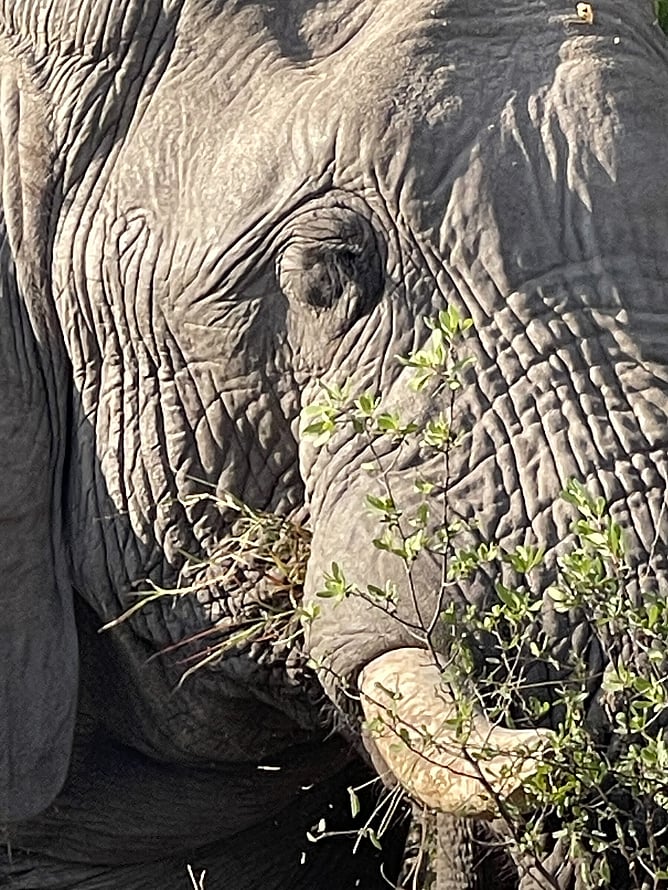
We meet the same old bull elephant we met a day ago.
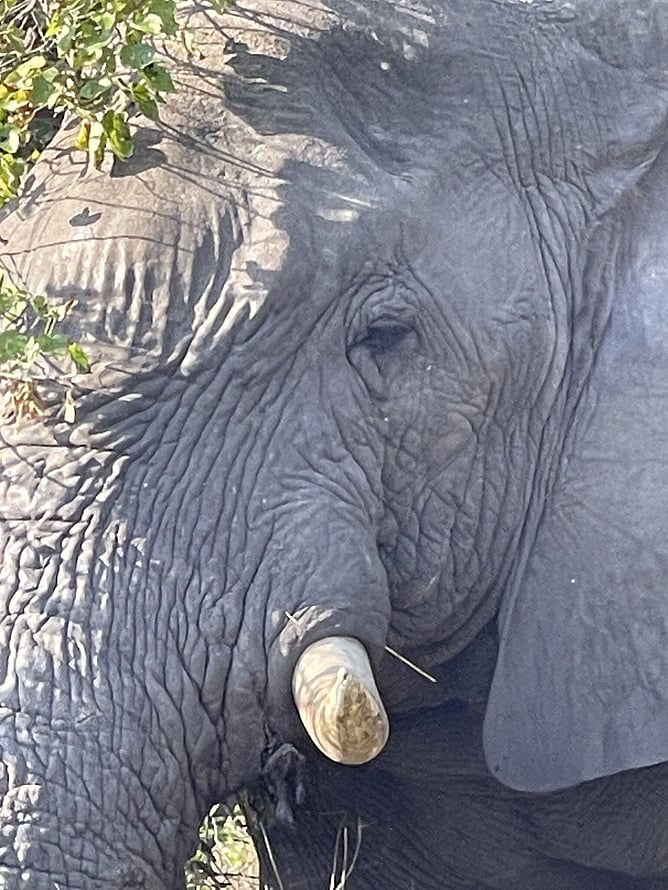
We recognise him from the broken tusk.
Then I spot a bird's nest.
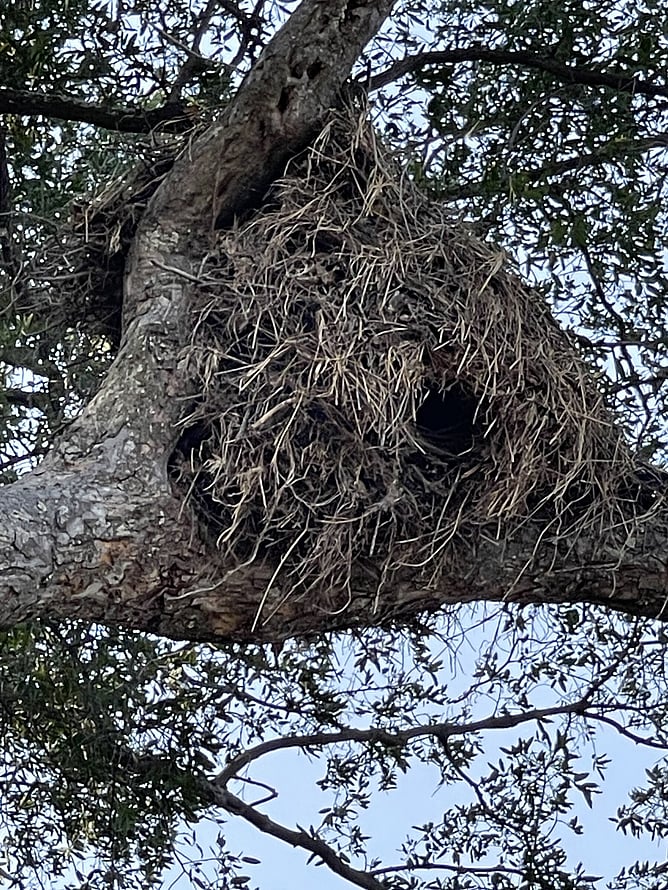
I didn't know what bird. I asked ChatGPT. ChatGPT says: "The nest is very large and bulky, built from hundreds of sticks, reeds, and grasses.
* It has a distinct side entrance, which is one of the Hamerkop’s trademarks.
* It is wedged securely into the fork of a large tree, another favourite nesting location.
* Hamerkop nests often look almost like a small haystack or hut rather than an open cup nest."
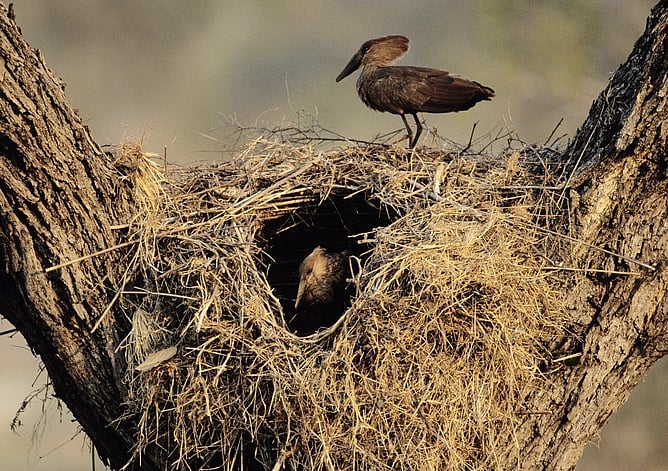
This is the hamerkop.
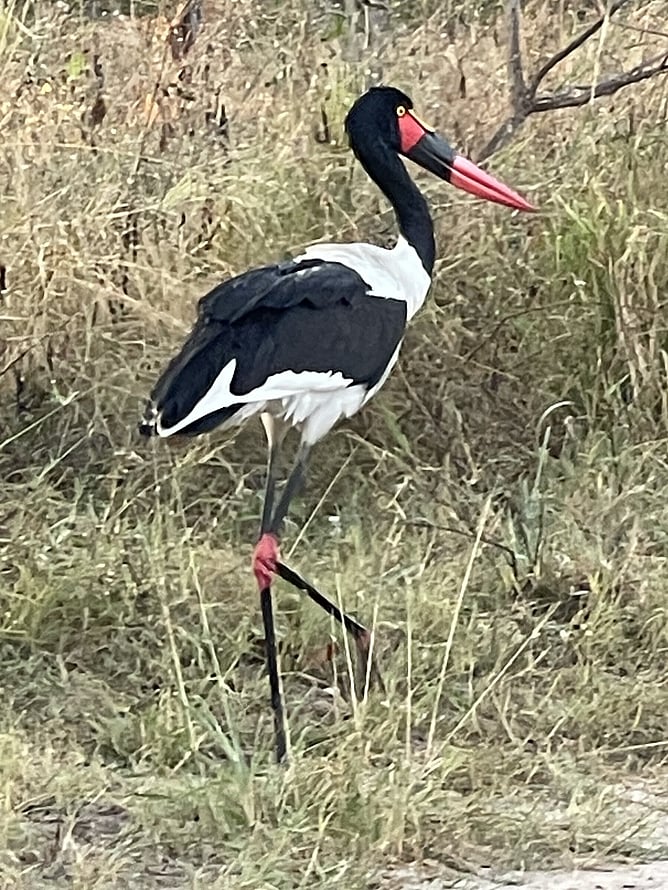
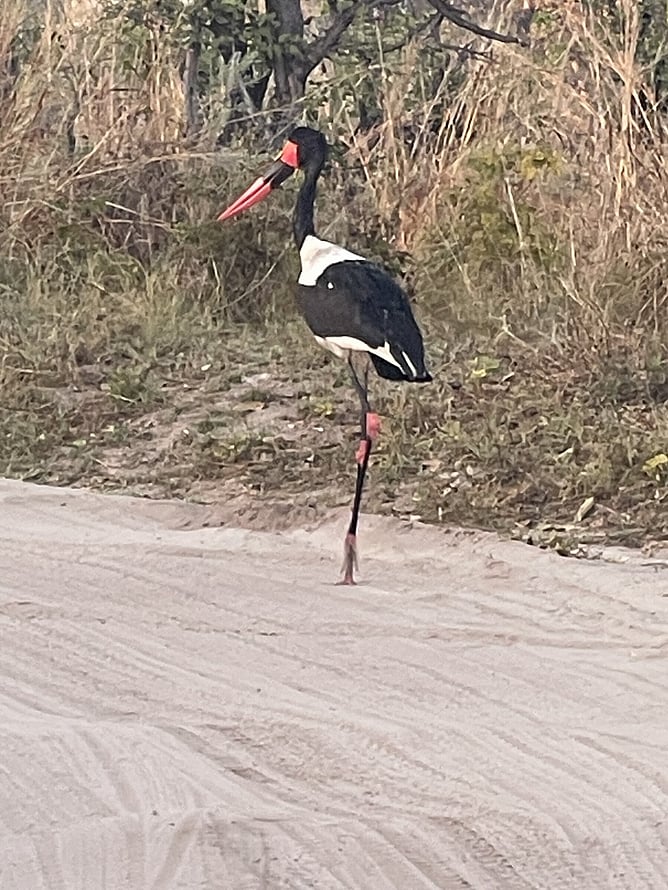
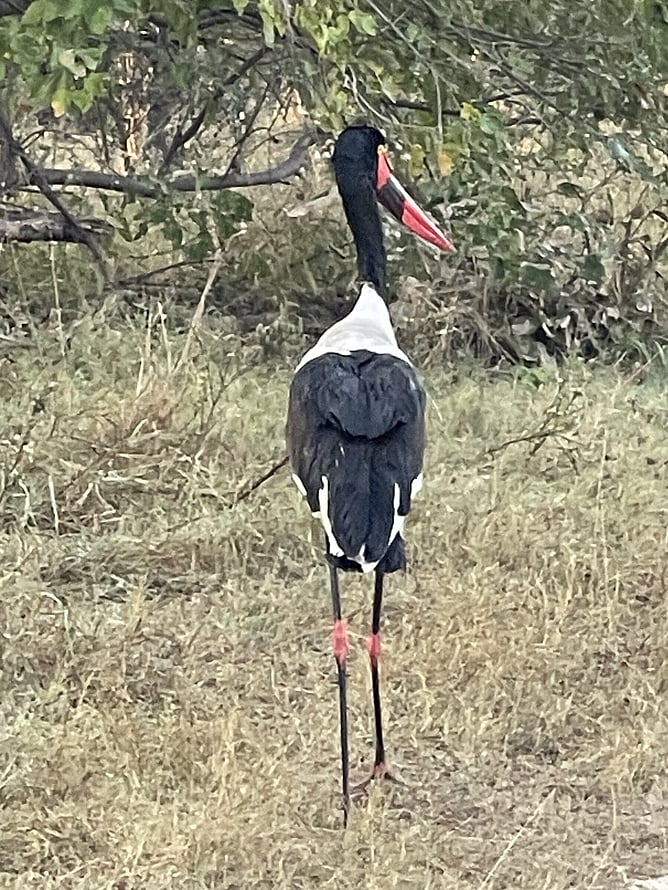
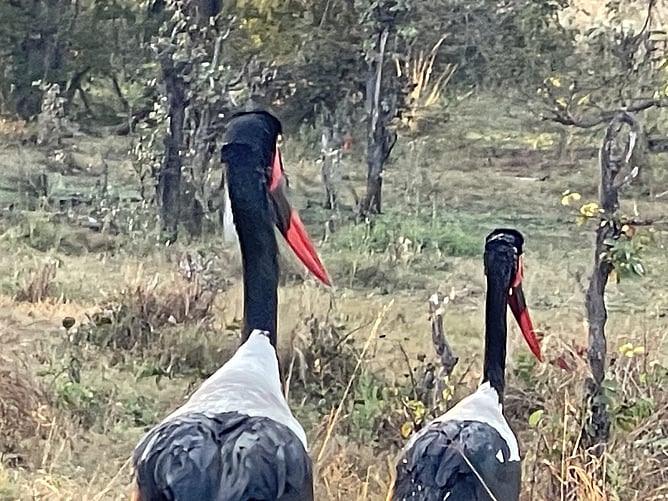
Then we saw more birds - the Saddle-billed stork.
"Saddle-billed storks live in wetlands, rivers, lakes and floodplains across Africa. The Okavango Delta is one of the best places in the world to see them because there is plenty of shallow water filled with fish and frogs.
One of Africa’s tallest birds, about 1.5 metres tall—almost as tall as some 10-year-olds!
Wingspan of up to 2.7 metres.
Can weigh 5–7 kilograms.
This stork is a patient hunter. It slowly walks through shallow water looking for:
Fish 🐟
Frogs 🐸
Crabs 🦀
Snakes 🐍
Small birds
Lizards
It grabs its prey with its long, powerful bill.
Saddle-billed storks usually stay with the same partner for many years. They build huge stick nests high in large trees, often close to rivers or floodplains. The parents work together to raise their chicks.
The bright red “saddle” on its bill gives this bird its name.
It can stand perfectly still for long periods before suddenly catching its prey.
It is an excellent flyer and soars high above the Delta using warm air currents.
Females usually have bright yellow eyes, while males have dark brown eyes—the bird in your photo has yellow eyes, so it is likely a female.
Healthy wetlands like the Okavango Delta are essential for saddle-billed storks to survive.
Saddle-billed storks are a sign of a healthy wetland. If there are plenty of fish, frogs and clean water, these magnificent birds can thrive. Protecting wetlands protects many other animals too.
Fun fact: If you ever see a saddle-billed stork take off, listen carefully—you’ll often hear the whoosh of its enormous wings as it lifts into the air!
Leopard - Kedi had been following leopard tracks and talking to another guide. Finally she spotted it - a long way away. But she took us much closer.
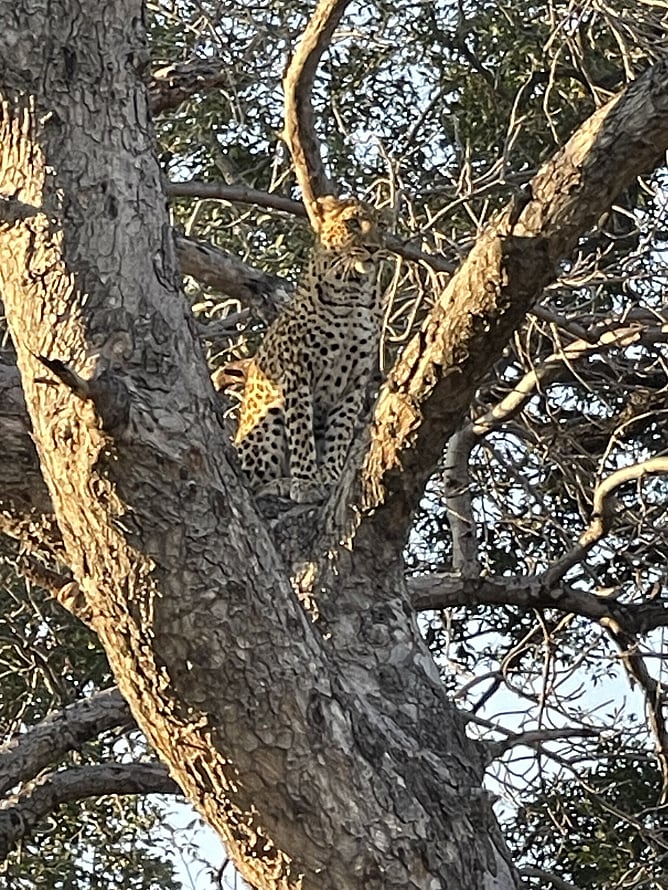
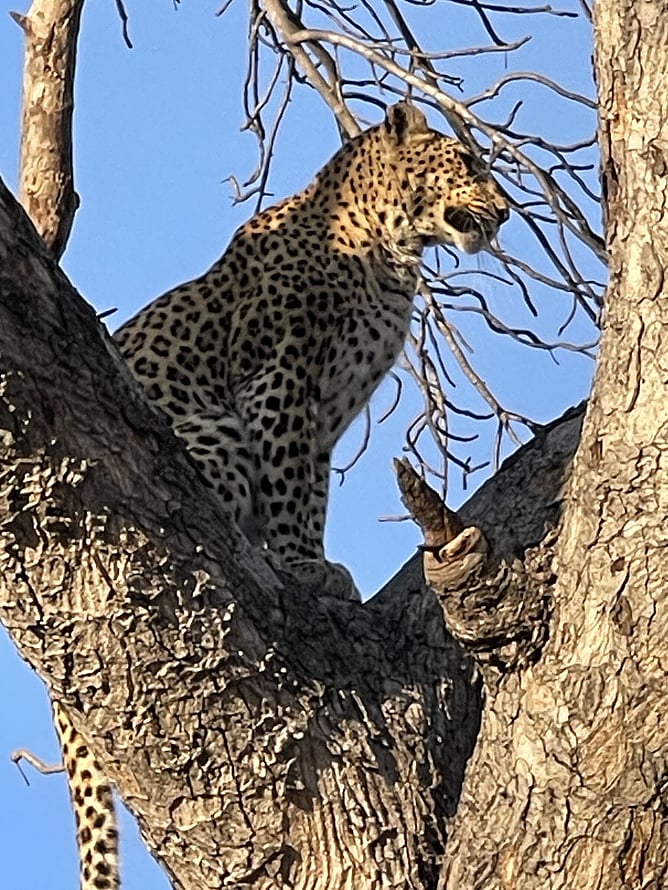
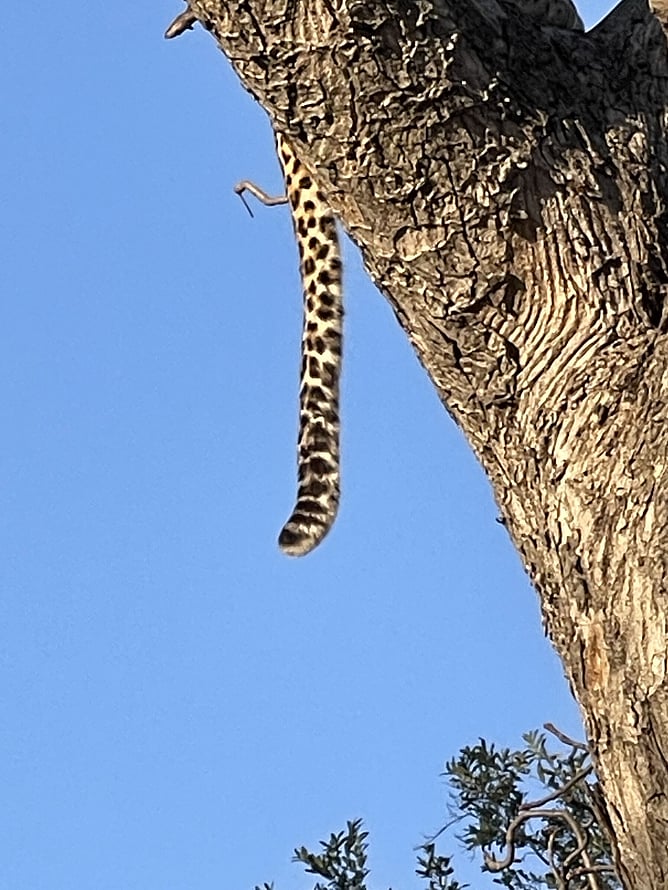
These next ones were taken by Gabrielle - Yo kleptoparasite. That's her with the camera.
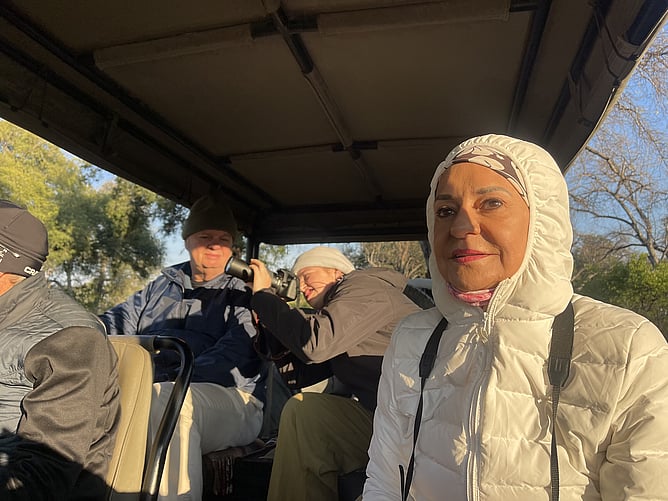
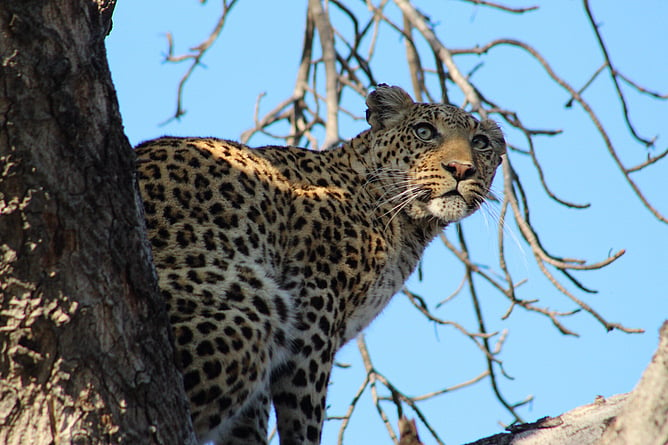
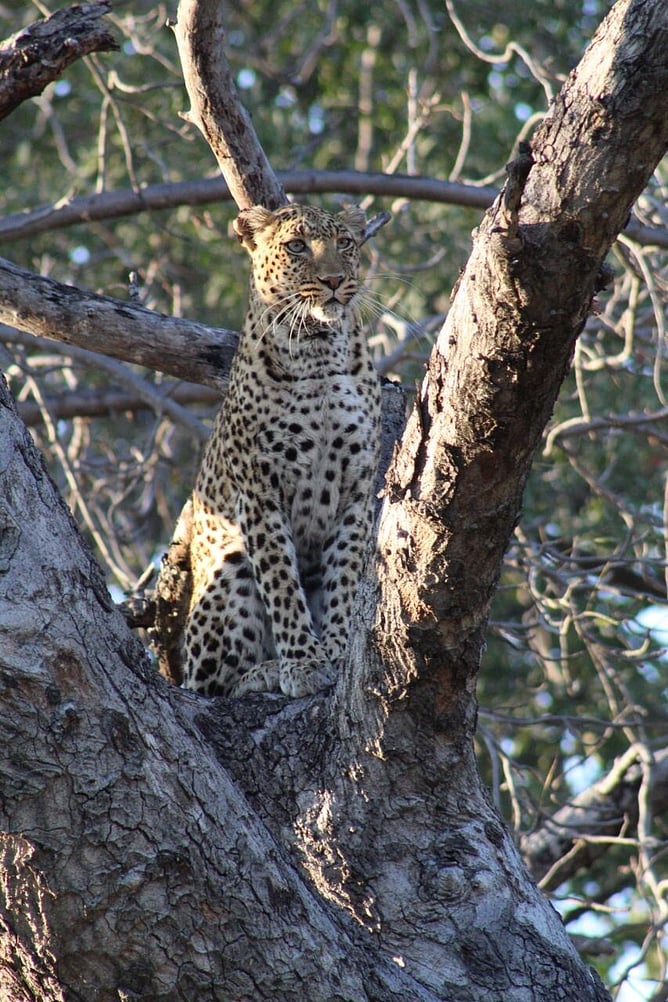
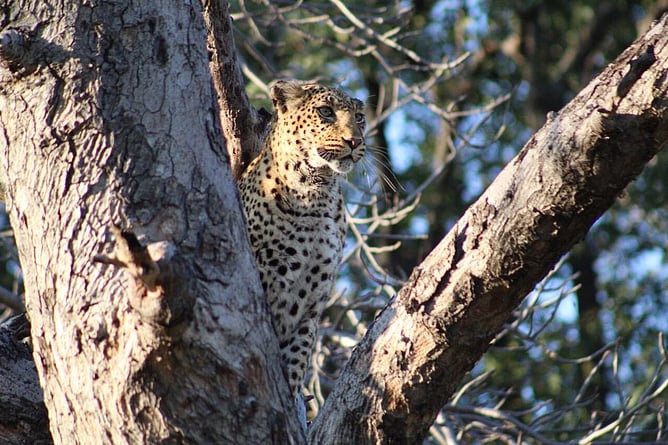
Thank you, Gabrielle. Your photos are clear and wonderful.
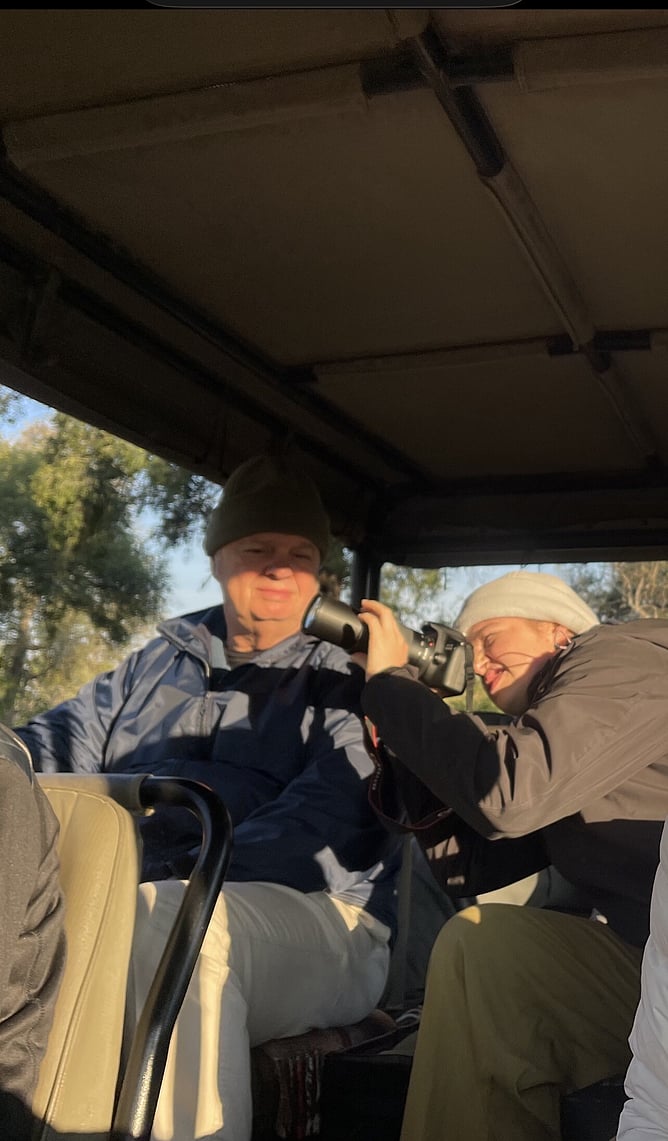
Then we saw the elephant with half a tusk again.
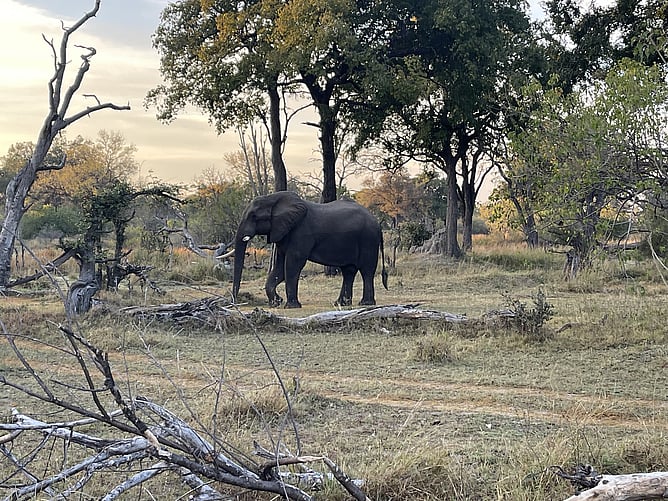
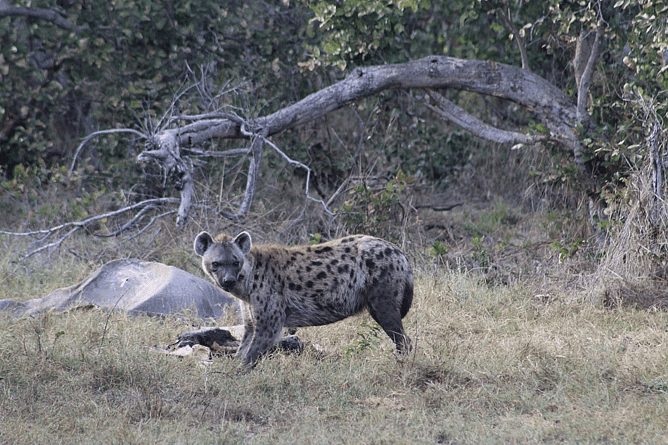
And a hyena (photos by Gabrielle).
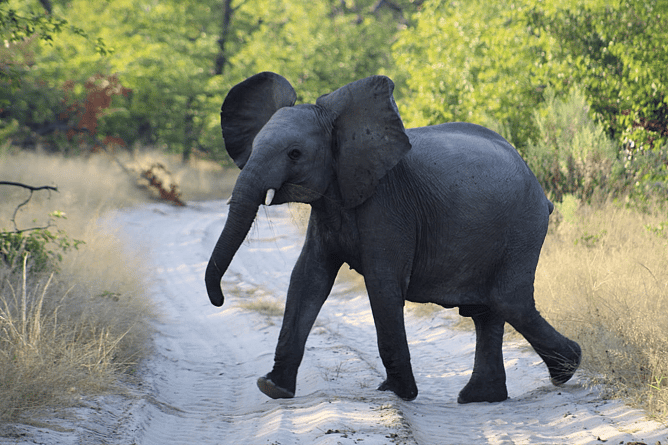
And a baby elephant.
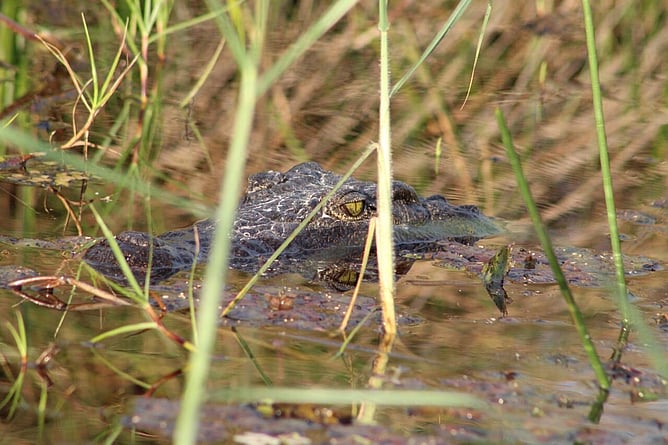
The afternoon that day was a boat ride - crocodile spotting.
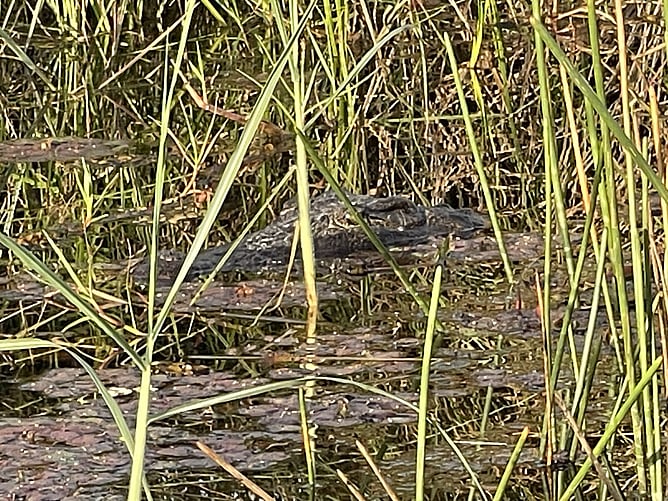
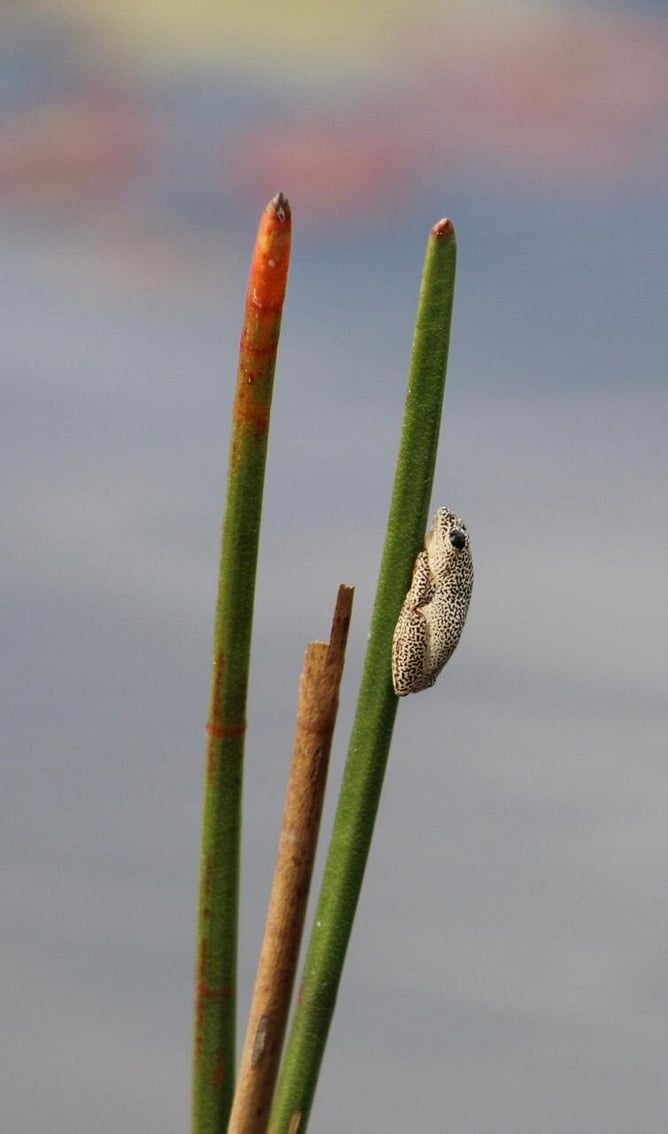
Another frog.
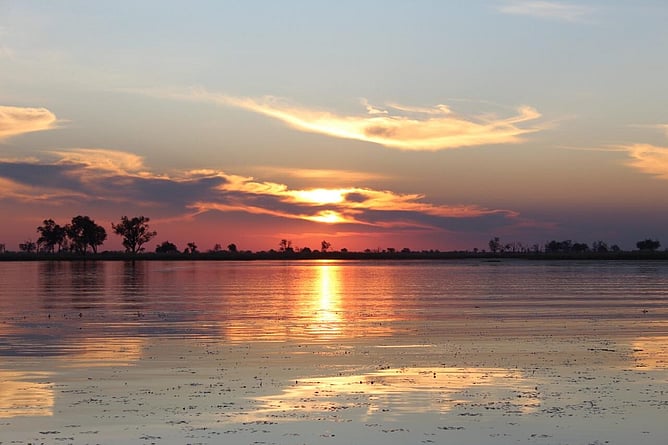
Then the sunset.
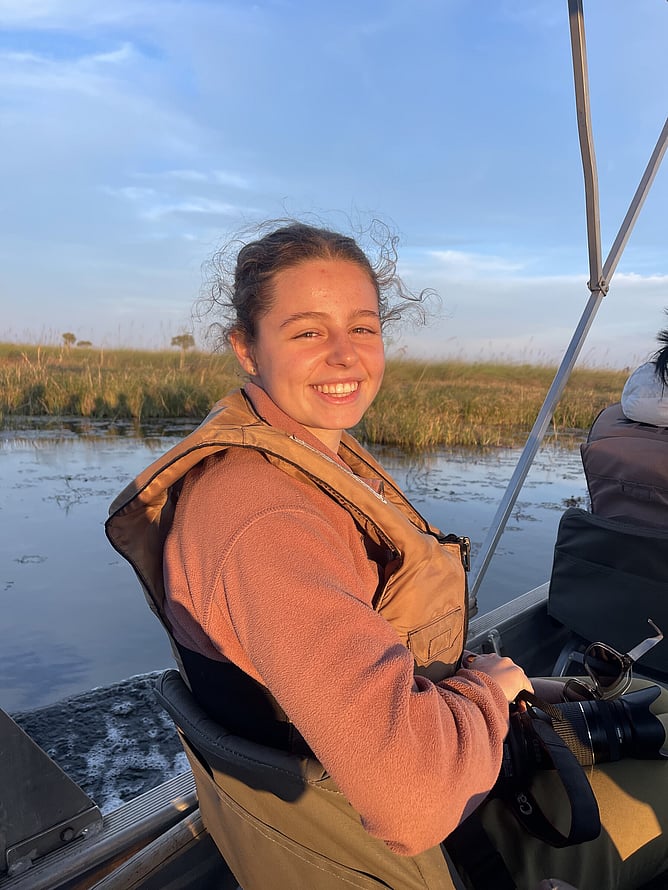
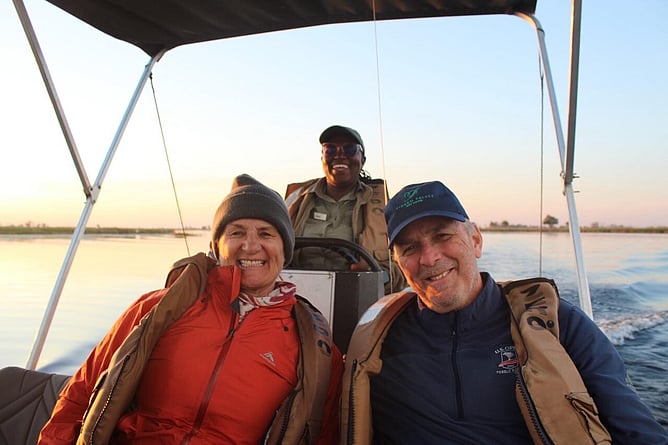
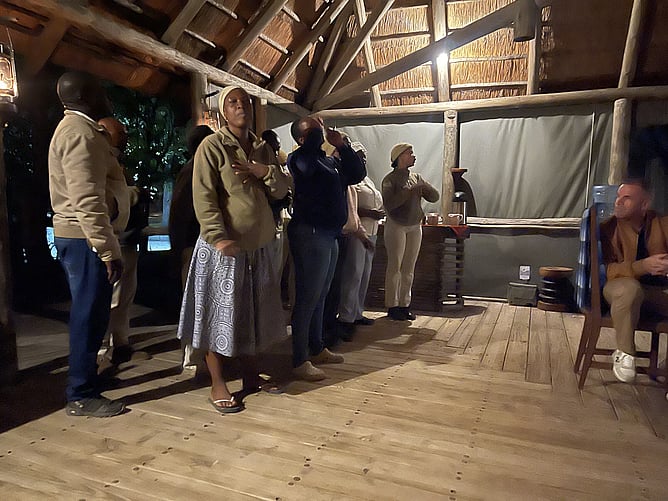
Then a farewell at night.
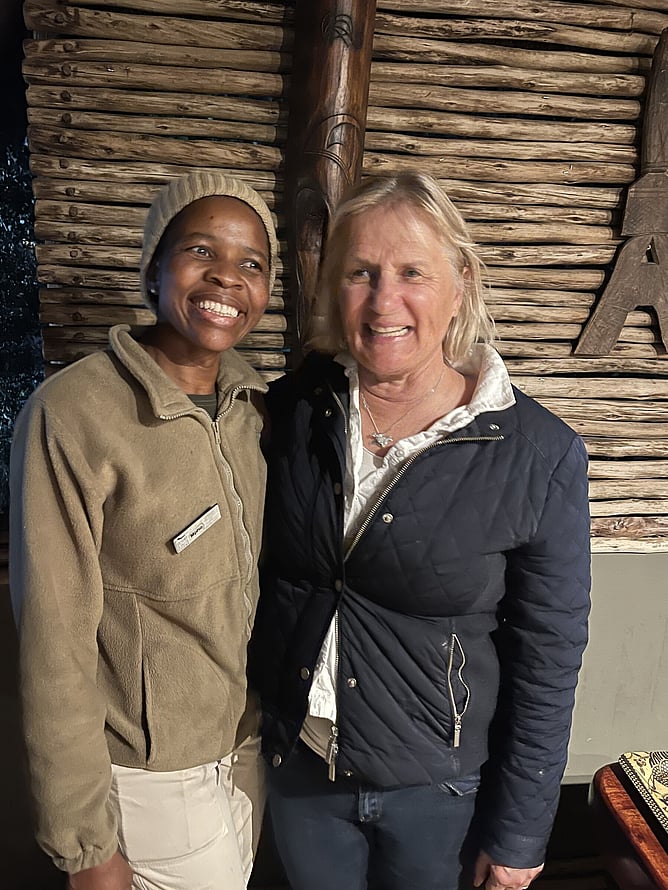
This is Mpho - from Serowe, where we went next.
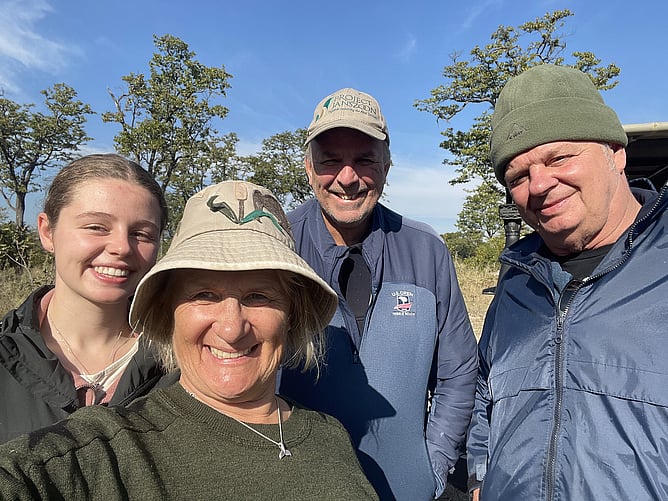
We say goodbye to our new friends.
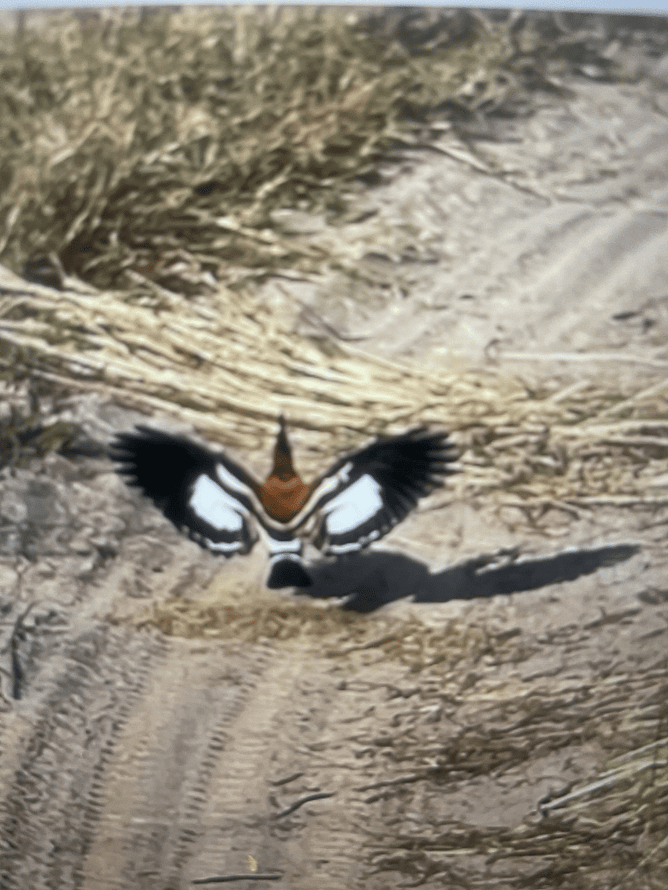
On the way to the air strip the next morning, two more bird sightings - an African Hoopoe:
👑 Long, erect crest that it raises when excited or alarmed
⚫⚪ Bold black-and-white wings, which are very striking in flight or when spread
📍 Long, slightly curved bill used to probe the ground for insects
This bird often lands on tracks and open ground like in your photo, searching for:
Beetles
Grubs
Ants
Caterpillars
Other insects hiding beneath the soil
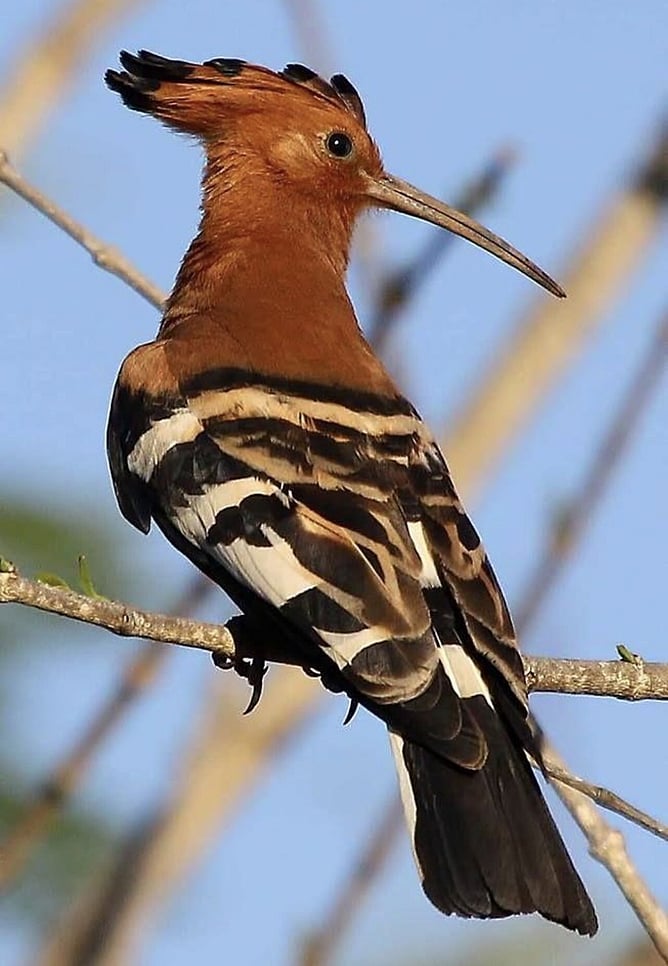
That was ChatGPT. "When startled, it spreads its wings and raises its crest, creating a dramatic display." That is what we saw.
And Southern Ground Hornbill.
"It is one of Africa’s most striking birds and a wonderful sight to see.
🖤 Large black body with long, sturdy legs.
❤️ Bright red bare skin on the face and throat (especially vivid in adults).
🐦 Massive black bill with a slight casque (helmet-like bump) on top.
🚶 Often seen walking rather than flying, searching for food across grasslands and open woodland.
Ground hunters: They spend most of the day walking, catching insects, snakes, lizards, frogs, mice, and even small tortoises.
Family teams: They live in family groups of up to a dozen birds that work together to defend their territory and raise chicks.
Very slow breeders: A pair usually raises only one chick every few years, making them vulnerable if adults are lost.
Amazing voices: Their deep, booming call can be heard up to 3 kilometres (2 miles) away on a still morning.
This species is considered vulnerable in many parts of Africa because of habitat loss, collisions with vehicles and power lines, and persecution in some areas."
And that was our two safaris done. So fabulous. Thank you, Okavango Delta, guides and all those people who made our trip.