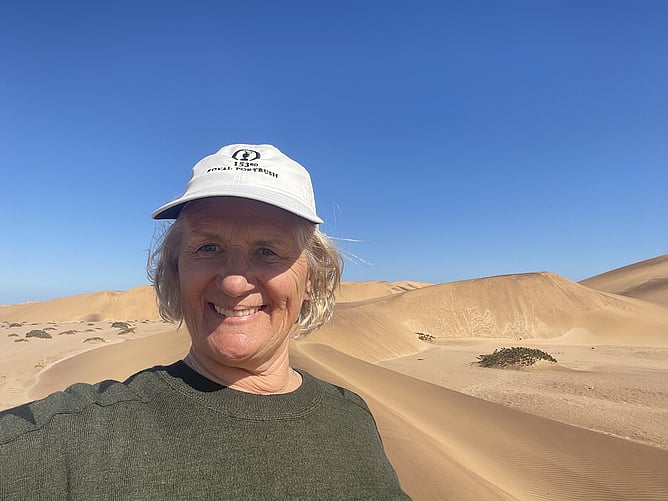
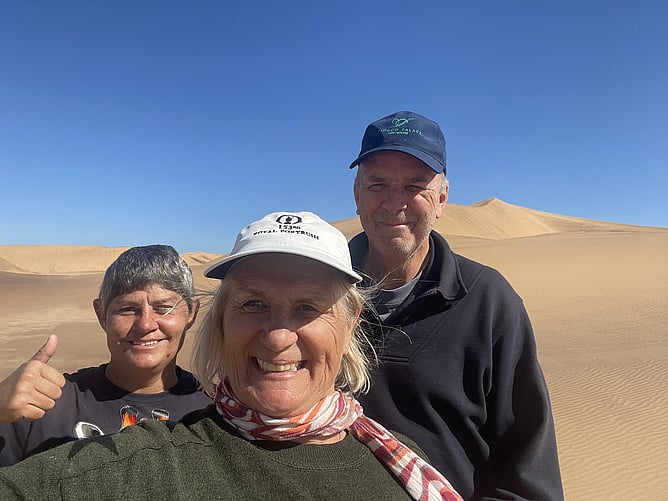
We had met Chantal at the talk about hydrogen power in Namibia at the Museum education centre. She got up at the meeting and said she would offer free Living Desert tours to anyone there. This was in response to discussion about putting hydrogen plants in certain places in the desert.
She said," The desert is living, not a place to put just anything." She quoted her trainer, saying she had been leading Living Desert tours for 11 years. She told us she was trained by Tommy Collard. He has since died, and "in his memory and my love for the desert, I will offer free tours for education." She said he would turn in his grave at the thought of them taking over the desert with solar panels.
On that note, I loved her attitude. There were about 75 people there, including Government represetaives, and she was that bold! So I went up to her after the hydrogen talk and booked a tour. We said we would pay though. We booked it for Sunday. That was Tuesday.
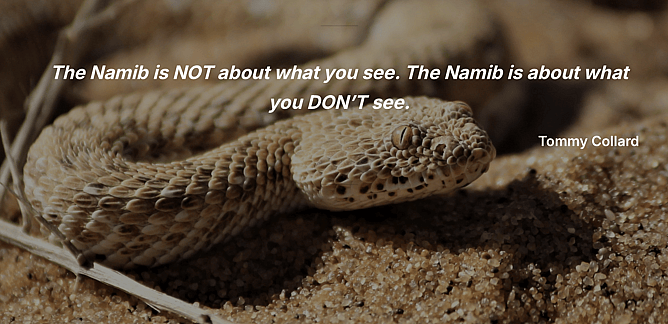
Why life thrives in the foggy Namib desert.
Brigitte Osterath reporting from Namibia - August 14, 2017.
"Scorching hot by day, freezing at night, scarce water and food supplies - the Namib Desert in southern Africa is a hard place to live. But these animals have found ways to cope with the hostile conditions.
We all know the golden rule: where there is water, there is life.
But water can take many forms - it doesn't have to appear as rainfall or flowing rivers. And in the Namib Desert, water comes as fog.
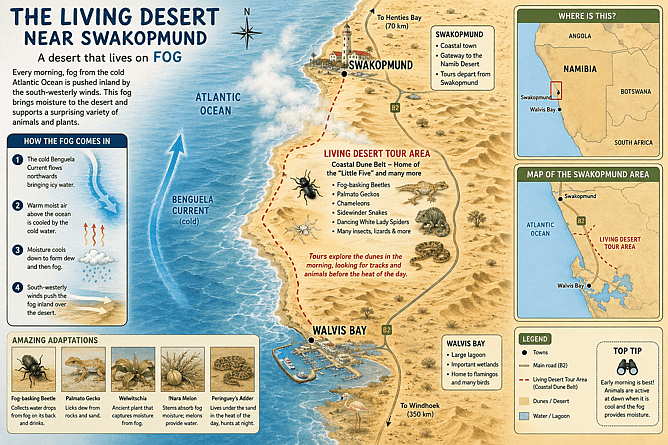
It is all due to the Benguela Current, a cold front. It brings icy waters from the depths of the Atlantic Ocean to the western coasts of South Africa ocean currents.
"The Benguela current interacts with warm moisture above the sea surface," says Roland Mushi, a research technician at Gobabeb Training and Research Centre in Namibia, in the middle of the Namib desert.
"The moisture is cooled down to form dew and then fog," continues Mushi.
Prevailing south-western winds then push the fog into the desert."
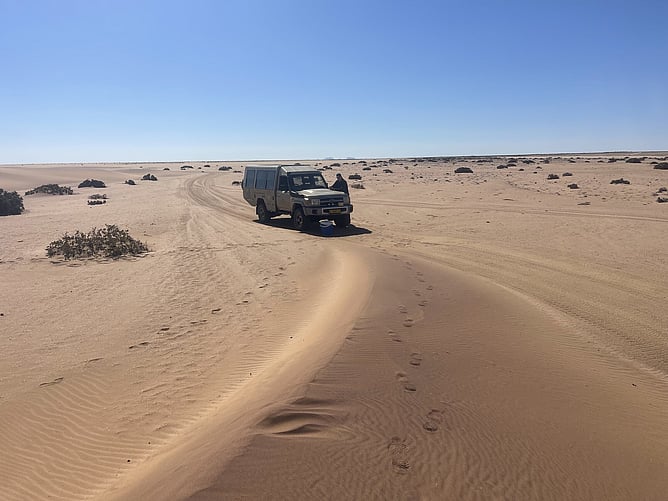
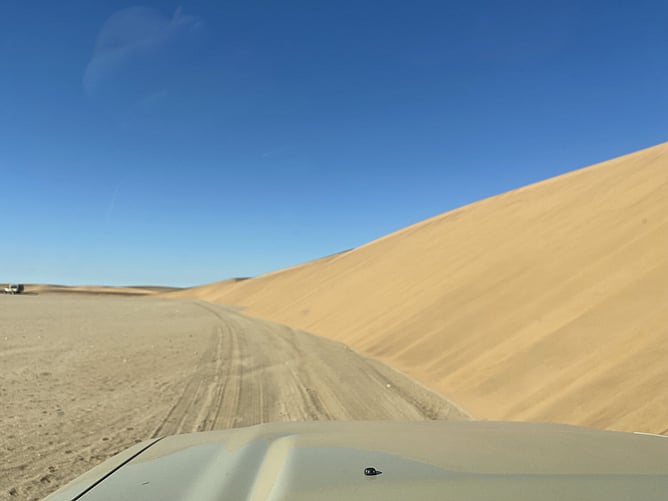
Chantal picks us up at 8.30 am. It is not foggy today. We go to this area in Chantal's Living Desert Tours car.
"Swakopmund, on Namibia's Atlantic coast, is a beautiful city with its German colonial architecture, but the fog sometimes drives residents crazy.
The city lies in a hotspot where the fog forms. So Swakopmund residents experience about 300 days of fog each year.
The fog forms in the early morning and lingers for several hours until about 10 am, when it warms enough to clear.
While the people in Swakopmund complain about the fog, life in the desert desperately waits for it."
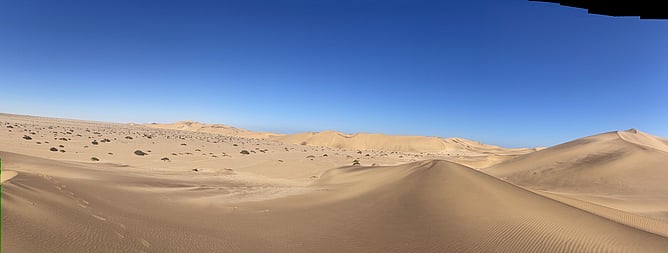
Chantal goes barefoot. She said she loves the sand on her feet. She says she loves all the desert creatures. She is sure we will see something special. From where we look, it looks desolate.
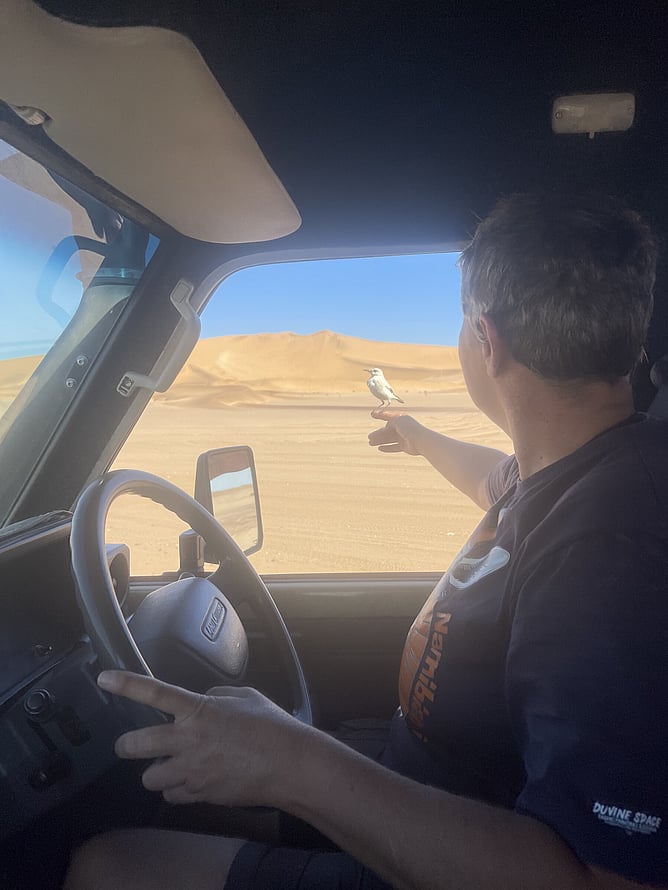
Chantal first looks for the two birds she calls Jekyll and Hyde. She has a box of worms, which she breeds at her house. They know her car and know her.
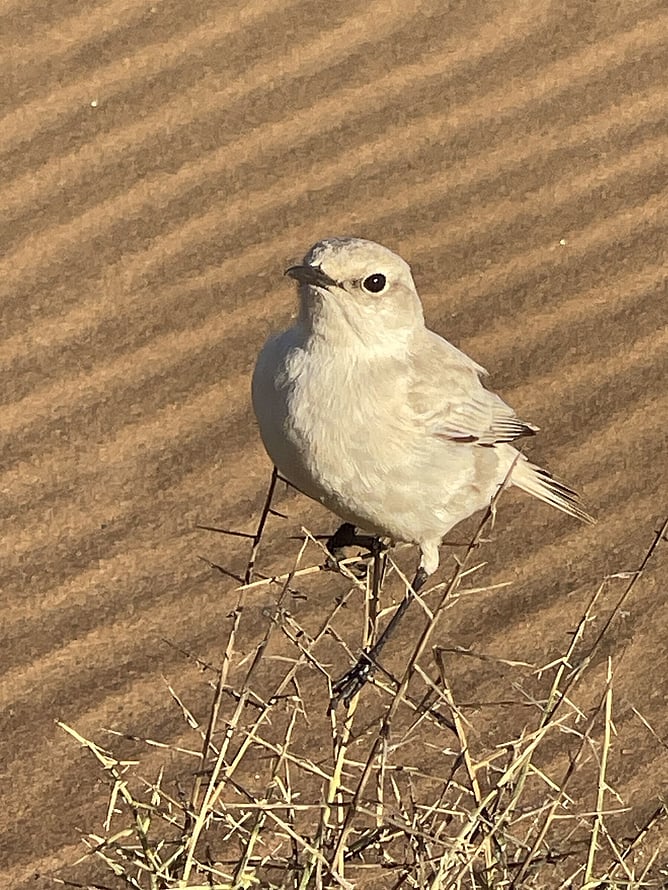
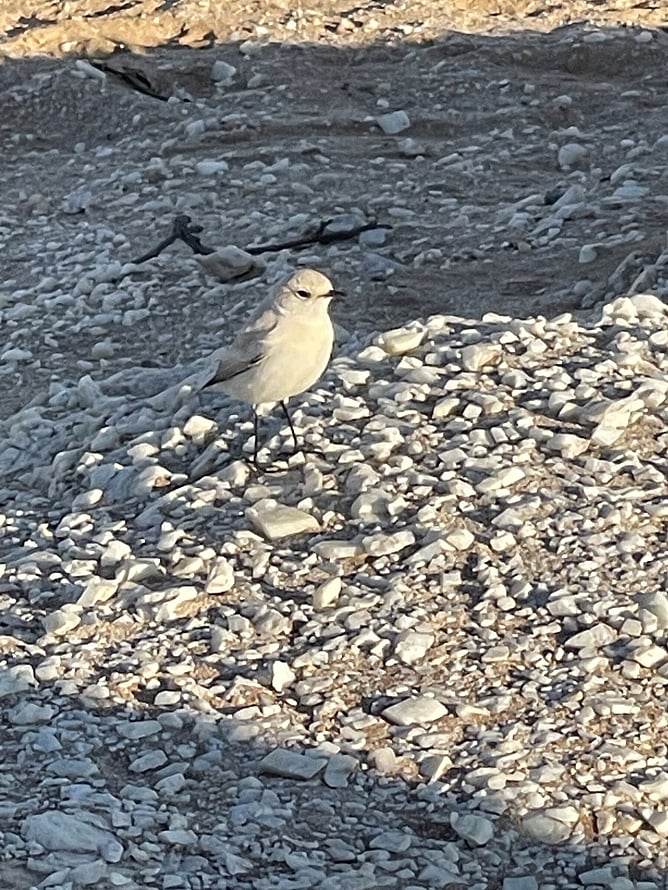
They both turn up.
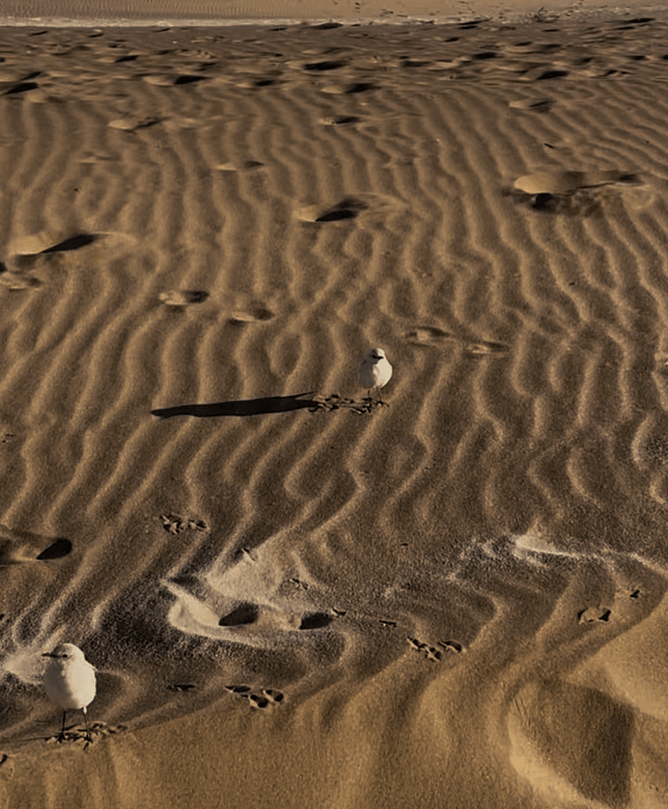
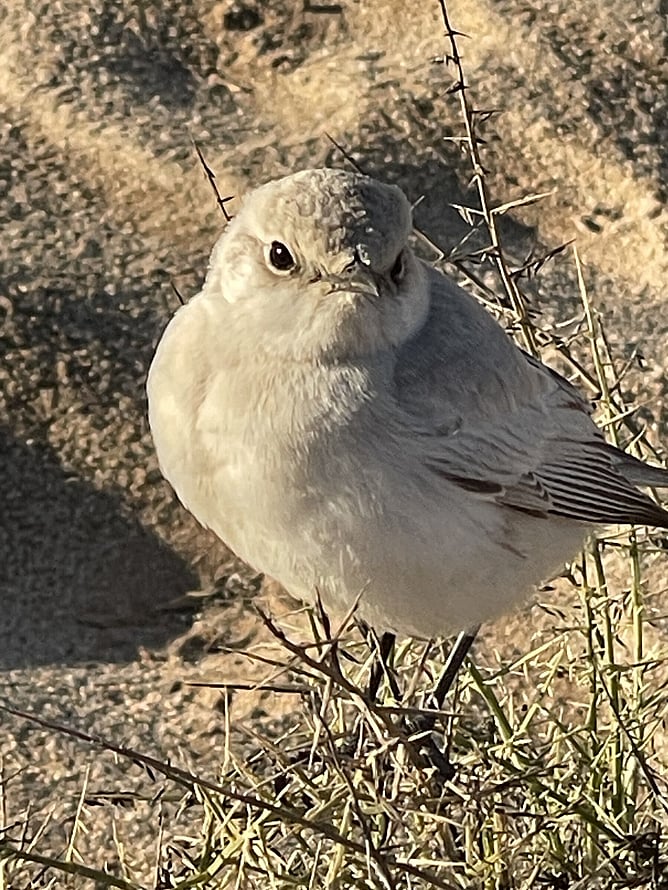
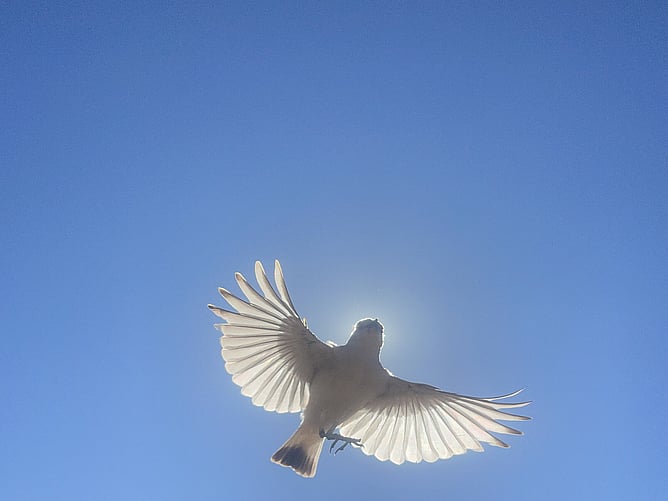
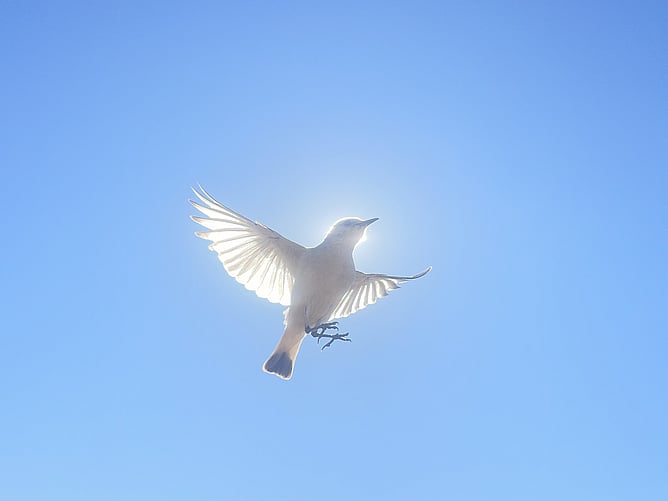
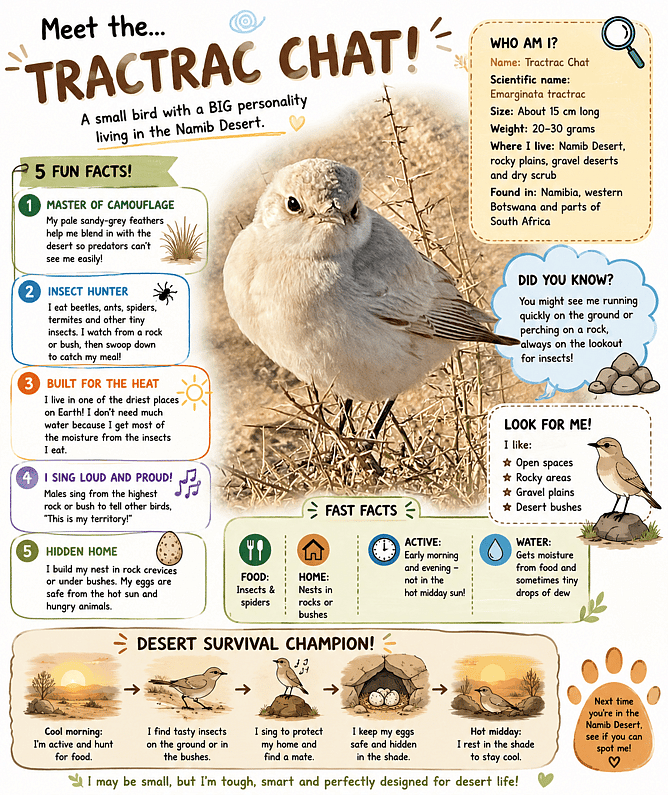
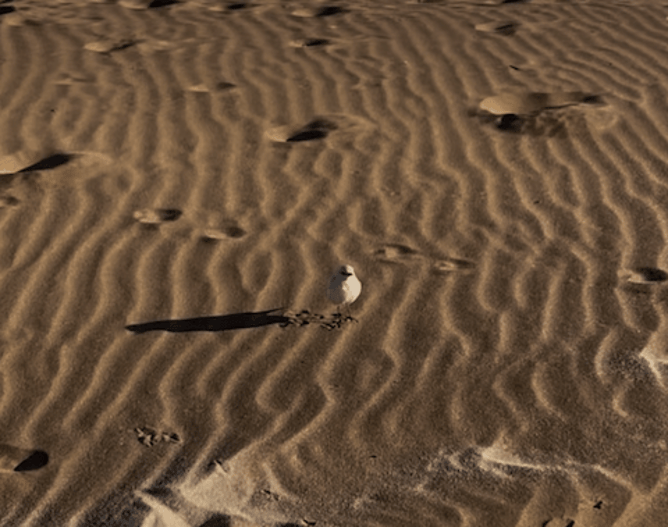
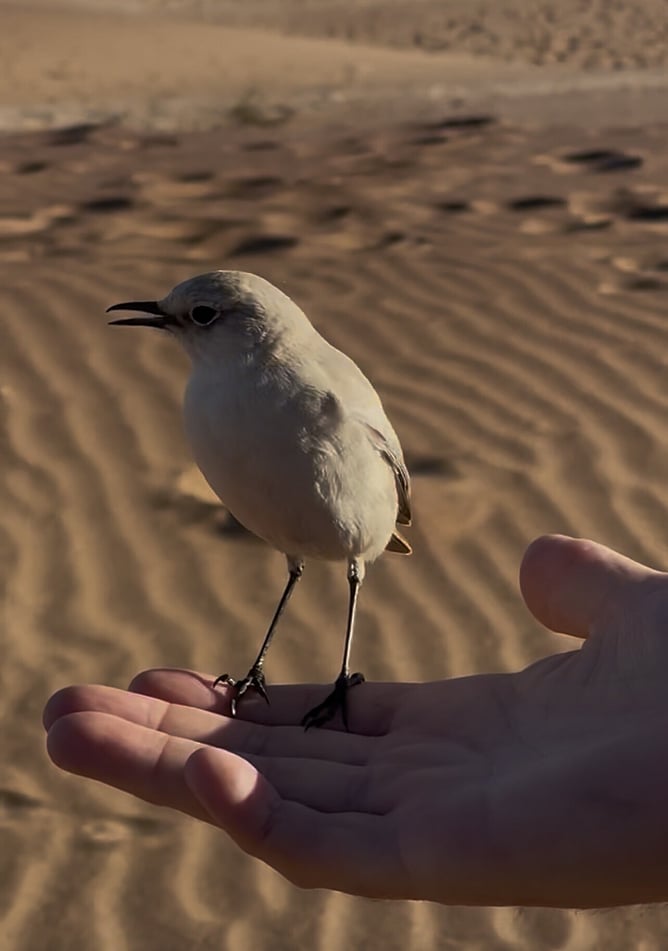
They are Tractrac chats - called because they make the sound "trac trac" when there is danger nearby . It is a sharp, dry, clicking "tchack-tchack".
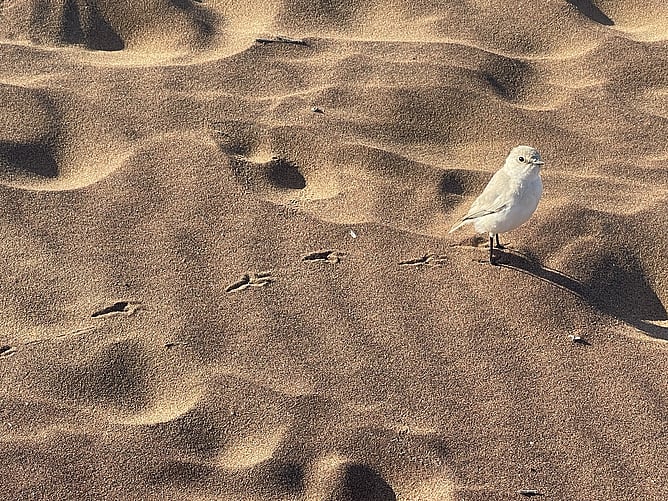
Chantal is feeding either Jekyll or Hyde with worms.
Love this photo - showing footprints.
Next Chantal looks for a FitzSimons' burrowing skink. She is looking for waves in the sand like this.
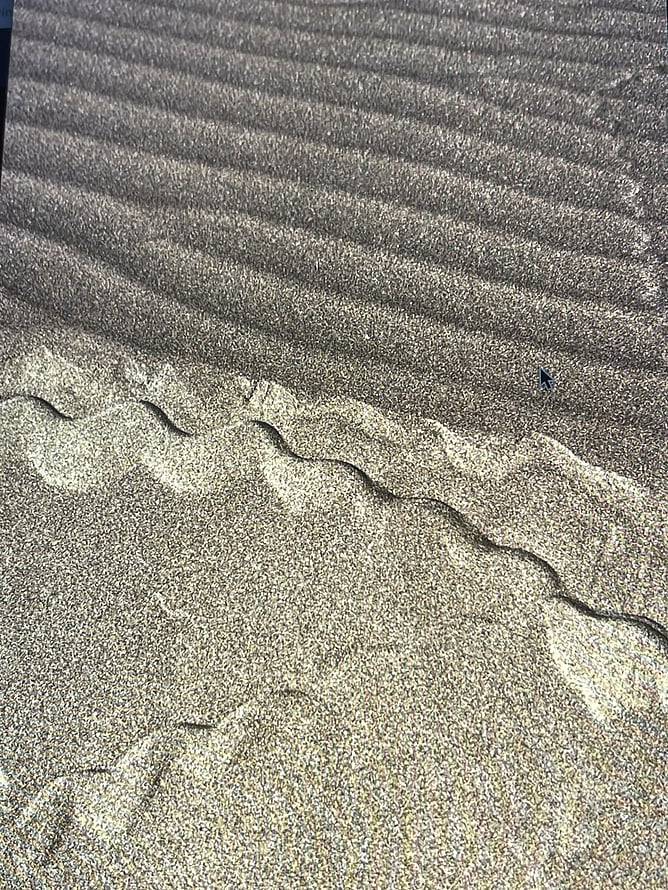
Then she knows where to dig and finds one.
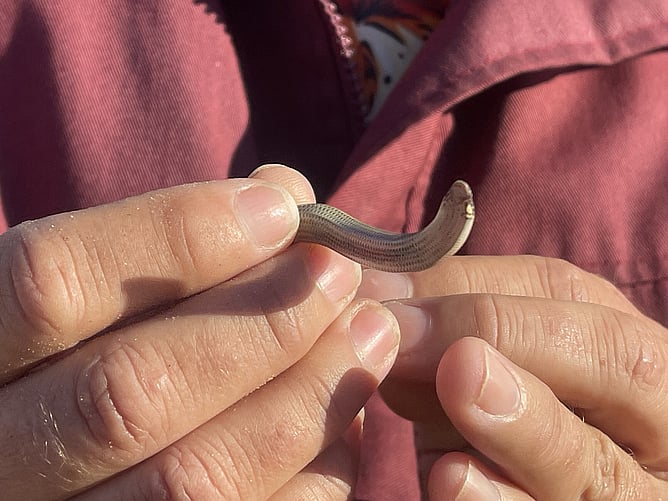
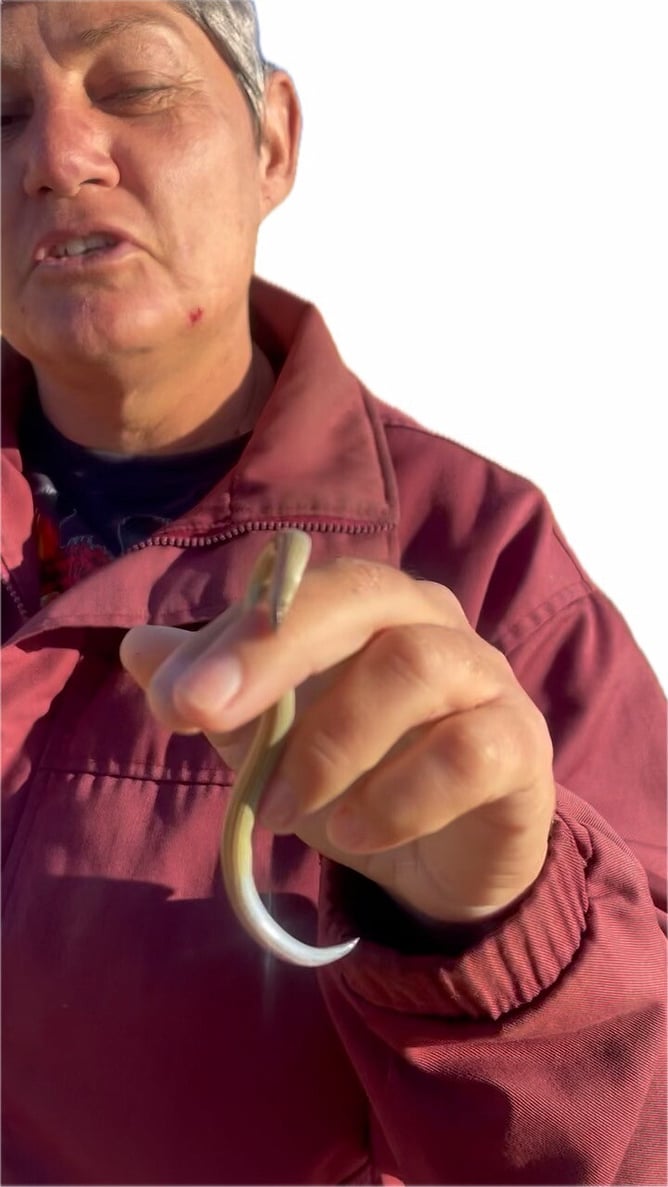
She tells us more about it.
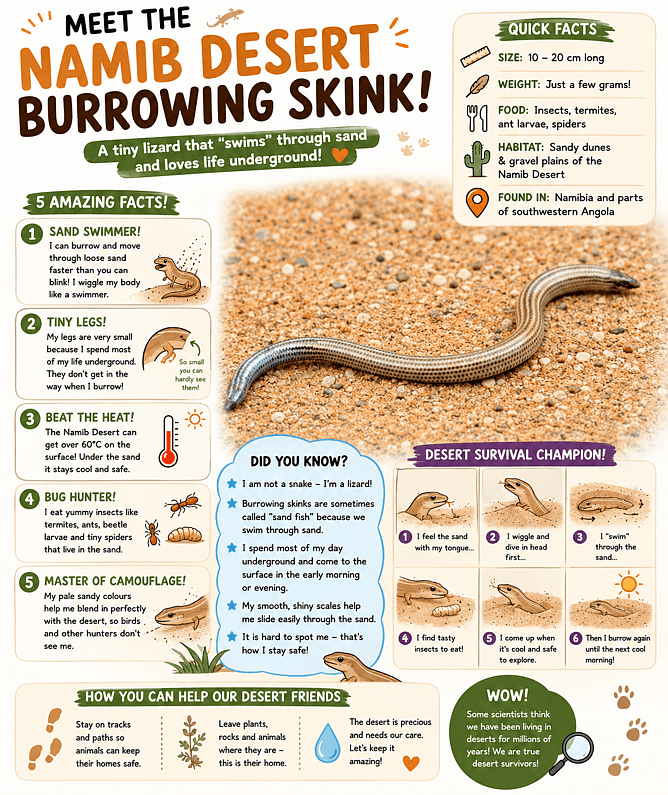
Then she shows us how it swims and puts it back.
Next she goes looking for a sidewinder snake. She is looking for the tracks of a sidewinder. As she looks, she says she was once bitten by one. She blames herself, as the sidewinder could feel her mood. She said she was in a bad mood. She hasn't been bitten by one since (she watches her mood). I am thinking: when I am in a bad mood, I will notice it and get out of it before the sidewinder comes.
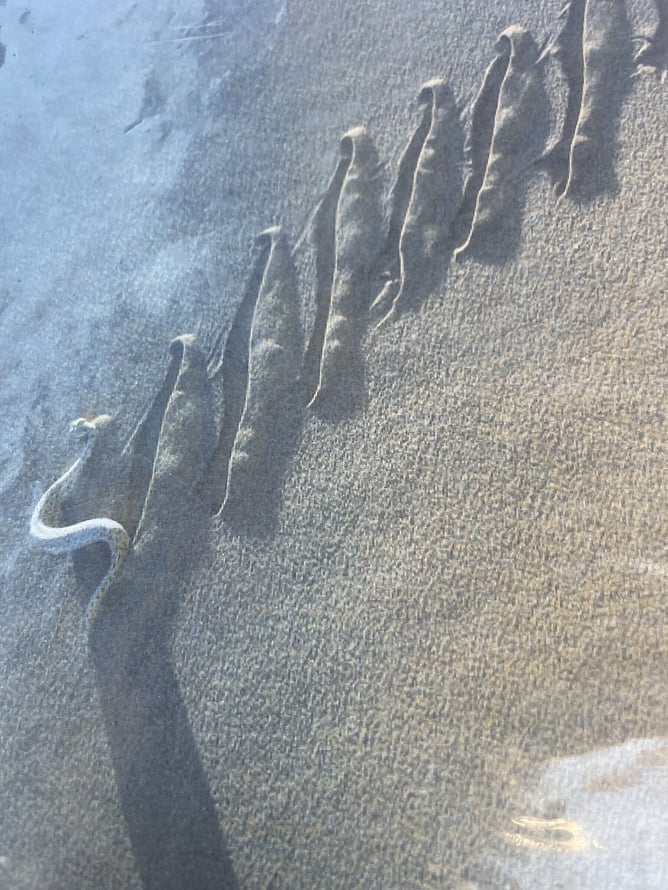
She finds one in here. She knows it's in here because they show an eye on the surface. This is much magnified - we would never have seen it.
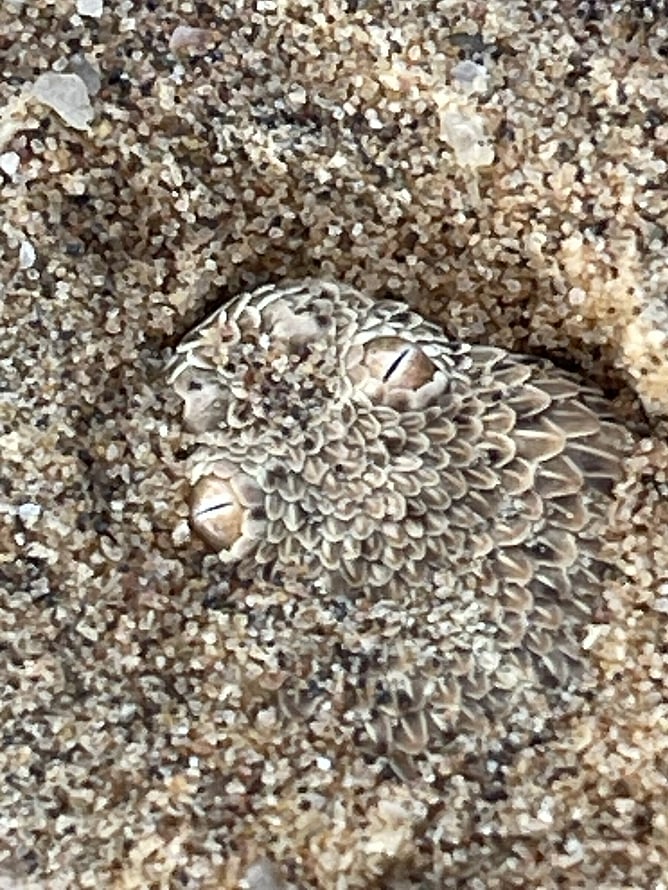
She shows us how it side winds.
More about Chantal. She has about 10 chickens. One of them sleeps with her.
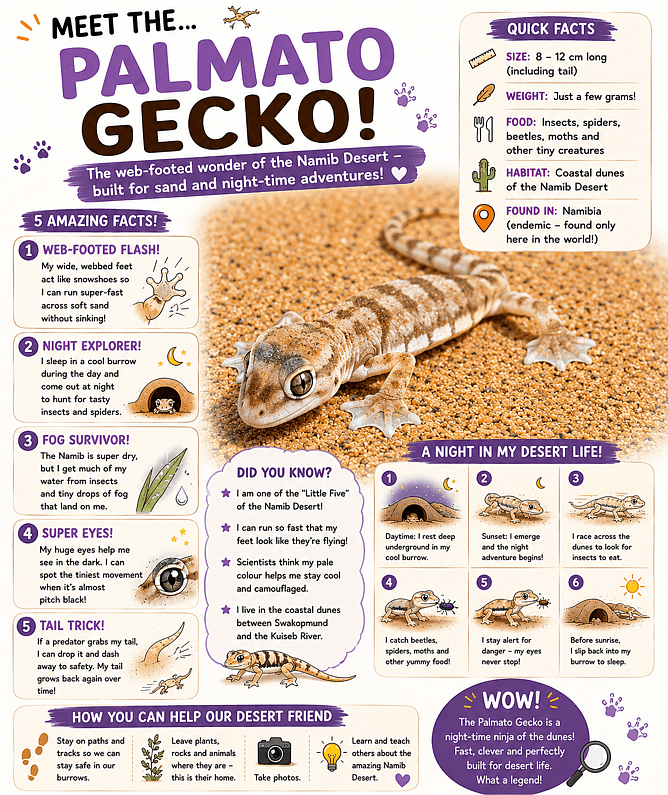
Next, she goes looking for a Palmato gecko
🦶 Large webbed feet for running across soft sand without sinking.
👀 Huge eyes adapted for seeing at night.
🩶 Pale sandy colour with darker bands that camouflage it among the dunes.
🦎 Slender body and tail, typical of this species.
📍 It is found almost exclusively in the coastal dunes of the Namib
Another Tractrac turns up as Chantal is looking. Only one this time, named Chicken. Tractrac is looking for Chantal's worms, and Chantal thinks tractrac also wants what Chantal is digging for.
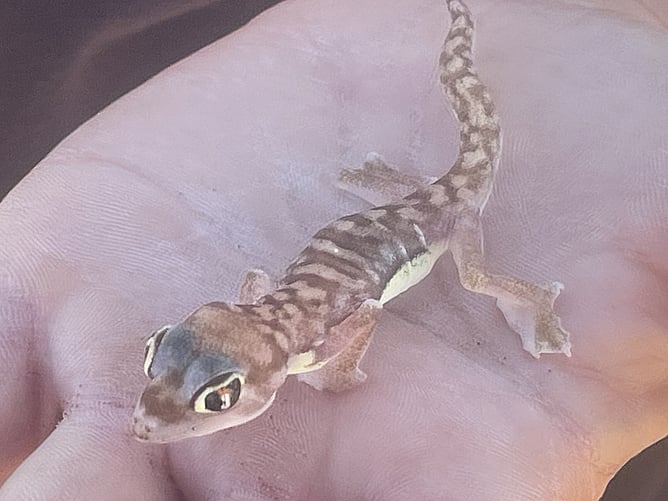
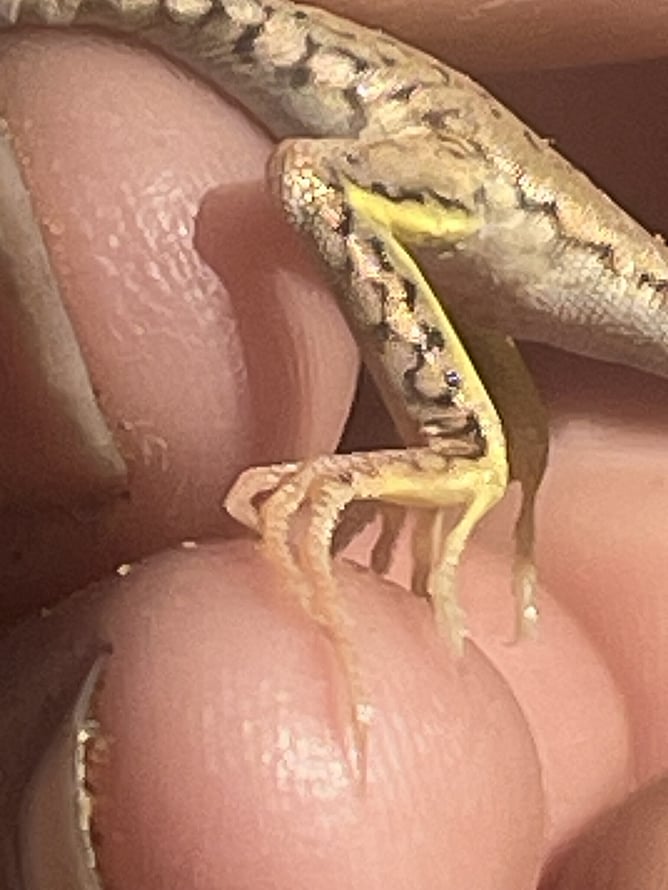
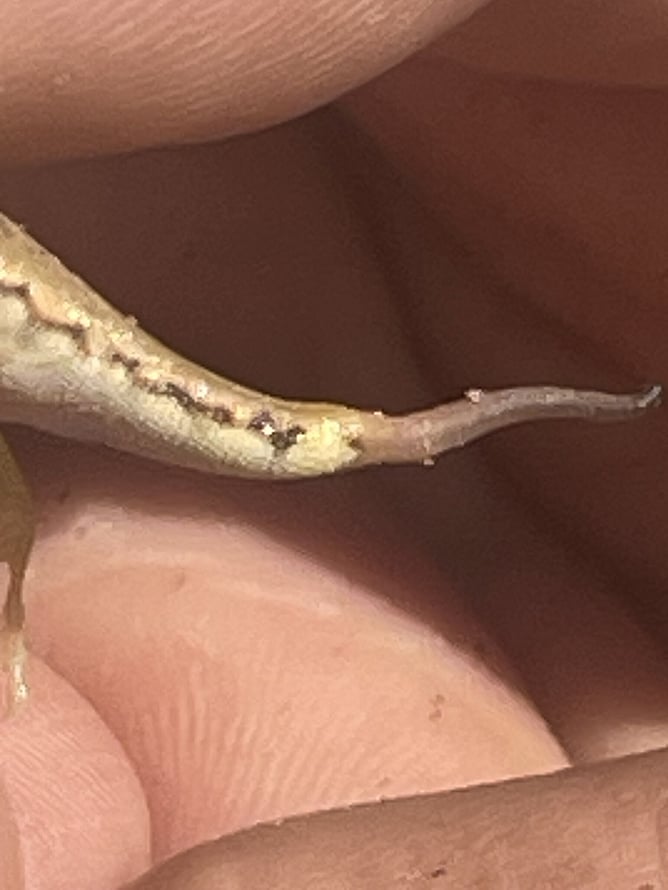
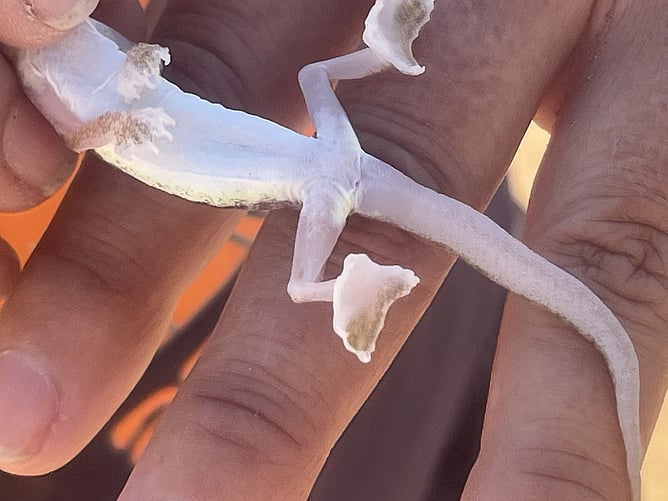
Chantal looks for a safe place for the palmato gecko, so Chicken won't find it. She tries several places and then finds this one.
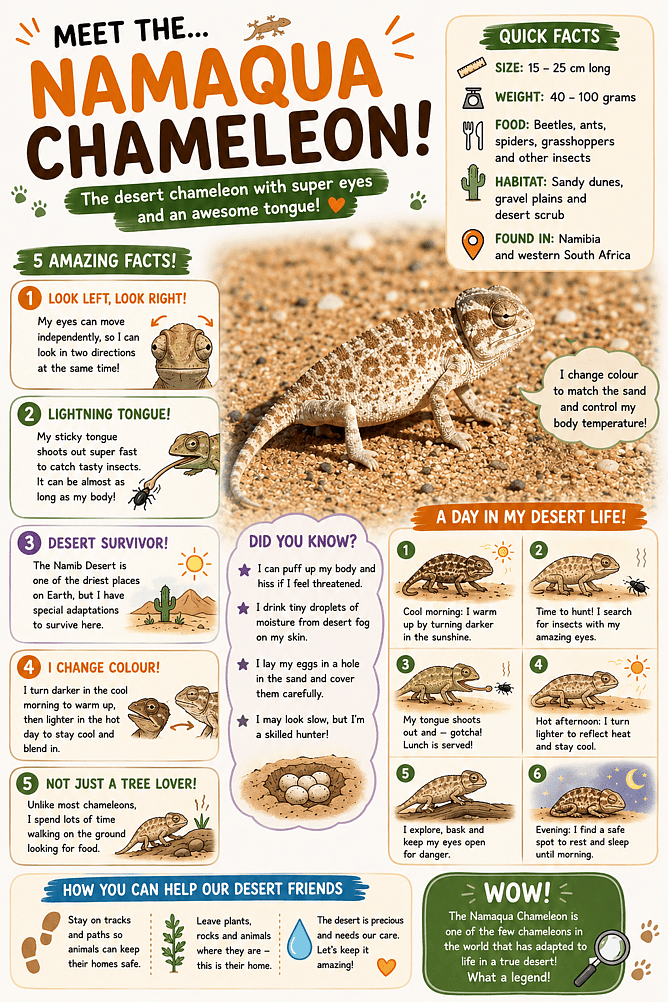
Next, Chantal goes looking for a Namaqua chameleon. She says they are super sensitive, so we stay close to the car. We take a few photos while we wait to hear whether she finds one. I bet she will. Here she is creeping and looking for signs. They will go looking for her, I'm thinking.
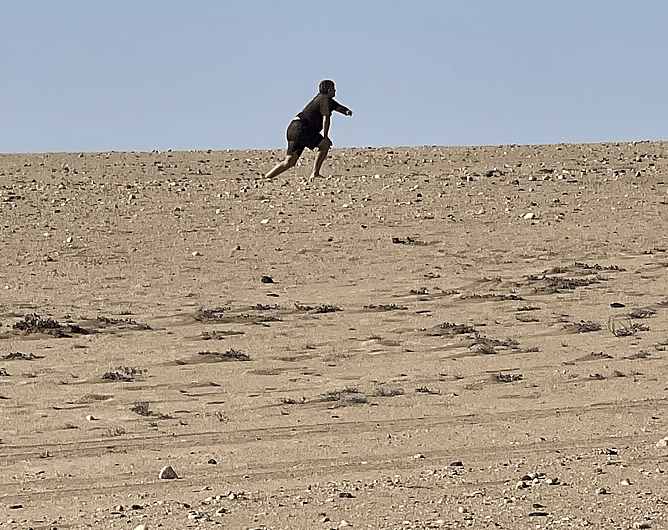
Then she found a baby chameleon! She shows us how this baby chameleon moves, though not too much.
"The clever chameleon knows how to defend itself.
Changes colour (but not just to match the background). Chameleons do change colour, but mainly to communicate, control their body temperature, or respond to stress. When frightened, many species become duller or darker, which can help them blend in better.
Stays perfectly still. Birds are excellent at spotting movement. A motionless chameleon is much harder to notice among leaves and branches.
Hides behind branches. If it notices a bird watching it, the chameleon may slowly move around to the opposite side of the branch or tree trunk, keeping the branch between itself and the predator.
Climbs into thick vegetation. Rather than running away, it often disappears deeper into the bushes where birds cannot easily follow.
Makes itself look bigger. If discovered, some chameleons puff up their bodies, flatten their sides, gape their mouths, hiss, or even lunge at a predator. This can make a bird think twice."
Fun fact: The “leaf dance”! A chameleon doesn’t just hide—it can pretend to be a leaf! By gently rocking from side to side like a leaf in the breeze, it can fool hungry birds into flying right past without noticing it.
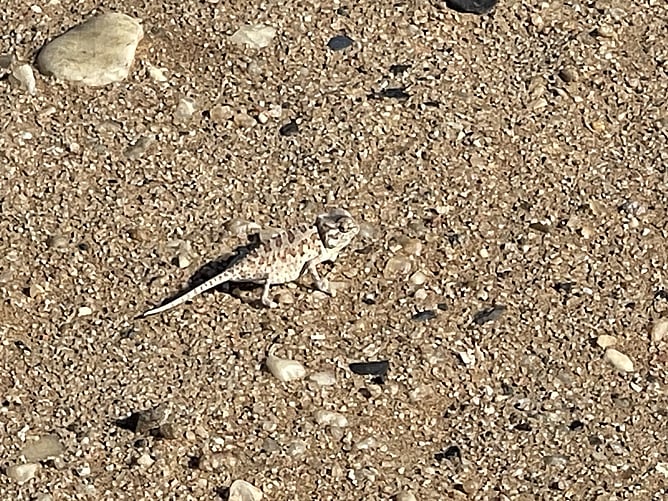
The baby chameleon hunting, I think, is super cute.
Tractrac Chicken is still hanging about.
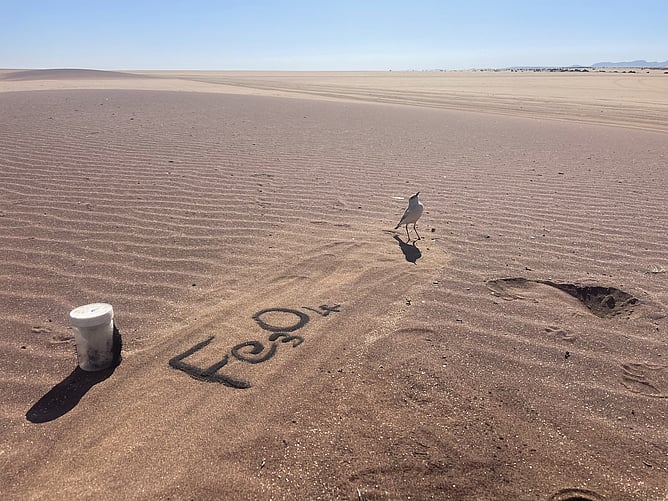
Iron in the sand.
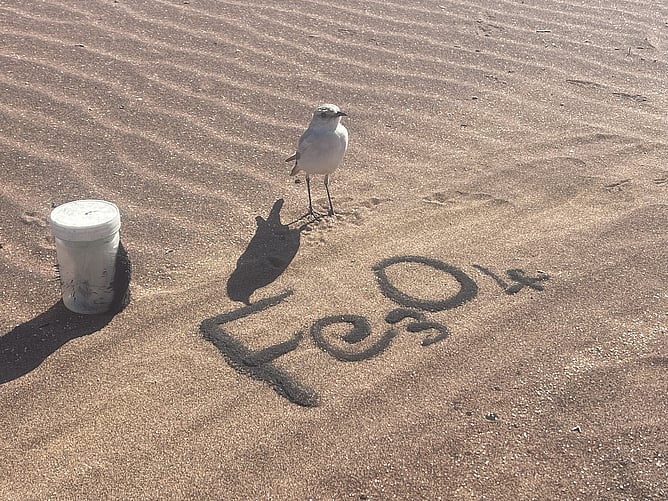
I couldn't choose which photo, so you have them both.
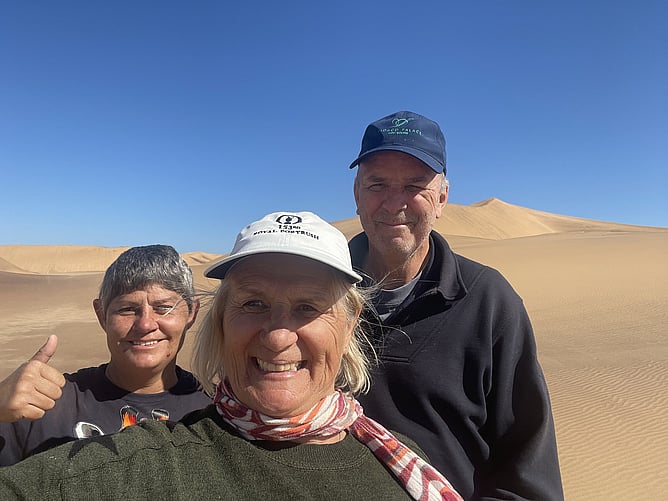
We enjoy the surroundings.
After we leave, I ask ChatGPT about the flora and fauna we would likely see on a living desert tour. They say most likely.
🪲 Fog-basking Darkling Beetle
🦎 Palmato Gecko
🦎 Namaqua Chameleon
🦎 Burrowing Skink
🐍 Peringuey's Adder
🕷️ Dancing White Lady Spider
🦂 Desert Scorpion
🦗 Solifuge ("Sun Spider")
🐦 Tractrac Chat
🦎 Shovel-snouted Lizard
🪲 Tok-Tokkie Beetles
🌵 !Nara Melon
🍃 Lichens
And beyond this list, there is this much bigger one - what you will rarely see but lives in the Namib Desert. It's mind-boggling how much lives here. https://docs.google.com/document/d/1NUz9hqz_QxU2MDxnxl4aoieZqZl5SU2jlOqPZ0-HOJ8/edit?usp=sharing
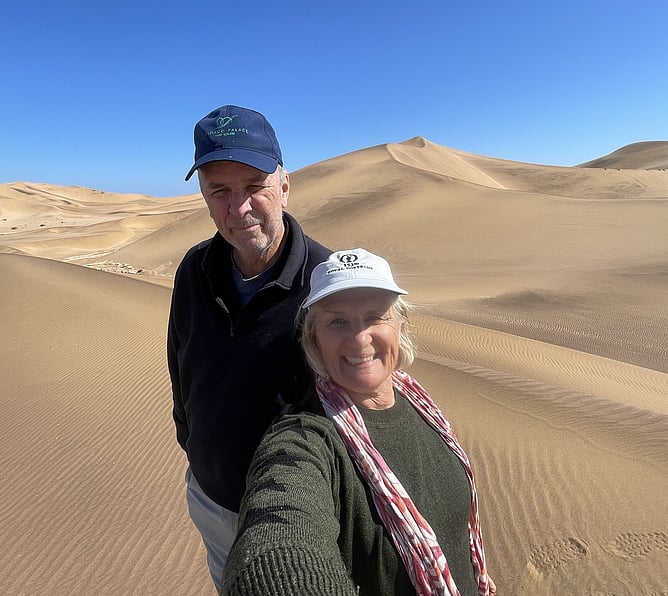
A final note - Why should I care about this desert?
"The Namib Desert is much more than a landscape of sand. It is one of the oldest deserts on Earth and home to an incredible web of life. Every beetle, lizard, plant, bird, and mammal has found a way to survive in one of the harshest environments on the planet. Together, they form an ecosystem that has evolved over millions of years. If desert biodiversity declines:
Scientists lose opportunities to study extraordinary species. Many Namib Desert plants and animals have evolved over millions of years to survive extreme heat, drought, and scarce water. Understanding these adaptations may help us develop new ideas for living in a changing climate.
The desert ecosystem becomes more fragile. When species are lost, the relationships between plants, animals, insects, fungi, and microorganisms begin to break down, making the ecosystem less resilient to future environmental change.
Some species could be lost forever. Many Namib Desert species live nowhere else on Earth. If they disappear, they may become globally extinct.
The desert takes an incredibly long time to recover. A footprint, tyre track, or damaged lichen field can take decades, and sometimes much longer, to heal. This means we must think carefully about our human footprint."
If there were no town of Swakopmund, it would be desert like above. I think we must learn to live more sustainably and educate everyone about native species that have developed over millions of years. They all have a role, and the biodiversity keeps our planet Earth healthy, and so us.