
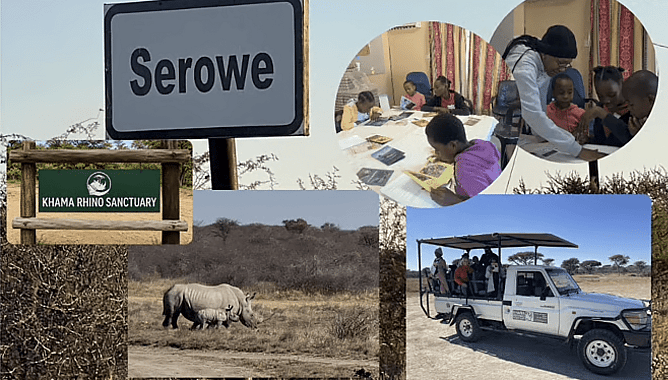
We left Maun Airport to head towards Serowe. We were going there because over the next three days, I was leading 'Young People Co-creating and Sharing Stories about Native Species Thriving', at SOS Children's Village in Serowe.
This had all come about from when we knew we were coming to Botswana, a week before we left. I contacted Danielle Dal Cortivo, a friend I knew had contributed to children in Botswana. We have been in many growing and developing courses together and speak each week as part of a group of women. We call our group Mastermind. I phone Danielle from time to time too. When I mooted the idea, she made it happen, and now we're doing it. More about SOS later.
The trip from Maun to Serowe takes more than five hours. We arrived at the airport at 3pm, so we stopped at the Boteti River Camp for the night, which is about 2 hours from Maun. We slept the night at Boteti and drove the rest of the way to Serowe the next day. I had my first hour and a half with twelve young people at 4pm that day.
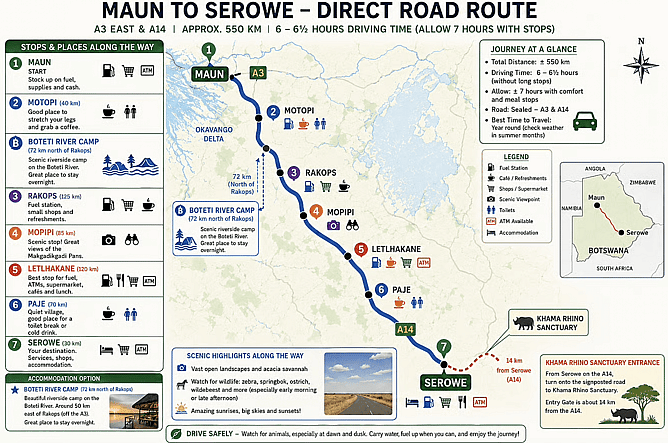
We drove out of the airport, and the car renters gave us instructions on how to take the A3, then the B300, to Serowe. The only problem was we didn’t know how to get to the A3, and we both didn’t have internet access!
I had tried to get it at the airport and was obviously in the wrong spot. Bill, in the meantime, was working out how to use the car we had rented. We had rented a four-wheel-drive because we thought we might need that at the Khama Rhino Sanctuary. Bill was getting where everything was, the spare tyres (they have two), and who to call if we broke down. That was a good idea.
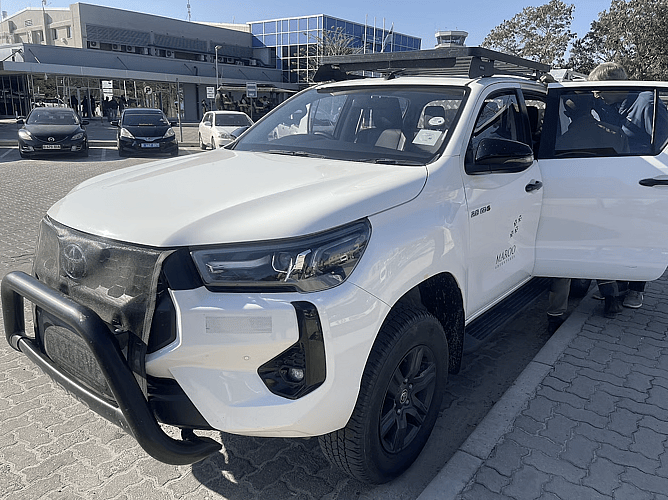
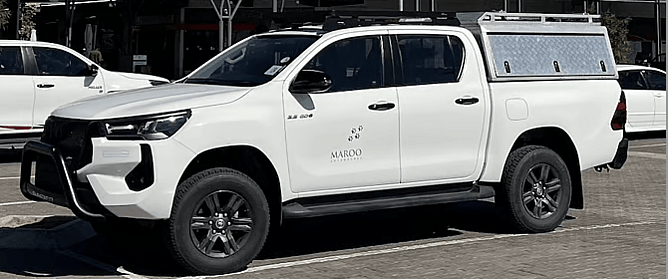
We put our two bags on the back seat. The storage at the back was empty. The car was a lot bigger than we had expected. (It had been booked by the Botswana safari organiser.)
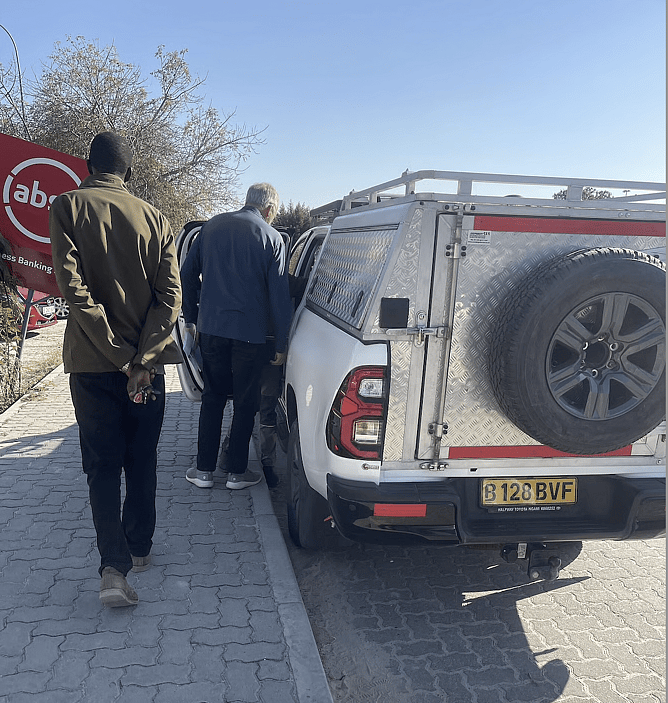
Bill thought he knew the way. So we left and thought there would be signs. There weren't. Bill is usually so prepared. I felt I was a bit useless (must collage that one or sort it. Two tools - collaging and sorting, I have learnt to use when you want a breakthrough in moving through a negative feeling and having positive ones come in quickly.)
There weren't any signs. We ended up going around a roundabout and back three times to find the way. Then Bill realised he had the map on his phone, even though he didn't have internet.
Bill was also a little annoyed, and I thought he might be feeling a bit useless. He said he thought he had clearly communicated to the agency he had used for safaris that he had wanted a small 4-wheel drive. This one was a big four-wheel drive. He also thought the Boteti River Camp booking was over the top. He had wanted a very simple place, and it seemed like we were going to another flashy lodge, which he didn't ask for.
Meanwhile, I didn’t mind where we were going; I often struggle with directions anyway, and I loved the car and somebody doing the work. I was in a comfortable car and a nice place to stay.
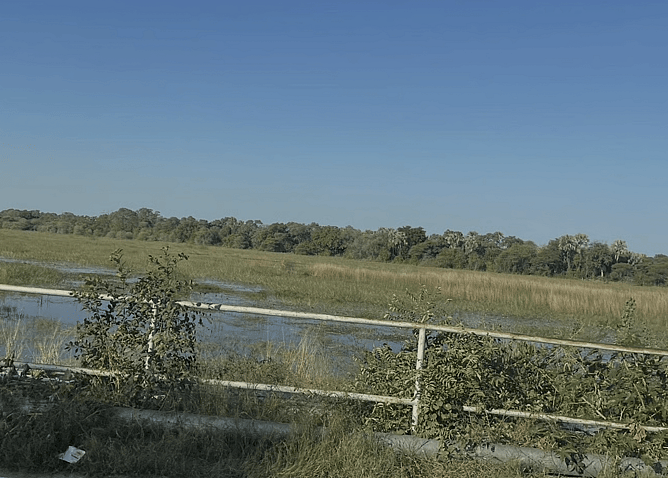
We finally found the right way to go. I got a quick shot of the Thamalakane River as we left.
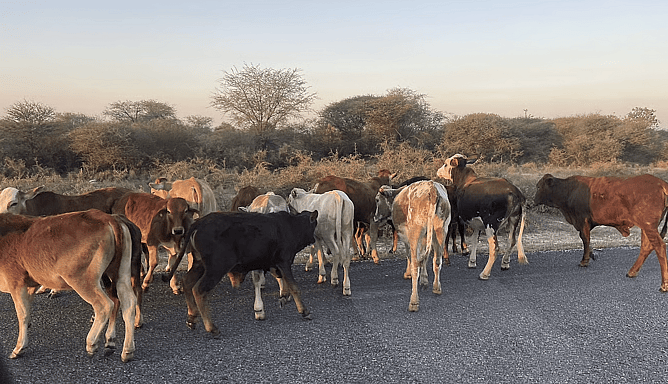
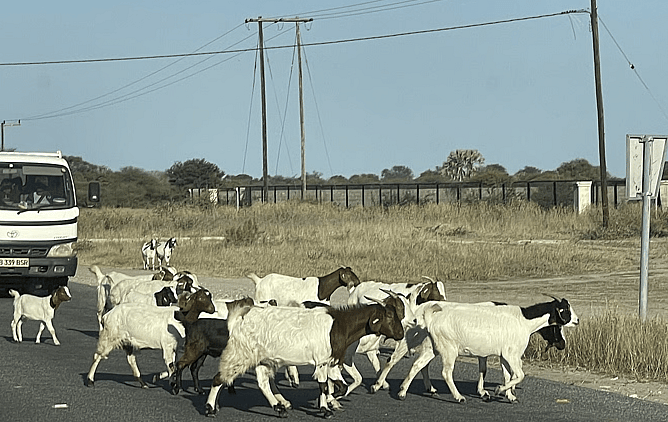
All the way on the drive, Bill dodged cows, goats, and potholes on the road. It was tar seal road all the way though, so that was good.
Apparently, these goats roam freely during the day without their owner and know where to return at night.
We left Maun at 4pm. (Actually closer to 4.30 by the time we had circled the roundabouts and other miscues trying to find our way out of Maun, Ed.) It took two hours to get to Boteti River Camp. I kept an eye on the signs.
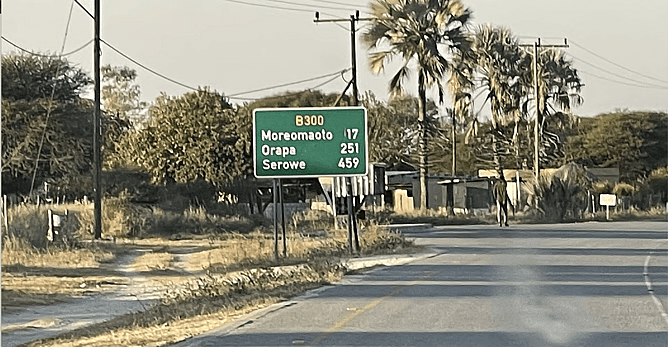
Then I spotted the sign we were looking for.
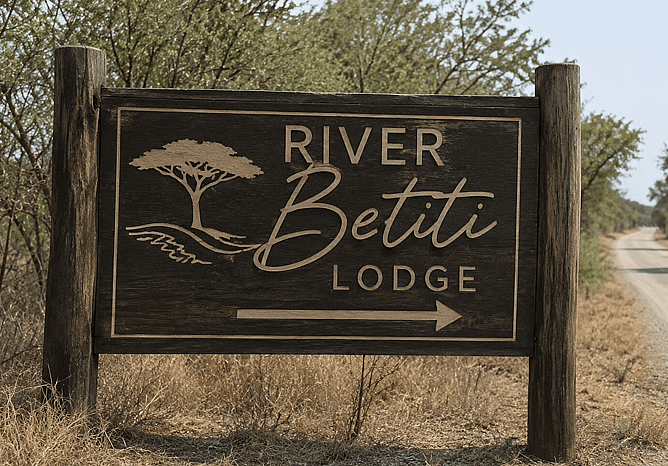
(If you think there is a difference between this sign and the name of the place we were staying, well spotted. Creativity is one of Robin's strengths - directions and attention to detail not so much, Ed.)
The restaurant is outside (at Boteti River Camp, Ed.). It was freezing. We were just in time for dinner.
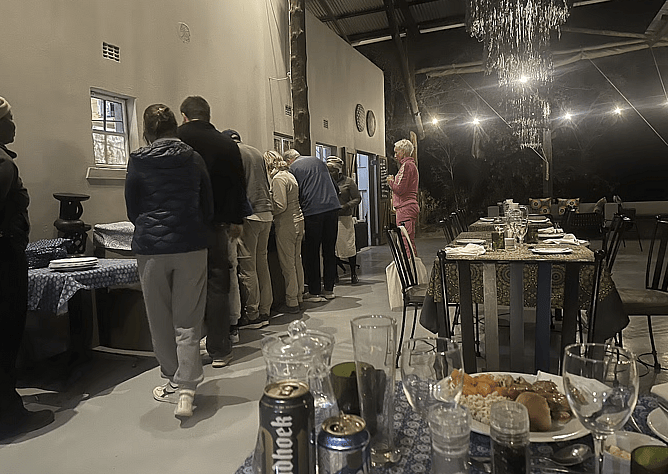
That lady at the far end in the pink was with her husband, they were from Norway. I can’t remember her name but she had a fabulous quote - "Some people get addicted to having tattoos, we are addicted to Africa, we come here every year to do lodges, self-drive and/or mobile safaris."
I wondered whether I would feel the same after leaving Botswana.
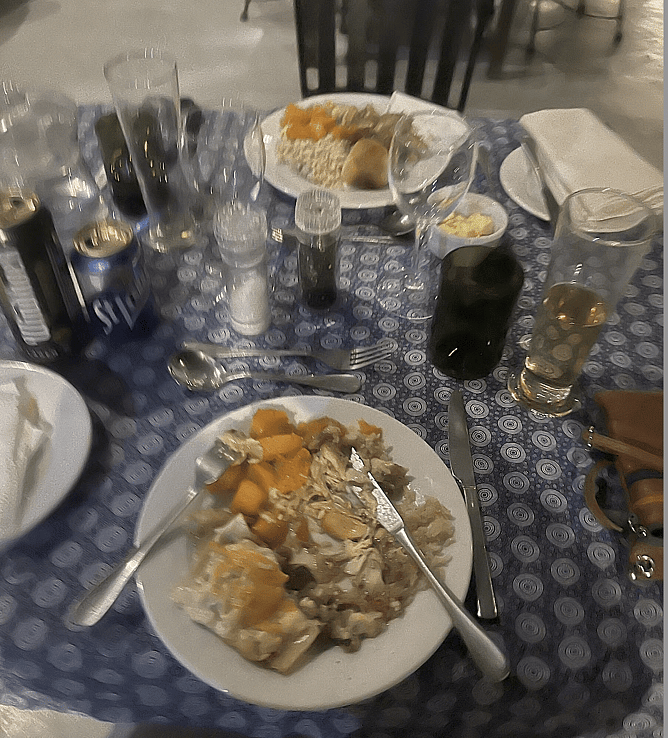
A typical dinner - chicken and rice. This was tasty. Yum.
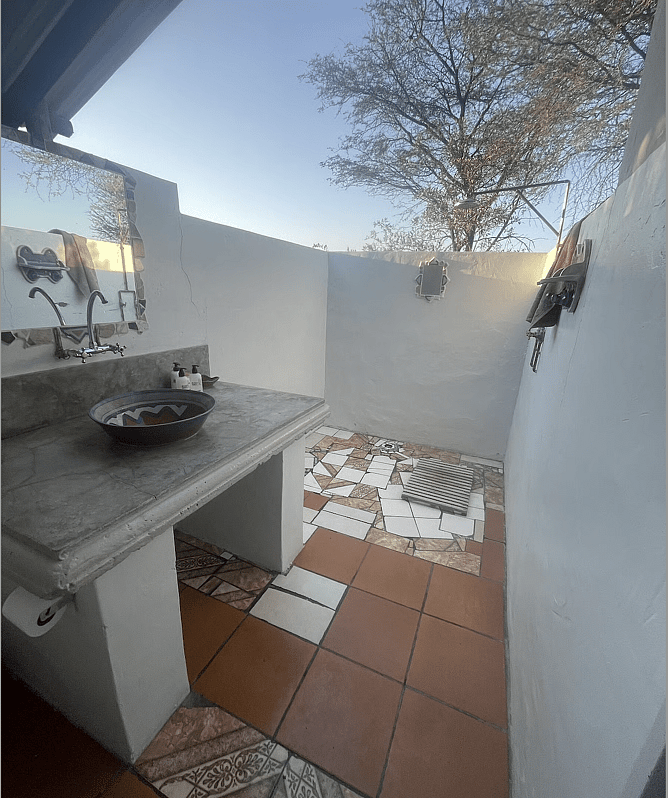
I loved our bathroom in 'the lodge' . It was outside. Freezing when you went, but gorgeous to see the moon if you are tall enough, and to hear the wildlife. I stayed extra long in the shower.
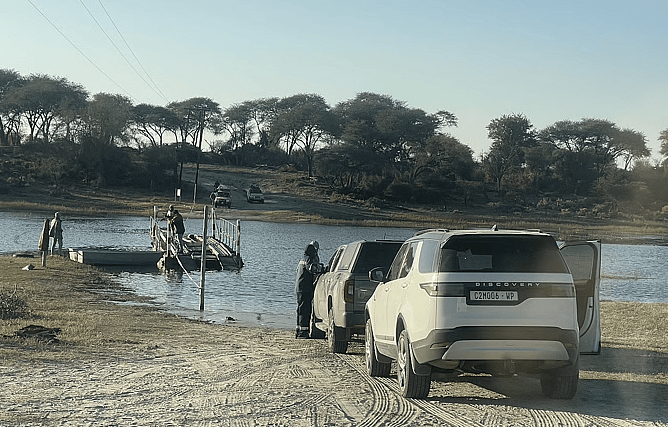
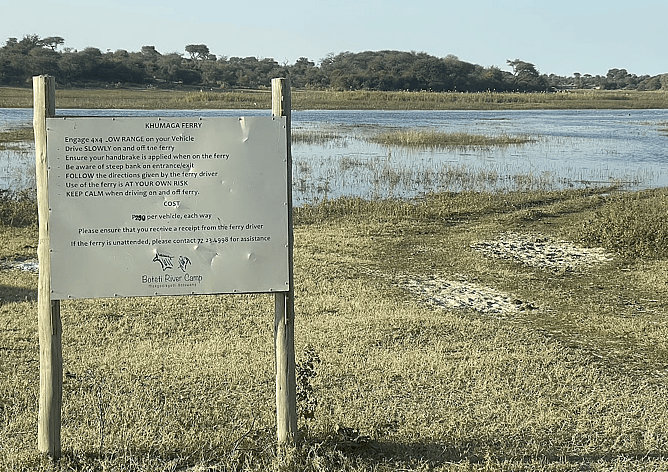
As we left the next morning, we drove down to the Boteti River, which the River Camp overlooked. As we arrived, there were two cars getting on the ferry, that only takes two cars. This river is in the reserve, so hippos could be here.
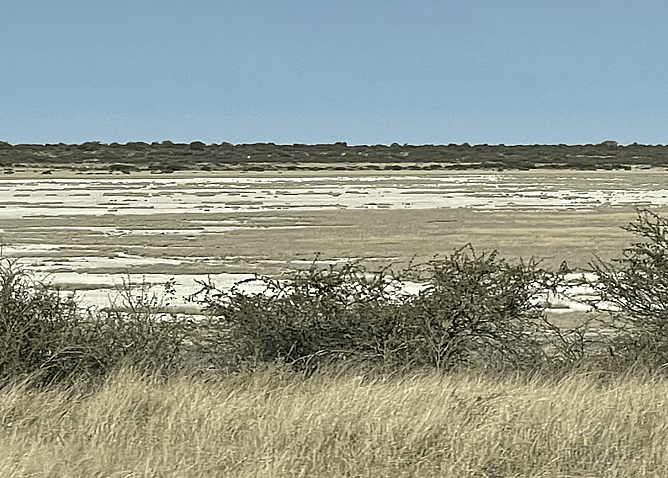
We drove on - the Kalahari desert is beside us.
The white areas below are salt crusts left behind as ancient lakes evaporated thousands of years ago. During the dry season, the surface becomes a vast, bright white plain, while after good rains it can hold shallow water and attract thousands of flamingos and other waterbirds.
Driving from Maun towards Serowe, you pass alongside the Ntwetwe Pan (part of the Makgadikgadi system) before continuing east towards Rakops and then Serowe. The landscape in the photo—low thorn scrub, golden grasses, and broad white salt flats—is very characteristic of that area.
Fun fact: Long ago, this wasn't a salt pan at all—it was a huge inland lake, even bigger than many countries are today! As the climate became drier, the water disappeared and left behind the sparkling salt you can see today.
After two hours we stopped for a coffee at Letlhakane. It was the only place on the way that had any shops that would recognise I think.
Then two more hours driving and 190 km to get to Serowe.
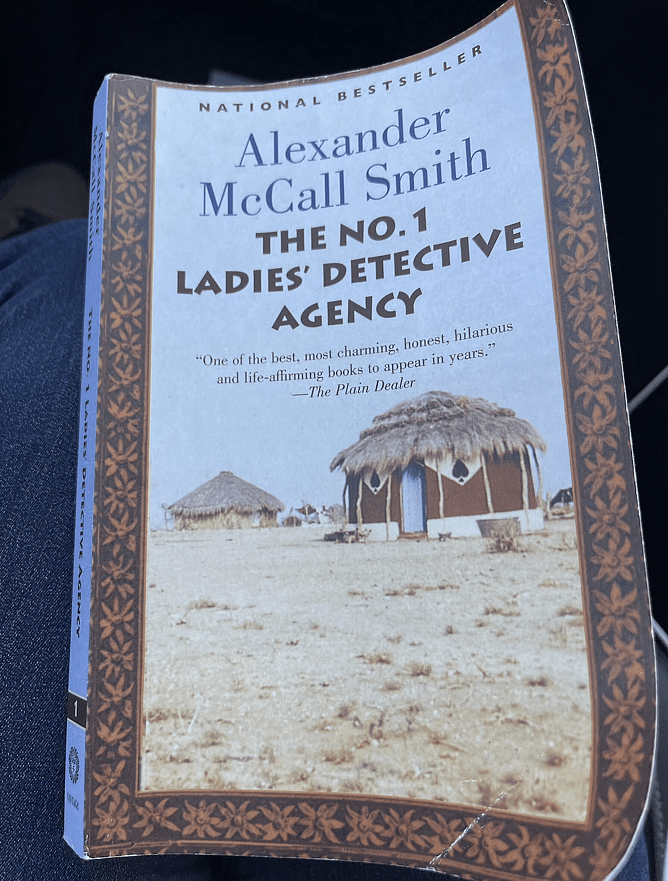
I read a book Ebet gave me. She said she had read it and would like to give it to me. I had started it on the plane. It was an easy read and a fun book about Botswana. It tells the story of Precious Ramotswe, Botswana’s first female private detective, who uses kindness, patience, and sharp observation to solve everyday mysteries rather than dramatic crimes. After inheriting money from her late father, she opens a detective agency in Gaborone and helps people uncover the truth about missing relatives, stolen property, dishonest behaviour, and family concerns. Along the way, she builds a warm friendship with the thoughtful mechanic Mr J.L.B. Matekoni and becomes a trusted member of her community. It is fiction. The novel celebrates Botswana’s landscapes, culture, and people. I loved the wisdom, compassion, and integrity throughout, and how Precious Ramotswe solved some mysteries playfully.
I felt like I was the Environmental Inspirer. Maybe I could set up an agency?
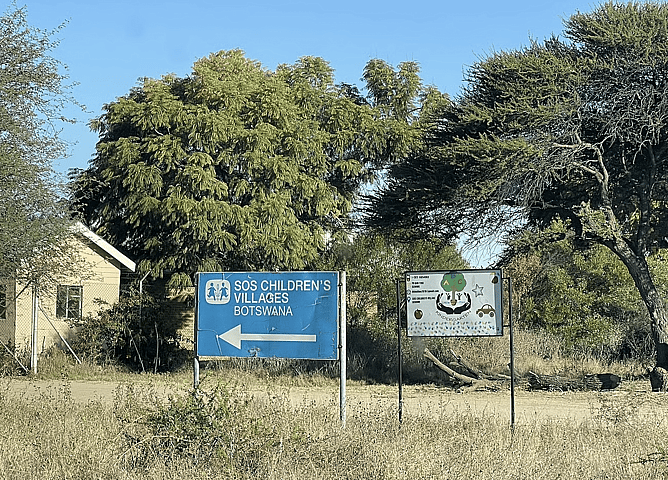
As we arrived in Serowe at 2pm-ish we spotted the children’s village sign - 10 minutes from 'downtown' Serowe.
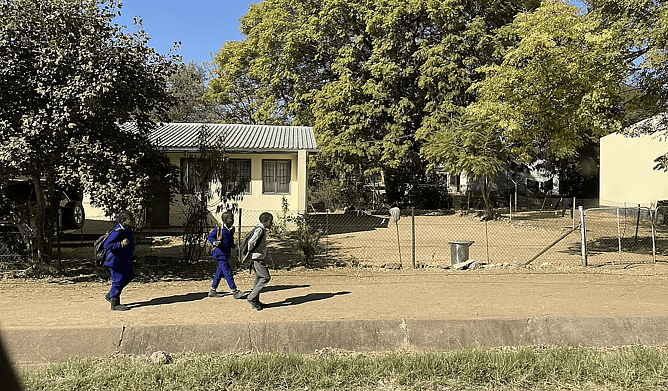
Further on I spotted young people coming out of school.
This was our hotel. (The best place in town, Ed.)
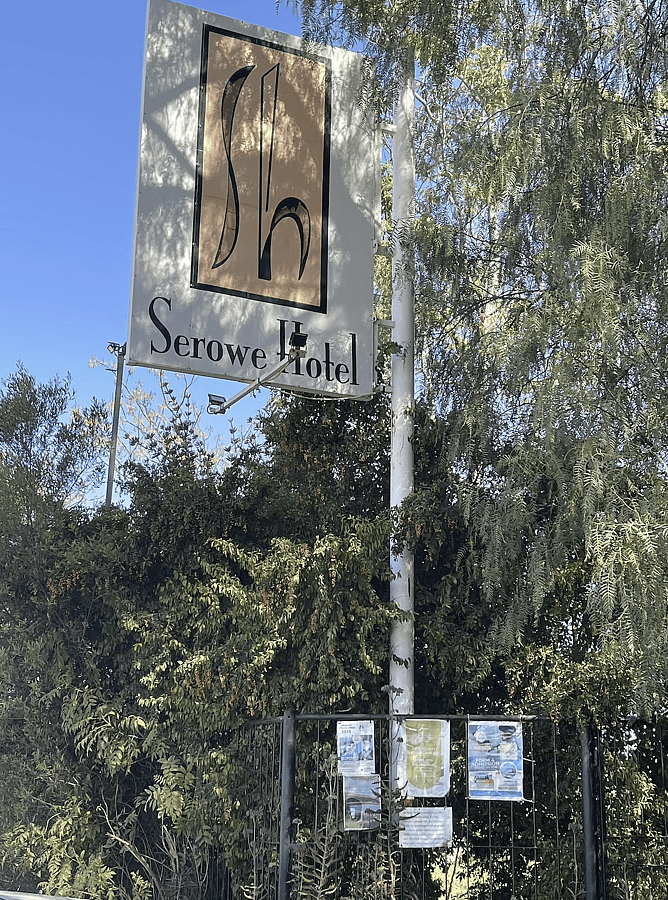
We got to the hotel, and I sorted out the bag with all the resources that I was going to take to the SOS Children’s Village. Then it was time to meet Katso, the Village Manager, and the children. I was feeling a bit like the Governess meeting Captain Von Trapp's children, except I can’t sing.
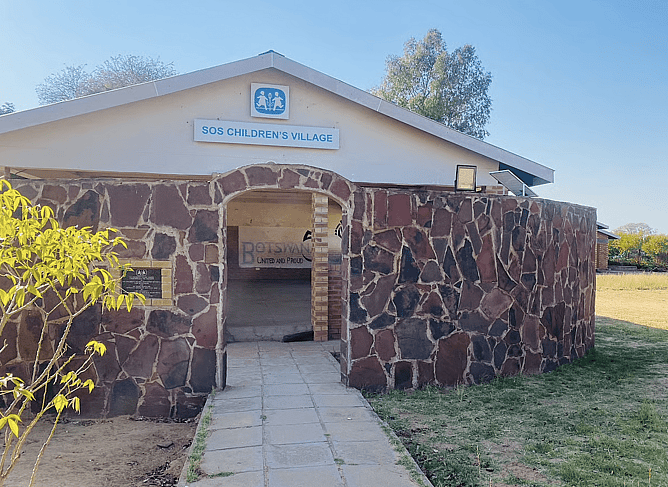
"SOS Children's Villages Botswana is a non-governmental organisation that supports children who have lost parental care, are at risk of losing it, or whose families need help to stay together. The organisation's goal is for every child to grow up in a safe, loving family environment where they can learn, develop and become independent adults. It has been working in Botswana since 1986.
Today, SOS Children's Villages Botswana has programmes in:
SOS Children's Village, Tlokweng – opened in 1986 near Gaborone.
SOS Children’s Village Serowe – established in 2008 to support children and families in central Botswana.
Francistown – where family-strengthening and child-care programmes have expanded since 1998.
Rather than operating as a traditional orphanage, SOS Children's Villages creates family-style homes. Typically:
Children live together as brothers and sisters.
They are cared for by a dedicated caregiver in a home environment.
Biological siblings are kept together whenever possible.
Children attend local schools, play sports, make friends and become part of the surrounding community.
The organisation also assists families before children need to enter care by providing:
Parenting support.
Educational assistance.
Health and wellbeing programmes.
Youth employment and life-skills training.
Emergency and disaster support when needed.
The Serowe Village
The Serowe programme was established in 2008 to meet the growing need for child protection in central Botswana. In addition to providing care for children, it works closely with local families and the community to help children remain safely with their parents or relatives whenever possible."
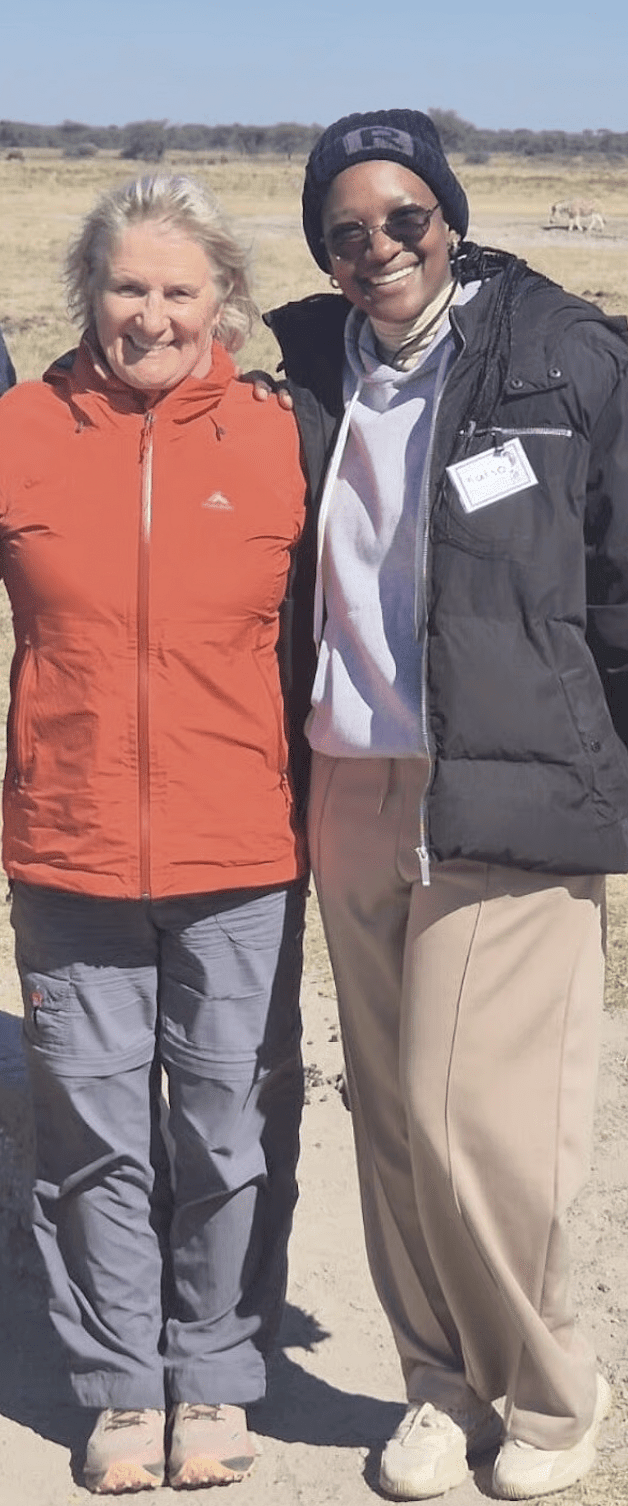
Katso tells me all this, and I research too. In her last job, Katso worked for Stepping Stones International as a senior executive until America pulled their funding. She has been in this job for a year and two months.
I am thinking I feel so lucky and privileged to have met Katso and Danielle and to be here. This is all through Danielle. I have been talking for a few months to make this happen but that was going to be in Uganda (with another wonderful leader there called Theo), and so with Katso for just a few weeks. But Katso has been talking to her young people. Finally, the day was here, and I was feeling a bit emotional.
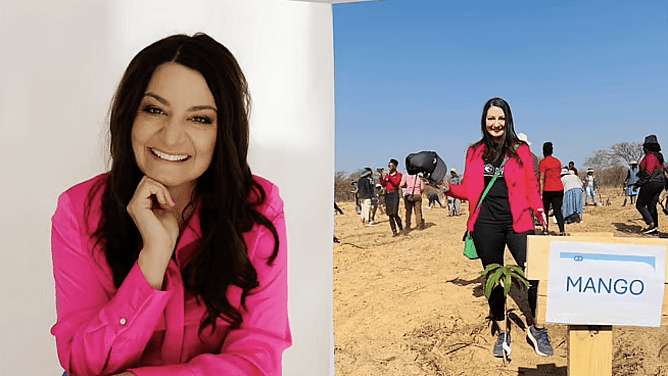
I have been on weekly calls with Danielle for 5 years as part of a group of 13 that was set up after we participated in a growth and development course.
A bit about Danielle Dal Cortivo, from LinkedIn. "She is a dynamic and transformational executive leader, interim CEO, entrepreneur, and executive coach with more than a decade of CEO experience leading organisations across strategy, governance, finance, people, operations, marketing, and program delivery. (I participated in one of her leadership courses too.) She is passionate about empowering individuals, especially women, to thrive and assisting teams in doing so. She works with leaders and business owners to unlock performance, expand self-expression and create lasting impact through creativity, collaboration and innovative problem-solving.
Alongside her executive leadership, Danielle has co-founded and led the charity Raize the Roof since 2009: https://www.facebook.com/raizetheroof. "
More on this later, as I went to the farm she contributed to. She is a sponsor of SOS Village Children and is an active volunteer with Adolescentric Global, reflecting her deep commitment to social impact, leadership development, and creating meaningful, lasting change. I have never met Danielle in person. She has been a close online buddy though.
I asked ChatGPT who funds SOS Children's Villages. Here is what it said. I like what they came up with at the end. Maybe I will take that further - after the programme.
"SOS Children's Villages Botswana is funded through a combination of government support, individual donors, corporate partners, sponsorships, and international support. The main sources of funding are:
Government of Botswana
The Government provides some subsidy funding to support the organisation's work.
To receive this funding, SOS Children's Villages Botswana submits audited financial statements and reports each year.
Individual donors
Many people in Botswana and around the world make one-off or regular monthly donations. (We were told they werre mainly from Sweden.)
These donations help pay for children's everyday needs such as food, clothing, healthcare and education.
Corporate partners
Businesses support SOS Children's Villages through financial donations, sponsorships, employee fundraising and gifts in kind (such as equipment or supplies).
Village and child sponsorships
Sponsors can contribute regularly to support an individual child or help fund an entire village.
Sponsorship money goes toward the running costs of homes, schools, health services and family-strengthening programmes.
International SOS network
SOS Children's Villages is part of a worldwide organisation operating in more than 130 countries and territories.
Where a national association cannot raise enough money locally, additional support may come from the international SOS network and its global fundraising partners.
From what you've shared about your work in Botswana, it's worth knowing that SOS Children's Villages also welcomes partnerships with educators, organisations and community groups that can provide programmes for children. Your nature-based storytelling and "Young People Co-creating and Sharing Stories about Native Species Thriving" programme could potentially fit as an educational partnership rather than as a funding project."
Back to the programme. After signing documents with Katso, I went outside the office, and all 12 young people were waiting for us.
I had been online for 40 minutes two days earlier with the four 13- and 14-year-olds who were going to be my leaders, and had wanted to see them first, but realised they were all waiting for me so it was going to be meet them all at once.
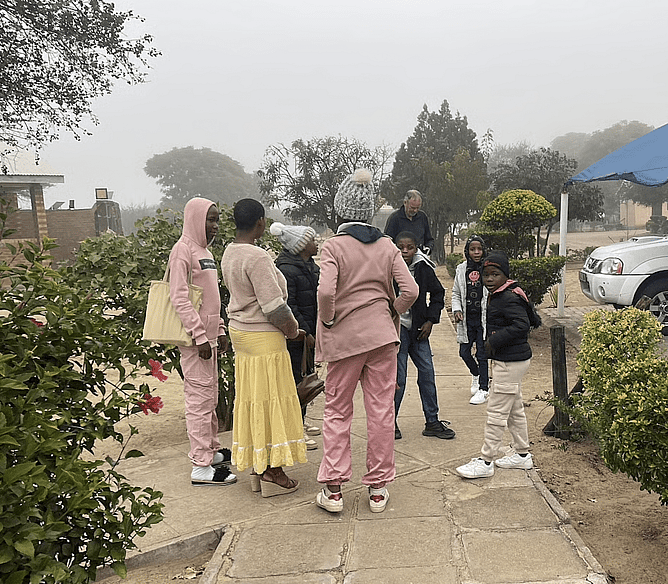
Katso had given me their names earlier so I could learn them. I attempted to pronounce each of their names and welcome all - Dumelang (doo-meh- LAHNG) - is Hello, to a group. The official language of Botswana is Setswana. I can't remember, but I am sure Katso translated. She interchanged between English and Setswana throughout the whole programme, which made such a difference.
We all walked to the village community hall.
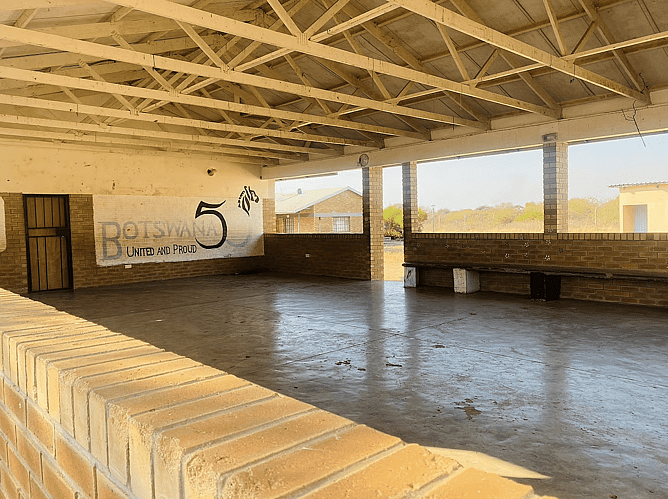
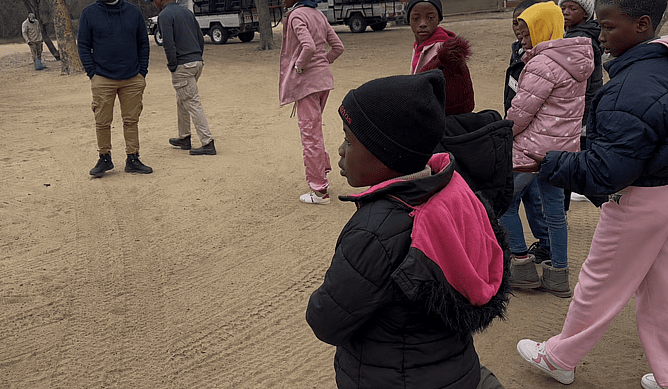
The first hour and a half was about getting to know them all, and them getting to know me - finding out what they knew, and outlining what we were going to do.
I struggled with my emotions. I couldn't believe I was here. There had been a lot of emails, calls, and WhatsApp messages. Danielle had caused it all to happen.
I looked at all their beautiful faces. I just remember how they were looking back at me and all eager to learn.
I acknowledged that I was struggling and that it had been a long journey getting here.
I looked at Katso. I think she said something in Setswana. It was then all ok. I said I was so thrilled, nervous, and excited all at once to be here. Gee, I was also struggling with their names. You know I am WSAW.
https://docs.google.com/document/d/1aZ87v9RzytjuL_j7nYZ-jEMKVS8Kksyc7_WTtX_qlcw/edit?usp=sharing
One girl could see I was struggling and said, 'Call me Truth.' Katso had not heard that other name for her before.
The first thing we did was a welcome circle. They said their name and one thing they liked doing that was a bit different about themselves. I thought I had recorded this, but I didn't. I remember table tennis, swimming, football, and getting into nature.
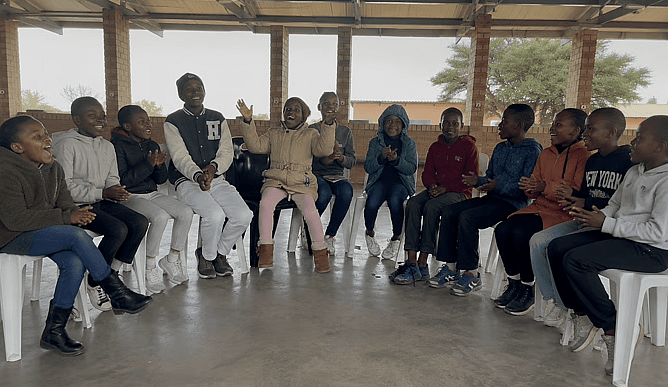
Then I asked them, "What am I here for?" and then "What is nature to you living in Botswana? What do you love about wild life/nature?"
Again, I thought I had recorded this, and I hadn't. What I remember is that I had to frame it a little, put an elephant in the room, and say a little about climate change/restoration and species going extinct. That was what I was here for.
Then a young person came up and said, "I want to become a guide." Another young person wanted to remove some of the extra smoke from the atmosphere. They wanted to help make it better. They loved nature for its calm. One said we must take care of the soil as much as we take care of animals and plants because it is also part of nature. Another said he was excited to learn more about nature, and during the first part of this session's game, he learnt that every animal plays a role in the ecosystem. Another said we must take better care of the environment.
Then I said in this programme we become storytellers, scientists and guardians. Let's find out how much you know and what we need to learn. The leaders, whom Katso had chosen, took their groups away and led them through a series of questions that I had given the leaders on Zoom a few days earlier
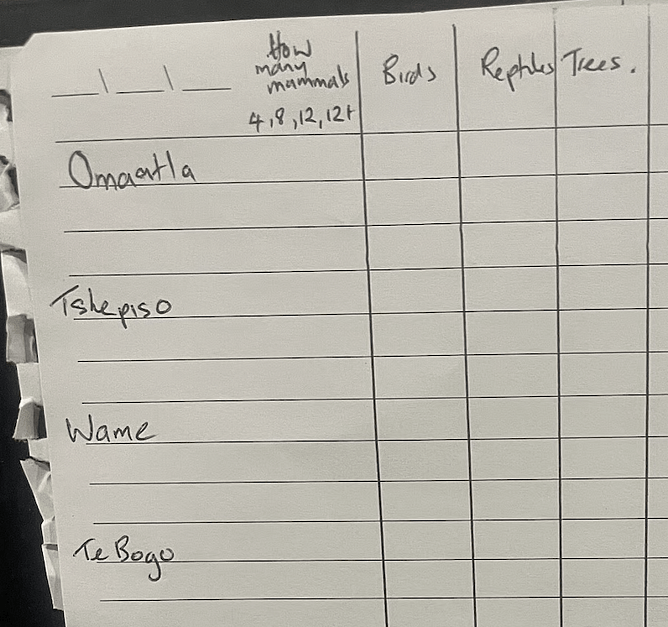
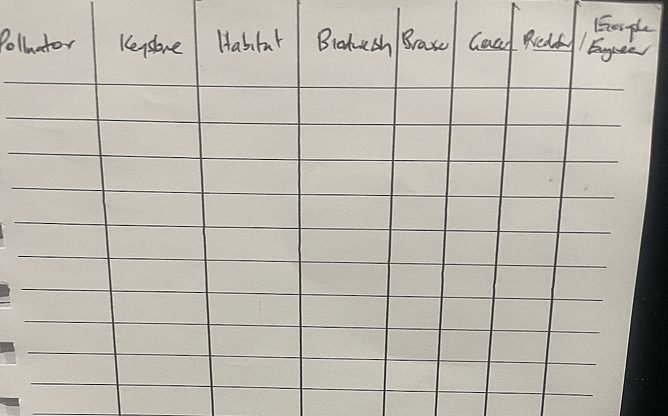
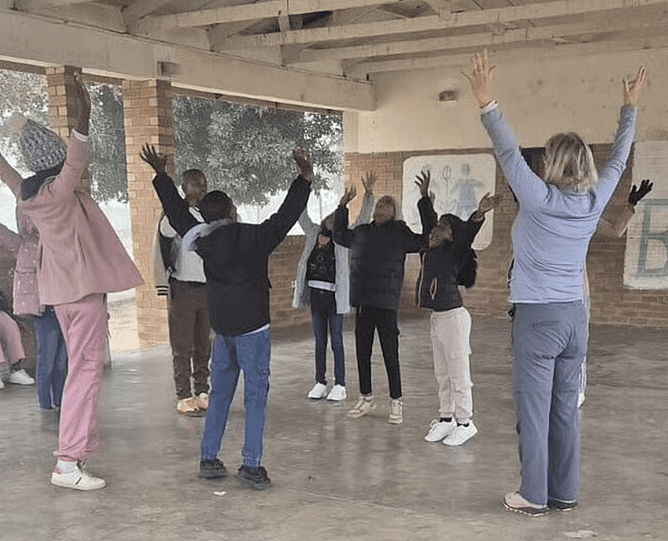
When I looked at what they knew, I saw we could all learn about browsers, grazers and predators. 3 out of the 12 knew what a browser and a grazer were, and 4 knew what a predator was. I would start with having 12 out of the 12 knowing those by the end of the session. I had a quick think about how I would do that. Not what I had planned. Ok, I said this game is called "Leopard is hungry". I used the whole space. Here they are playing it.
This is "Giraffe is browsing."
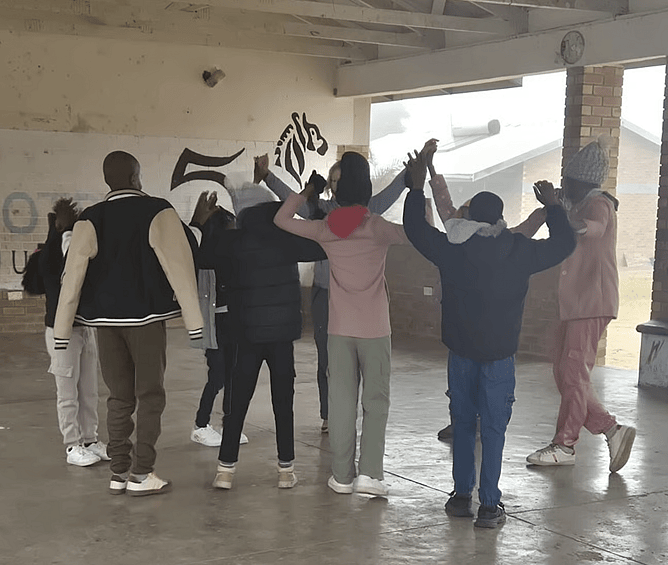
"Warthog is grazing." Warthogs kneel on their front knees to eat, because their neck is so short. Occasionally, they can eat fallen fruit and insects.
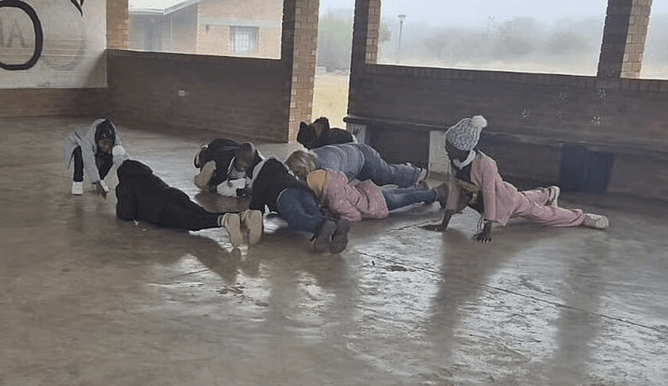
"White Rhino is grazing." I can just name the grazers. When they hear grazing, they now know what to do.
"Impalas and baboons stick together." Here they are finding a partner to be with.
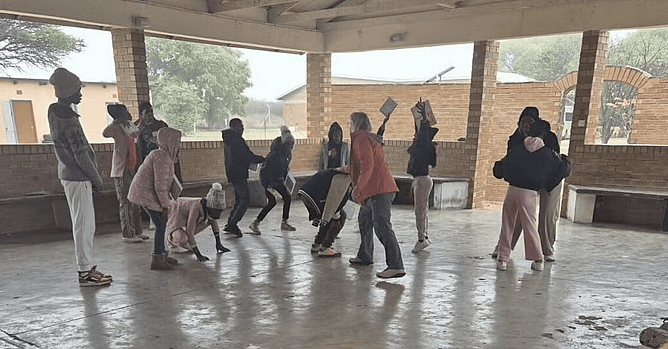
"Leopard is hungry!"
The leopard chases to tag someone. They stay in the game learning. They chase better than I do. I could not catch them when I was the leopard.
This game was such a hit, it was so much fun. We played it on the second day too, and before they headed off to Khama Rhino Sanctuary on the third day. They loved this game, and this was a great space.
I tried to think of other commands - 'Water' was going to another wall. I named other mammals too that browse: 'Black Rhino is browsing'. Overnight, I came up with:
'Guided walk' - they all get in a line, and I was the guide.
'Water fowl at the drinking hole' was at a waterhole in the middle.
'Game Drive' was 6 in a jeep on the side.
'Aardvark sleeping' was lying on the ground, though they slept underground I said.
'Black mamba wrestling'. They were in pairs wrestling. Apparently, male black mambas do this before they find a female mate.
'Termite'. They formed a termite mound with their arms high.
'Secretary bird strutting around proudly '.
I can think of others now as I write this - 'Shade ', they go under the seats. I didn't do the trees, and I could have done 'Leadwood tree ', growing slowly and then really big. 'Secretary birds walk around for their prey' - eating small mice, snakes, etc.
I think young people could easily come up with others.
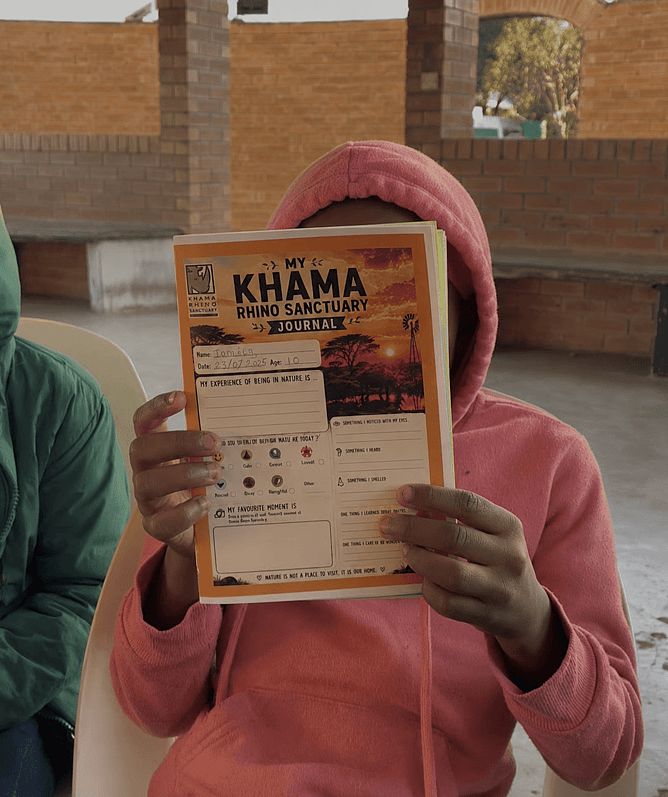
Then we went back to our seats, and I gave out the journals. They had a plastic cover. All the leaders had one each, and the two in each group had a plastic cover between them, plus a pencil with a rubber on the end. I got them to write their names in their journal, and then I got a video of each of them, so I could learn their names overnight. They had to say their name and then hold up their journal. That was for me so I could learn their names.
Then we closed with what they got out of the day. Again, I forgot to record. They got, from memory - There is a lot to learn; I am excited about tomorrow and the trip; I want to look after our native species; I want to remove carbon from the air to stop climate change; I want to be a guide.
And we were only on the first day!