
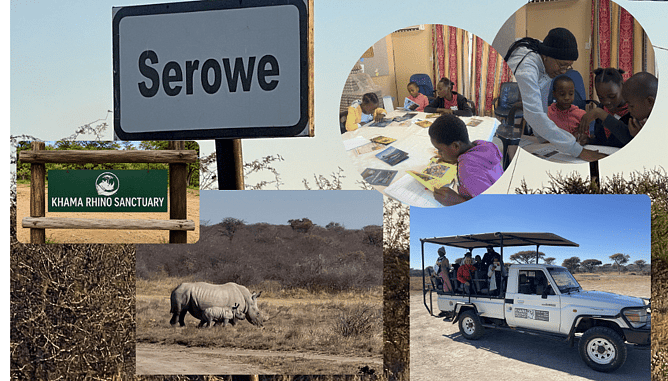
The next day arrives. I have printed the story books at the hotel. I also sorted through all the resources I prepared, along with the games and activities we didn't do, and packaged them up to give to Katso so she can play later. I also put them in a drive she can access. See at the end.
The young people arrive at 7.30am. We arrive at 8.00am. First, I hand out their journals and name tags.
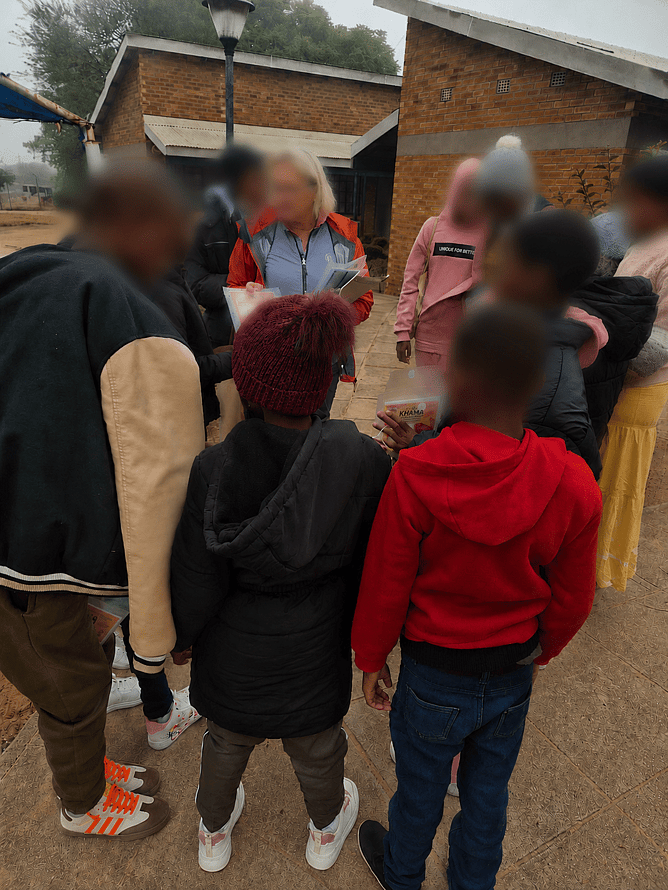
Mr Bikkie, who is taking a car to the Rhino Reserve with us, has gone somewhere. While we wait, we play "Let's Go, Leopard" again.
Here is the game written up. https://docs.google.com/document/d/1CPzYJqpBz2D_rJYPmmZgwXeuULkpxl9su1Le4R_nKHw/edit?usp=sharing
I think of another action - 'I'm going on a game drive.' They divide into two groups, the same groups they used to create their story. They sit in their seat, in a group of six and drive. I didn't catch them driving. Just as well. They are too young.
I read them the stories they created to see if we need to make any changes. I had worked on the Lilac-breasted Roller overnight. It seems they are all happy with their work.
https://canva.link/teeruql531e4tnc
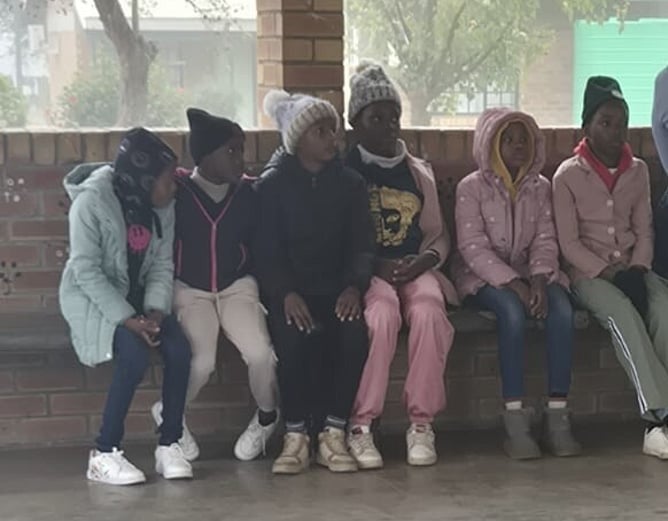
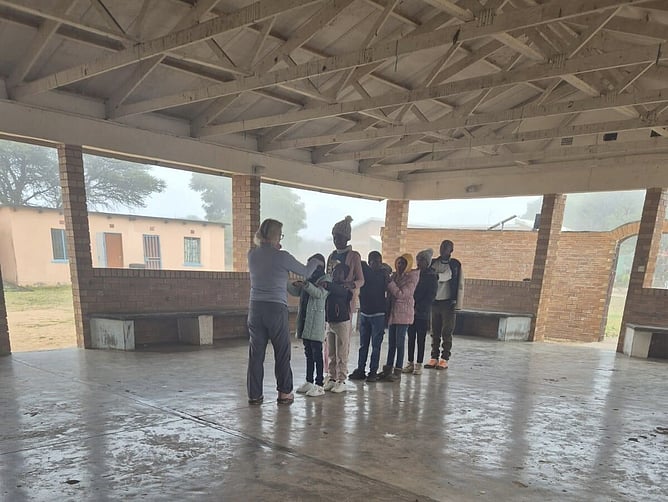
We play for the third time 'Leopard is Hungry'. I introduce another action - 'We are going on a guided walk.'
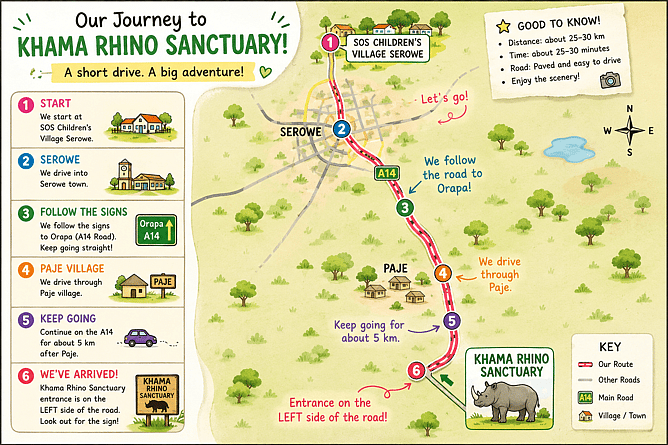
Mr Bikkie arrives. It takes 25-30 minutes to the Khama Rhino Sanctuary. Here is a map of our journey. We are in three cars.
I meet Mogomotsi, who I had been emailing about what would work for the day. I could not say his name. He said to call him MG.
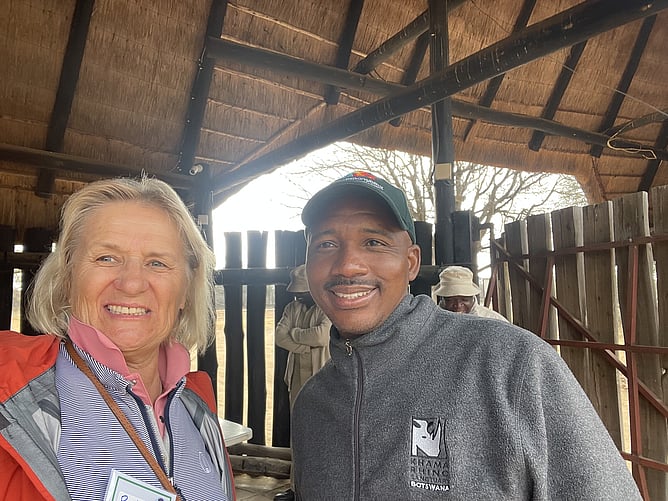
This is also Sepoh, the other guide. We would have two guides driving two vehicles for the game drives.
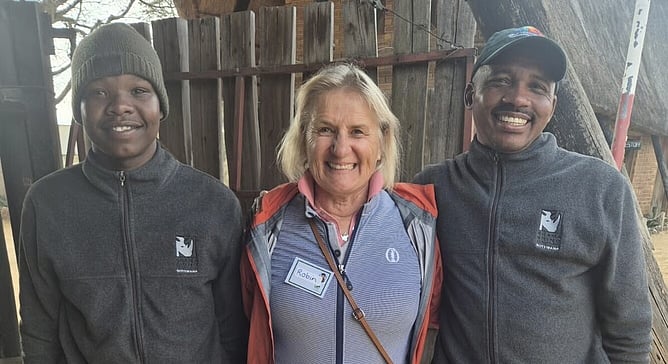
I am not sure whether this map is correct. I should have bought one from the shop - that seems the only way you can get a correct map. And I didn't. This is from from ChatGPT, it gives you some idea of where we went.
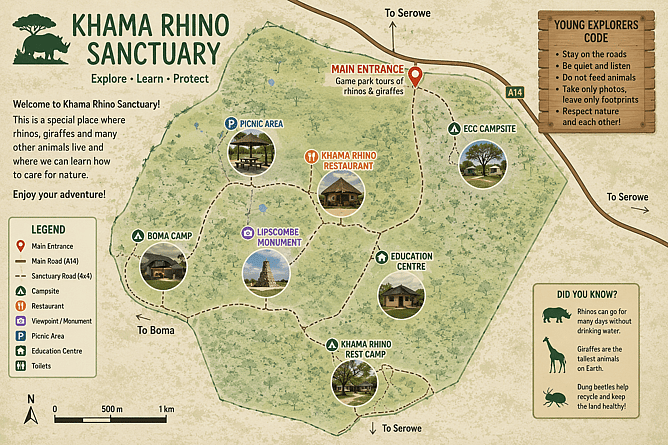
We headed to the Education Centre first.
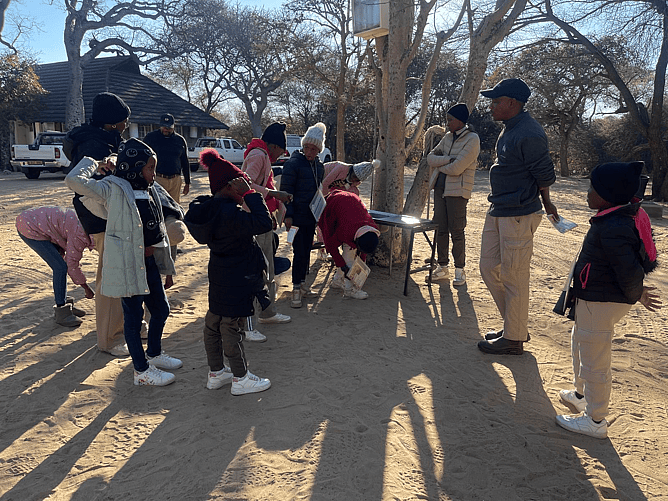
Then MG gave us a talk on the history of Khama Rhino Sanctuary.
"Ian Khama (later President Seretse Khama Ian Khama) was one of the key people behind its creation. When the idea was conceived around 1989, he strongly supported the project, encouraged the protection of Botswana’s last rhinos, and helped bring together local communities and conservationists to make it happen.
The sanctuary was established as the Khama Rhino Sanctuary Trust, with Trustees elected by the communities of Serowe, Paje and Mabeleapudi.
Ian Khama worked with local communities and conservationists; he helped protect Botswana’s remaining rhinos and create a safe place where they could thrive.”
Because he was president and came from Serowe, I am guessing it was easy to name the sanctuary after him.
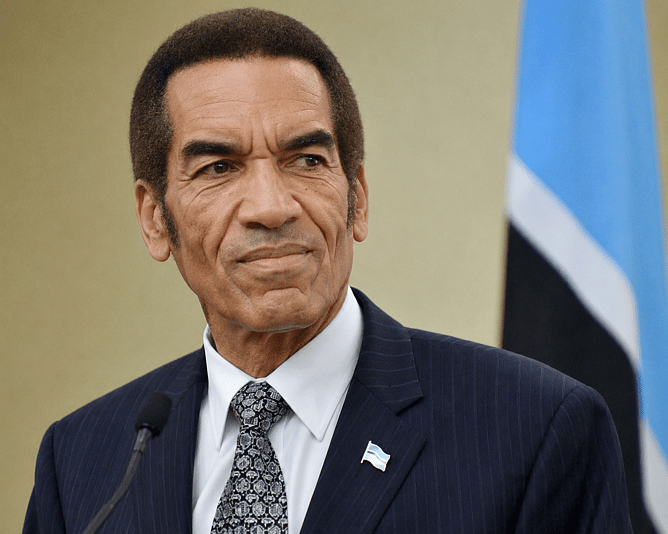
I rephrased the history of the rhino sanctuary in a story. I couldn't help myself. This is especially for young people reading this:
https://docs.google.com/document/d/1HVUGvlQ0_DIVDxvORUaldpWRjKHgTg55gOJP-cYv0Y4/edit?usp=drivesdk
And for adults:
https://docs.google.com/document/d/1HlYiPAt8OGXLP7k4XtPJW4OSzyd5Ldwn8y0fUe8HbFg/edit?usp=drivesdk
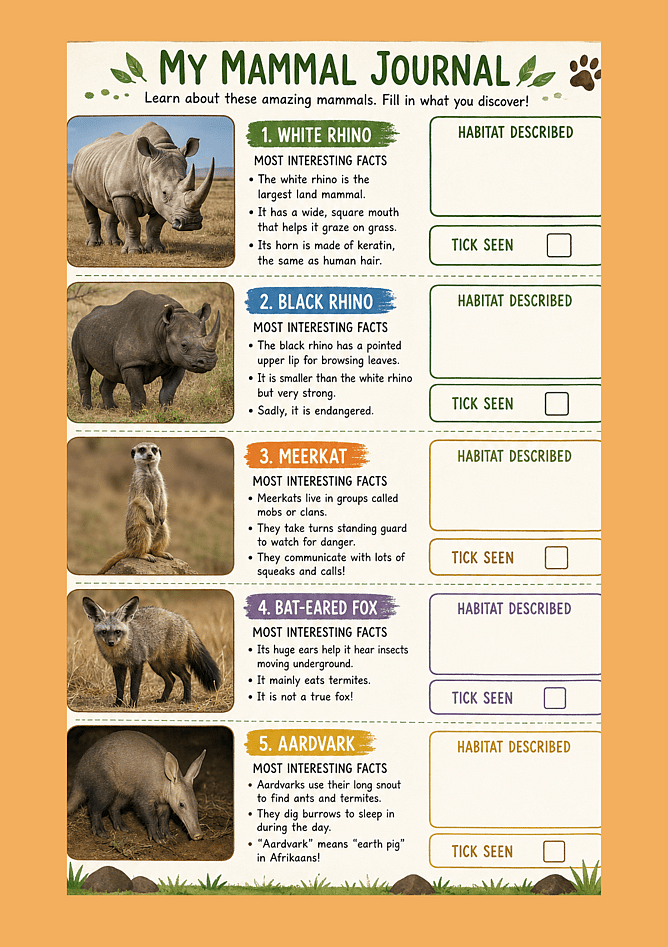
MG talked about the difference between the black and white rhino. One is a grazer, the other a browser. There are 50 white rhinos in the sanctuary and 7 black rhinos.
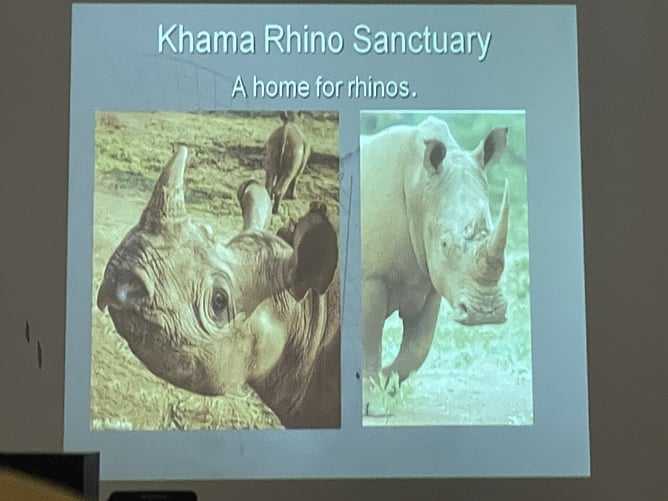
Here, MG in action with the students.
And Jerson up the front too!
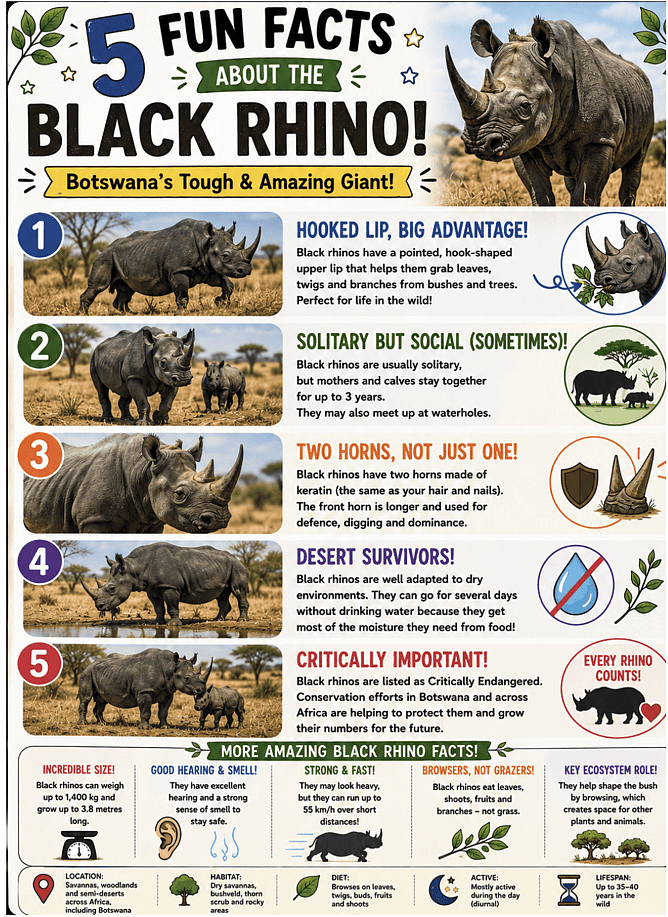
Then it was time for the first game drive. I had emailed MG and told him that I wanted little time at the Education Centre and most of it on game drives so they could experience wildlife. My experience has been that when young people see and experience wildlife, they want to save it.
The program was a morning game drive, lunch, an afternoon game drive, a guided walk, and afternoon tea.
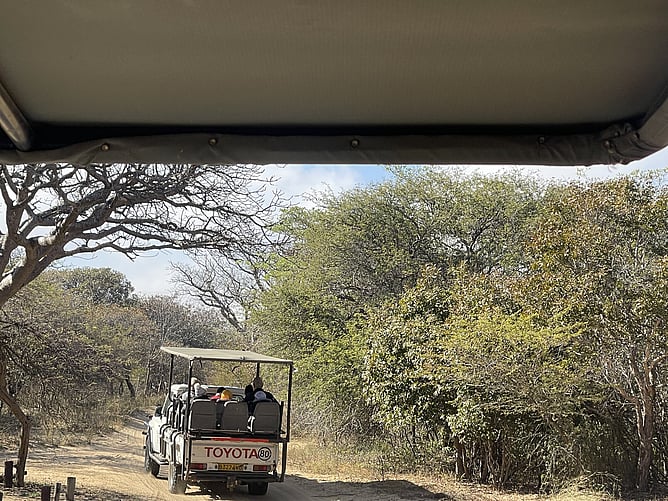
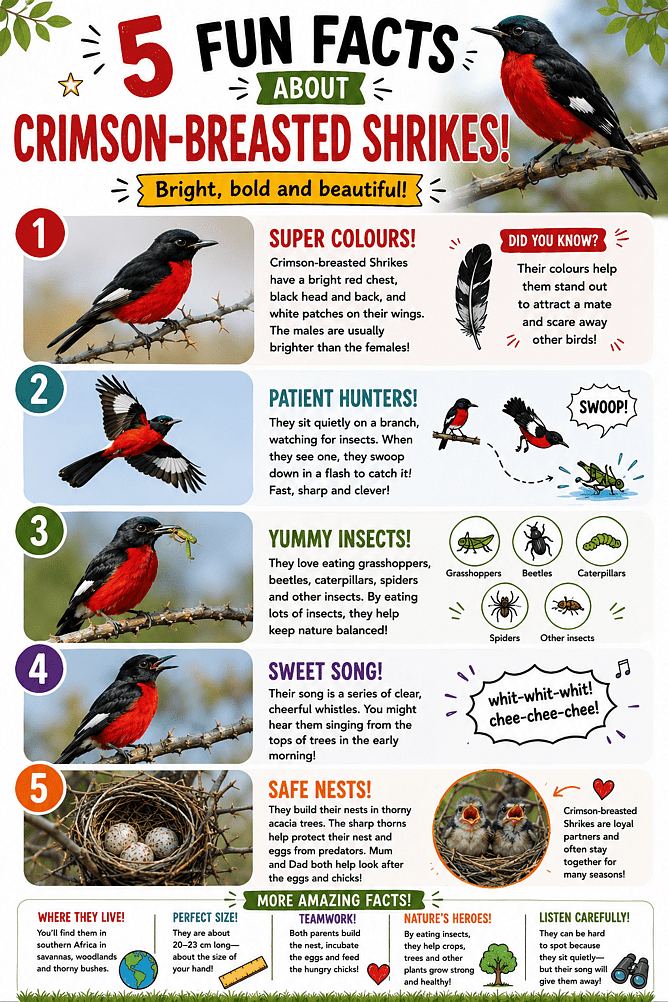
First sighting is a crimson-breasted shrike. This was not in our journal. I thought this would happen, so I had stapled some extra pages in the middle of the journal, so that if they saw something that wasn't in the journal, they could write it and draw it there.
There were the sheets on the table for the other species. I made up a new one afterwards.
MG got out of the jeep and showed us rhino dung which had twigs and branches, and dung which had grass.
Dung from a black rhino. Hear the muddle I made. I think I was too excited to be here.
This below from a card game I designed to help understand some of the names given to species and the role they play. We never had time to play it. I left it with Katso.
I did have some of the cards (on black-and-white paper) to give out to put in their journals if they saw a species. I thought they could collect the cards. I didn't have this card with me to give out. I wish I did. The species is genius.
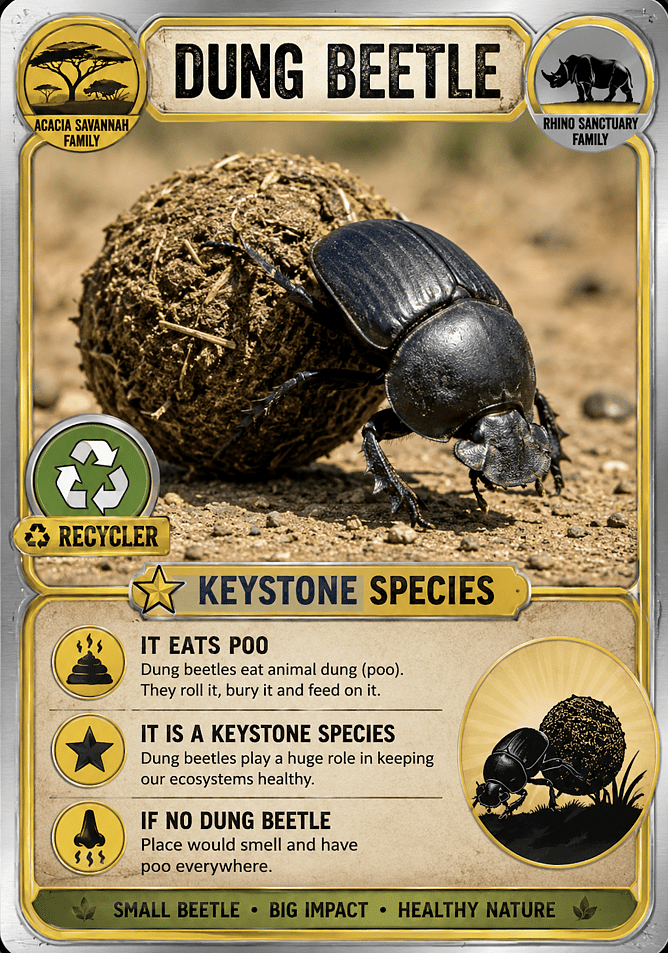
One that I did have for them.
We drove on.
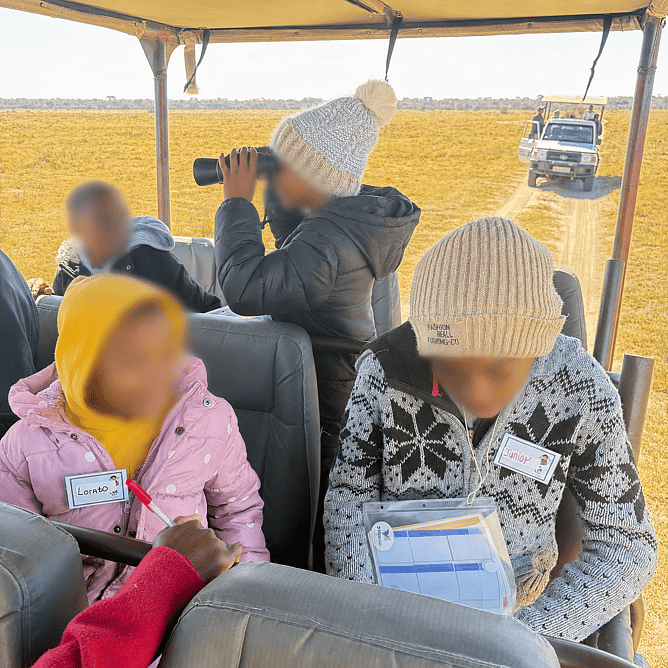
Binoculars were a big hit!
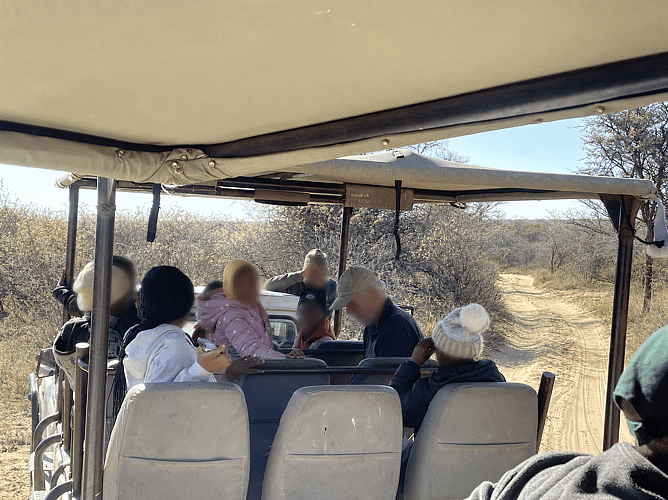
We went to the waterhole. There didn't seem to be too much happening. So we took some photos and stretched.
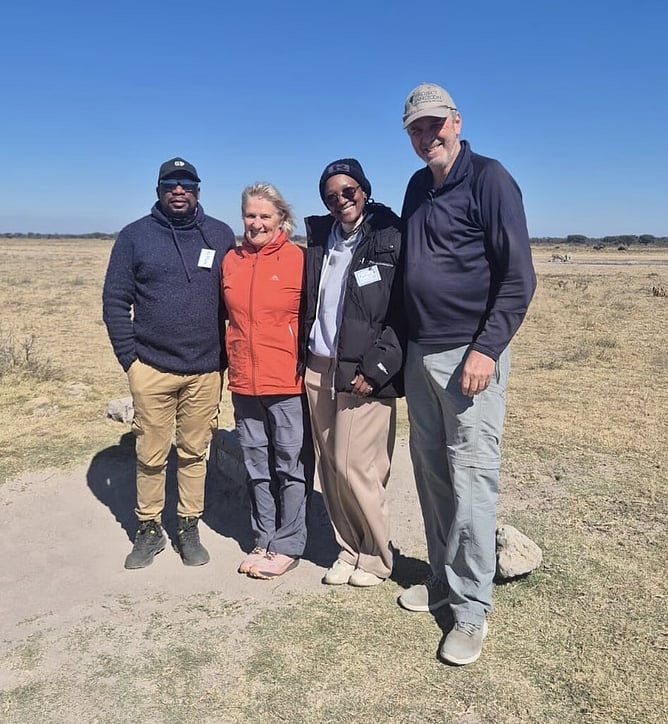
Mr Bikkie, me, Katso and Bill. (Sorry you are not here, Danz :(. ) This is the team - plus Danz - that made all this happen.
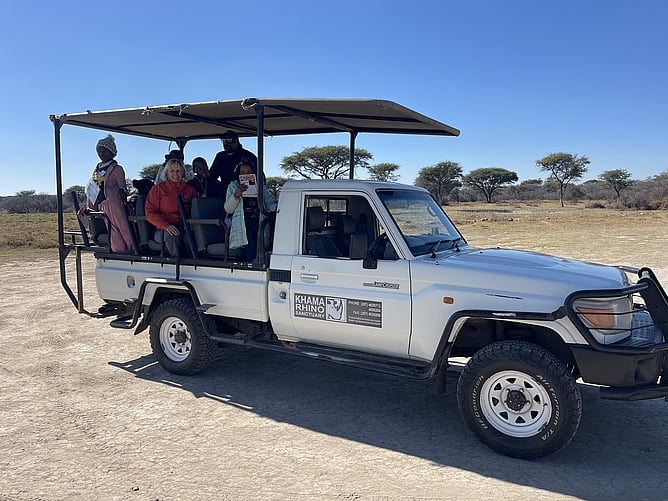
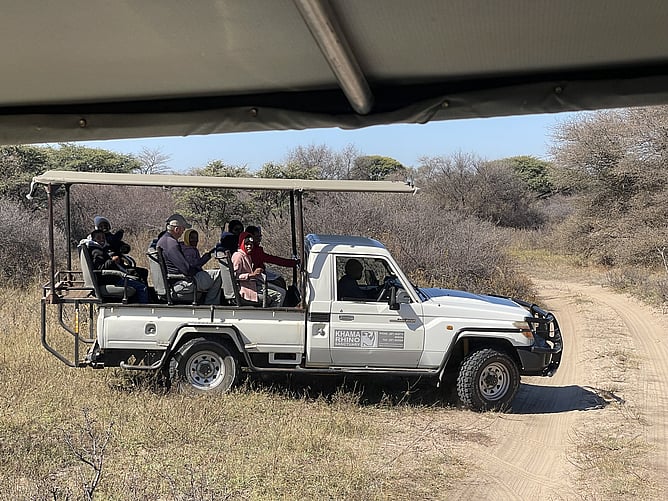
Our jeep - with journals.
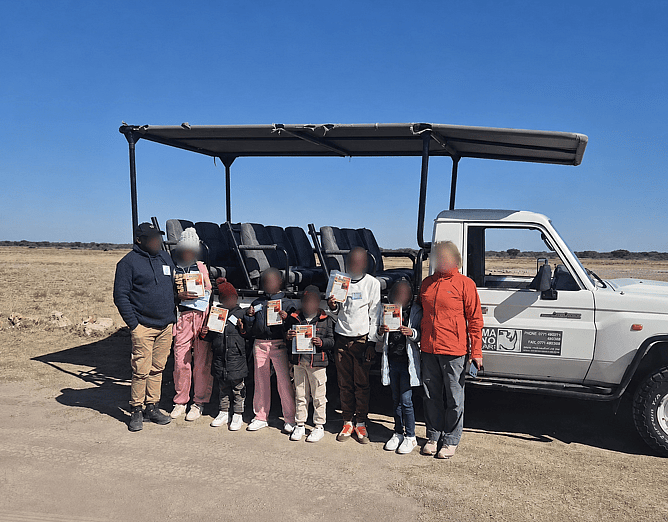
Katso and Bill's jeep - with journals.
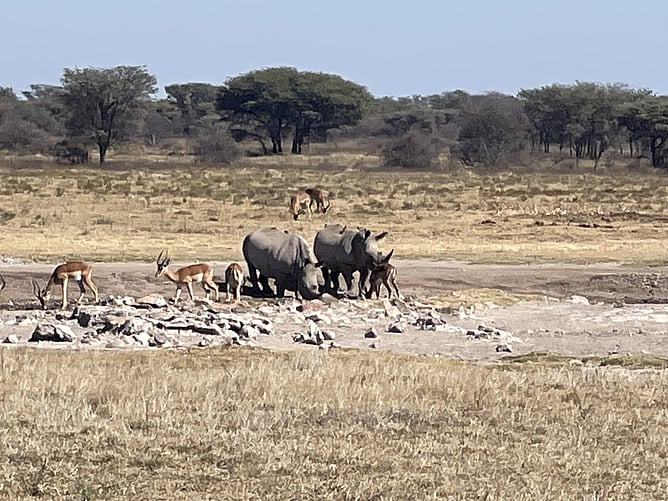
Then the animals started arriving at the water hole. They were a long way away but everybody saw them.
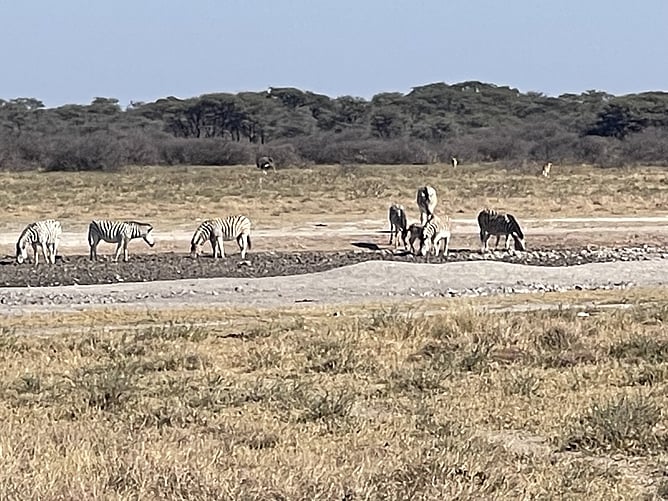
MG spotted the secretary bird a long way away, but said we could get closer. He said he couldn't go off-road, but we could get close to the road, so off we went. He said we would return to the waterhole after that. We did get closer.
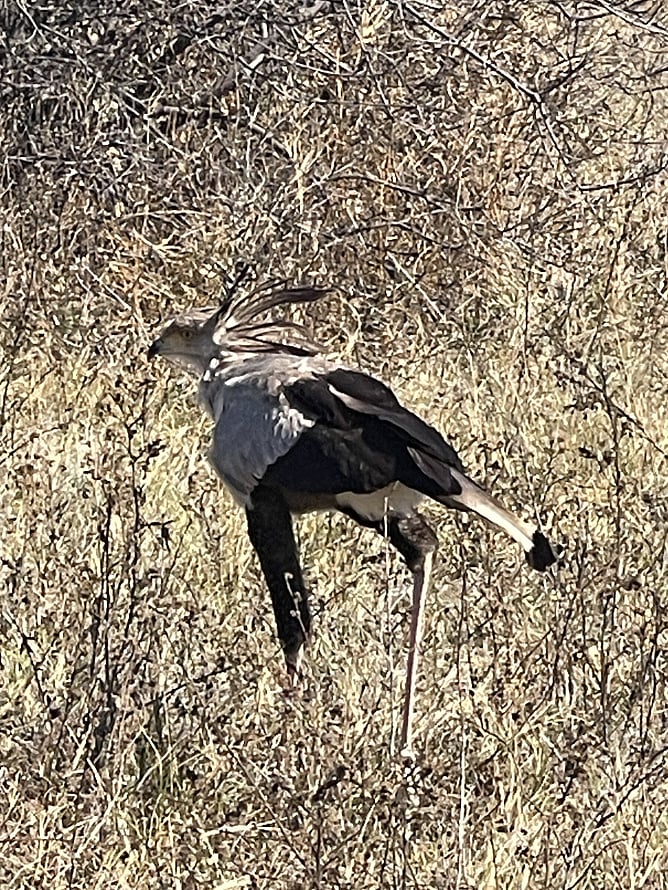
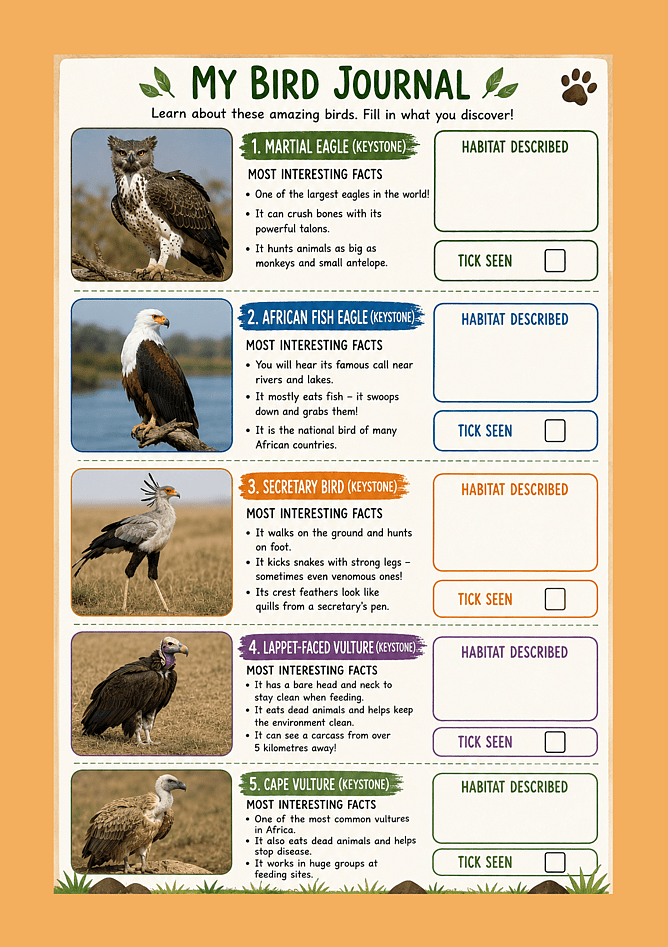
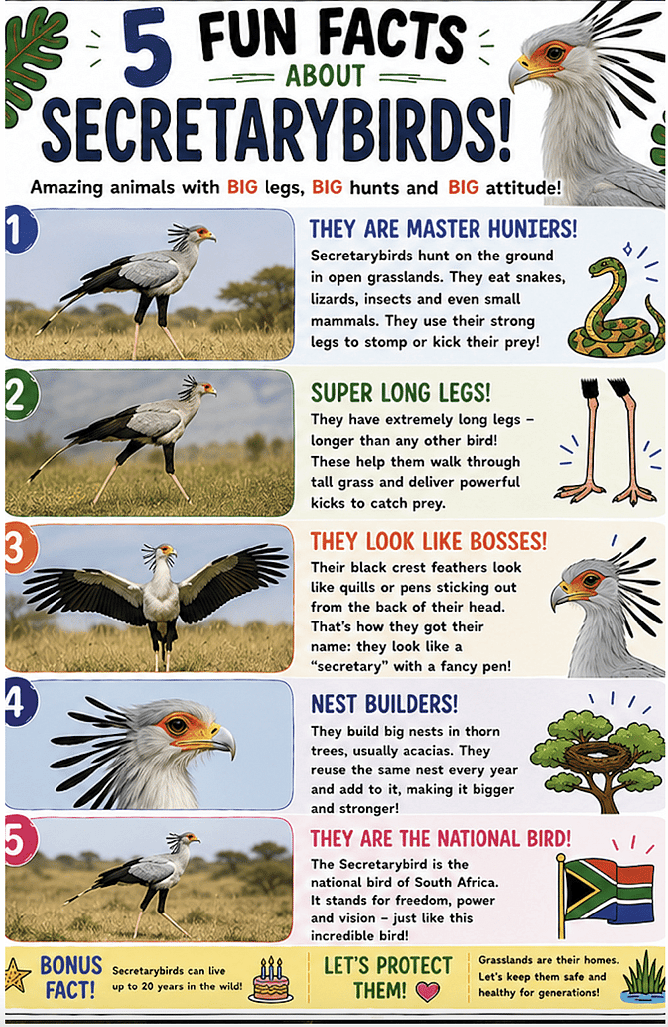
My experience seeing this bird was that it was beautiful, weird, and comfortable in its own skin. I was transfixed as it walked, obviously looking for ground food. Yay, it was in their journal, and I also made a sheet about this for class stories.
Then we see springbok much closer.
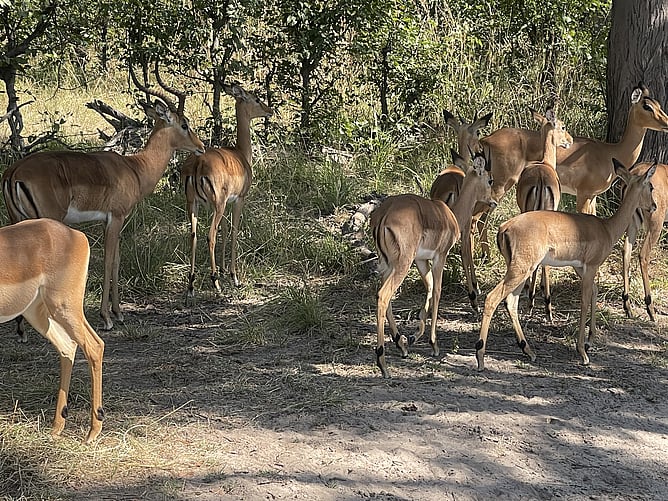
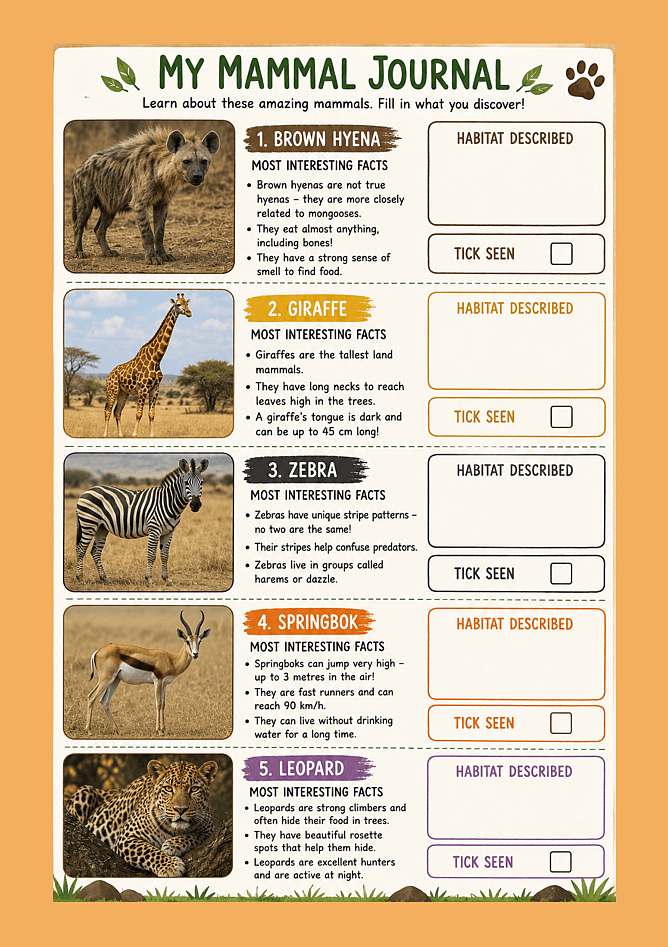
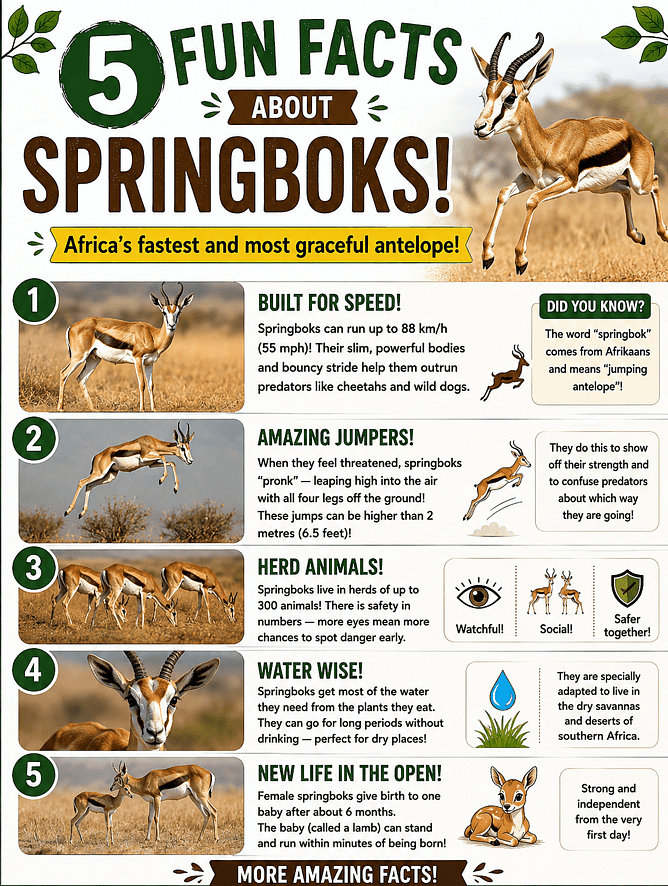
Then spot who is here!
I had to tell them not to look at their journal all the time!
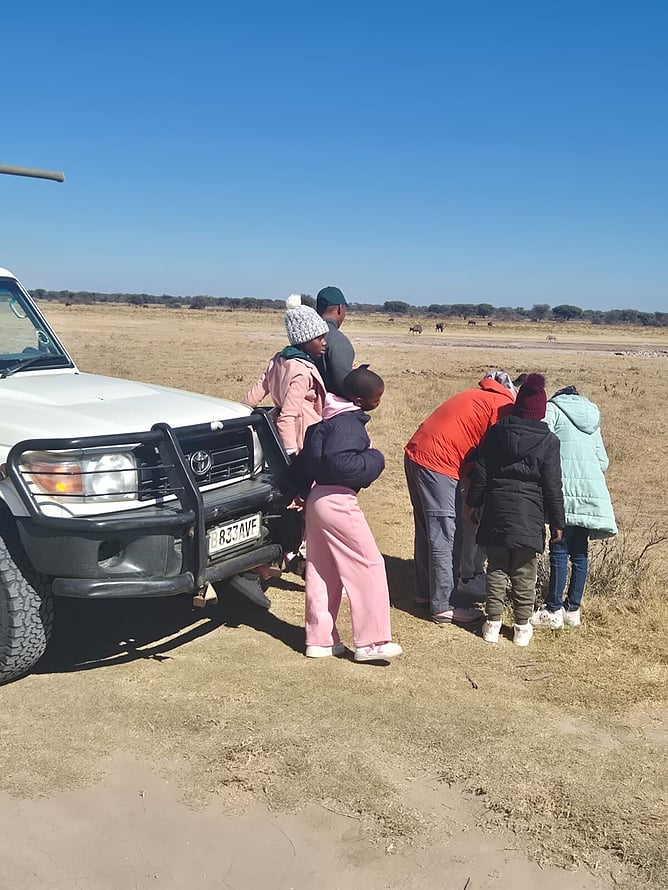
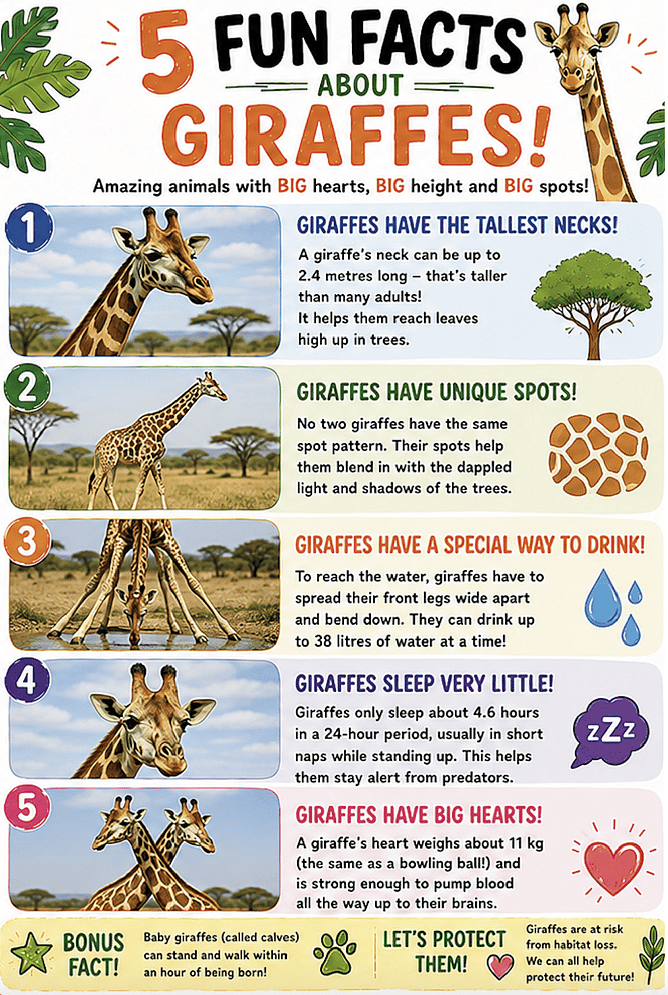
Then giraffe arrive. I love the way they drink.
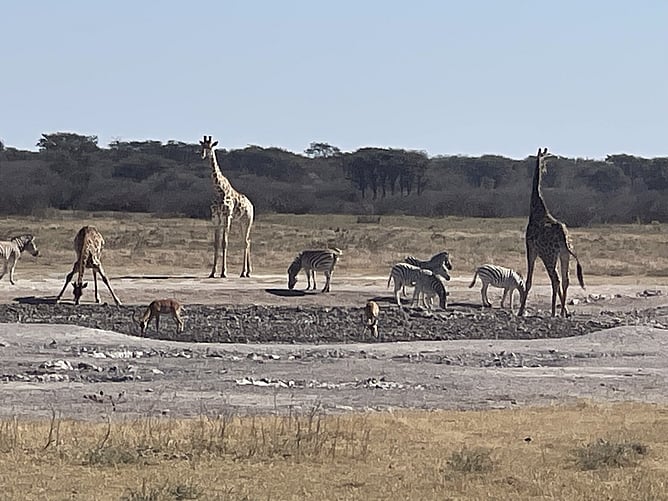
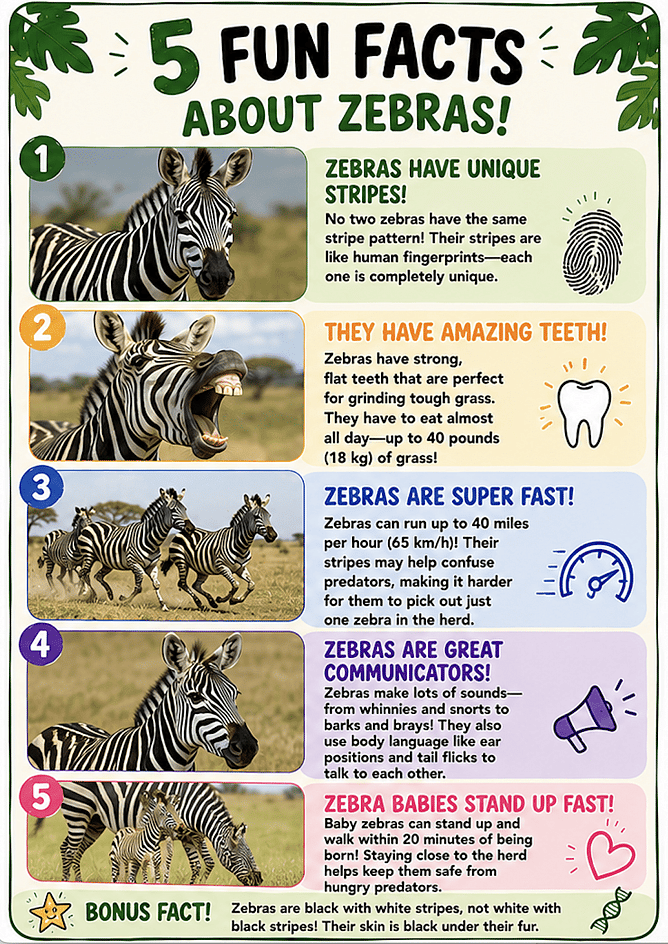
How many giraffe and zebras?
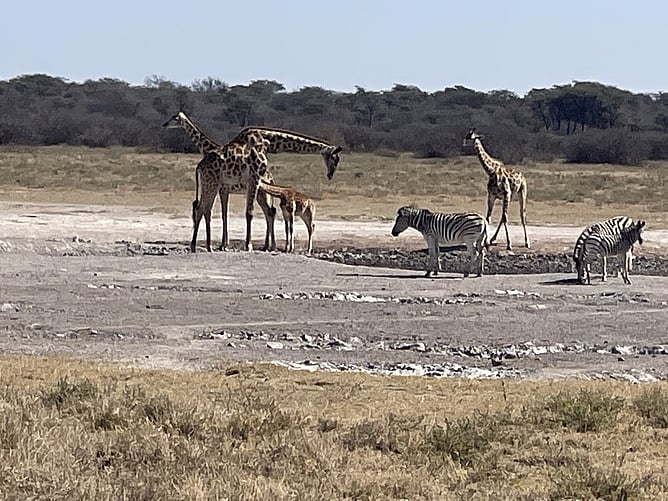
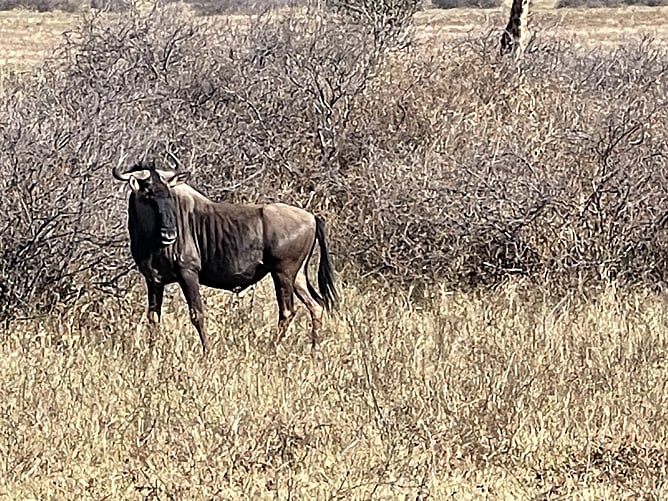
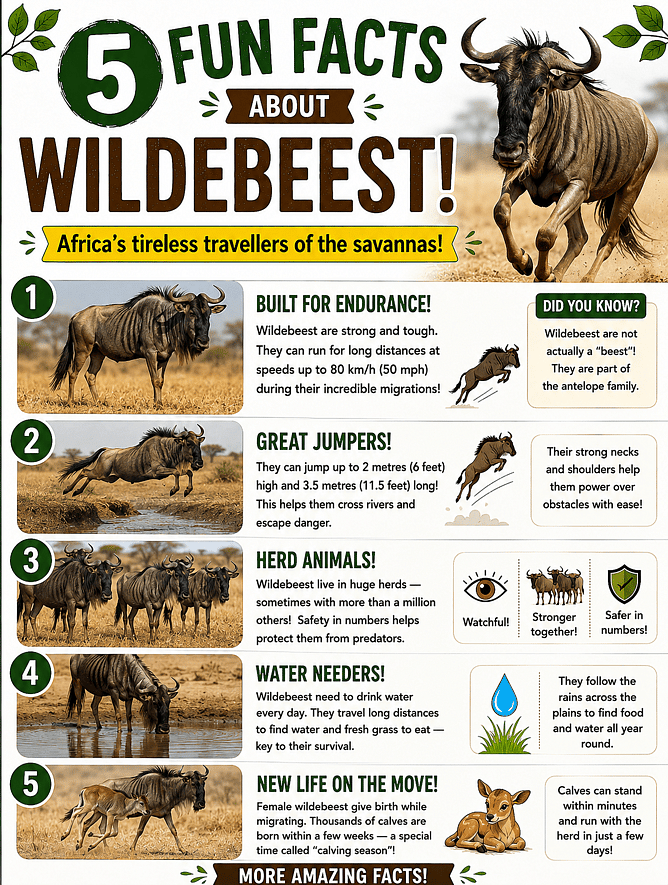
We move on. We see wildebeest.
There was a giraffe behind.
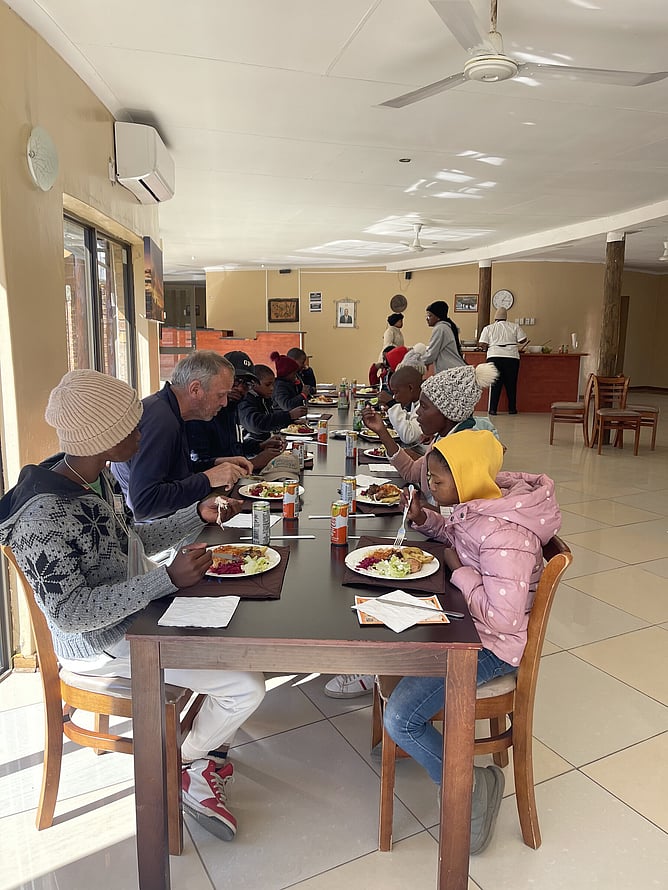
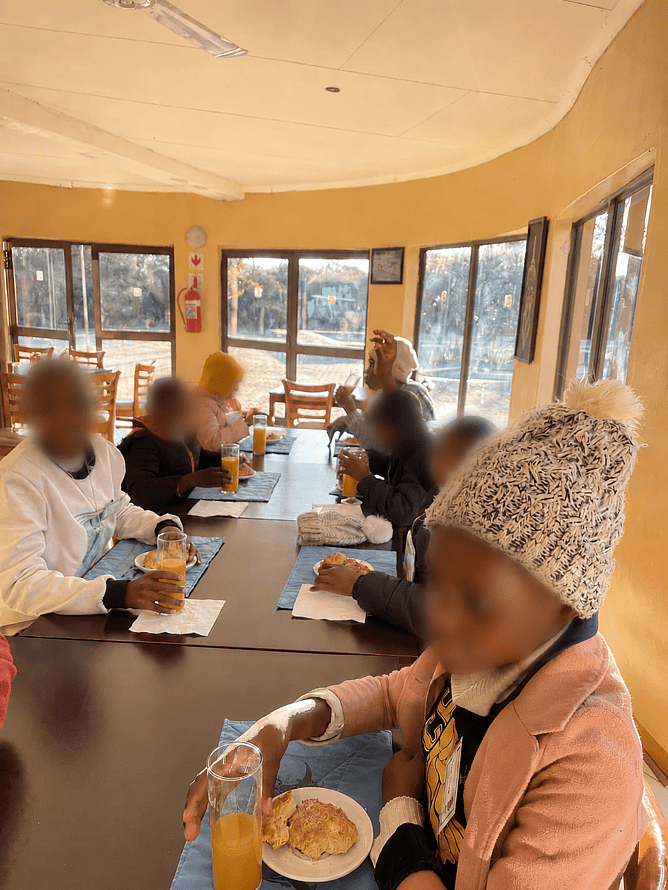
Then it was back to the restaurant for lunch. Yum.
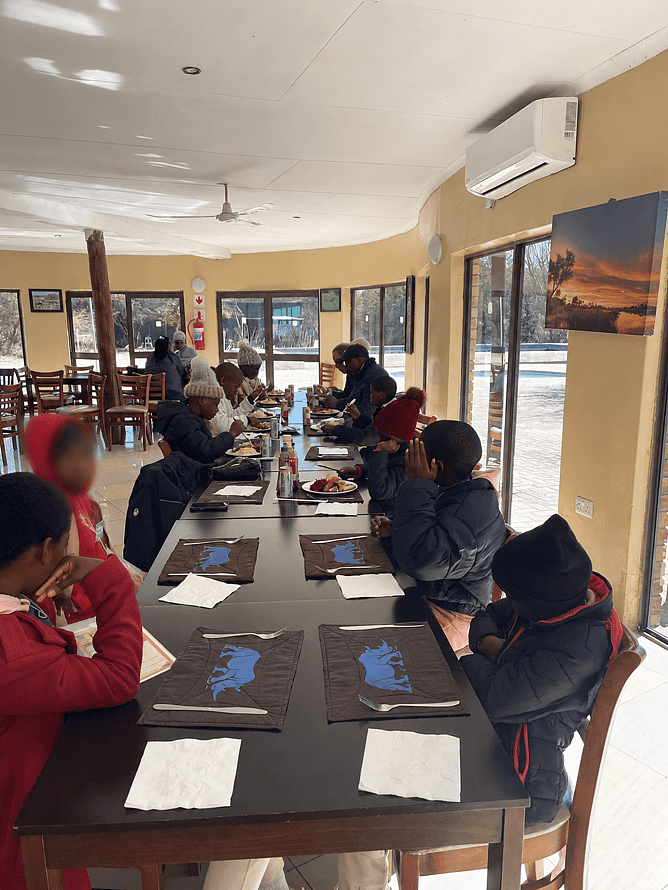
And after lunch, the second game drive. MG spots rhino footprints.
And then in the trees ...
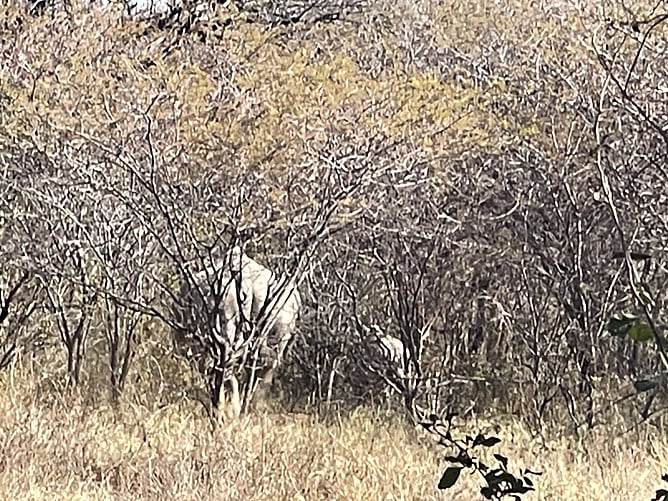
And it is the cutest baby with its Mum. We follow its direction. I can keep watching these videos. It is adorable.
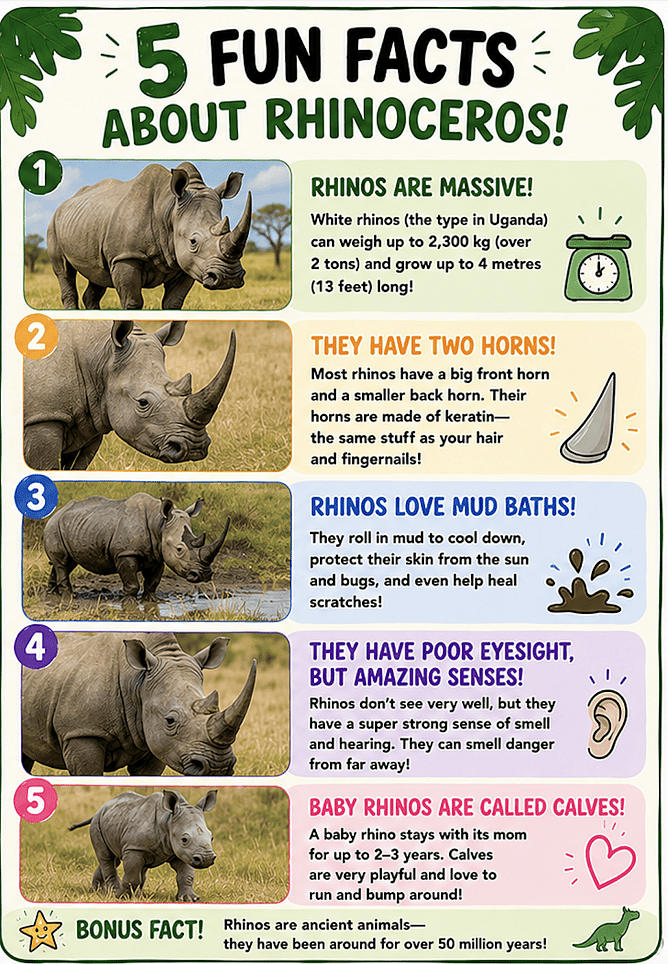
We keep following Mum and baby.
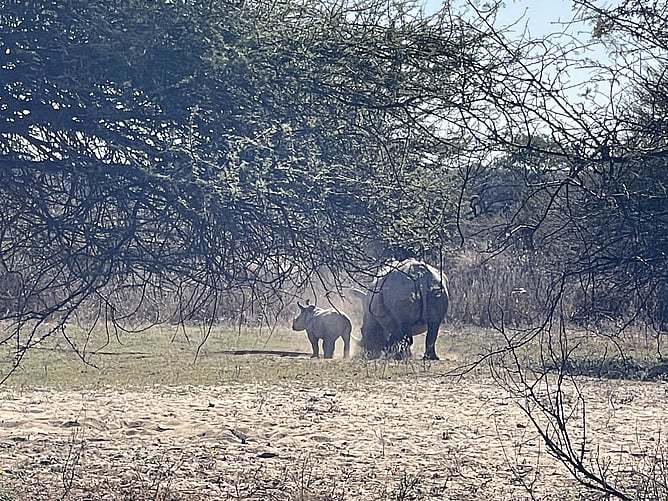
They cross the road back the other way. MG knows they are heading to the water hole.
The other jeep with Mum rhino and baby.
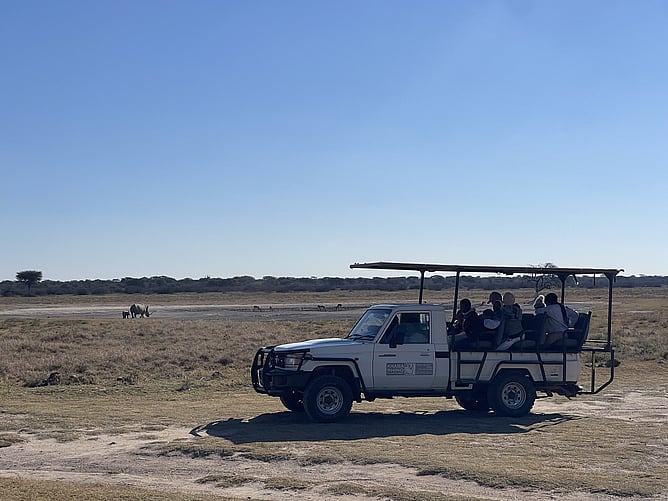
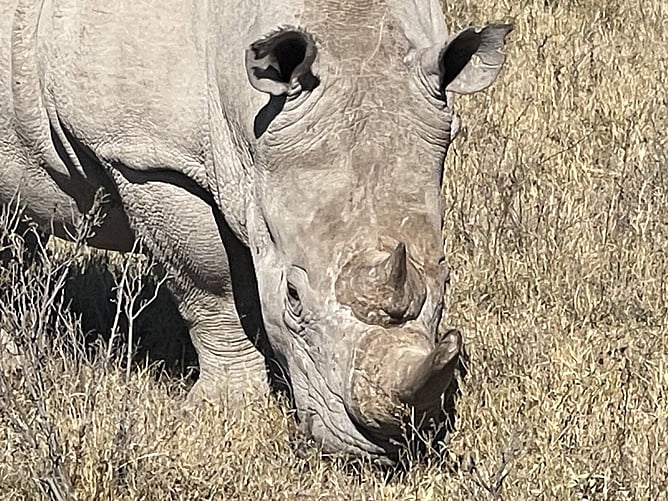
Later we saw another rhino grazing.
We got super close.
Look at those horns.
Tail.
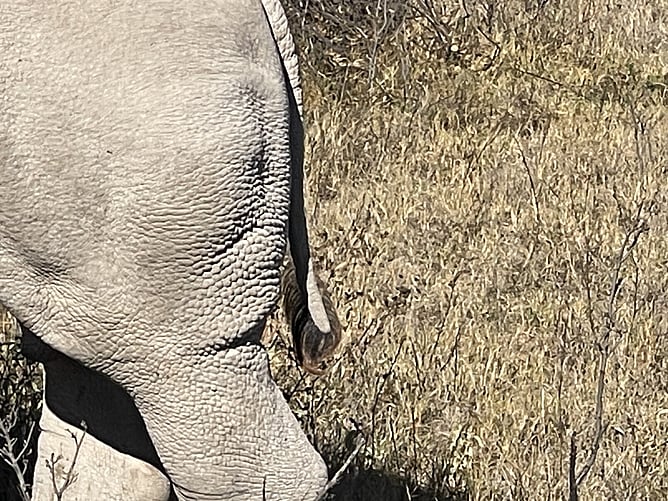
Tum.
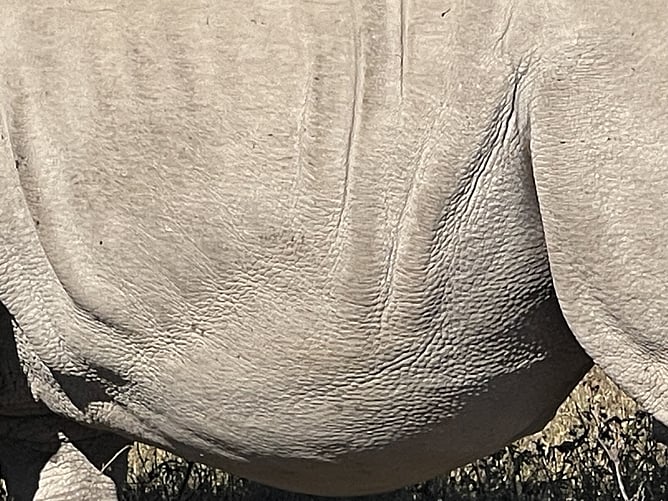
How close we were.
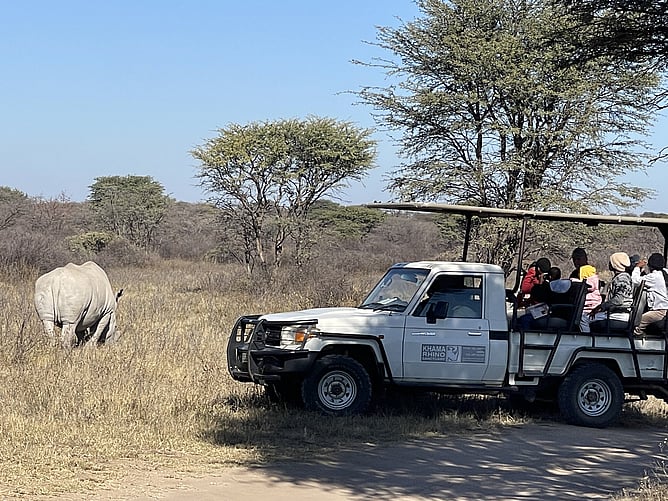
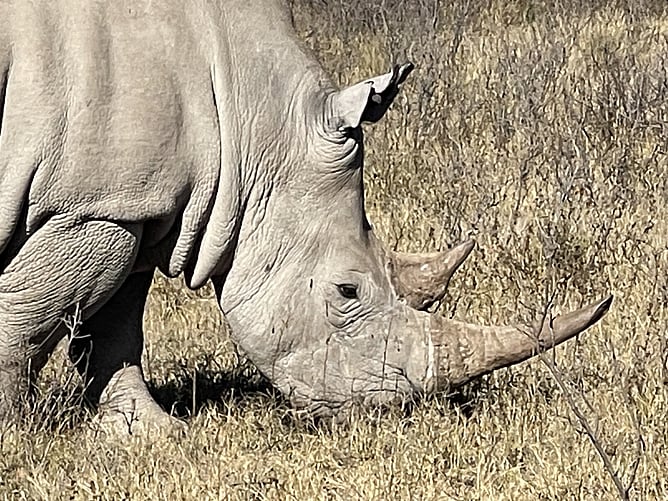
And walking away.
It was Katso's first time at the Rhino Sanctuary too.
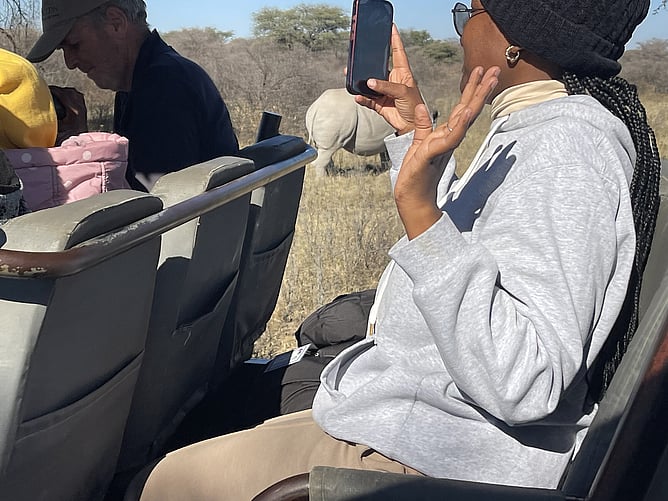
Then a giraffe nearby.
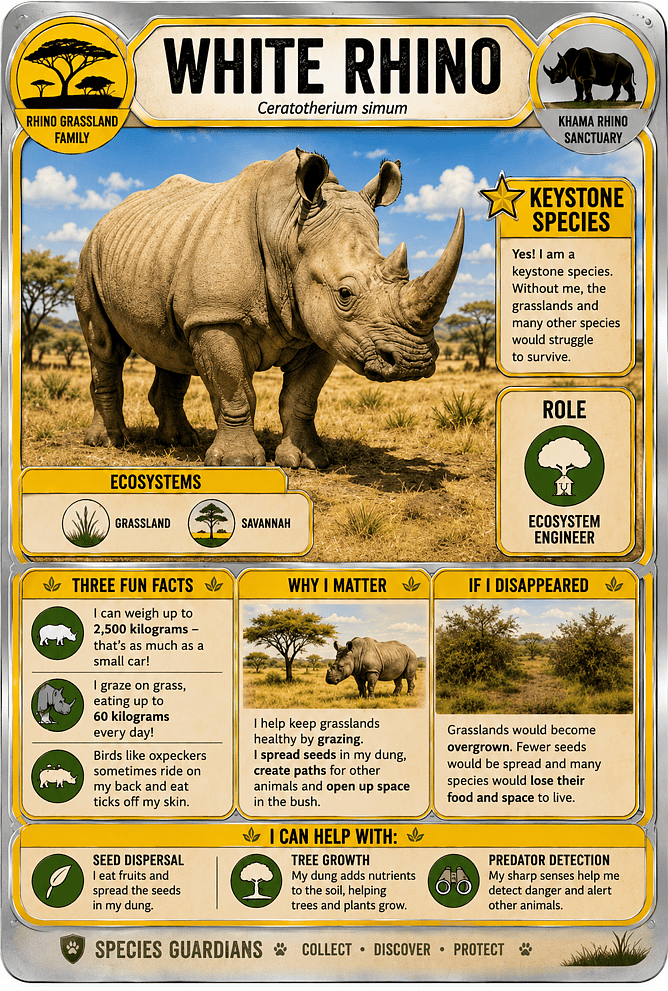
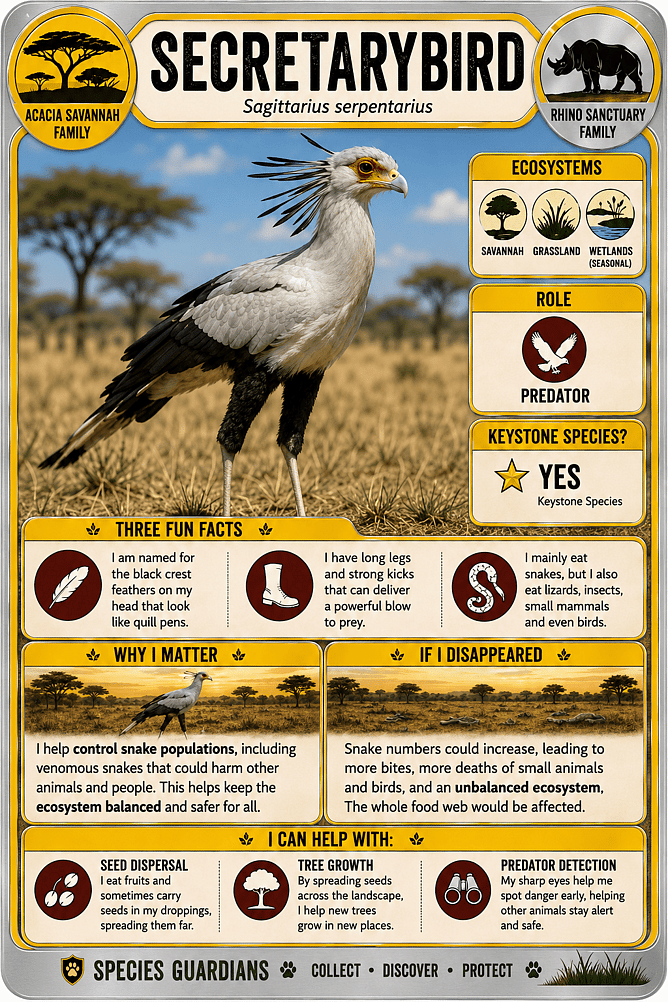
After we saw the rhino, I handed out some of the cards I had in our jeep (like the dung beetle ones.) I had printed them in black and white from a card game I had made up. To my surprise, they all wanted the white rhino card. I only had two white rhino cards.I said I would send more. They can exchange them and make up a full set and play with others in the SOS Children's Village. I will leave that to Katso now. I had thought the cards might be a hit, but I was overwhelmed by how much they liked them. I am super pleased about that.
Here are the white rhino and secretary bird cards, not any more for fear of making this blog too long. So many learnings to take away. At the end of this blog, I will include a link to the rest of the cards and to all the games I prepared and never played. I am sure I will have to add extra cards.
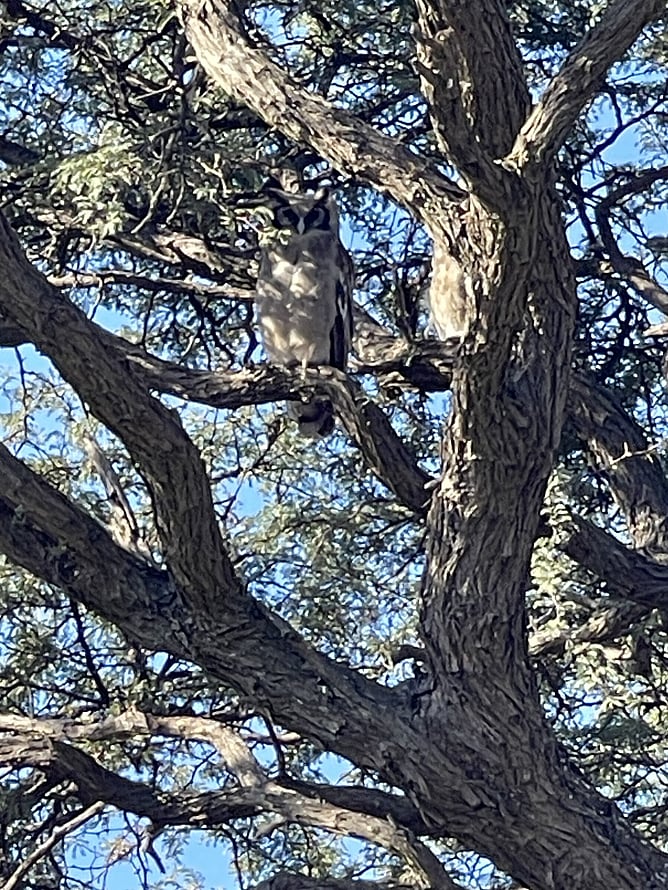
Giant eagle owl - maybe 4 in the tree. Well spotted, Jessica, eagle eye! We would not have seen them otherwise. These are usually seen only at night.
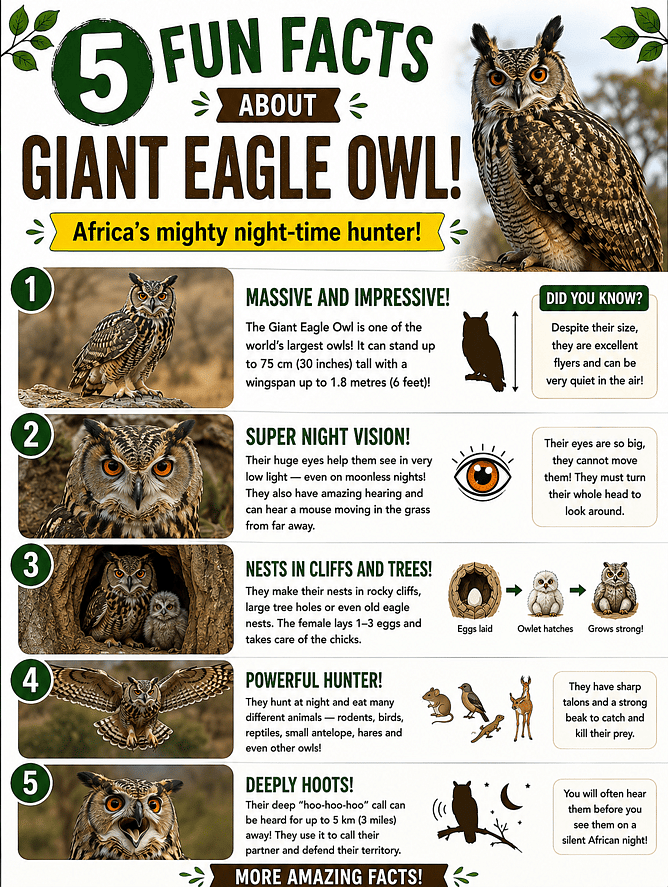
(Another card, fear of making the blog too long overcome obviously, Ed.)
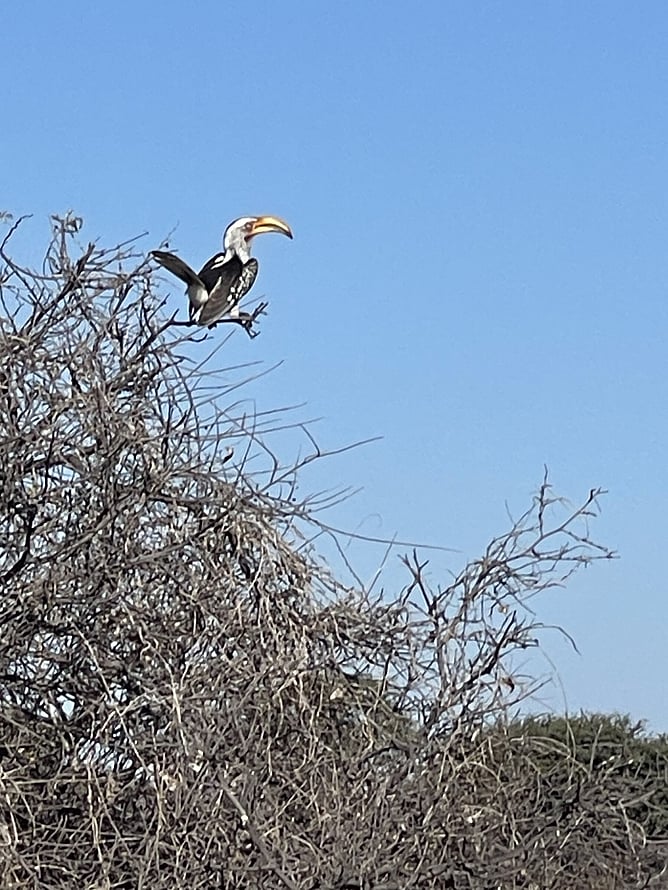
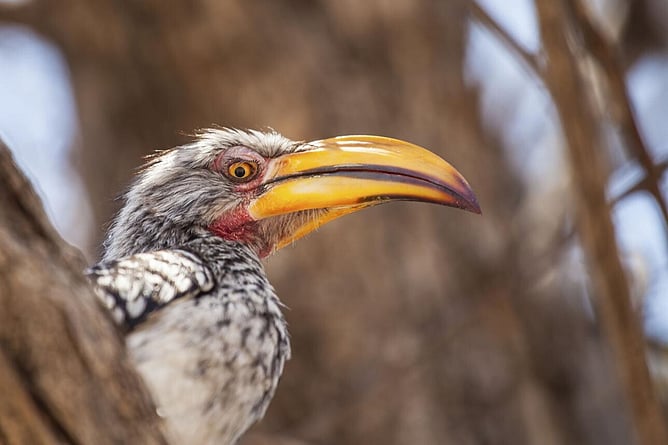
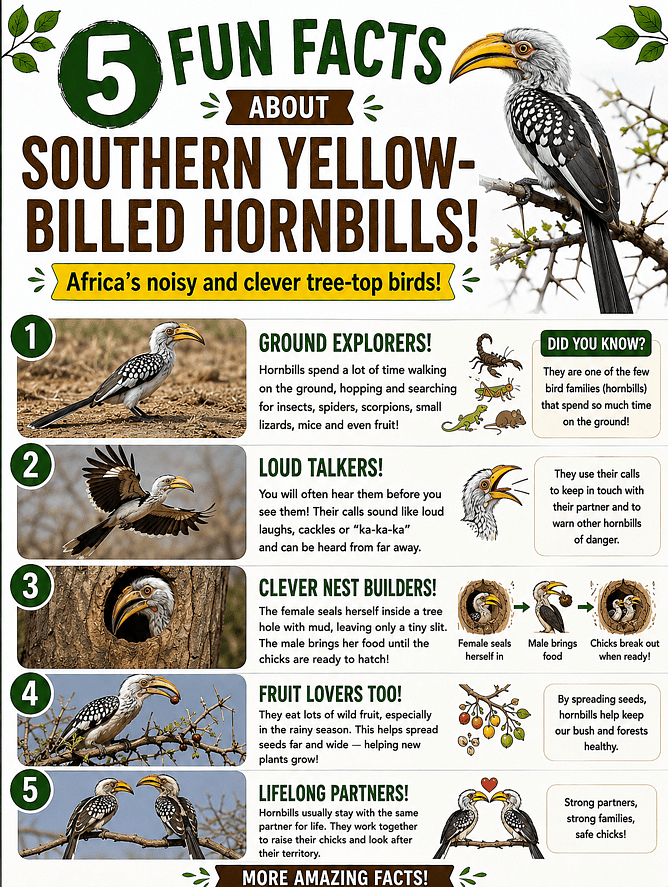
The Southern yellow-billed hornbill.
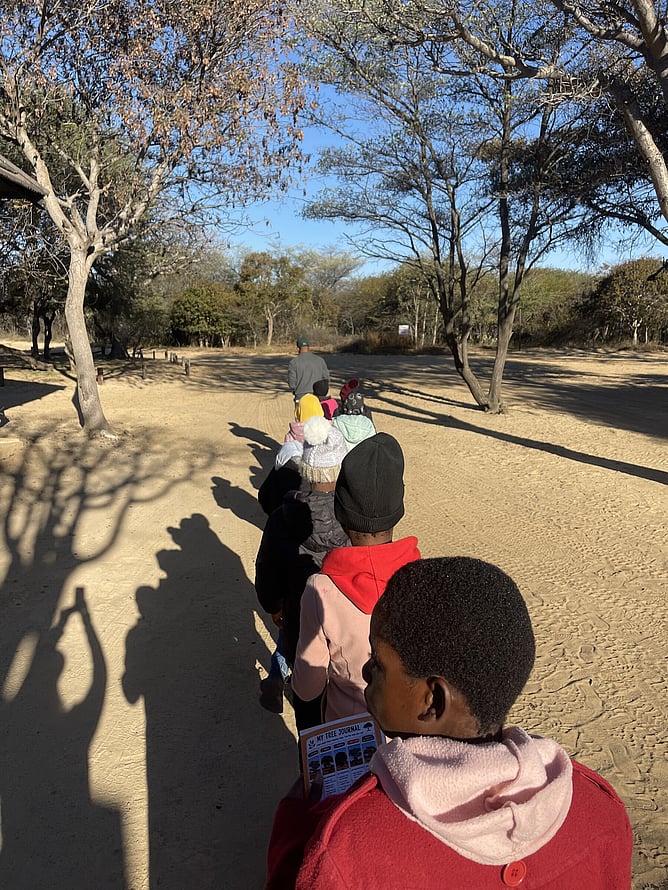
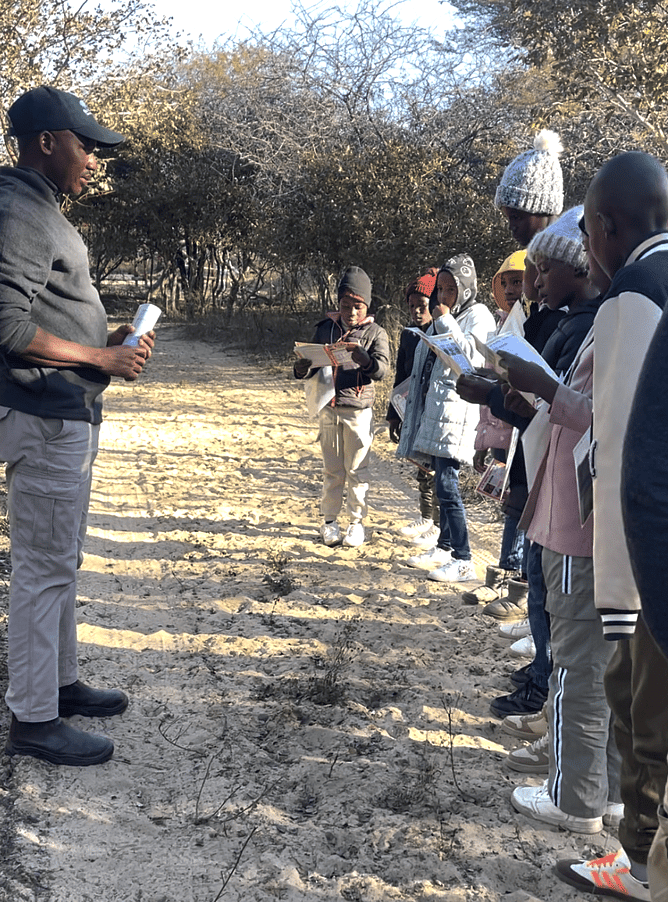
Then we took the guided walk. They were in a line from shortest to tallest. I was in the middle.
What poo?
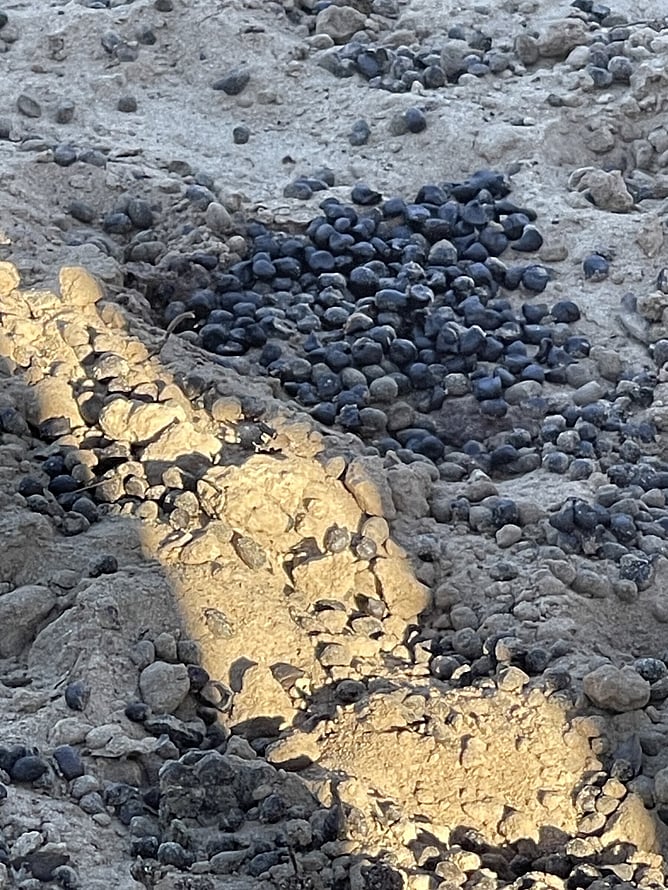
Answer Impala.
What poo?
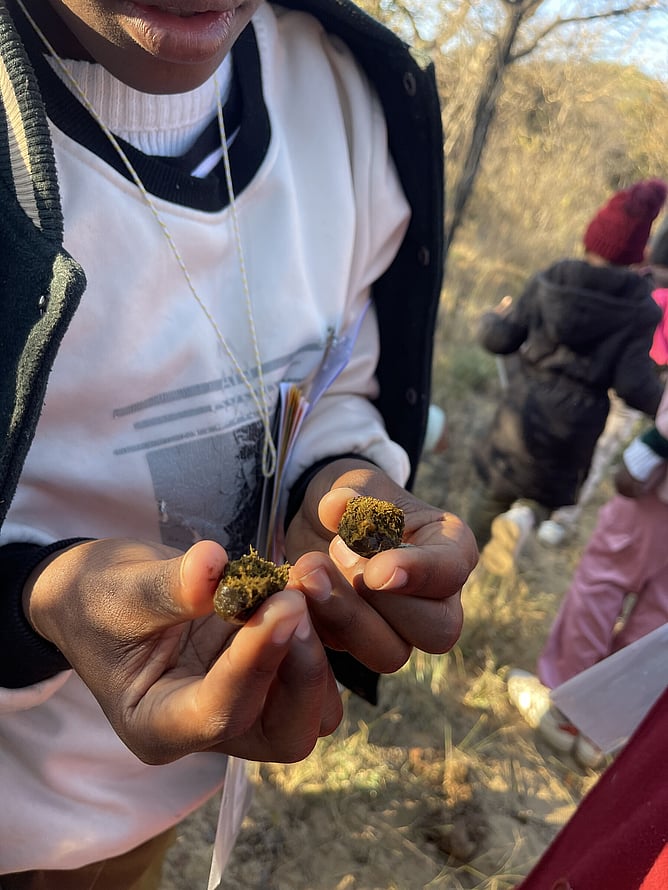
Answer giraffe.
Plant talk.
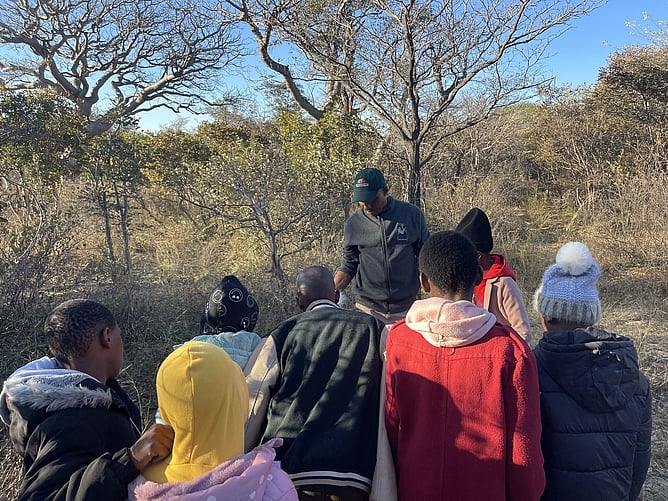
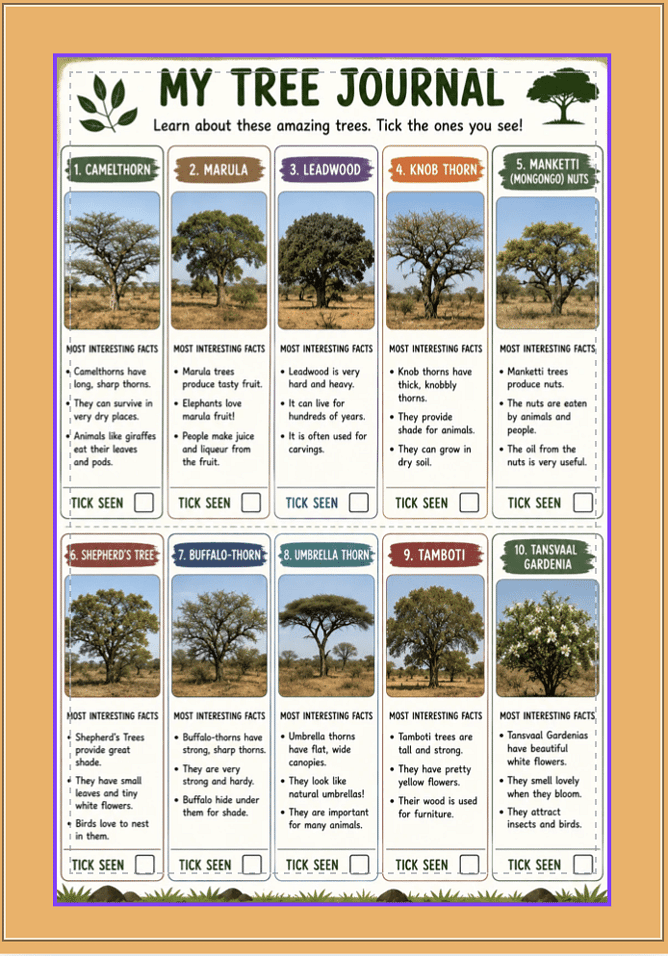
I am not sure which other trees they identified in their journal. They were looking. Next time, I will make sure they can tick them off. I didn't have the acacia tree in the journal!
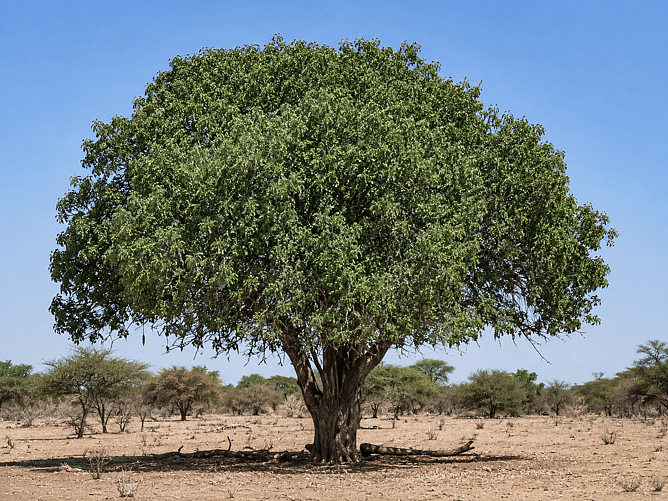
The only one I do remember is the manketti tree. The manketti tree is sometimes called a “tree of life” because it provides:
Food for wildlife.
Nutritious nuts for people.
Shade in hot, dry landscapes.
Homes for insects and birds.
Income for local communities that collect and sell the nuts and oil.
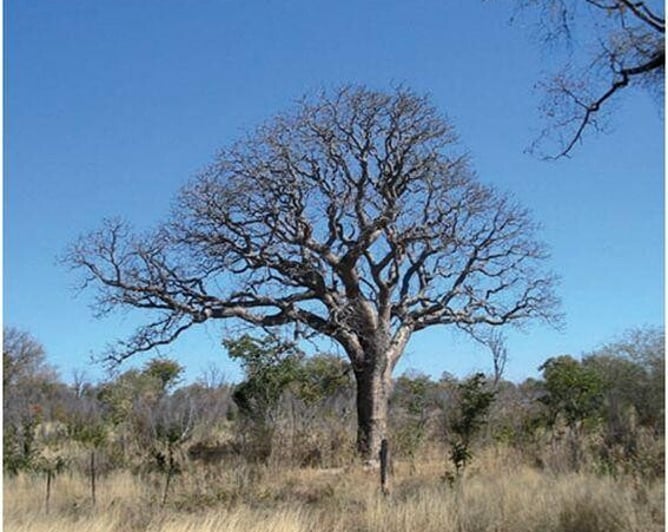
What it looks like with leaves and nuts.
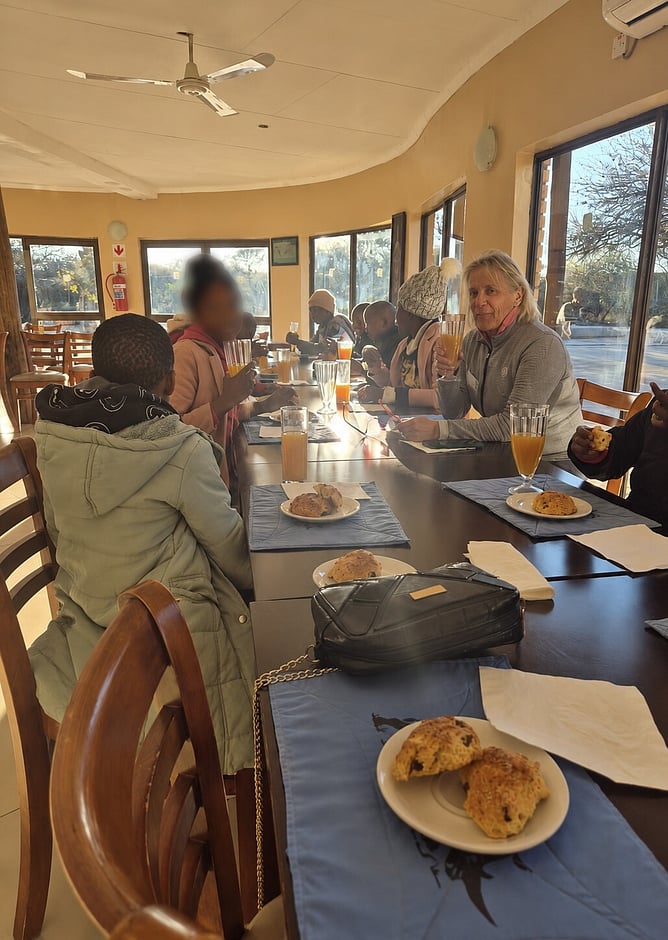
Then to afternoon tea to finish. Yum.
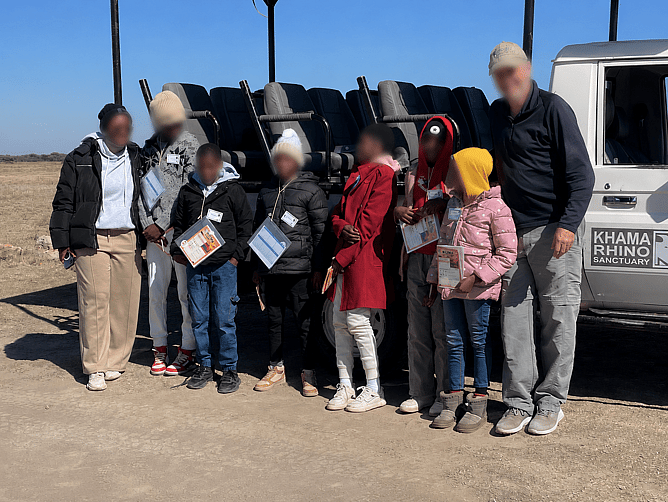
Two missing from the wrap-up photo. Not sure where they were.
Manketti tree in the background.
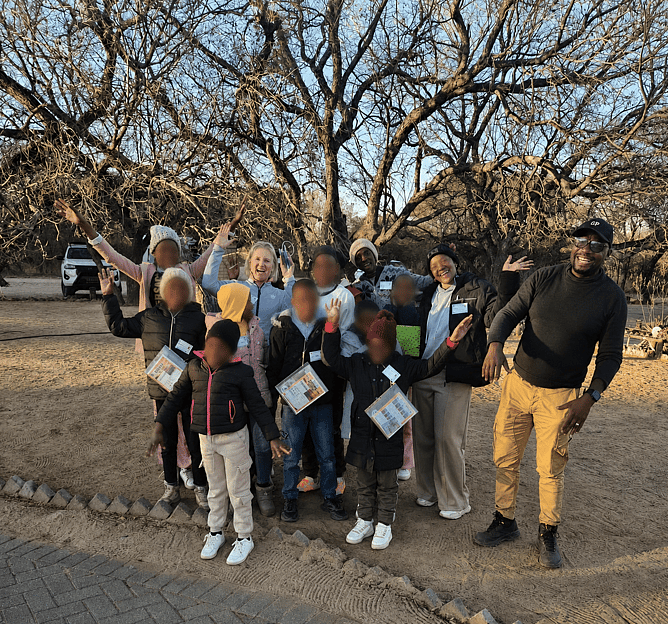
To the SOS Children's Village young people:
Bill and I loved being with you all. We loved all our conversations. We loved listening to your ideas, your focus, your enthusiasm, and your curiosity about living species.
Thank you for being the first young people in Africa to participate in Young People Co-Creating and Sharing Stories about Native Species Thriving. You surprised and delighted us so much in the way you engaged with everything.
Your dreams of becoming guides, teachers and pilots are inspiring!
You are all in my heart forever.
Robin has these requests of you:
We both look forward to your illustrated stories and hearing your dreams come true.
Please turn up to our Zooms regularly.
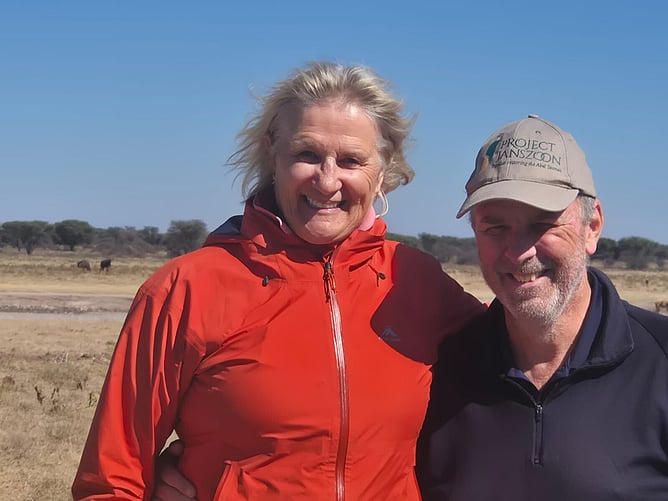
For reference: Activities, journal and games are accessible in this drive:
https://docs.google.com/document/d/1kfGYgmAwn0_nHK9jFomJVaoc9LRO1Ff9ujIKD-YCaMY/edit?usp=sharing