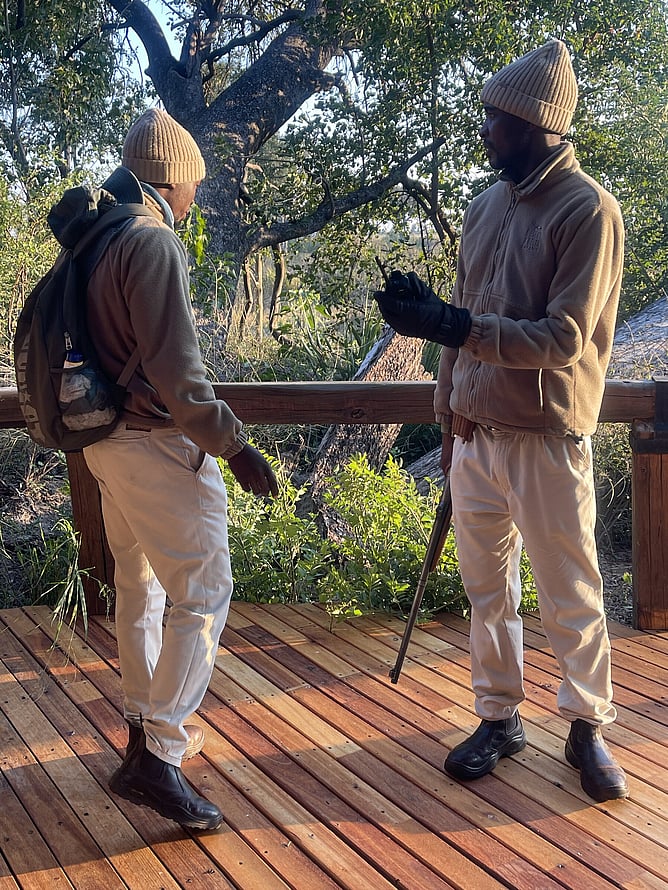
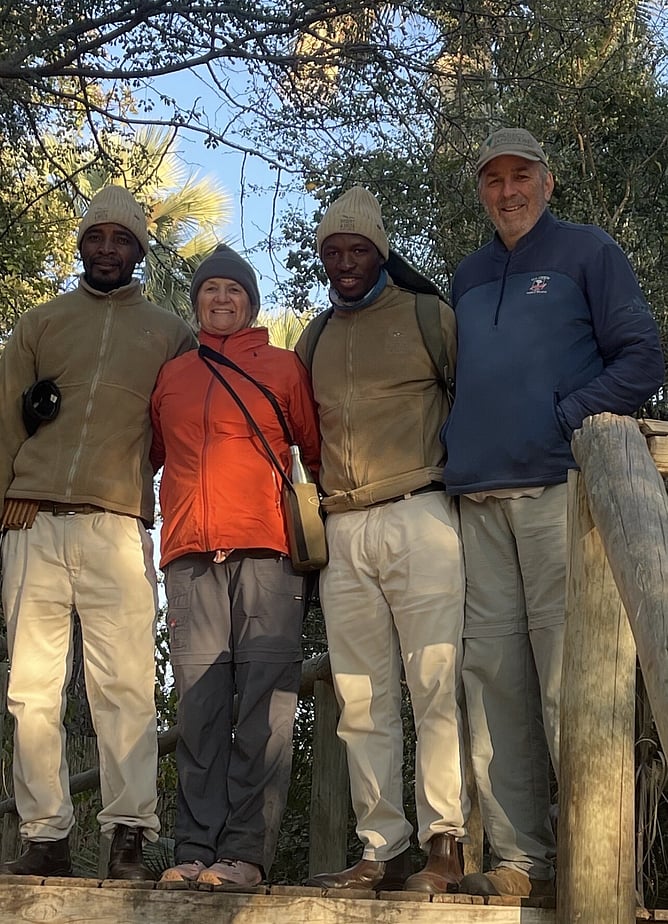
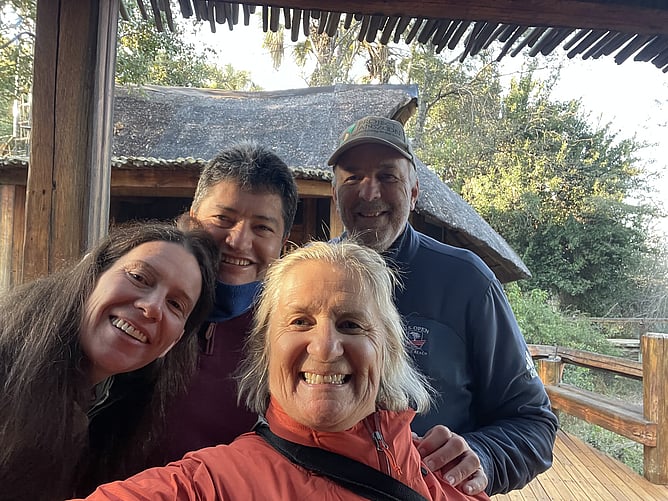
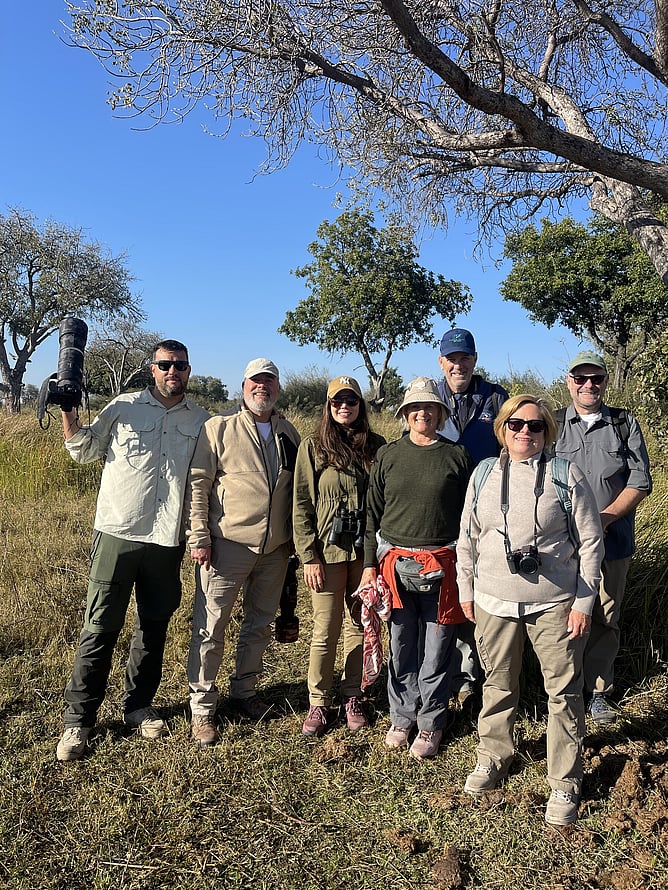
Above - Vee, me, Aodi and Bill. Below - Bess, Mauricio, Bill and me.
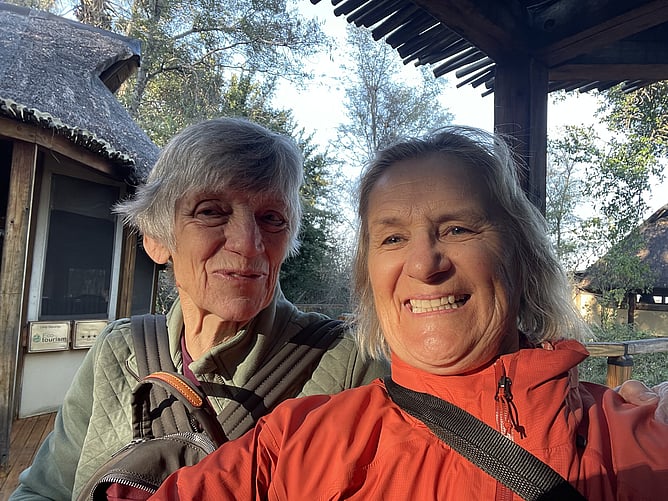
Ebet and I.
Robin, Bill, Mark, Jason, Dianne, and Jo.
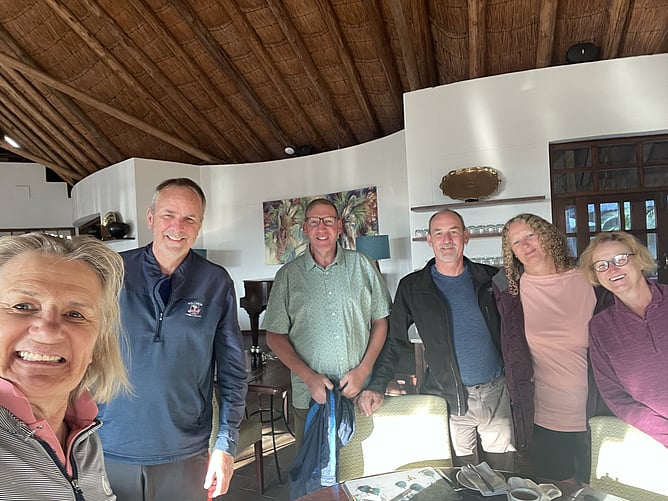
Marcel, Teodora, Karina, me, Bill, Chris in front and Matt behind.
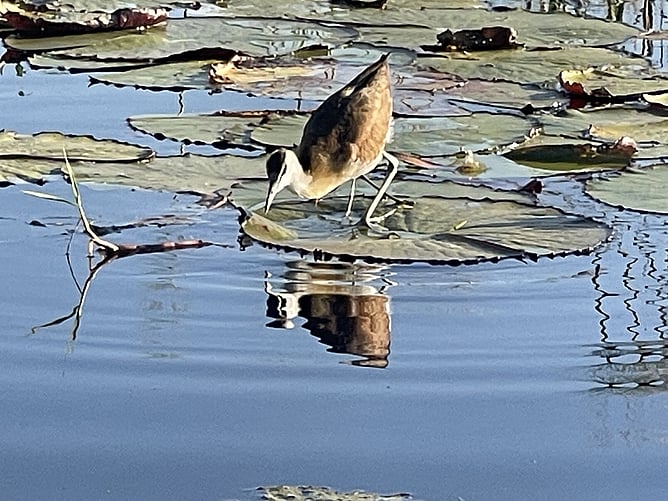
Is this African jacana looking at herself?
This is the kleptoparasitic safari blog because all those photos above are mine, but I'm hoping that some of the ones that will follow will be "stolen" from other people we met at the camp, with better shots, better cameras than my iPhone, and better photographers than me. I want to thank them in advance. (So kleptoparasitic-aspirational might be a better description, Ed.)
(Kleptoparasitism (parasitism by theft) is a feeding behavior where one animal deliberately steals food or resources gathered by another. Instead of hunting or foraging, the "thief" saves energy by letting someone else do the hard work. Ed, with the help of Wikipedia.)
I have learnt to take photos quickly. This can have an upside and a downside. I can get some left field shots - and I can get some that lack quality. Unlike the kleptoparasitic dung beetle that we learned about, I will give something in return - this blog, and honour all that I have stolen from by crediting their names.
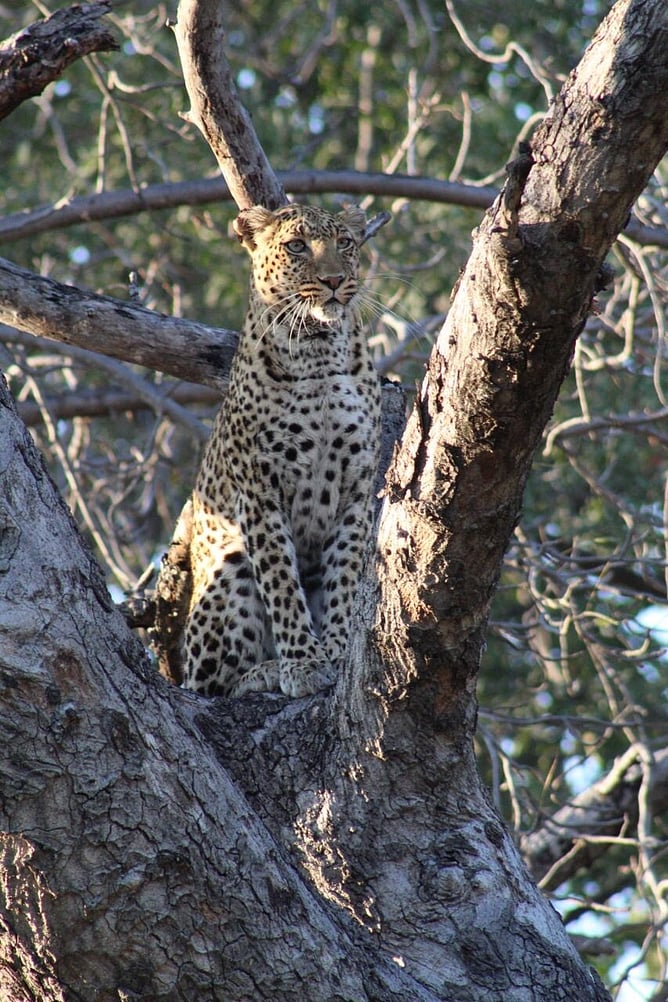
This one below is from Gabrielle - just to keep you interested. A photo of her comes later - also to keep you interested. A leopard that we got very close to, though it could be mistaken for a cheetah.
Here’s how a klepto dung beetle works (Wikipedia):
🪲 A tunnelling dung beetle digs a burrow beneath a pile of dung and carefully rolls or pulls pieces underground.
🕳️ A klepto dung beetle sneaks into the tunnel while the owner is away—or distracts it—and steals some of the stored dung.
🥚 It may lay its own eggs in the stolen dung, allowing its larvae to develop using food gathered by another beetle.
⚡ This strategy saves the thief the time and energy of finding and burying fresh dung.
Although it sounds unfair, this behaviour is a natural part of the ecosystem. Different dung beetle species have evolved different strategies:
Rollers form dung balls and roll them away.
Tunnelers bury dung directly beneath the pile.
Dwellers live and breed inside the dung pat itself.
Kleptoparasites steal dung from the nests or tunnels of other beetles.
Even klepto dung beetles still help recycle nutrients and return organic matter to the soil, so they continue to play an important ecological role.
This below on the dung beetle from Chat GPT. (She has a thing for dung beetles, Ed.)
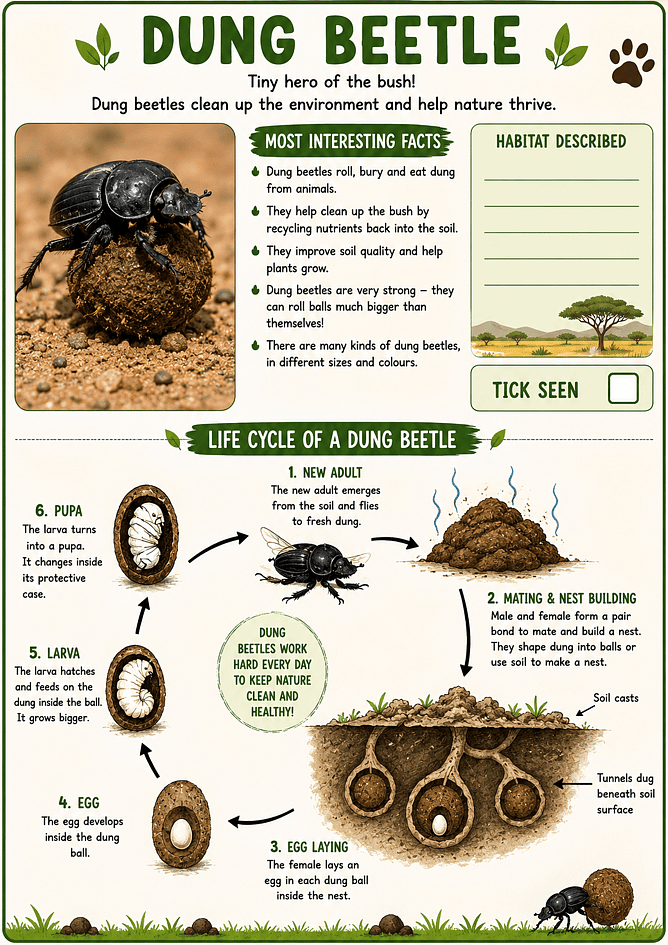
We never saw a dung beetle. They were laying their eggs in their dung, which they had buried. I found them fascinating. And yes, dung beetles like human poo, but it is usually not their first choice if larger herbivore dung is available.
We arrived at our camp airstrip from Maun. Nancy was our pilot.
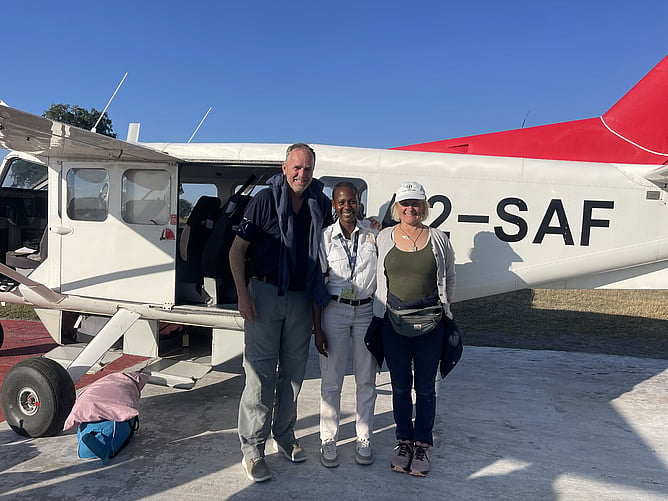
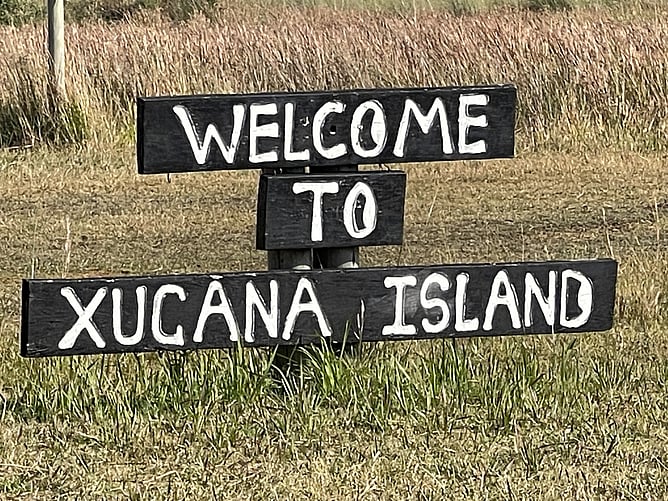
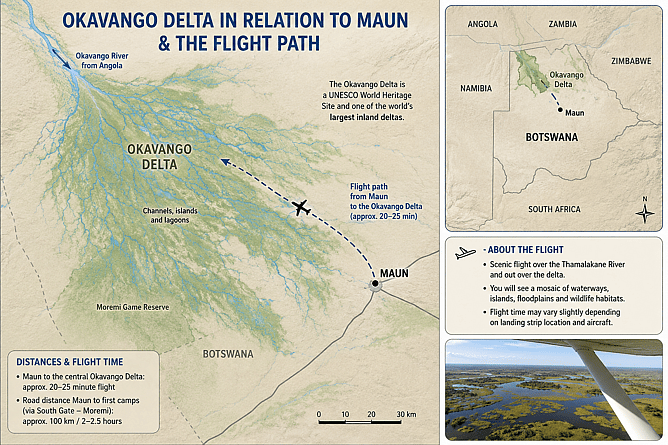
It would take 5-6 hours to drive and boat from here to Maun. Our flight was 55 minutes. Everyone flies. Airports are busy. Some airstrips have been flooded, including the one right next to our camp, so we flew into Xugana Airstrip, and then took a 45-minute boat ride to Okavango Camp. Nancy is flying the next passengers to Chobe Lodge. I don't know if their airstrip is underwater?
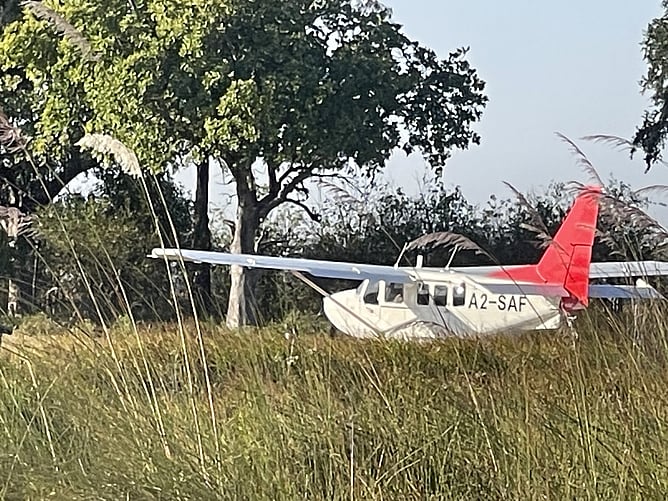
The Okavango Delta is very full this year. The highest in decades. These are the reasons.
Heavy rain in Angola - Over 95% of the Delta’s water comes from rain in Angola. This year, unusually heavy rain sent more water downstream.
A wet season in Botswana - Northern Botswana also had above-average rainfall, so the floodplains were already wet.
The flood spread further - With the ground already saturated, the floodwaters filled old channels, lagoons, and dry areas.
What does this mean for wildlife? A high flood year is great for nature:
🐘 More water for elephants and other animals.
🦛 Larger lagoons for hippos.
🐟 Better breeding conditions for fish.
🐦 More habitat for waterbirds.
🌿 Healthy growth of reeds, papyrus, and grasses.
🛶 More waterways open for mokoro (dugout canoe) trips.
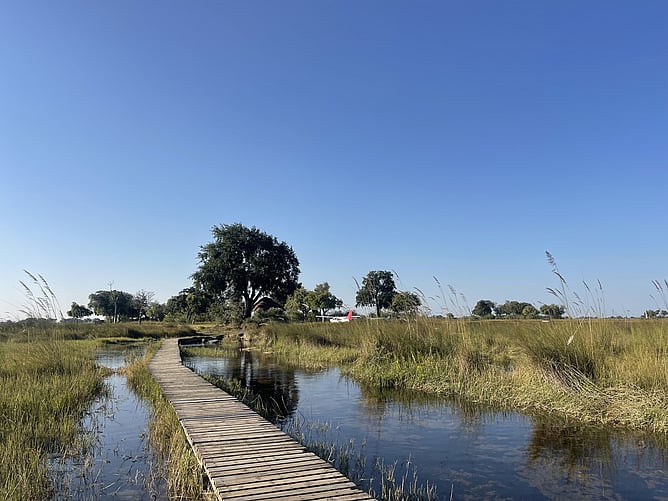
This is where we took the boat from, beside the airstrip.
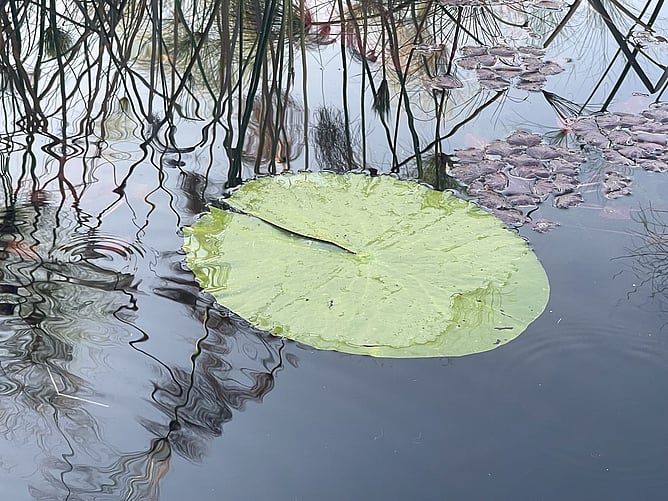
A day-blooming lily pad.
A night-blooming lily pad.
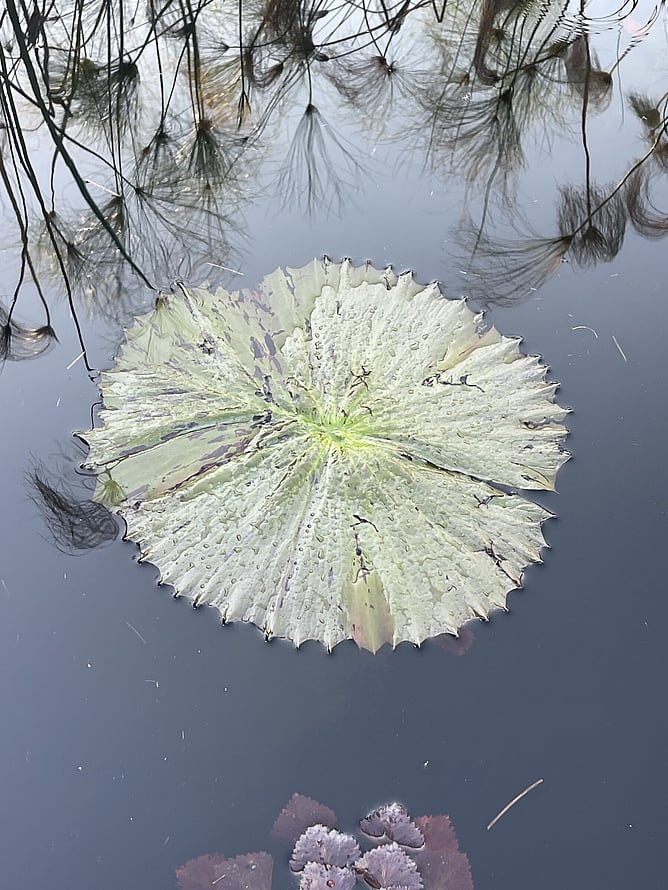
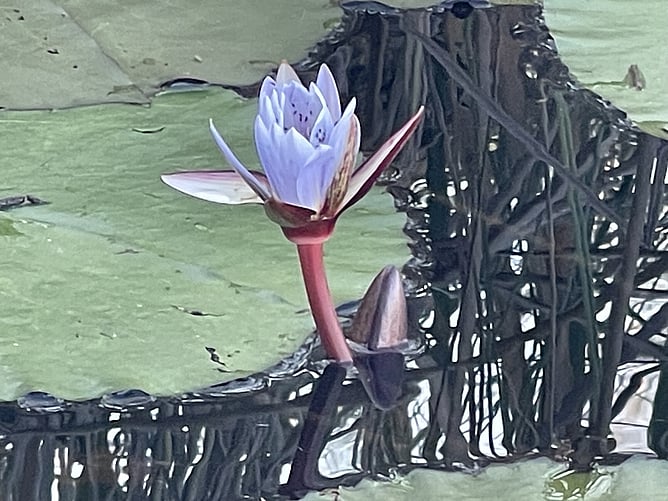
Sometimes you see a zebra crossing, and sometimes even a lion crossing, or a crocodile. On this trip we saw lily flowers. They are amazing - during the day and at night, they go underwater.
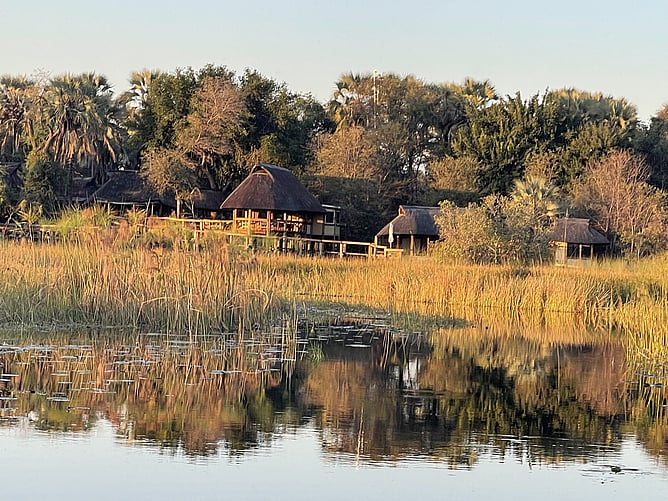
We reached Camp Okavango.
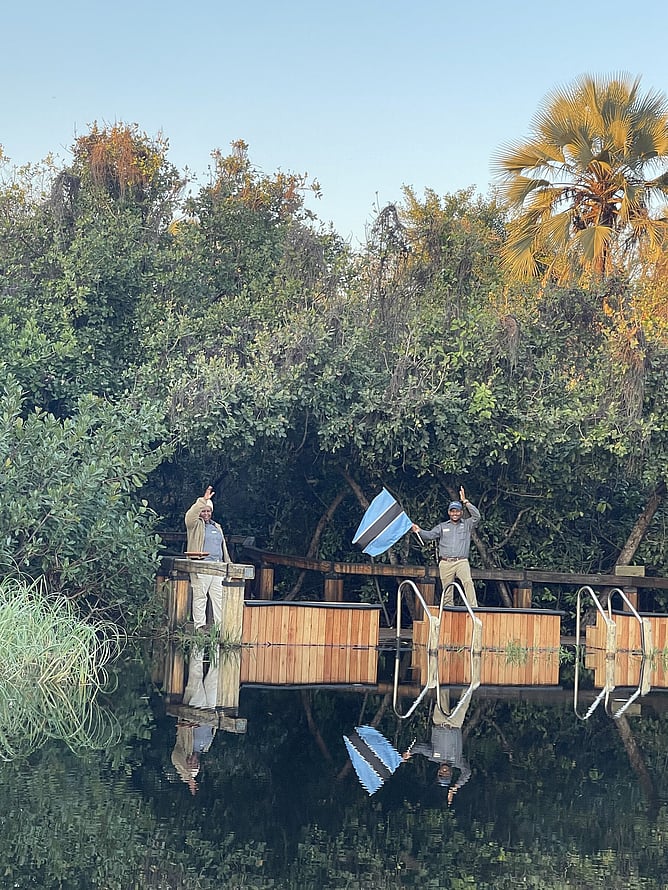
This is our greeting party - Lydia and Ogee. Note the Botswana flag.
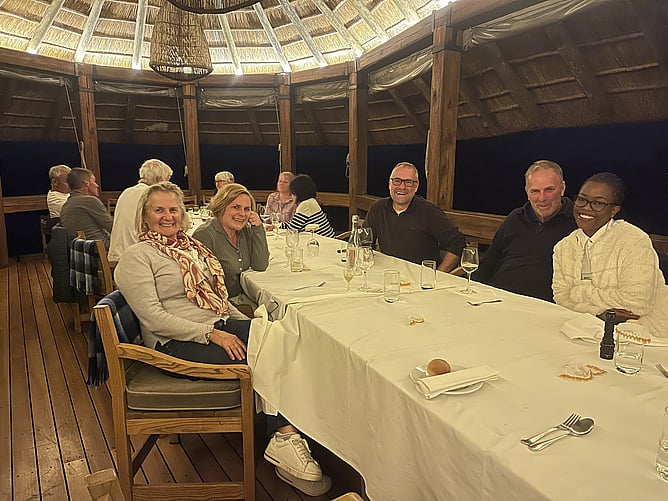
We have dinner and meet Chris, Matt, and Mildred, the only female guide at this camp. I will remember that name. It was my grandmother’s name.
Chris is an ex-principal. She and Matt live in Southampton, England. Such great teaching conversations. I don't know what Matt and Bill talked about - maybe banking? (Not banking and not dung beetles, Ed.) Gee, hold the tummy in. We will eat 5 times a day. We haven't even started!
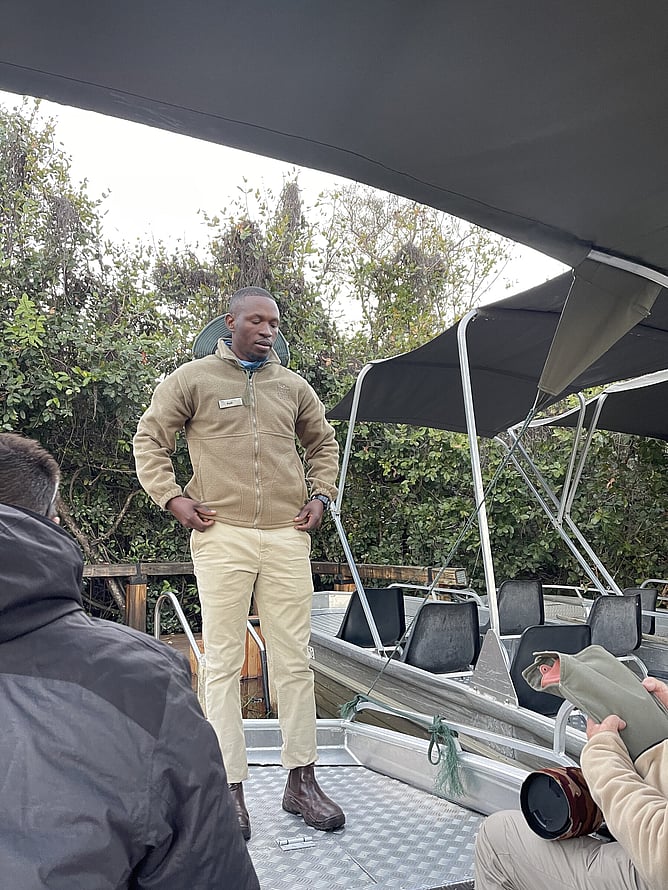
The next day, we are off for a guided walk on Lopus Island. Meet Aodi. He gives us a briefing. Spot the bush baby (hot water bottle). Very nice touch in the 5degree morning temp.
When we reach the island for the walk, Vee gives us another safety talk - note the handle of the loaded rifle - just in case, and he is pleased he has never had to use it.
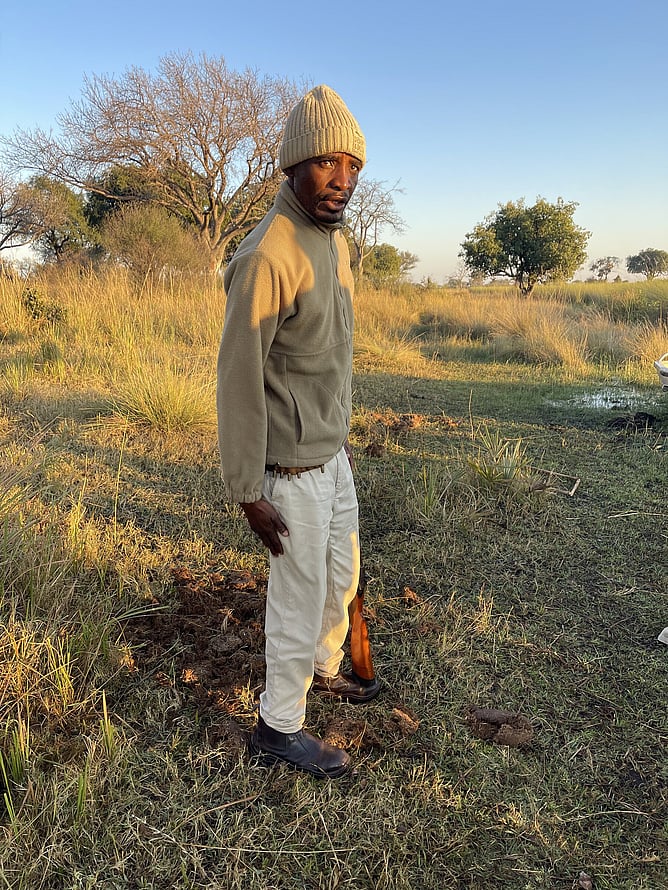
We go in a line, an arm's length apart. Note Marcel with that big camera. When you are writing a blog and you only have an iPhone you befriend those ones (photo kleptoparasite.)
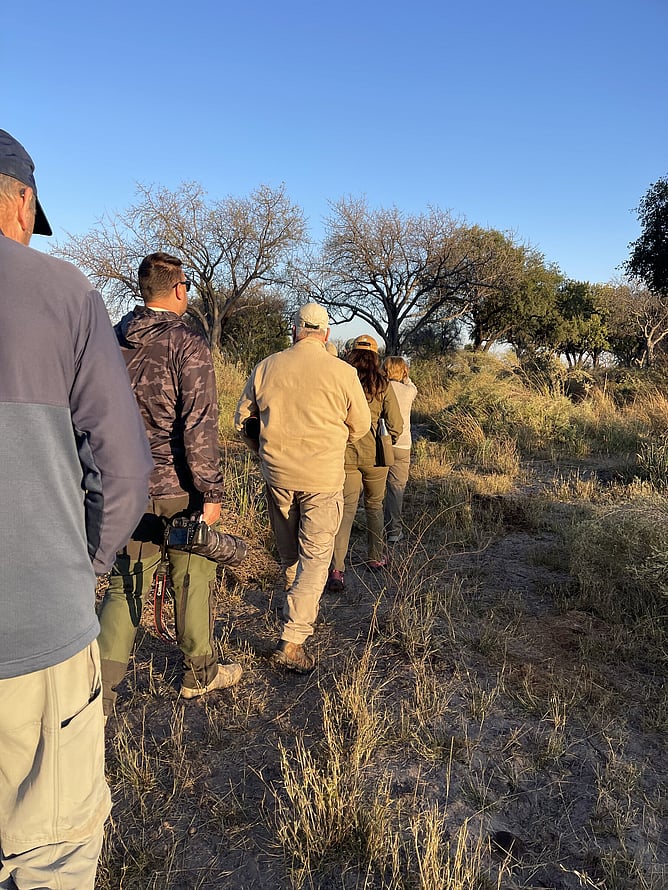
These guys are experts. Vee is checking the tracks.
We walked around this baboon twice, 20 minutes apart, and he was still sitting there.
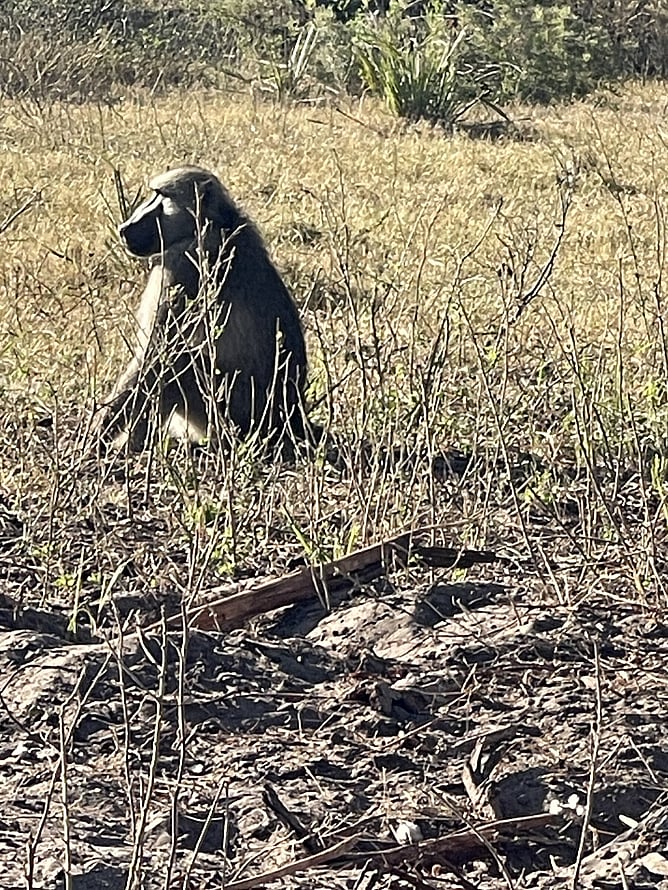
Elephant has been here.
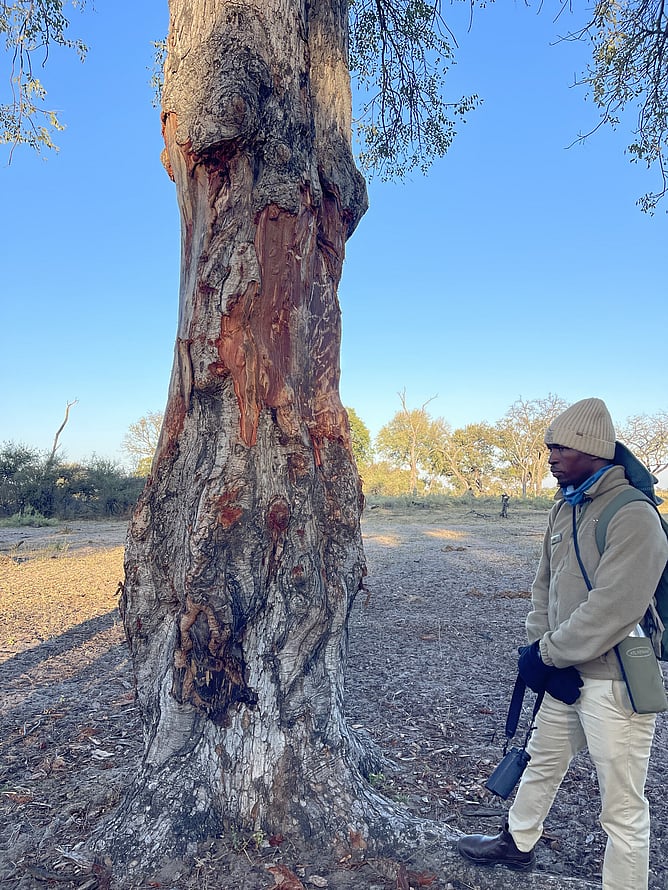
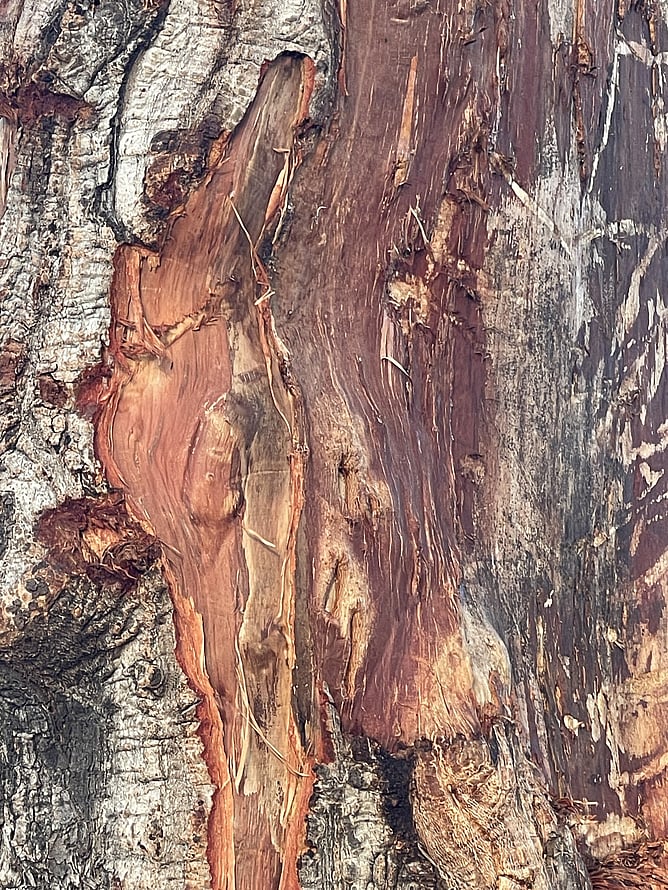
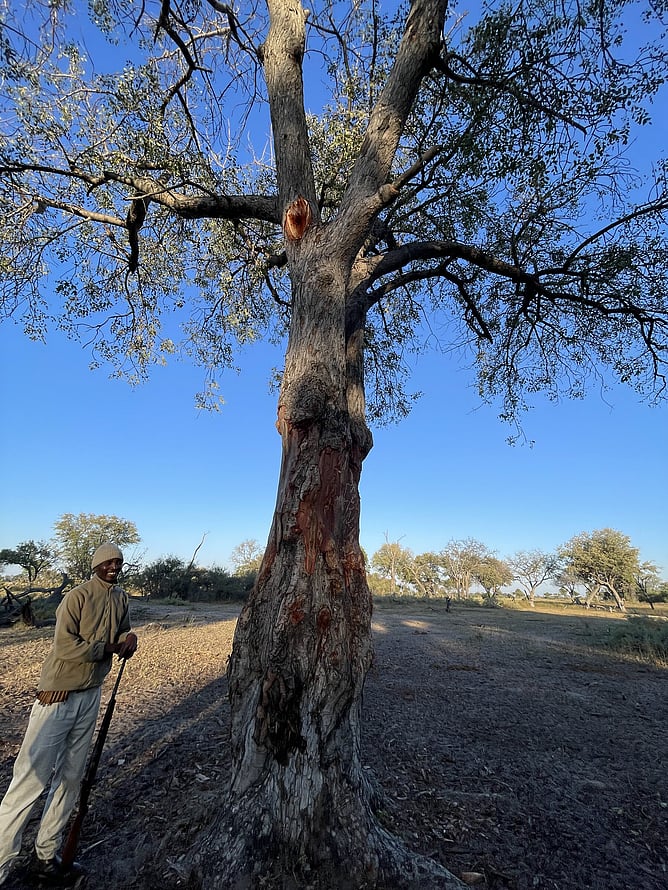
Elephants often:
strip bark to obtain moisture and minerals,
rub against the trunk to scratch themselves,
sometimes ring-bark trees, which can eventually kill them.
Leadwoods are incredibly tough and can survive surprisingly severe damage, although repeated bark stripping may eventually be fatal.
Baboon and impalas hang out together - until there is a young impala. Then the baboons can try to eat them.
We spotted a few impala on the walk.
Then it was goodbye to our co-walkers. They are leaving today. This is Karina waving or is it a salute or Peace be with you?
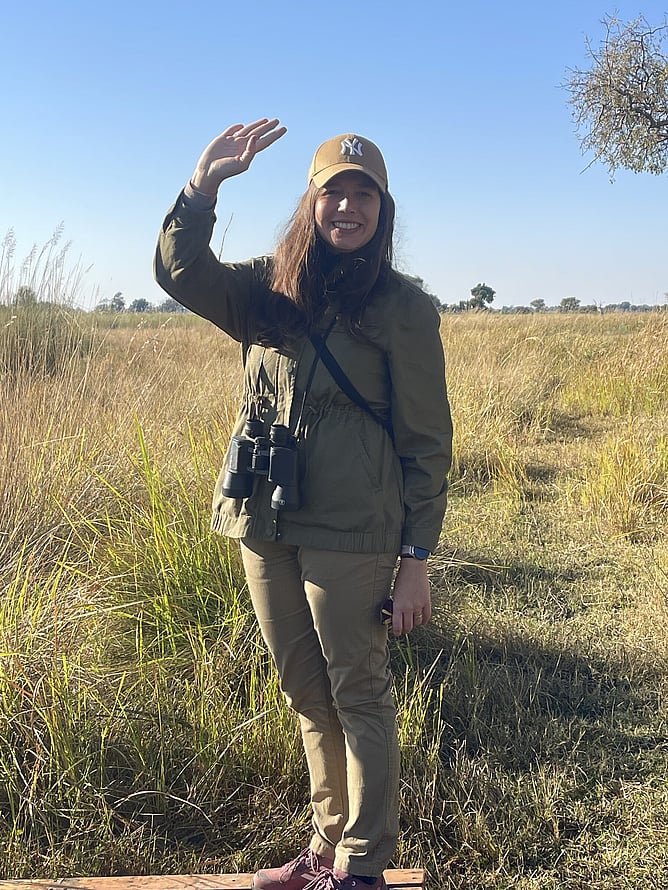
Actually Karina is definitely Peace be with you. (And Marcel, Ed.) I am thinking all of that, and I hope you got great photographs with those cameras and can replace mine, so this blog can really rock people to look after the earth.
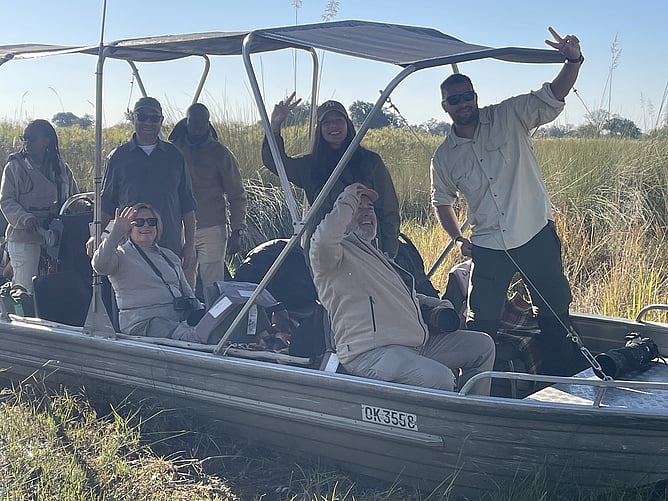
Now it is just Bill and me with Aodi and Vee - a private tour.
I ask them if they work together often. And they said yes. I thought that there was an easy understanding between them, I say. They tell us they are both from Bahambukushu tribe, and the same region. There is one other from the 42 staff at Camp Okavango who is Bahambukushu. Vee and Aodi tell us lots.
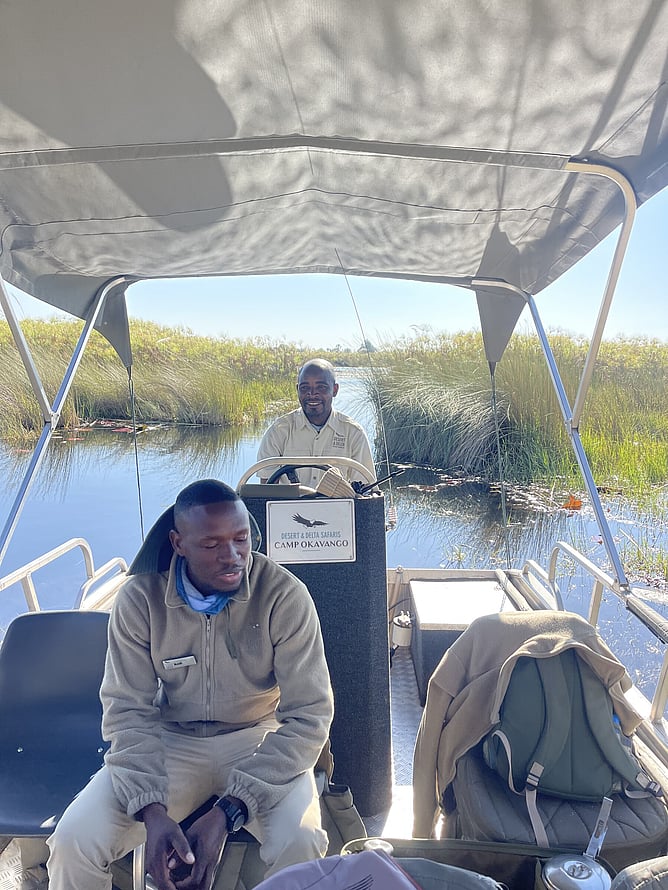
(Wkipedia) The Bahambukushu are one of the oldest and most respected cultural groups of the Okavango Delta. They have lived around the rivers and floodplains of northern Botswana, northeastern Namibia, southeastern Angola, and western Zambia for centuries. They speak Thimbukushu, a Bantu language that is still spoken today.
They have always chosen places close to rivers because water provides fish, fertile soil, transport and reeds for building.
Homes - Traditional Bahambukushu homes are built using local natural materials:
Wooden poles
Mud walls
Thick grass-thatched roofs. These homes stay surprisingly cool during Botswana’s hot summers.
Language - In the 60’s Bahambukushu families fled Angola into Botswana, where communities such as Etsha were established.
Traditional way of life - Life has always revolved around the annual floods of the Okavango.
Aodi and Vee tell us their families when they were young:
Kept cattle and goats
Fished
Hunted sustainably, though there is no hunting now.
Collected wild fruits, nuts and medicinal plants.
The yearly flood brought fish, fertile soil and fresh grazing, making the Delta one of Africa’s richest ecosystems. They told us they were water boys. Since they were little, they negotiated with wild animals on their way to school and to the water. Guidng for them was just an extension of the way they grew up. We felt privileged to be with them both and in very good hands.
We asked about their language. We loved trying to learn it. I struggle with long names and pronunciations. If you haven't followed earlier blogs, I am WSAW.
https://docs.google.com/document/d/1aZ87v9RzytjuL_j7nYZ-jEMKVS8Kksyc7_WTtX_qlcw/edit?usp=sharing-
We certainly had a few laughs. I don't know what they think of their tourists most of the time (probably that we don't know much). I thought there was so much to learn about another's culture. I got that they were both so clever. I felt privileged to be here and was loving this boat trip, and it was just the beginning.
Bill and I keep practising. Bill nails good afternoon.
From now on, when we see Aodi and Vee at base I will practice!
African jacana- "the Jesus bird" in action. Can you guess why it is called that?
I couldn't choose which Jesus bird video to show, so you got two.
Aodi says you can check the water depth using nature - the lily pad stem.
And make a sun hat - Aodi makes one for Bill.
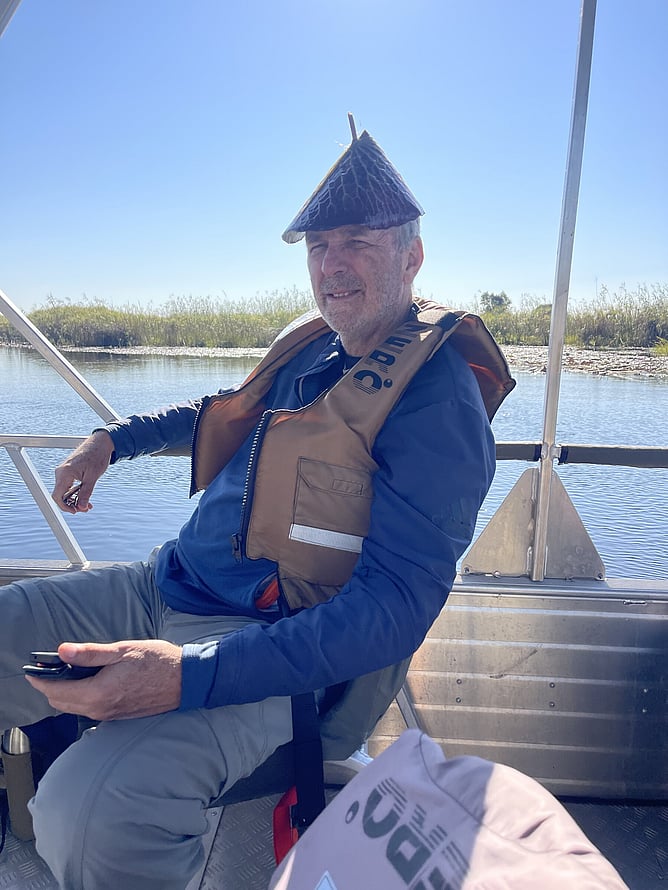
Then he makes me a necklace from the stem.
Then we are ready to renew our vows.
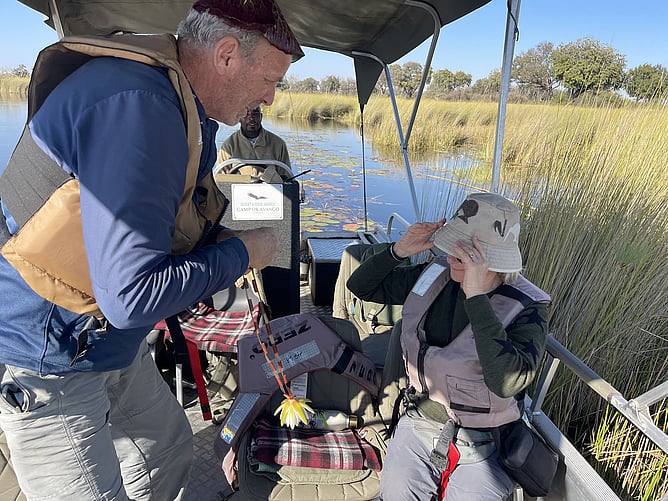
We have been married 41 years. Wow. Secret to a long-lasting marriage - Robin's manuscript - Let them, when you want to be right; grow and develop your own strengths; and keep loving no matter what. (And listen, Ed.)
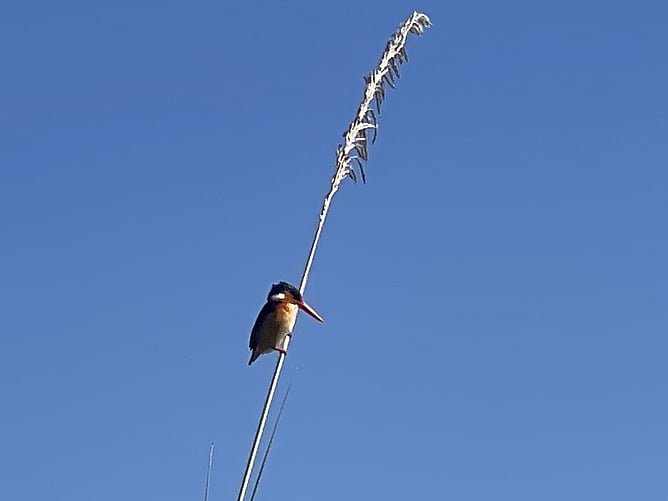
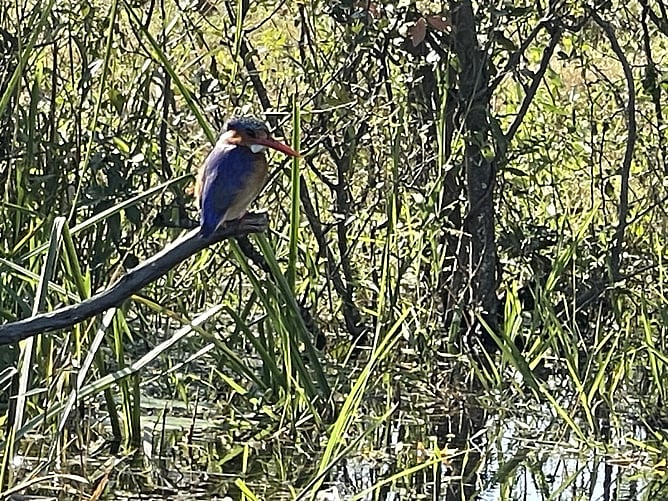
This is a cutie - the malachite kingfisher. These tiny kingfishers are only about 13 cm long, making them one of Africa’s smallest and most colourful kingfishers. Fun facts:
They mainly eat small fish, but also catch tadpoles, aquatic insects and tiny frogs.
They hunt by sitting quietly on a reed, then diving into the water with remarkable accuracy.
In bright sunshine, the blue feathers shimmer an electric turquoise because of the way they reflect light.
They nest in tunnels dug into riverbanks or sandy banks.
Below is the fish eagle. We saw it from a distance, not like this. Thank you ChatGPT.
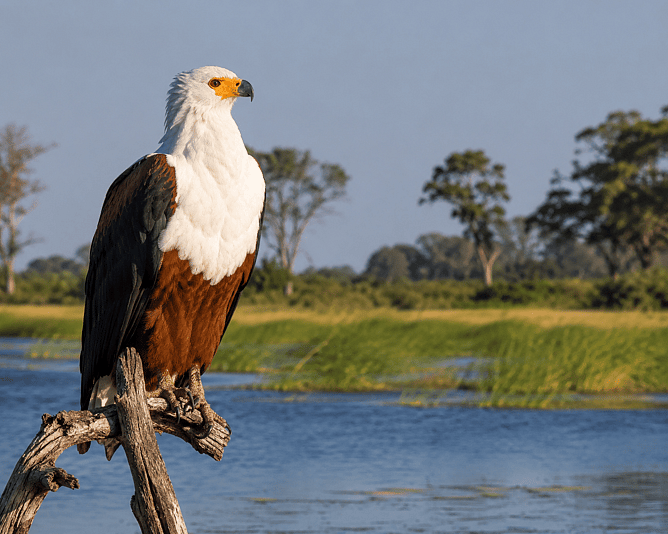
Then it was back to base. Thank you Aodi and Vee. So pivileged to have the real deal. A .5 photo
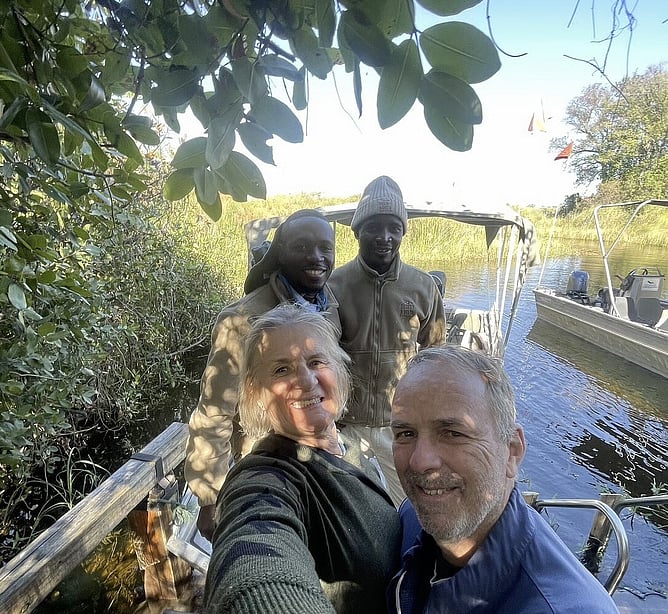
Great chats with Bess and Mauricio at dinner that night. There are two young ones in their group. I ask if I can create a story with them, since I need some practice for my upcoming gig in Botswana. They say yes. Then I talk to Ebet, their grandmother. It will happen tomorrow if the youngies choose. Ebet loves the idea.
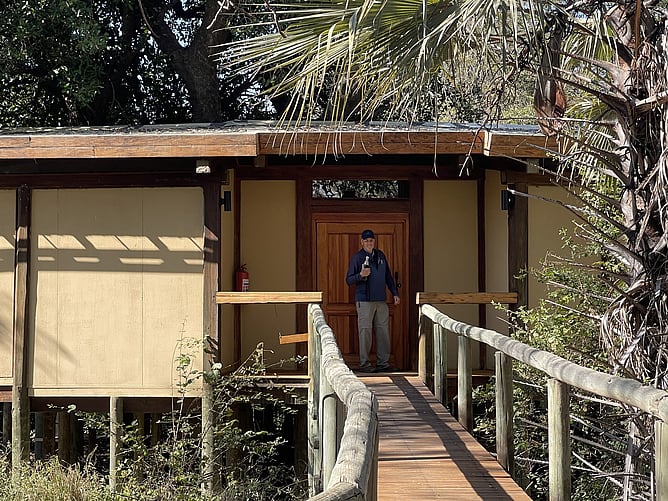
This is our room. You hear hippos at night, they sound very close, and lions too.
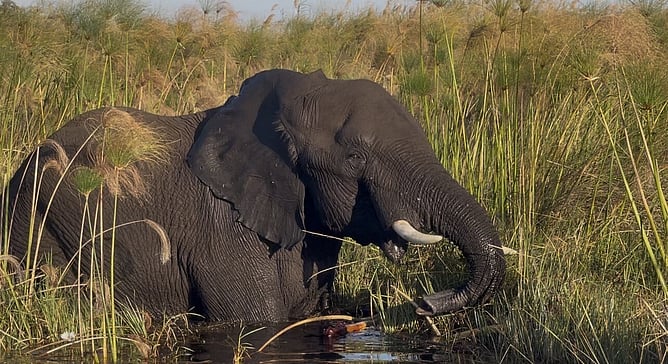
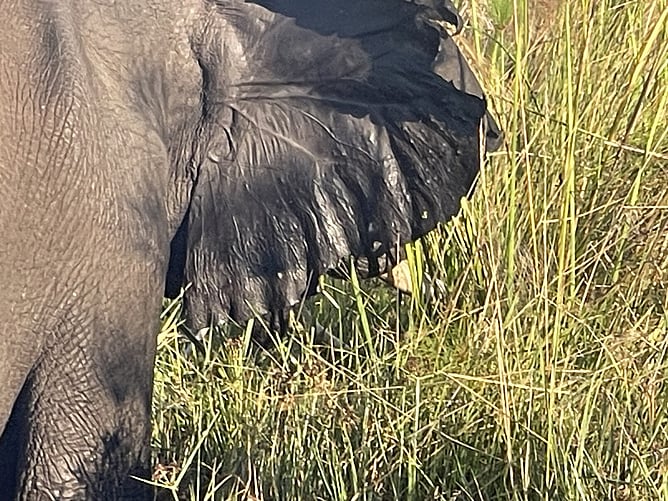
The next day, it was another boat ride after breakfast. Very quickly we came across an elephant.
Then a close-up.
We moved on. The reflections were incredible.
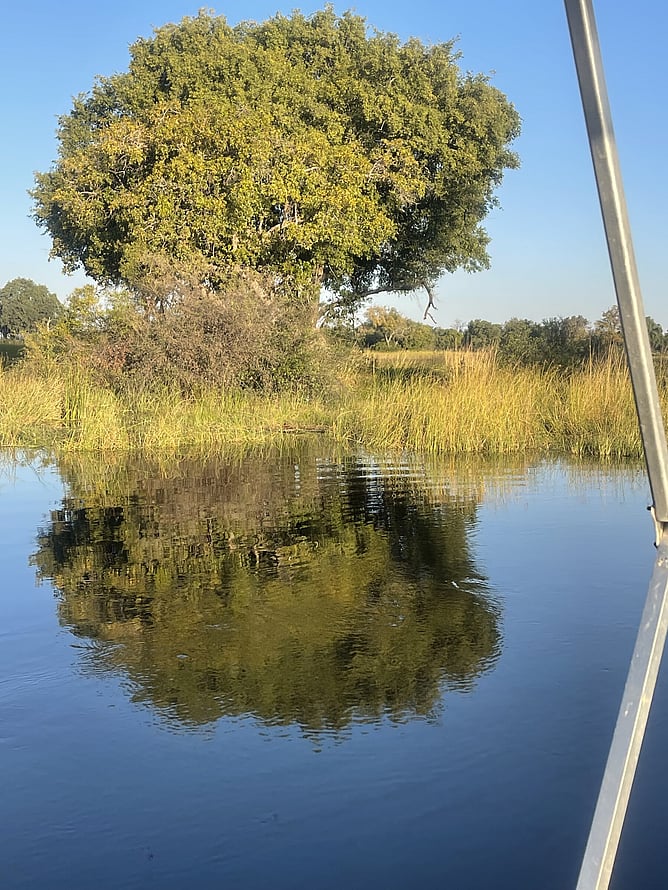
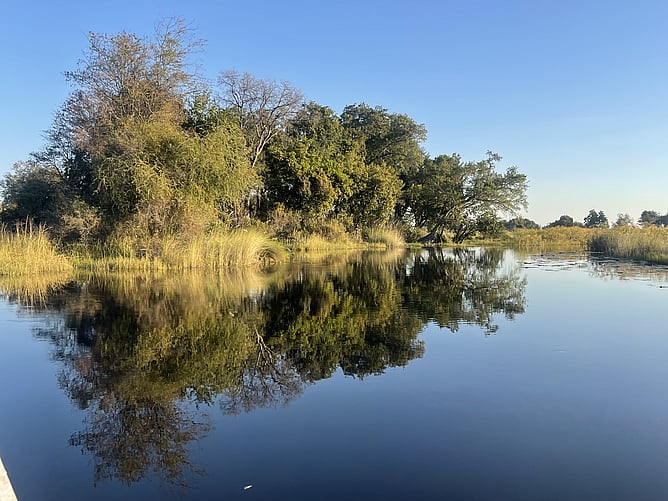
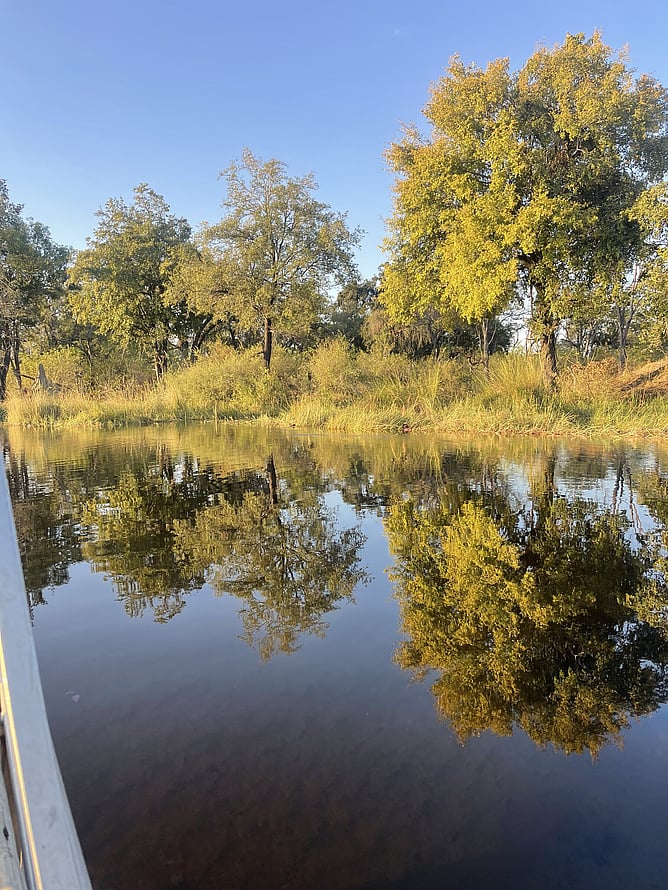
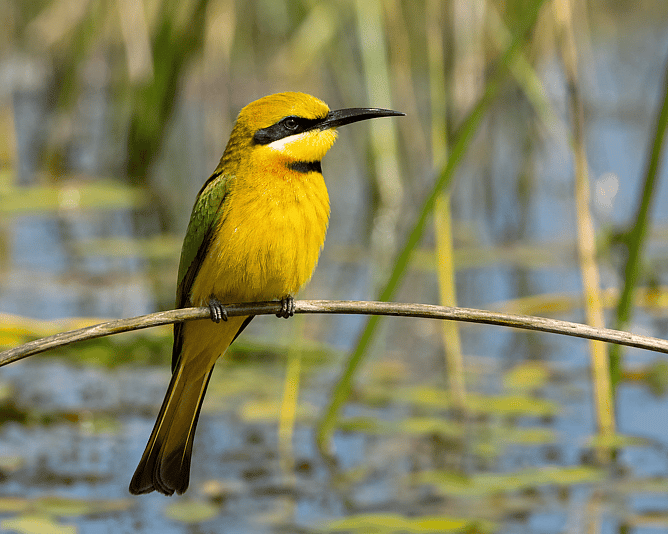
We spotted a yellow bee-eater. Image is stolen from ChatGPT, the text from Vee and ChatGPT.
The Little Bee-eater is one of the smallest and most colourful bee-eaters in Africa and is a delightful bird to spot in the Okavango Delta. It has bright yellow underparts, a green back, a black eye stripe, and a slender curved bill perfectly adapted for catching flying insects such as bees, wasps, dragonflies, and butterflies. Before eating a bee, it cleverly rubs the insect against a branch to remove the sting. Little Bee-eaters are often seen perched quietly on reeds, grasses, or low branches, making short, graceful flights to catch insects before returning to the same perch. They nest in tunnels that they dig into sandy riverbanks or flat ground, where both parents help raise the chicks. Their soft, sweet calls and brilliant colours make them one of the Okavango Delta’s most charming little birds.
Then it was all quiet on the delta. It was like when I was waiting to give birth to our daughter, Anna. She was 10 days overdue and induced, and everyone was hanging around in the hospital, and I wasn't sure why. Then suddenly, all action and in 20 minutes she arrived. Then I knew why they were hanging around me.
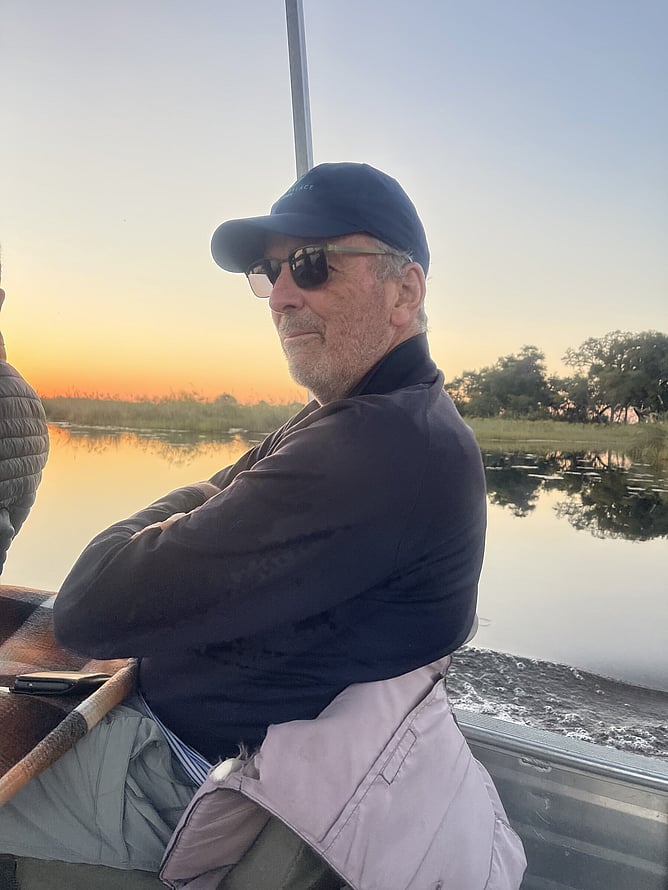
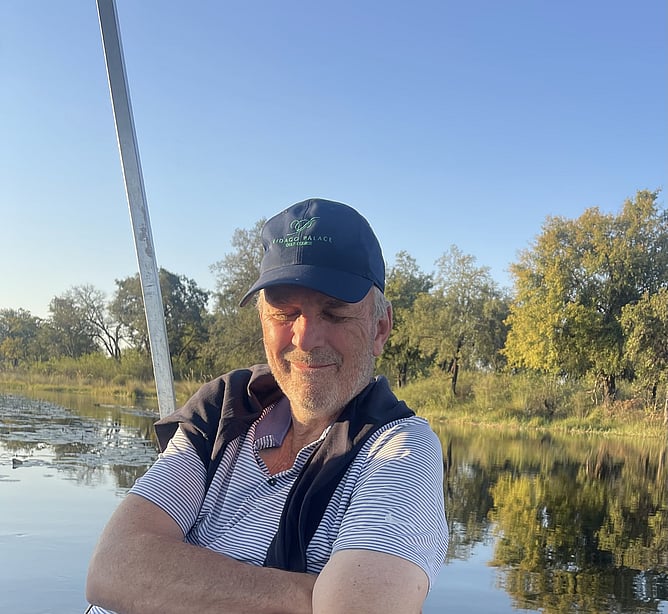
I thought you could almost swim; it was so calm and lovely. Here is Bill, like bliss and probably similar to waiting for Anna to arrive.
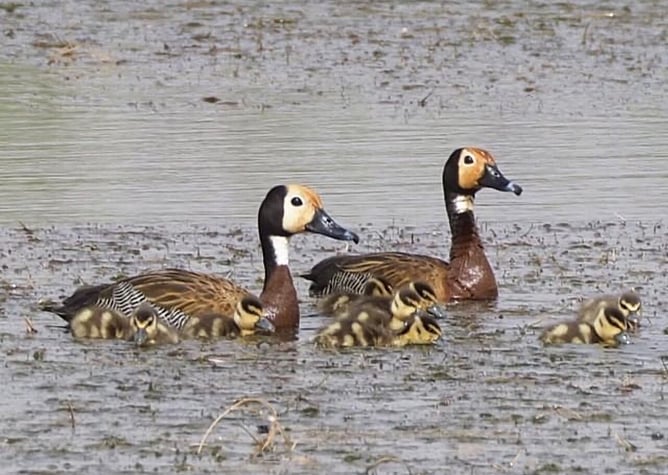
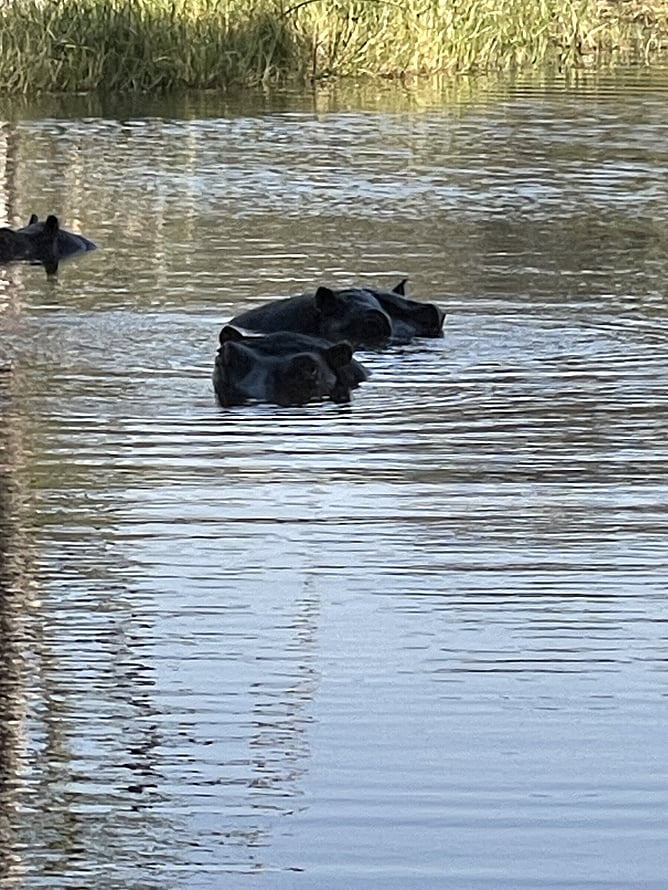
Then we saw hippos grunting, then little ducklings, an elephant on land moving towards the water, and the fish eagle in the tree. It was all happening at once, you did not know where to look.
Aodi and Vee tell us the duck and ducklings are the African pygmy goose, actually a duck inspite of the name. I liked it that they had not seen a mother and babies like this before. I always like it when you see something new.
Fish eagle and Pygmy Goose and ducklings.
Photo kleptoparasite from Chat GPT (needed to see African Pygmy Goose closer.)
The elephant went out from the bush down to the water.
Hippos were all around us, though a way away.
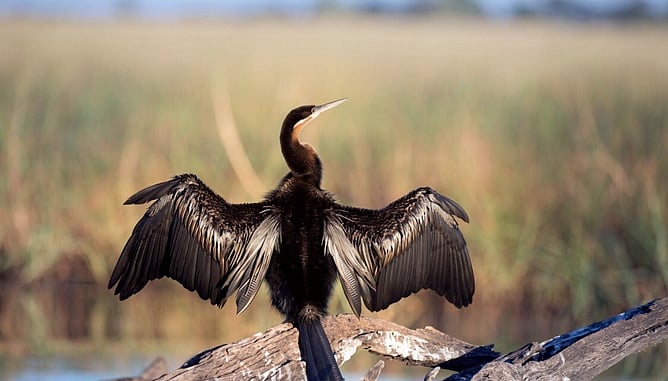
We had an afternoon boat ride too, with a sundowner drink and nibbles watching the sun go down .
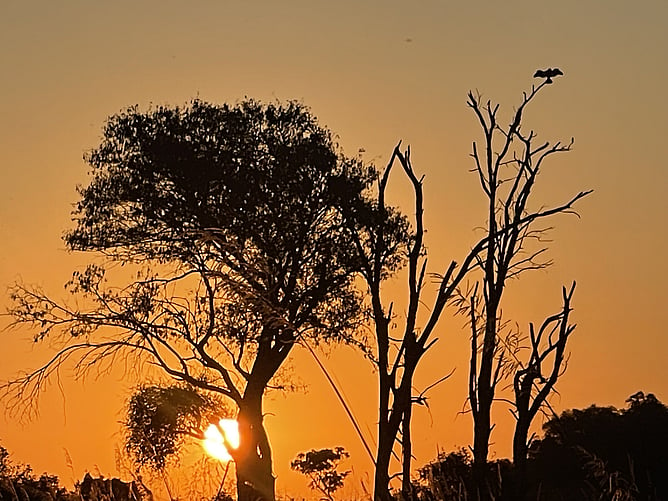
That is an African Darter (kleptoparasite from ChatGPT) high up on the tree, drying its wings before darkness comes.
The next day, we went to Buffalo Island for a guided walk. We got out of the boat, and we realized there was a bull elephant right there. He was certainly interested in us.
We all got back into the boat as Vee and Aodi saw the elephant was what they call fake feeding. That means they are pretending to feed when really they are watching us.
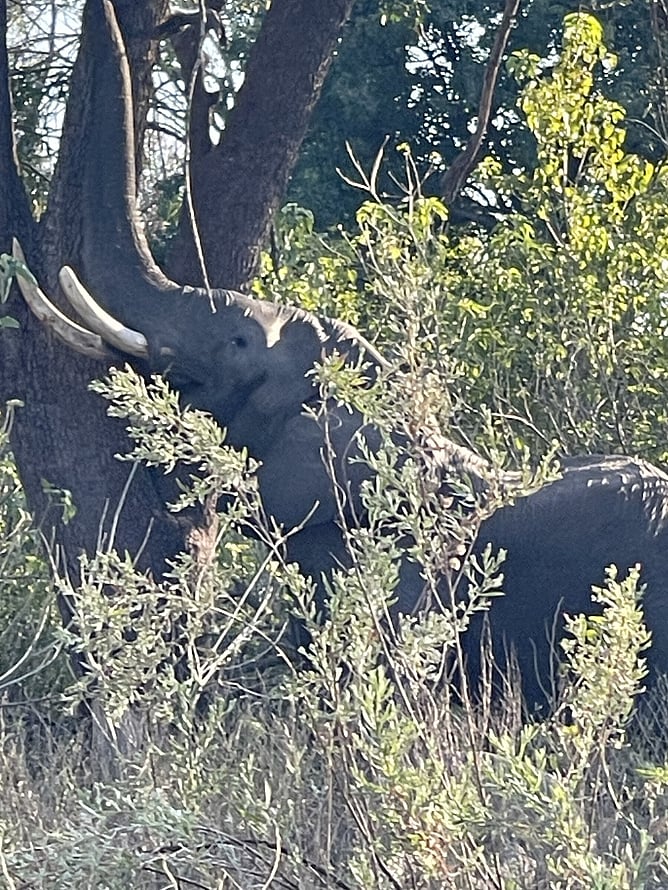
After about 15mins Vee was happy for us to proceed on our walk - quietly and quickly, and away from the elephant.
When we got a little way away, they talked about the sausage tree; never camp under it!
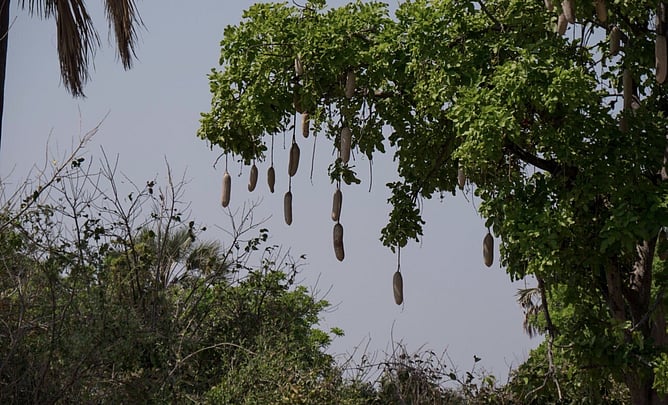
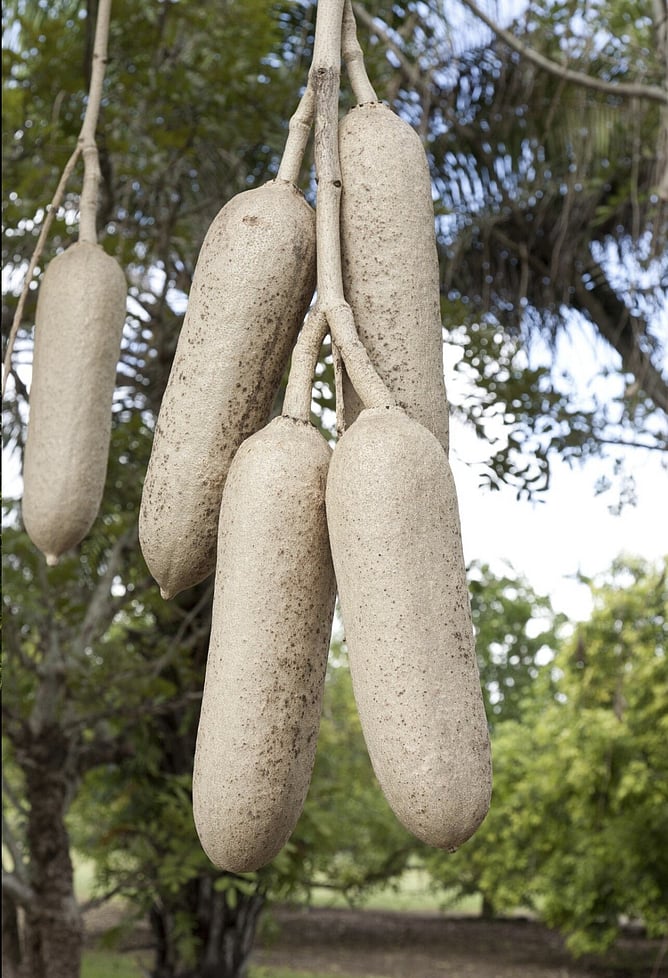
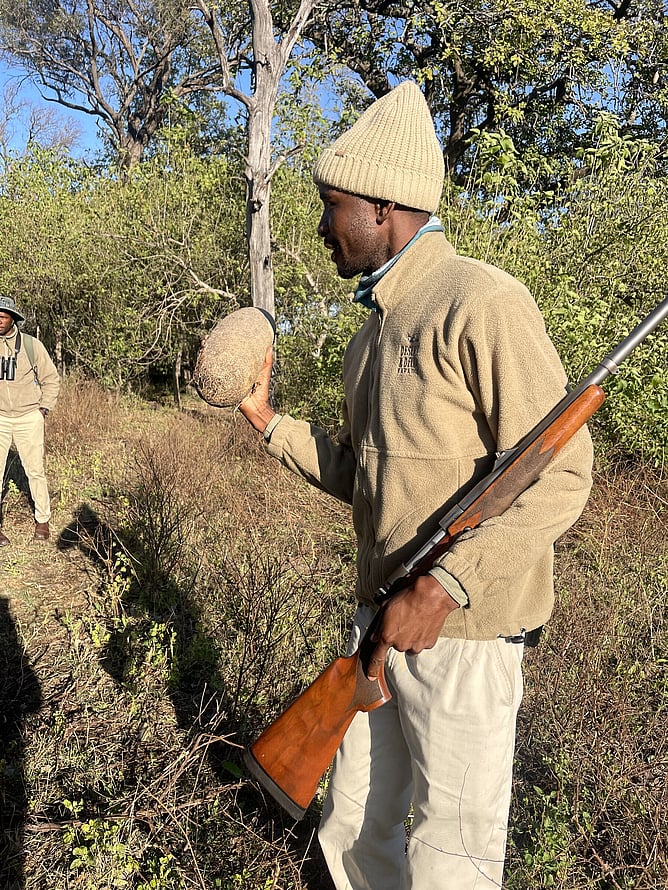
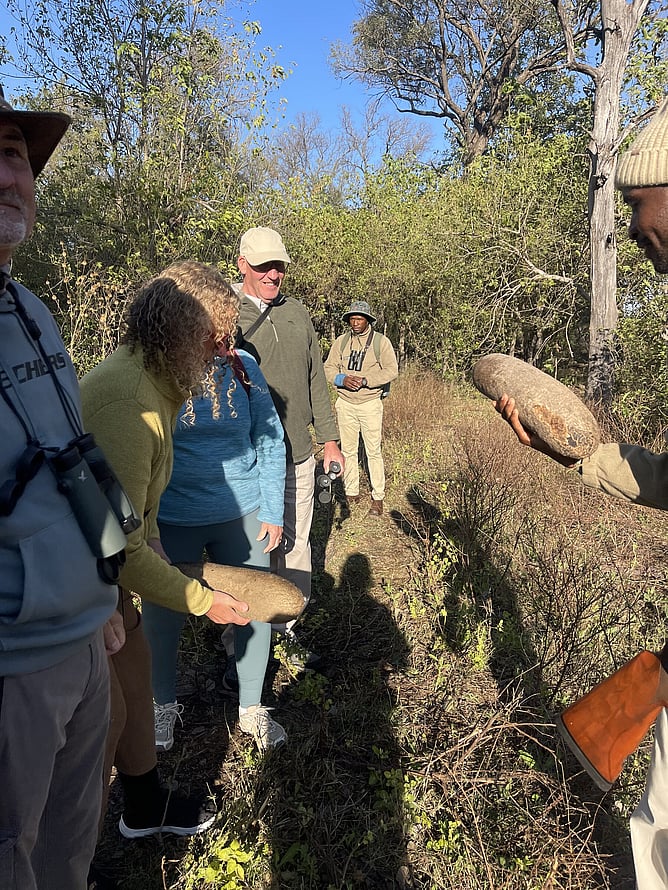
Many African animals—including elephants, baboons, giraffes, warthogs, hippos, and porcupines—feed on the fruit or help disperse its seeds.
🌿 The raw fruit is not safe for people to eat, but in some African cultures, it is carefully processed or fermented for traditional foods and drinks. Different parts of the tree have also been used in traditional medicine, although these uses don’t necessarily mean they are proven to be effective or safe for everyone.
Vee included maybe a breast infection or even cancer of the breasts, though I have forgotten, and did not take notes to remember.
We see a vulture, warthogs, and wildebeest.
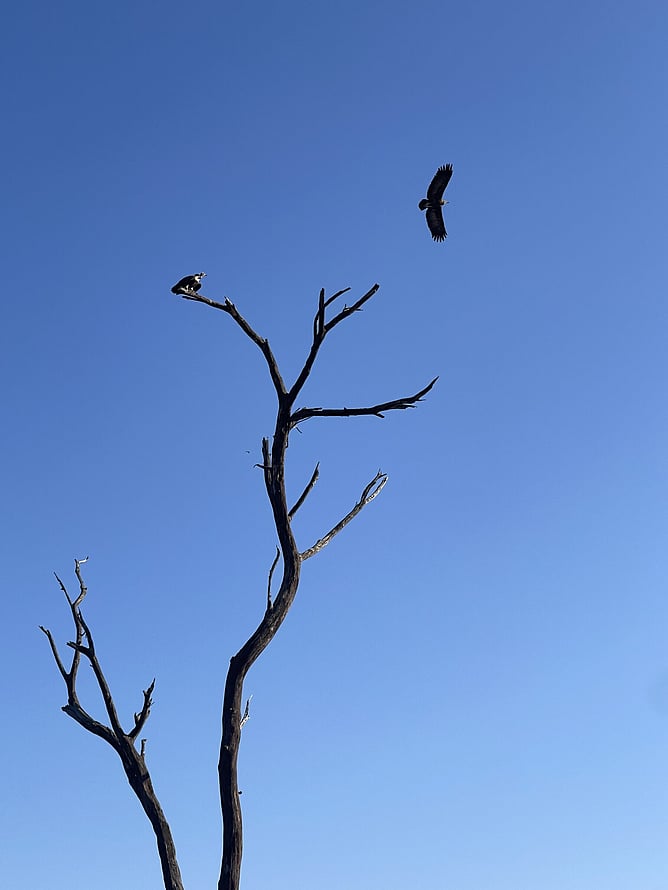
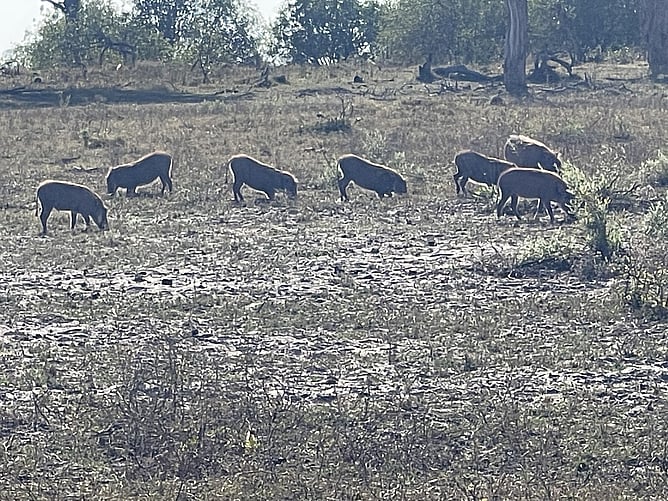
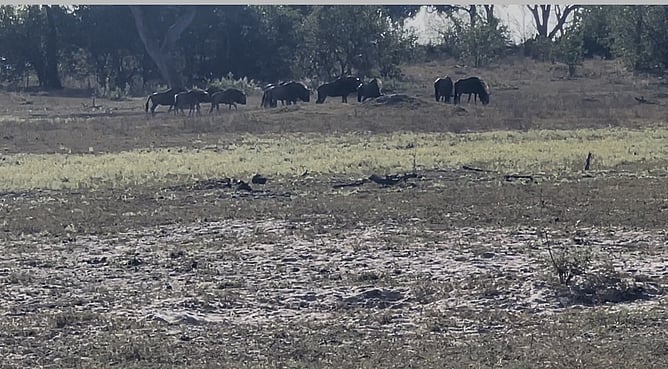
And the elephant again.
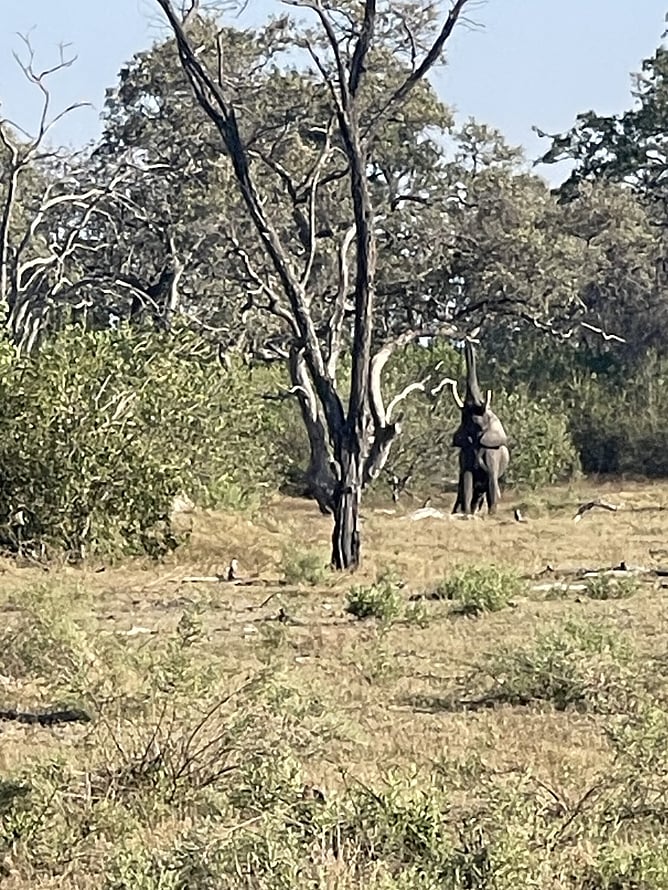
The termite talk was so interesting and educational. Termites basically enrich the soil and a lot of different animals use them for dfferent things. Inside it is like a beehive. It is so organised. The aardvark is what eats them.
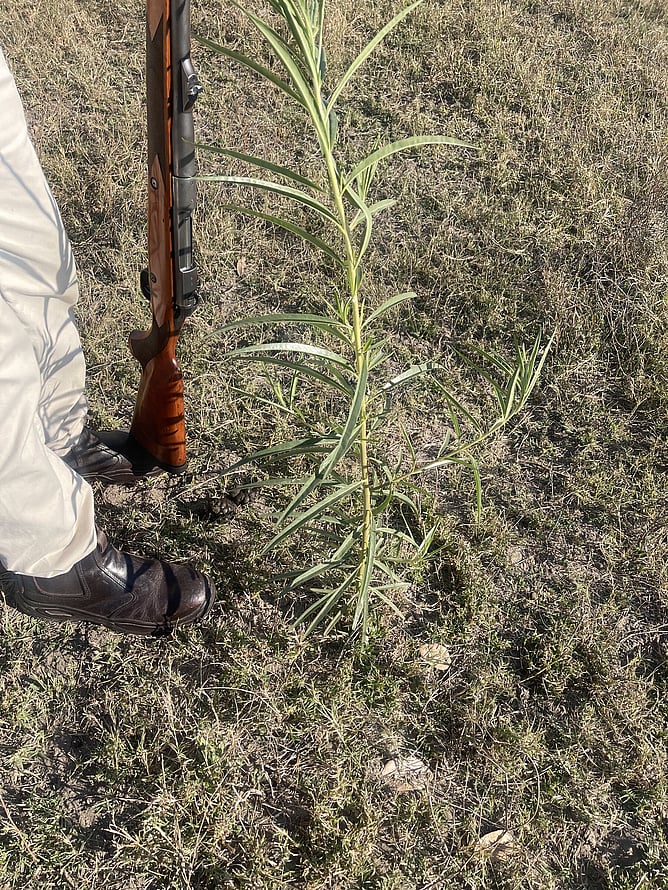
This is milkweed. The milk inside the weed can heal things like warts. I took some to try and heal a wart on the top of my finger.
On the way back, we see a malachite kingfisher again.
This is a common moorhen.
We did a mokoro ride in the afternoon - the traditional dugout canoe. This is Vee, Bill and me setting out.
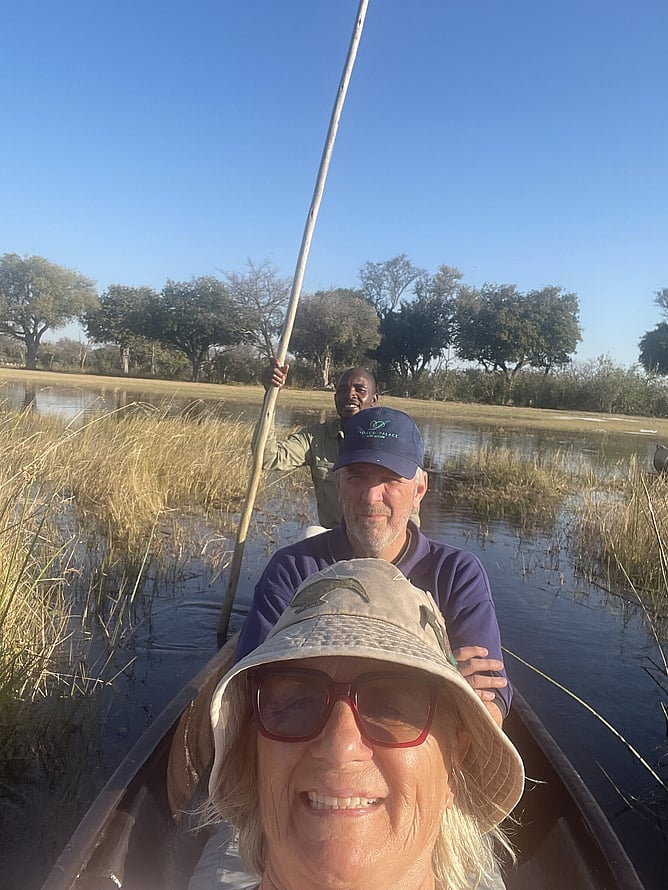
Two stolen photos follow. Thank you, Jo and Mark.
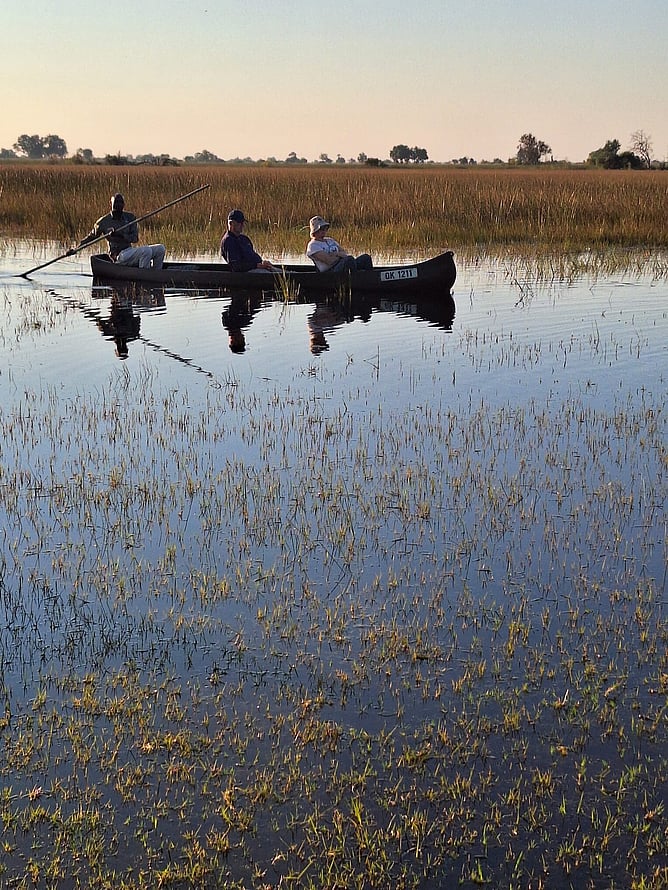
You have to know what you are doing as a poler.
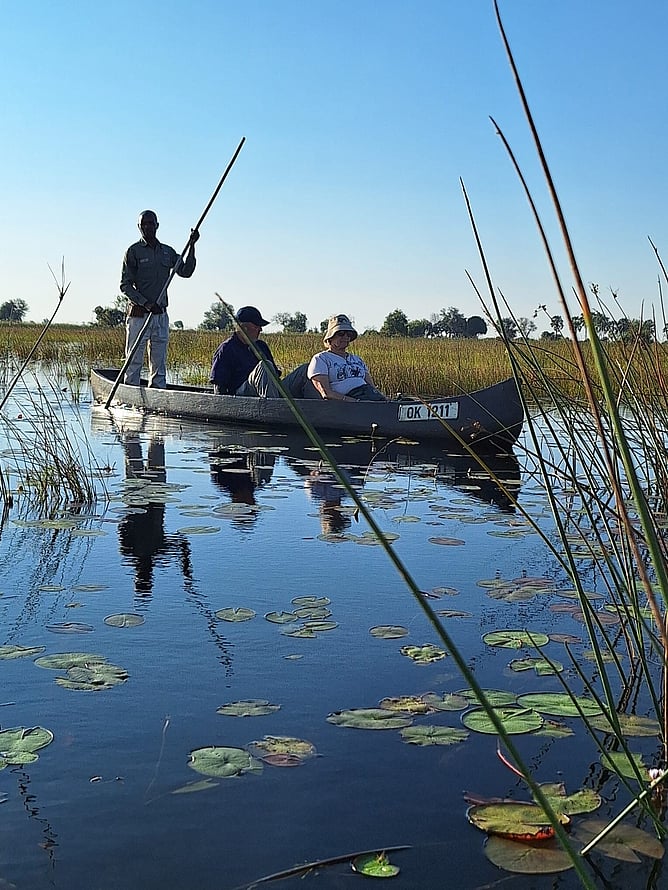
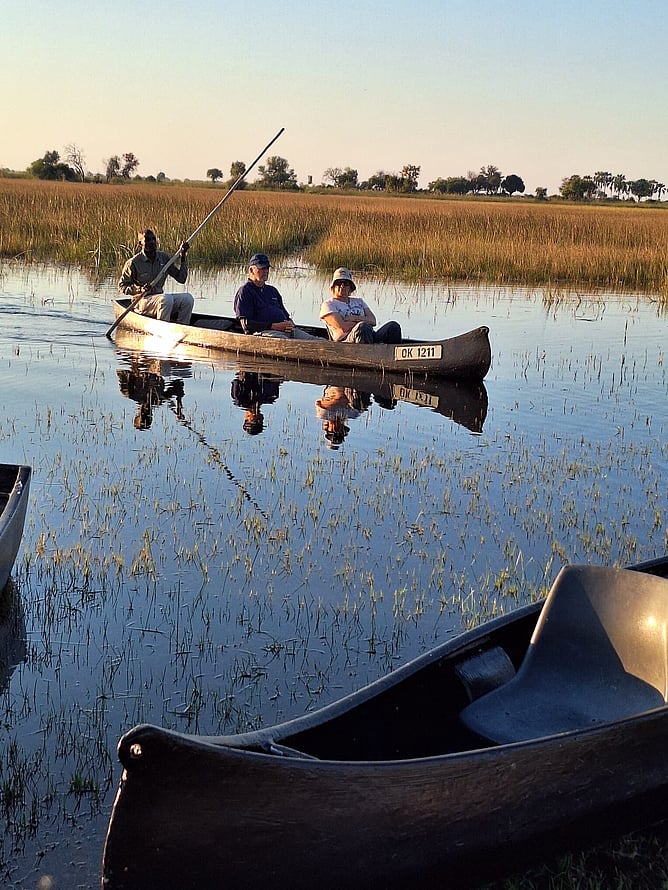
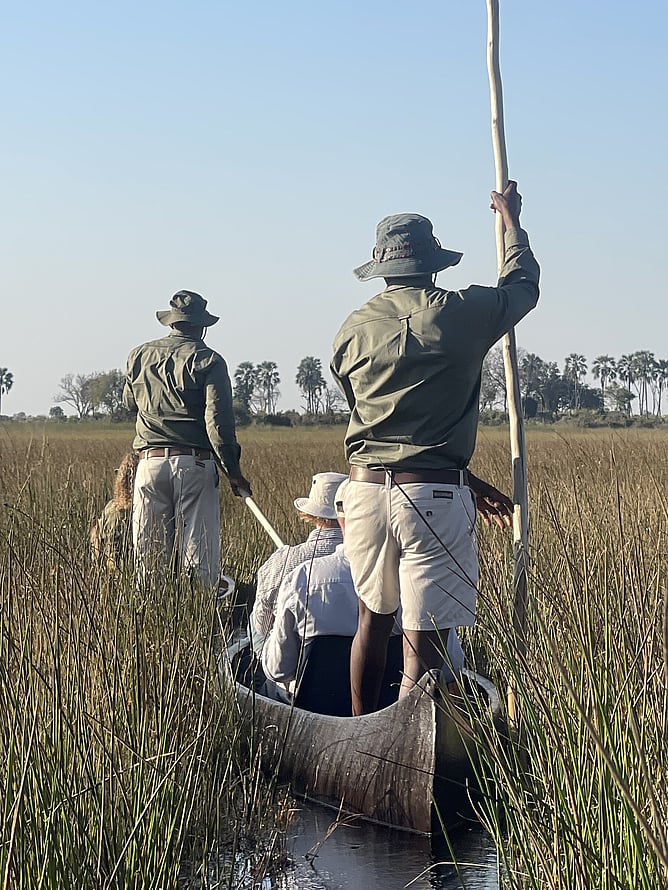
All these paths are made by the hippos.
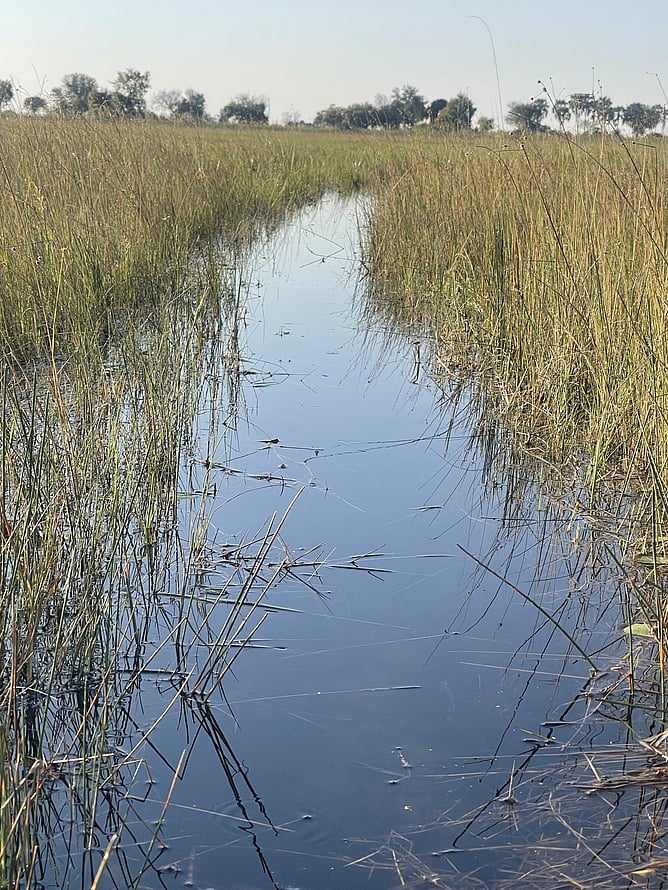
Vee sees this on one of the reeds, and we would have missed it.
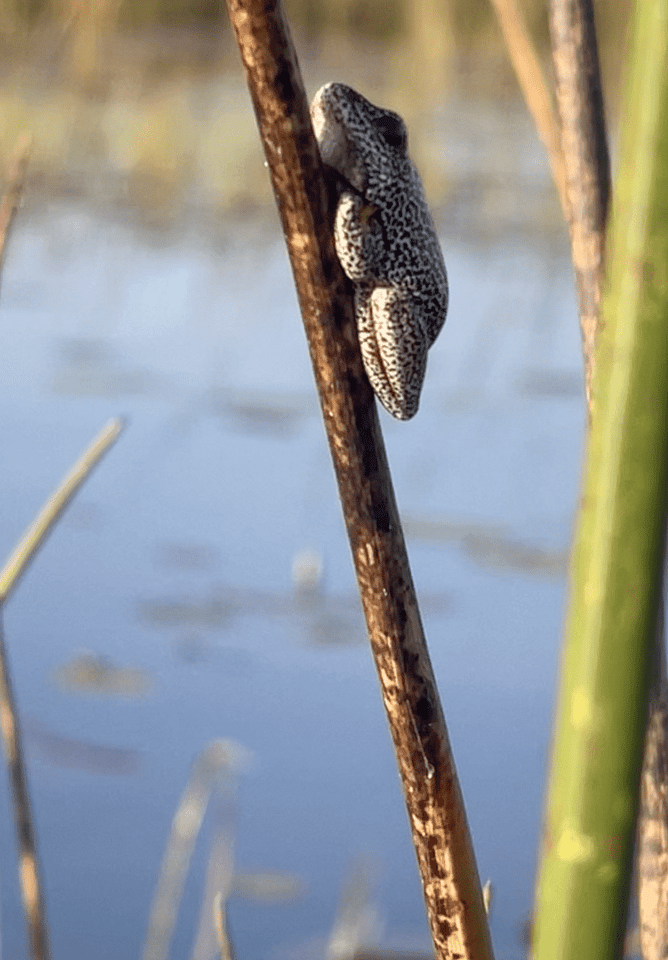
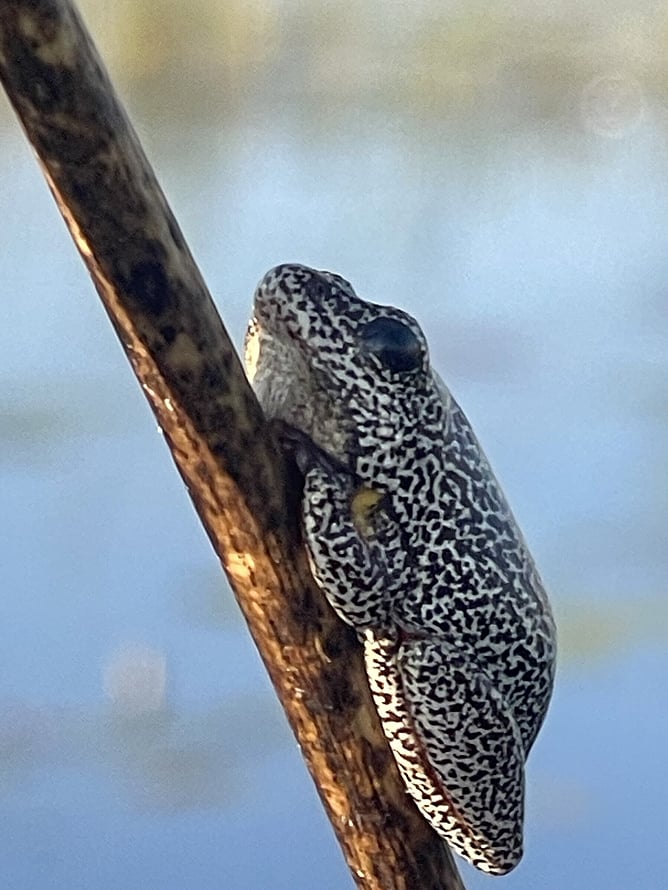
This is the painted reed frog. They change colour to blend in with the reeds.
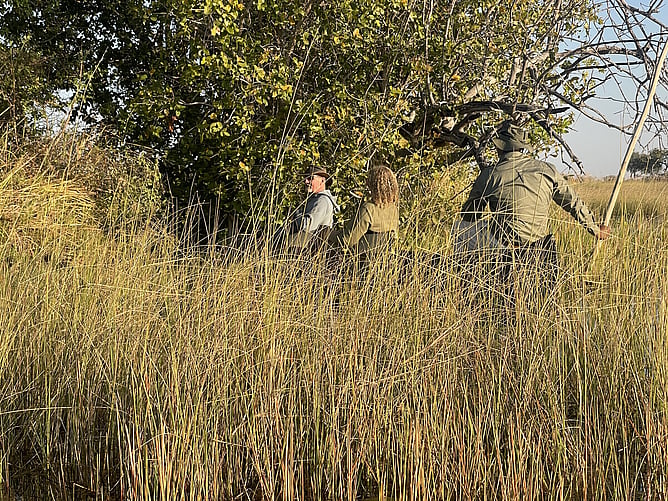
I missed videoing Dianne just before this. She was mouthing 'BIG CROC' just here.
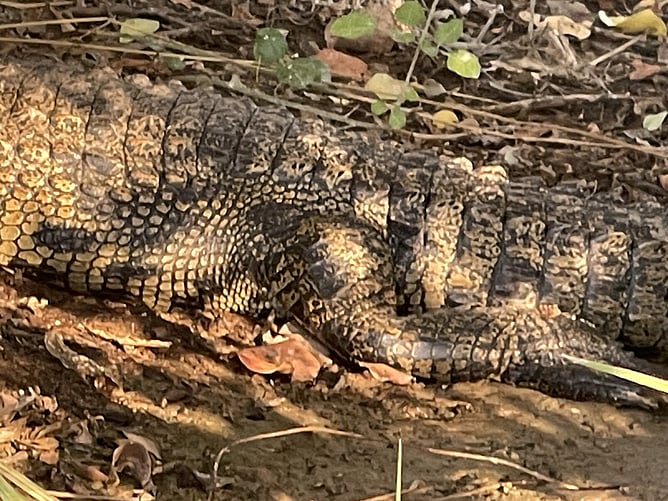
Then it was back to the camp. That evening after dinner, Ebet grandmother, Maggie 12, and Emma-Rose 10, created a story.
I wish I had recorded Emma Rose singing the book I used to create the story, which I wrote to inspire her, she sang it.
I was so inspired by them both and Ebet. This is the story they came up with. We could not have created this story without Ebet. I am trusting the girls will illustrate it, and then they can send it back to me, and I will print a hard copy and send it to the camp and put it in their camp library. It was such a privilege to co-create this story. I was fizzing after it.
https://docs.google.com/document/d/1TXyKOjkFZ5Y-VHtsoJ8CsGf3thYT_2Yuw1KS0n9nXMM/edit?usp=sharing
In the morning we talked to Learnmore in the camp again. His story is incredible. His grandfather had 6 wives, they all got married at the same time. There were four of them who spoke different languages. The grandfather spent one night each week with each of his wives, provided for them and had 63 children. Learnmore's mother thought he had to learn more to learn the languages of the masses of his relations. And the extraordinary thing is he has.
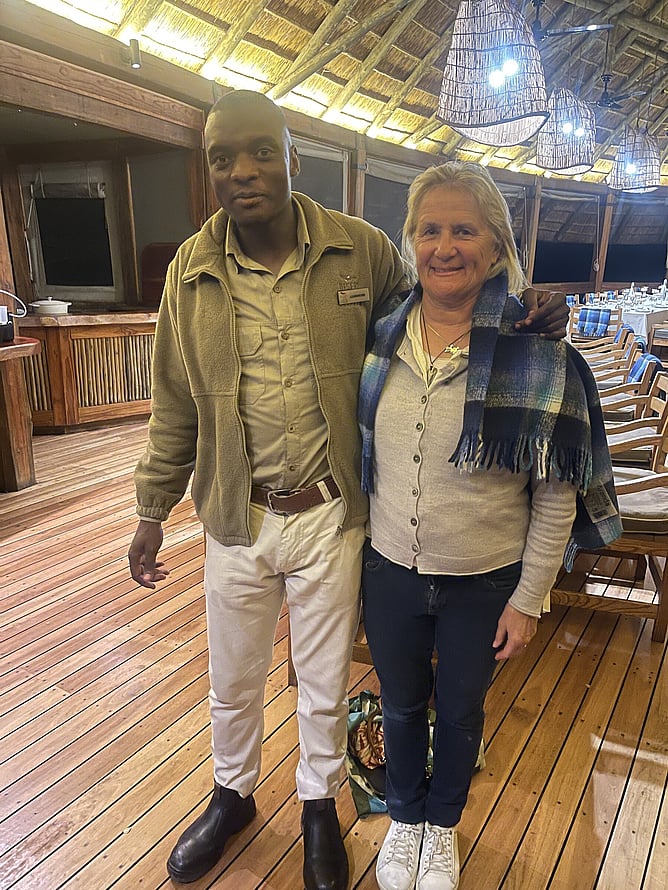
At breakfast, Ebet read the story to her husband Tom. He seemed interested. Ebet was as excited as I was. The whole story creation was a good practice for Serowe. That is after our safaris, with twelve SOS orphanage village children.
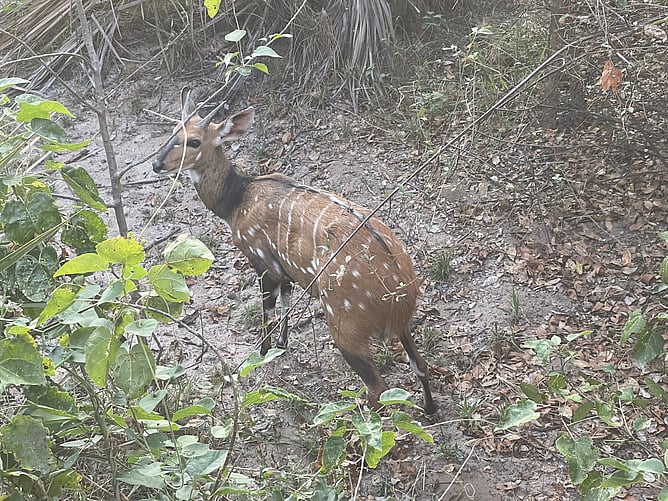
The next day, we went for a short game drive before our flight to the next camp. This was in the camp as we got in the jeep.
We saw a male lion.
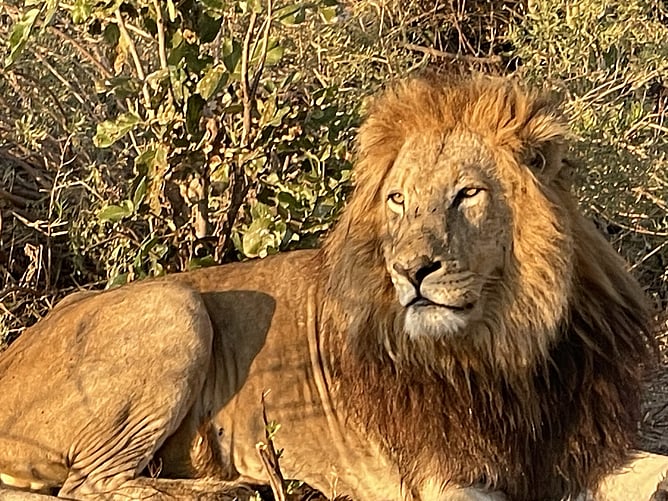
Then he got up and walked ...
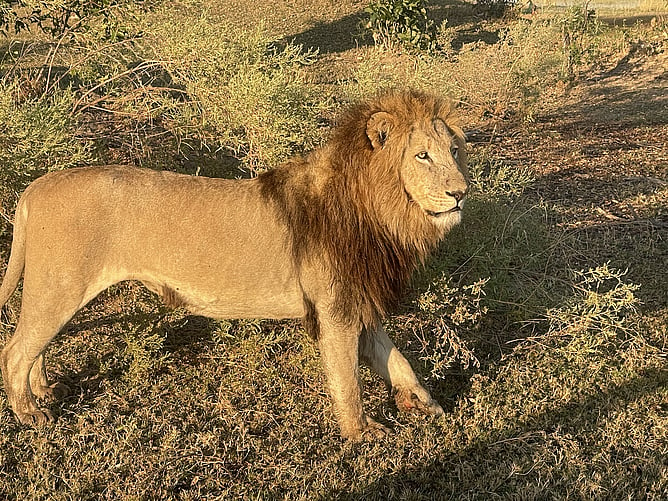
... and he was sore.
This is where we were in the mokoro the day before.
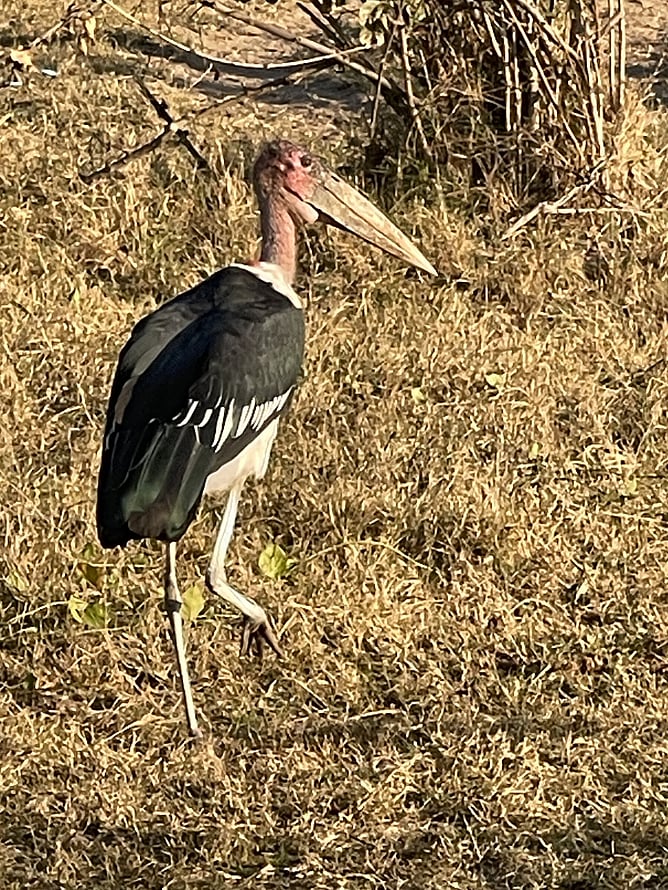
Then we saw these. Marabou storks are often called “Africa’s undertakers” because they frequently feed on carcasses alongside vultures and hyenas. However, they’re not just scavengers—they also catch:
Fish
Frogs
Small mammals
Lizards and snakes
Large insects
Occasionally young birds
They stand 1.2–1.5 metres (4–5 feet) tall, with a wingspan of up to 3.2 metres (10.5 feet), making them one of Africa’s largest flying birds.
Then it was on to the airstrip, a 45-minute boat ride, the way we came. We saw female red lechwes on the way.
The most glorious three days for us, learning about African wildlife and culture. And also about other cultures. Thank you to all these people who were with us - Vee, Aodi, Ebet, Thomas, Bess, Maricio, Oliver, Western, Amy, Rufus, Trip, Maggie, Emma-Rose, Mark, Jo, Jason, Dianne, Learnmore, Chris, Matt, Mildred, Teodora, Marcel, Karina, Lydia, Ogee, and I have forgotten some names sorry - like the cooks. You are all in my heart now, and I take you with me.
And from the photo kleptoparasite re photos. If you have better shots and other flora and fauna from the Okavango Delta, please send them to me, if you don't mind me being a kleptoparasite +6421444327. Thank you, and you don't have to.