
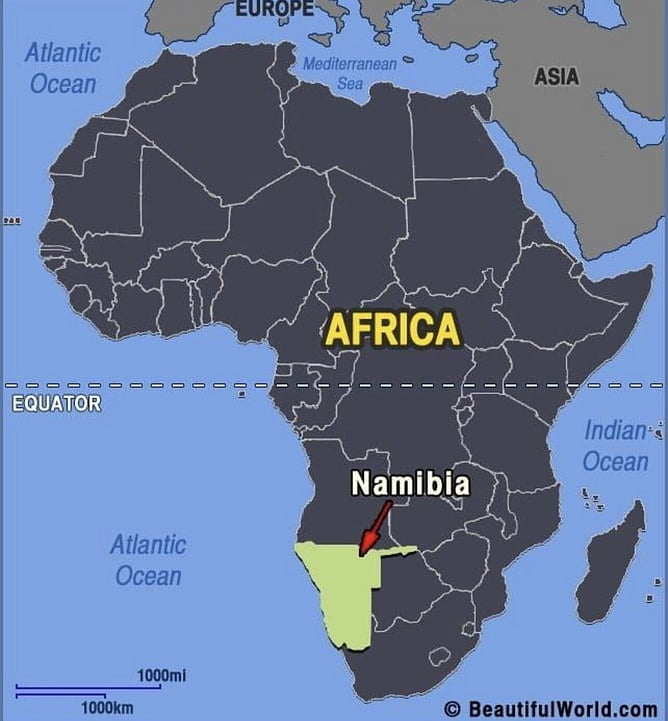
Marama, a reader of the blog, suggested a map or two. Great idea. Here is Namibia, in south-wes Africa. This is also for the grand-nieces and nephews.
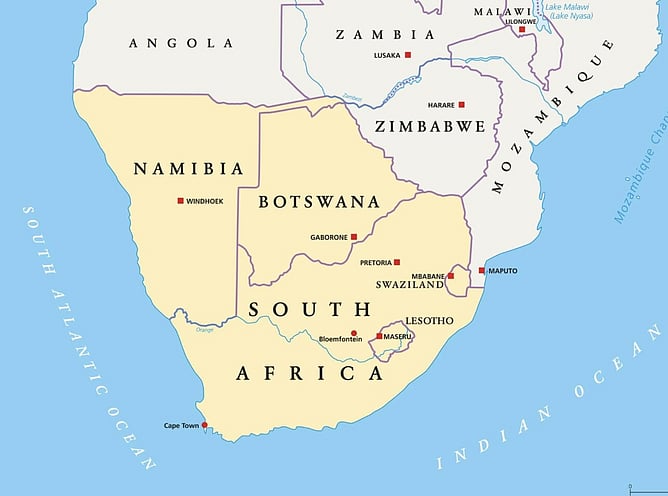
Here are Namibia's nearby neighbours.
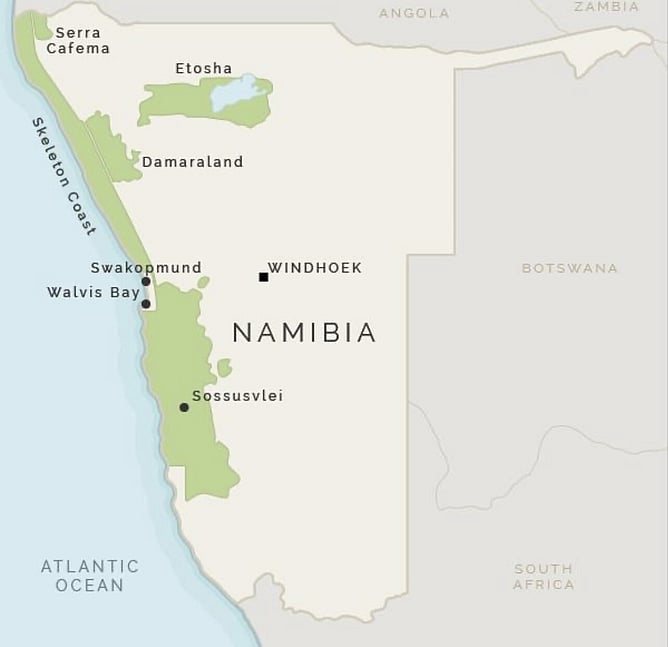
Here are our excursions covered in this and the next blogs: 1, 2, & 3. Sandwich Harbour (where dunes meet the sea) is 55km south of Walvis Bay.
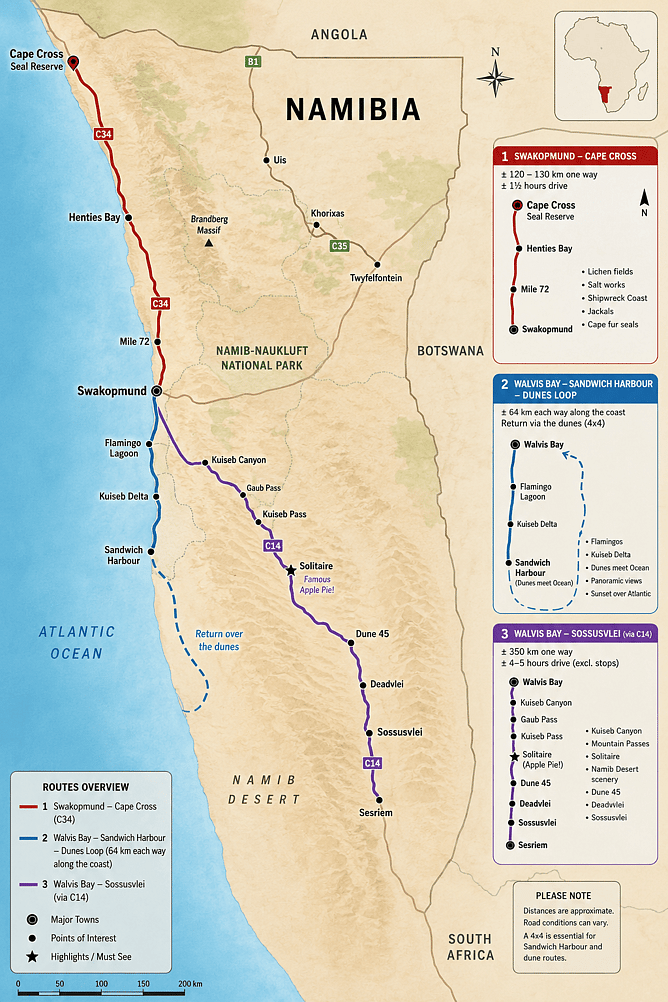
Sandwich Harbour is not really a harbour. From Chat GPT- It is called Sandwich Harbour because it was once a genuine bay used as a harbour and was probably named after a ship called Sandwich. Over time, the desert filled the harbour with sand, leaving the beautiful lagoon you see today. Sandwich Harbour also refers to the giant dunes of the Namib Desert. They run straight into the cold Atlantic Ocean. There are very few places on Earth where you can see such enormous dunes meeting the sea.
It is special because of its wetlands. It was declared a Ramsar Wetland of International Importance because it supports huge numbers of birds, including flamingos, pelicans, terns, and migratory shorebirds that travel thousands of kilometres between Europe and Africa.
This blog post is map-mad - last map. We are exploring the green areas on this map, except the top half of the Skeleton Coast and Etosha.
A little history - It is thought that hundreds of years ago, sailors, whalers, and fishermen used Sandwich Harbour as a natural harbour. Fresh groundwater and shelter made it a useful stopping place on an otherwise harsh coastline. Over time, shifting sands and changing currents made it less suitable as a port, and nature gradually reclaimed the area. Today, it is protected as part of the Namib-Naukluft National Park.
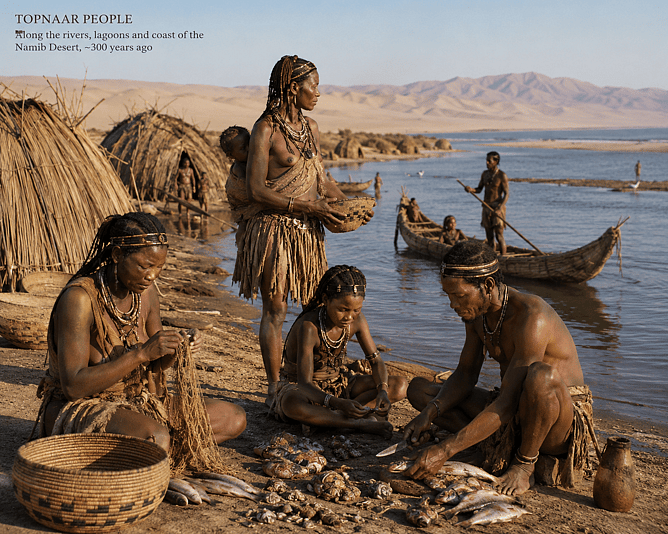
Long ago, the Topnaar people lived beside the rivers, lagoons, and coast of the Namib Desert. They collected juicy nara melons for food and water, kept cattle, fished in the ocean, and traded with visiting sailors. A fascinating fact for children is that the nara melon was so important that the Topnaar were sometimes called the "people of the nara" because it helped them survive in the desert, where very little else could grow. Next image is generated by ChatGPT
I will return to Sandwich Harbour after telling you about our lagoon and outer lagoon visit.
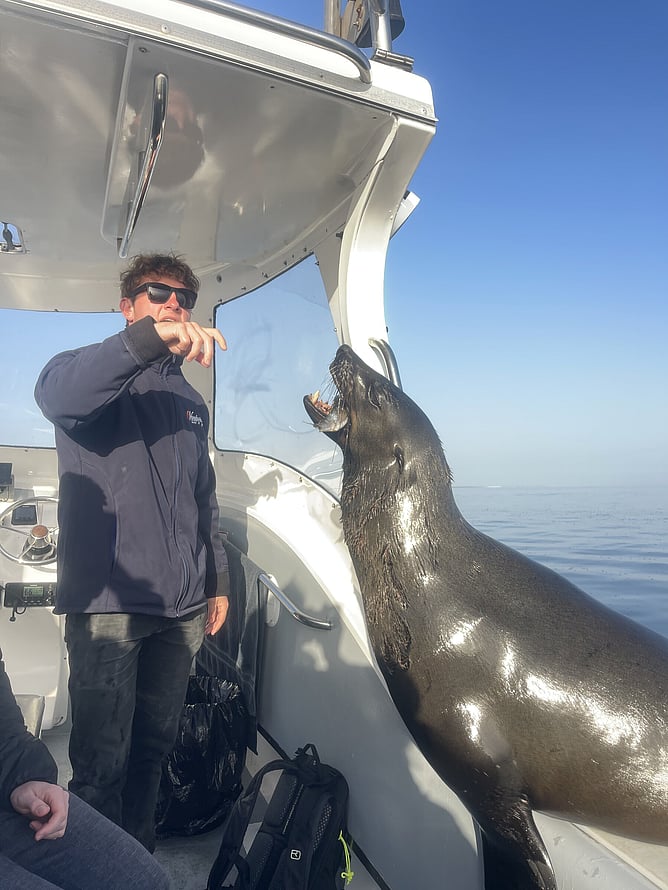
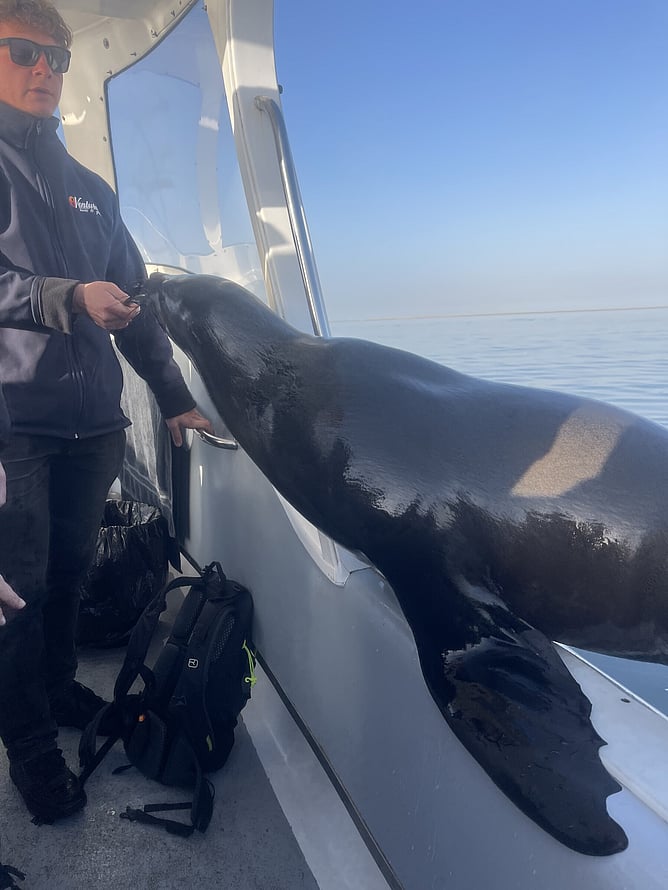
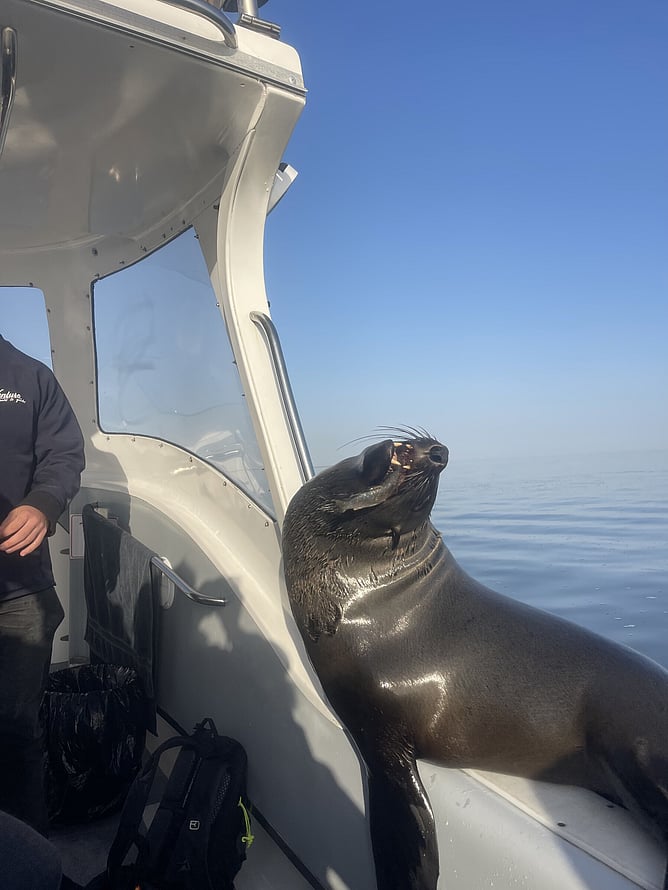
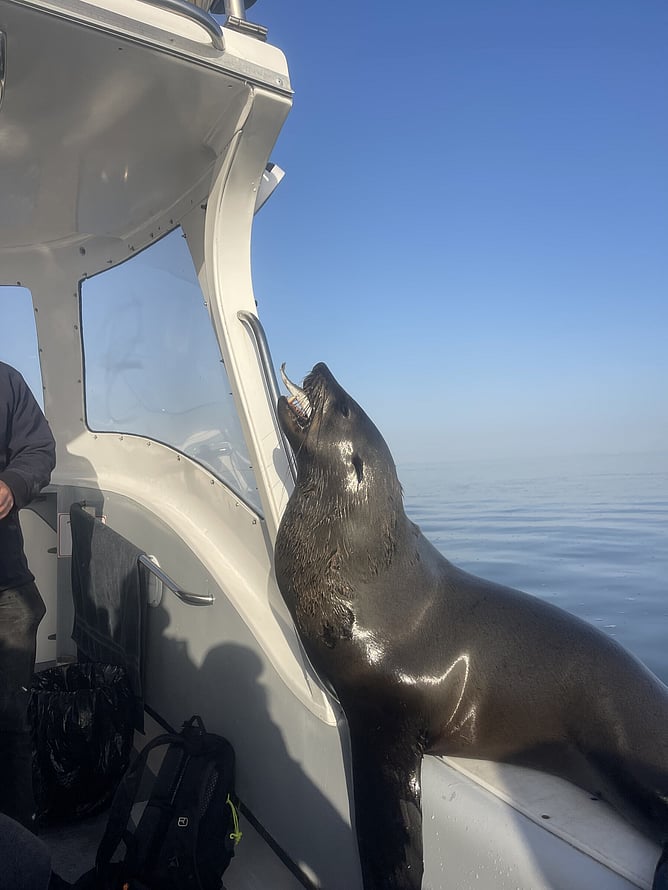
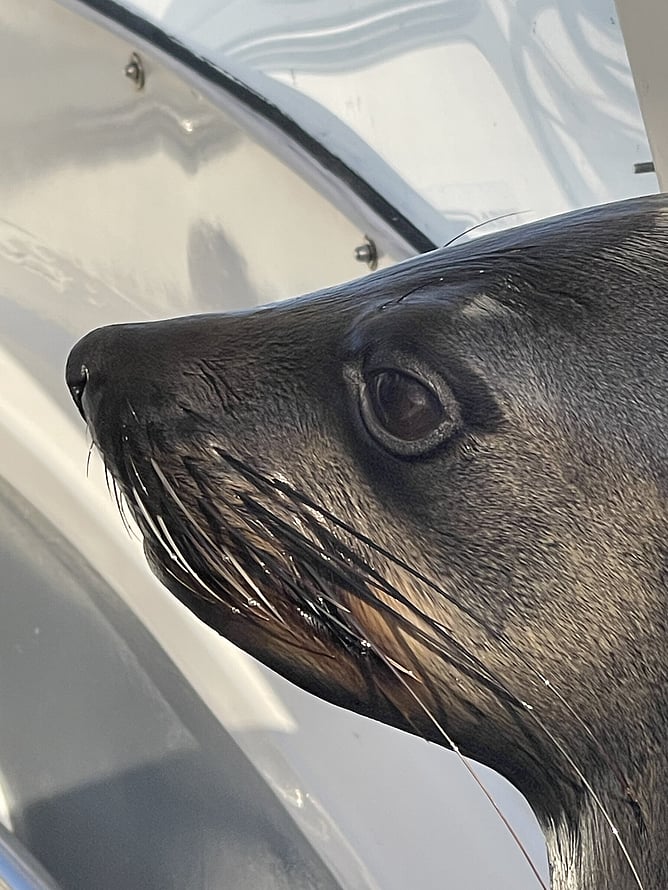
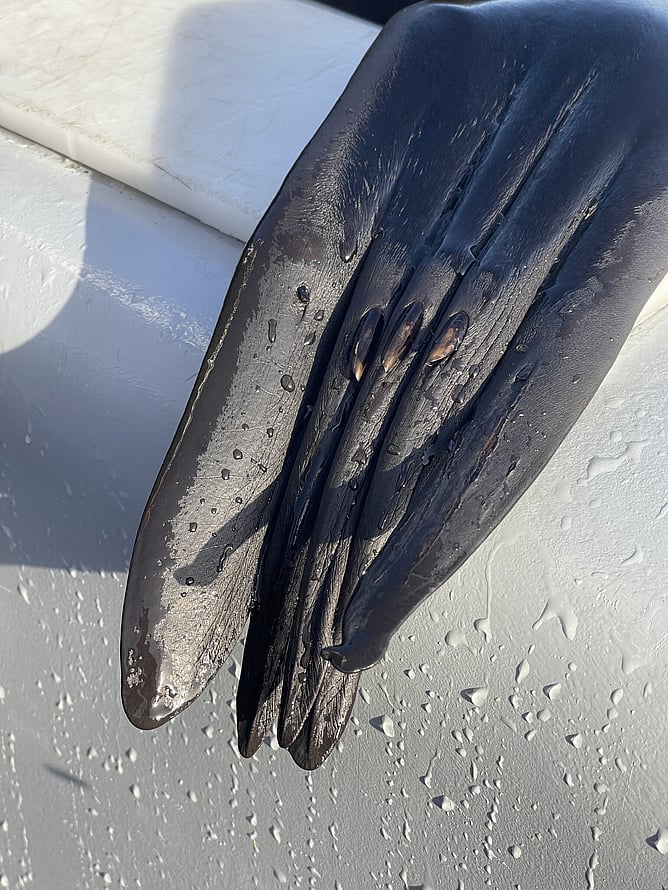
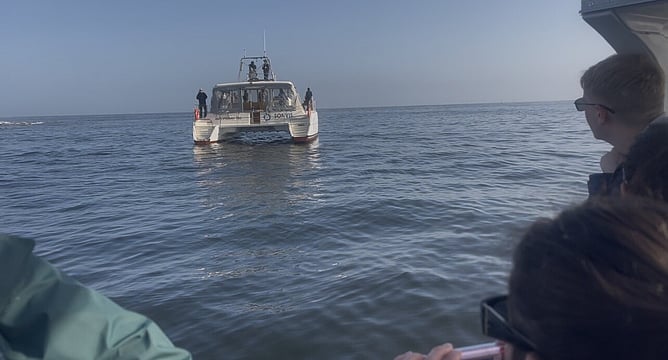
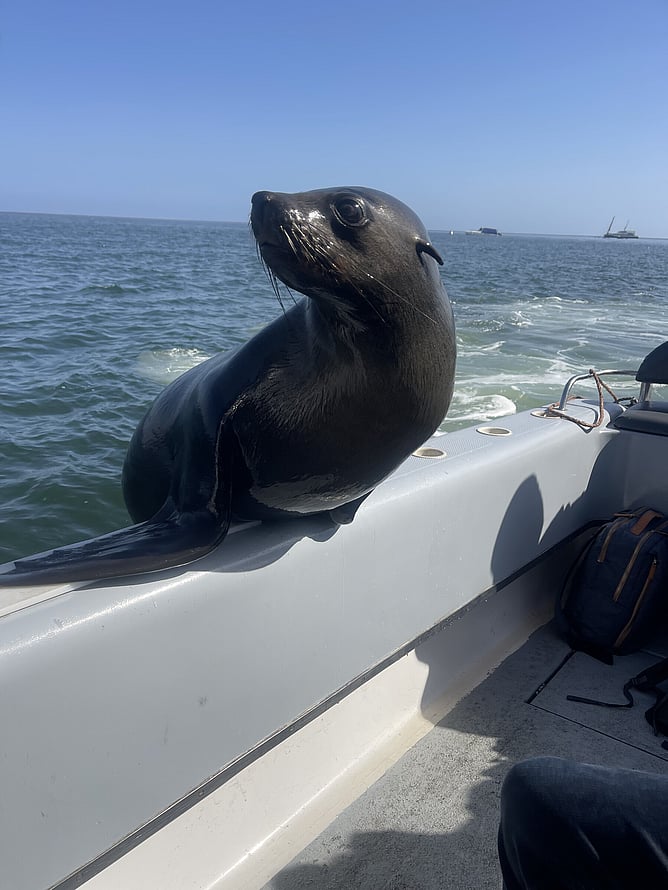
We paid for a combo trip for a day - a two-in-one deal. The first trip was by boat out of Walvis Bay. Our boat driver was Adrian. We went with IVentures, recommended by a waiter we had met in Windhoek named Abed. The trip was from 9am to noon. Adrian had been with the company for 6 years. He told us he had a good relationship with the pelicans and, in particular, a seal named Alex. Alex was trained as a baby seal to come onto the boat, and you could pat him. Alex had, of course, a bucket of fish that he fed Alex with if he came closer. And he did.
Then we saw cormorants heading somewhere - flocks and flocks of them.
Then the pelicans came. Adrian had more fish.
Then we saw dolphins.
Adrian was told there was a humpback whale in the area. We waited for the whale, which other boats had sighted.
Then we saw it. I was too slow to get a photo. This photo is from the internet. We saw a body, then its tail. This was better than we saw, although no tail was seen here. Amazing to see so much wildlife.
And that was not all. There were seals in the water everywhere and on the beach. Namibia has a total of 1.5 million seals. That is one seal for every two people. Fur seals are so happy here as there are no predators. There may be an occasional orca. So every 5 years, Adrian told us they cull ~50,000 seals, so there is enough food for all the seals.
Comparing with New Zealand - despite being more than three times larger Namibia has about 3.1 million people, New Zealand about 5.3 million people. Namibia has one of the lowest population densities in the world. Namibia: about 4 people per km², New Zealand: about 20 people per km².
When you are driving between places like Swakopmund, Cape Cross, and Sossusvlei, you can travel for hours and see very few people. The seals are much more dense.
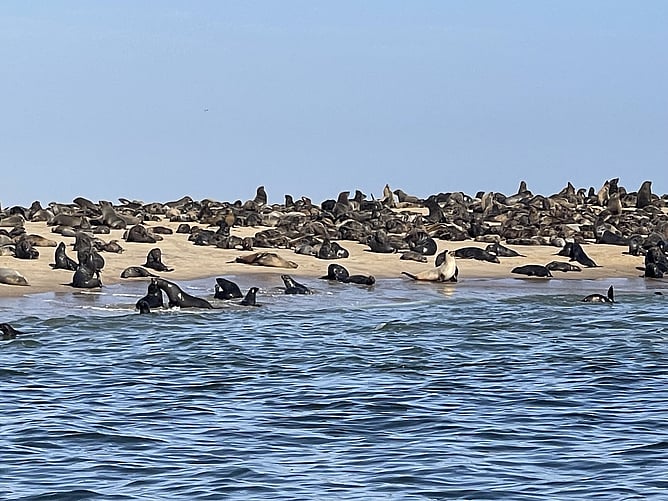
The boats go close.
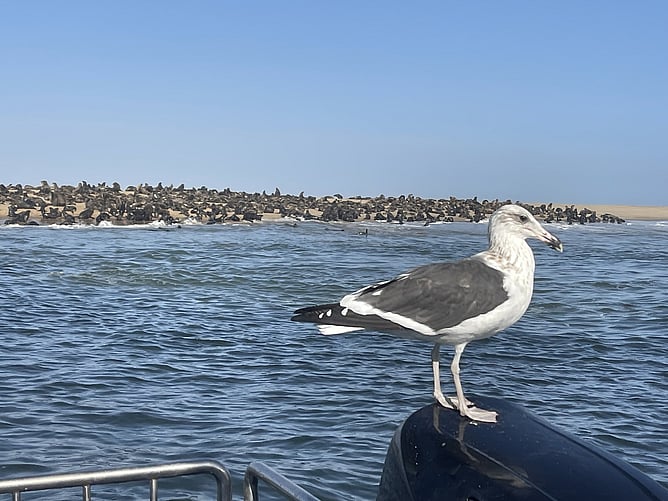
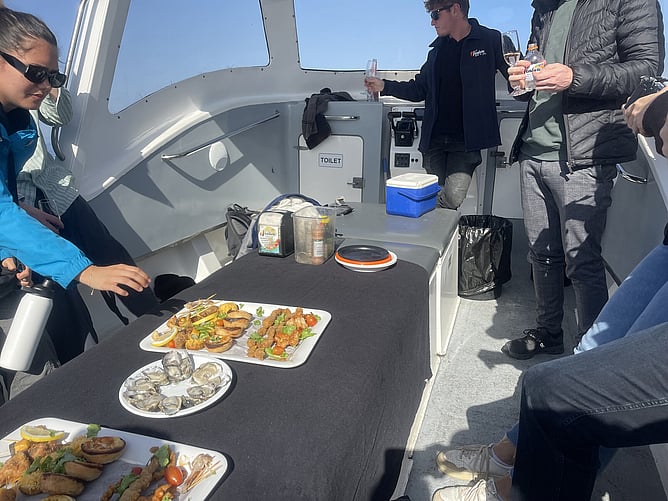
Then a nice lunch spread on the way back, including oysters.
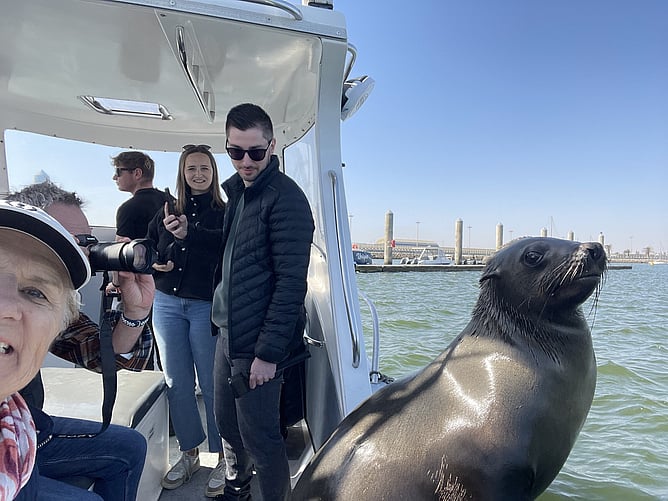
Alex appeared again as we headed into the shore.
I should have got Bill to take. I have forgotten how to do .5's. I will do for next time. Only half of me this time.
Back to Sandwich Harbour, where the dunes meet the sea, that was the afternoon part of our two-in-one tour. We will be driving 64 km down the coast and then back on the dunes. See the earlier map.
We were with Peter, our driver, and Michael and Trevor, from Australia Michael and Trevor were also on the combo/two-for-one deal. Michael had a flash camera. He would have got the whale, I think. I will substitute some of these photos for his when I get them. I cheekily asked him for them, and he obliged.
All my photos are from my iPhone. Michael was in the front seat with a good view. I was in the back in the middle, as I was the smallest. Peter, our driver, has been doing this for 9 years. Harry (Anna's partner) would have loved being a driver, Bill and I thought. Peter says he has the best job ever and enjoys driving every day. Here is Peter with Michael and Trevor.
First, the salt factory. This factory has been going for 60 years.
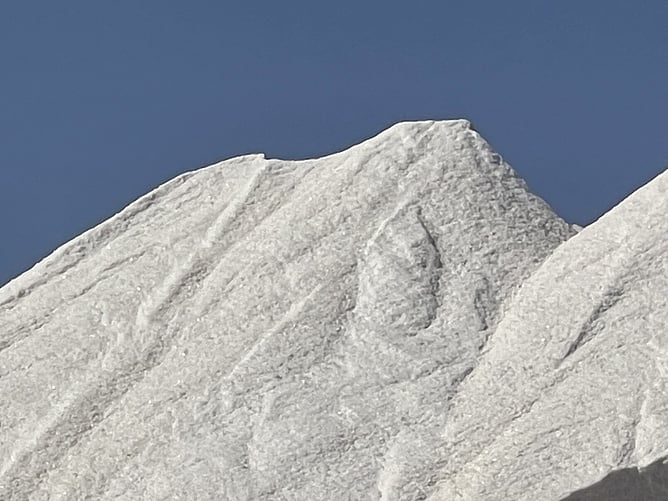
The Walvis Bay Saltworks is a giant outdoor salt factory beside the Atlantic Ocean. Seawater is pumped into shallow ponds, where the hot Namib Desert sun and strong winds slowly evaporate the water, leaving behind sparkling salt crystals. Every year, the saltworks produces up to a million tonnes of salt.
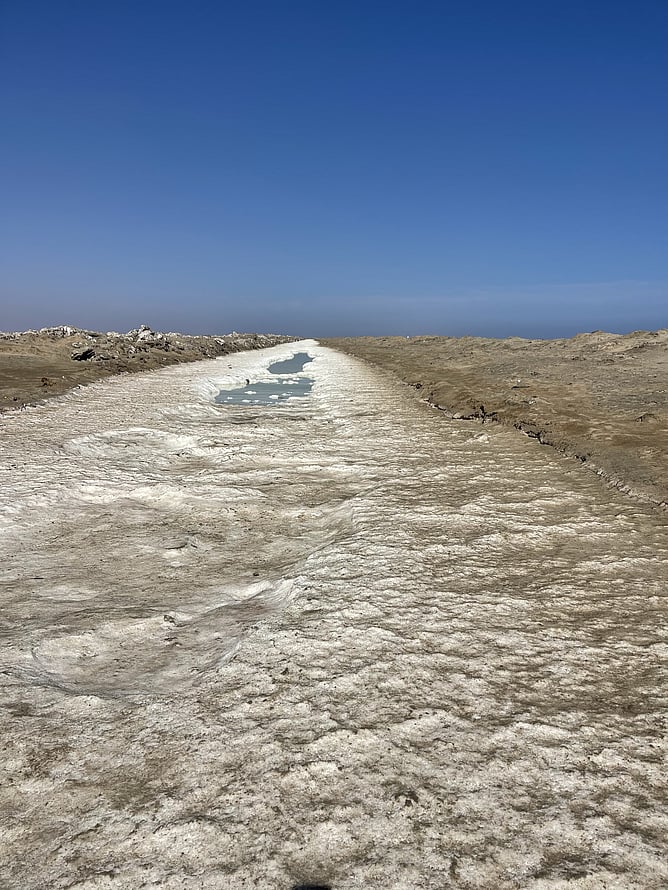
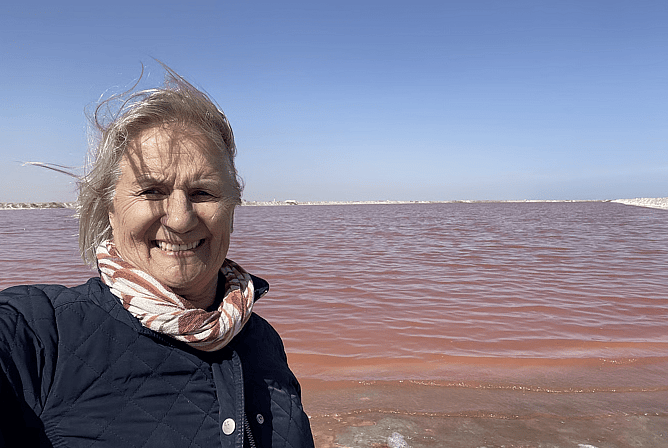
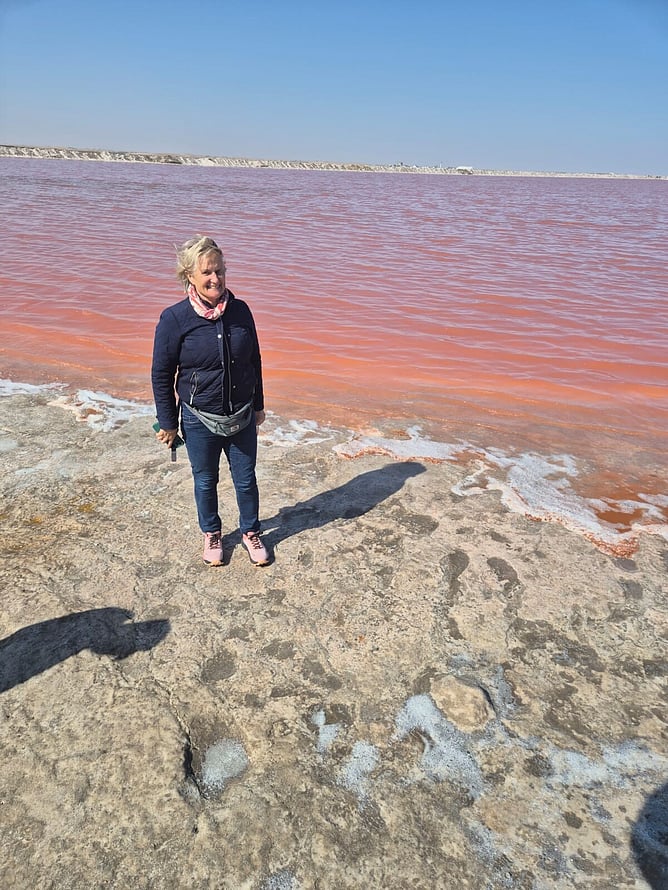
Some ponds turn bright pink because of algae that live in the salty water. The ponds are also a favourite feeding spot for thousands of flamingos.
One of the coolest things about this place is that you can see the blue Atlantic Ocean, the golden dunes of one of the world’s oldest deserts, and huge white mountains of salt all in the same view—a sight found in very few places on Earth.
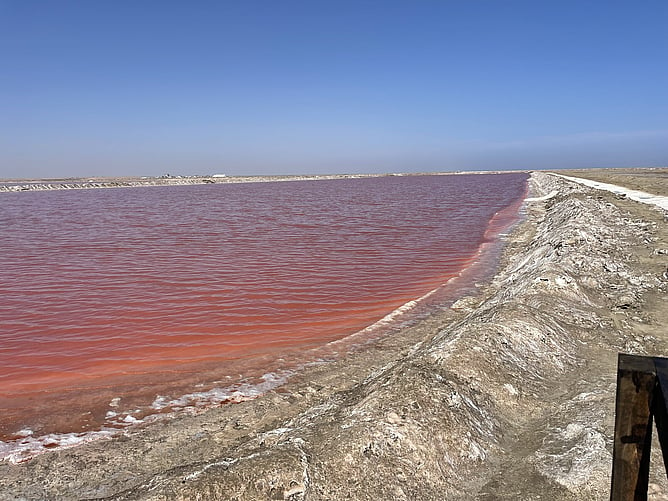
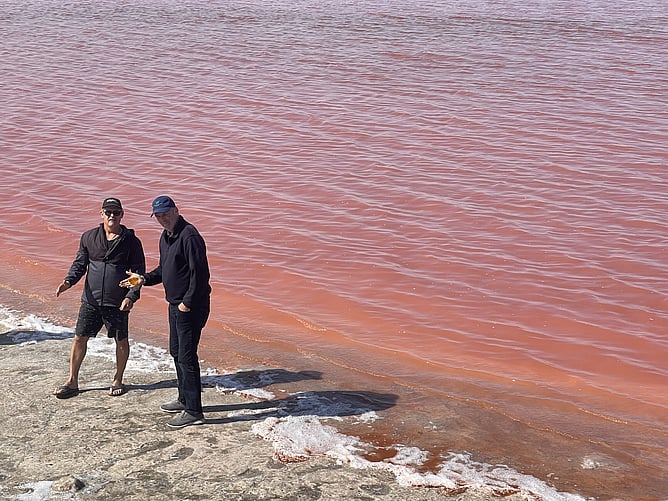
Peter shows Bill the water quality. It is sludgy.
I took this photo because my pink scarf matches the water. My sister asked whether I ever take the scarf off? The problem is it is cold, and it is soft and easy to wear. I forgot to use .5 again.
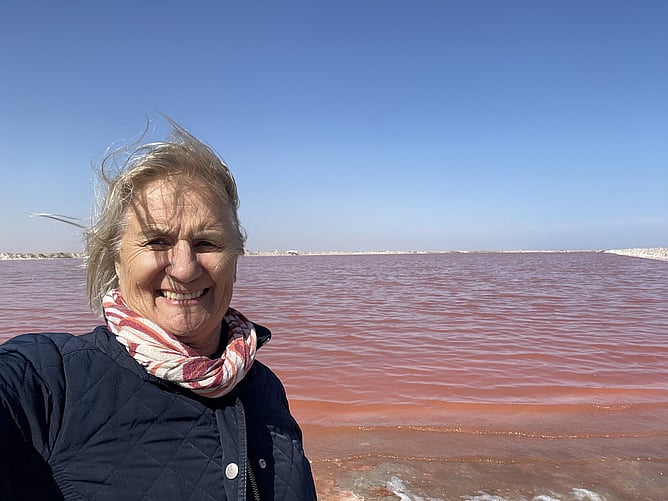
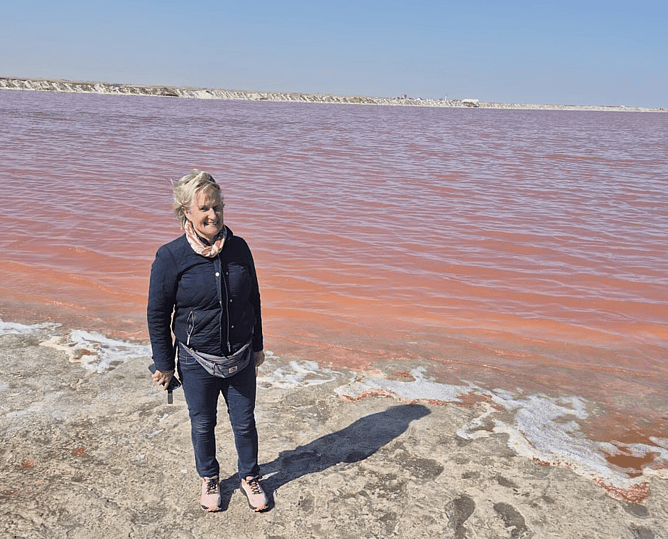
Bill got a better photo - he wanted to show I had packed a scarf AND shoes to match the water. Too bad about the hair.
Then we motored along the beach. We were following another vehicle from the same company.
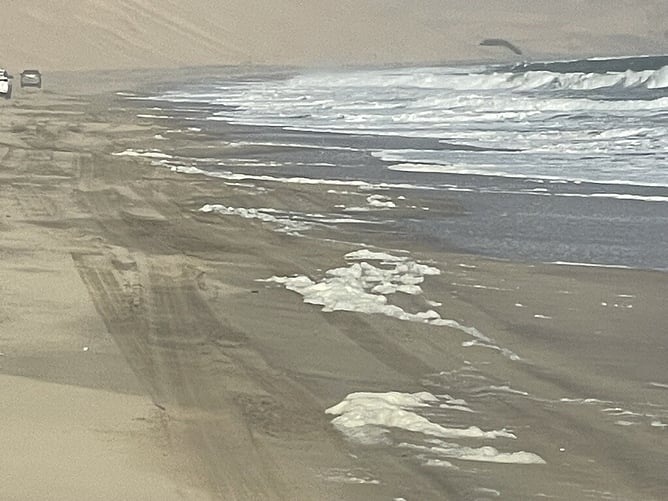
This is where the cormorants were flying to! There were thousands of them.
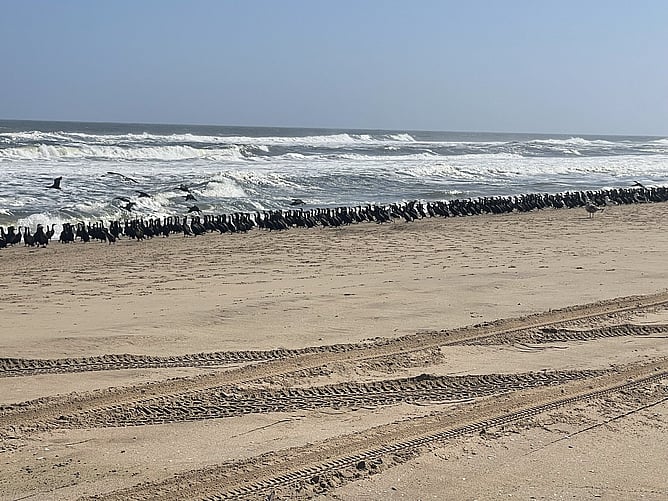
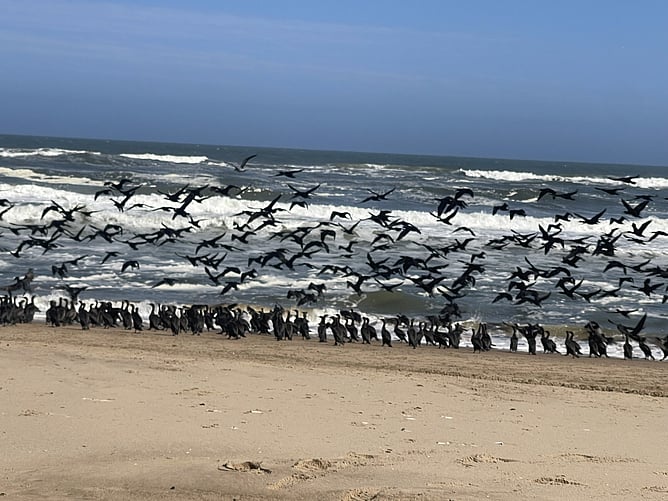
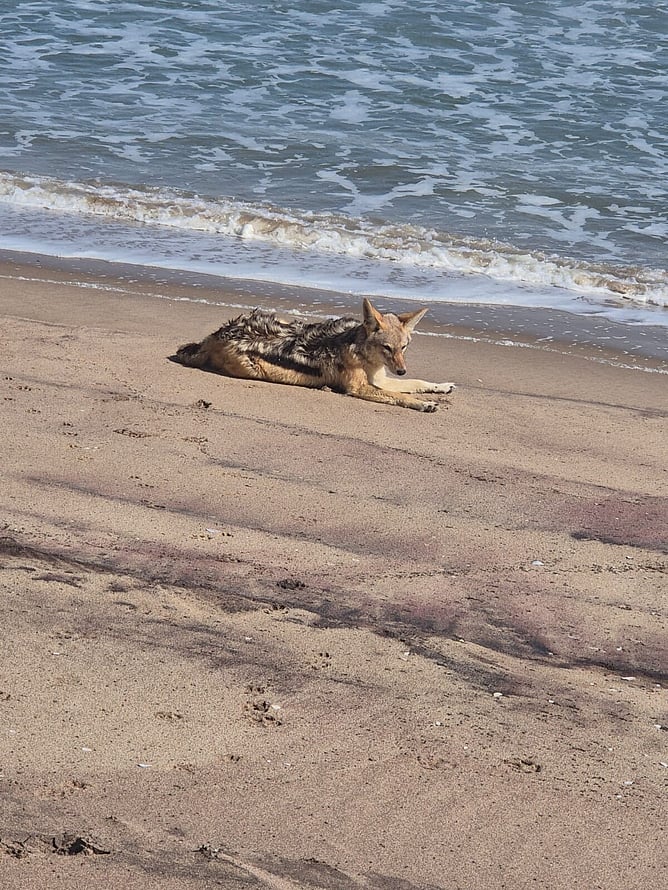
Then we saw a jackal. Out of Bill's window. Luckily, the jackal sat there long enough for Bill to take the photo! Afterwards we had quite a discussion, as Michael and Trevor were Aussies. Do dingoes take babies?
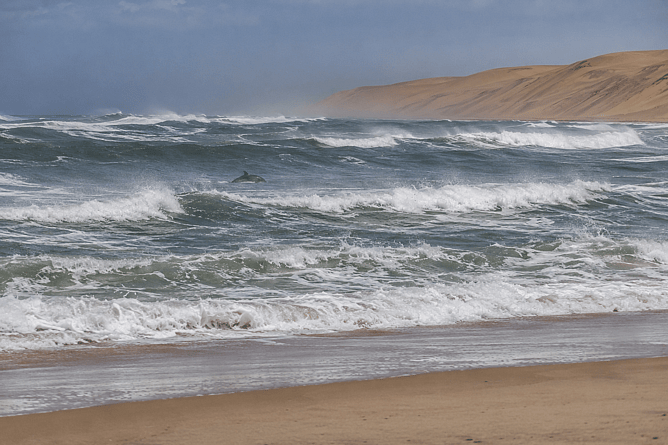
Then we saw a dolphin. We missed getting it on camera. Bill saw it first. He pointed. I was too slow and his arm was in the way.
Chat GPT saw it. Thankyou ChatGPT
Bill posing.
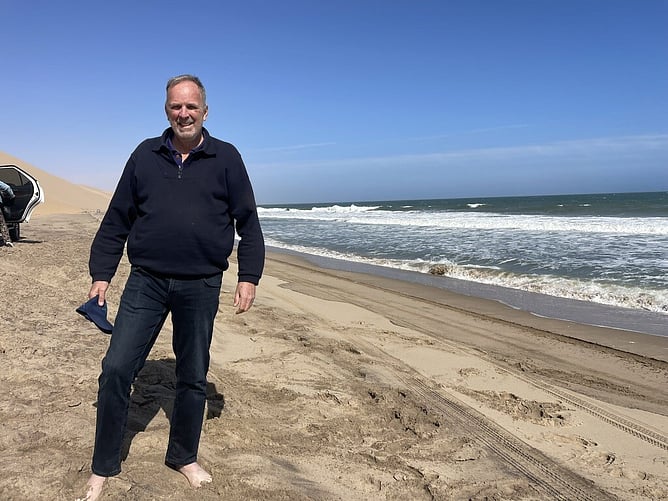
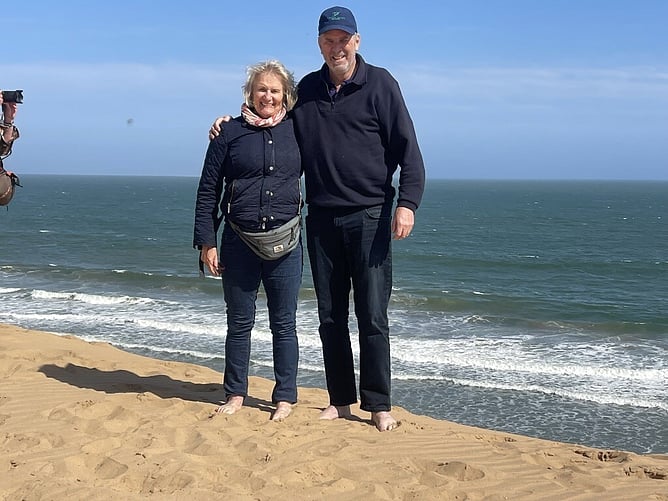
Spot Michael's camera left. That means an even better photo of us is coming.
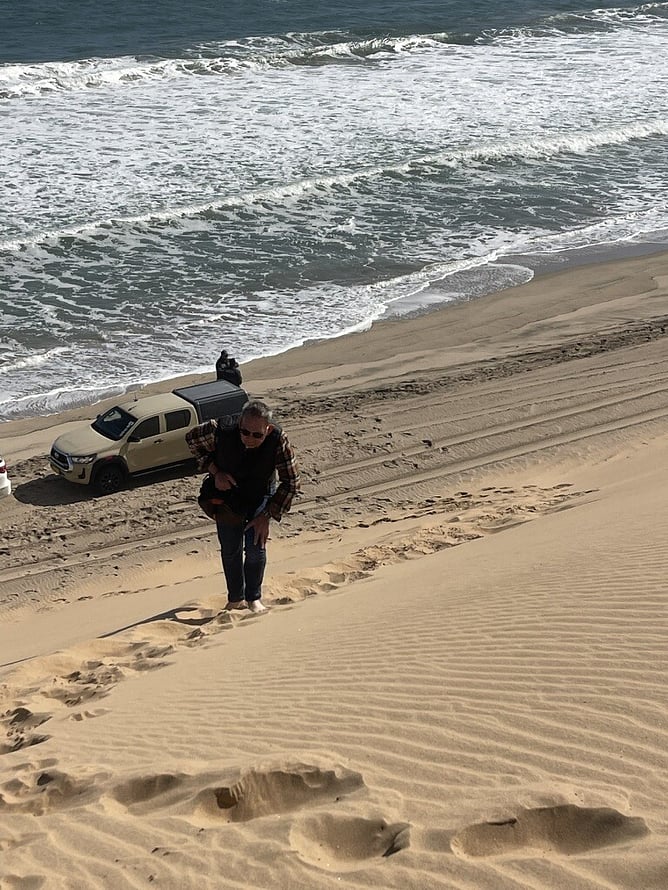
Then we all climbed a dune. This is Michael, our photographer, climbing the dune. The 4x4 vehicle we travelled in is in the background. Peter stayed by the vehicle.
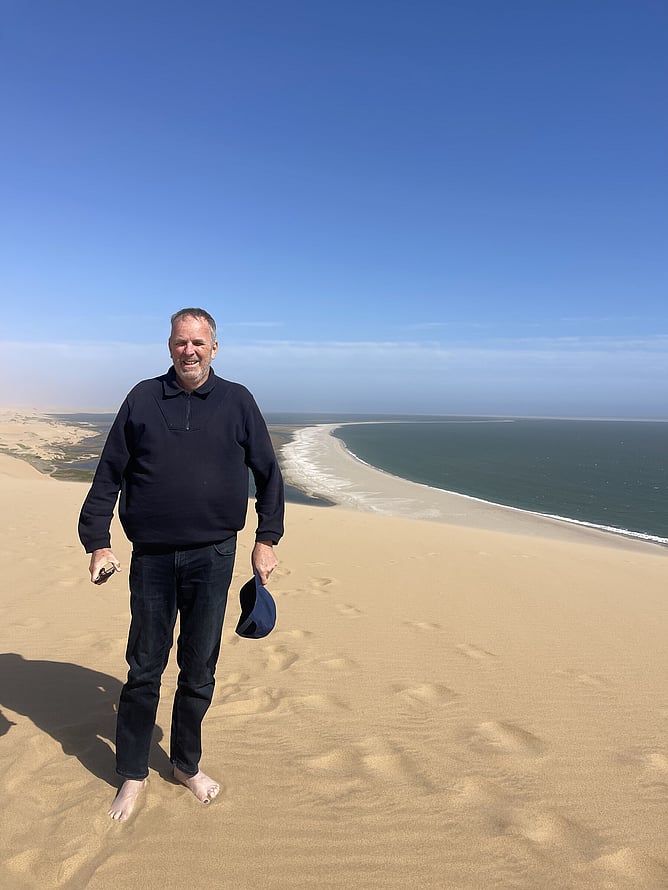
There were fabulous views from the top of the dunes.
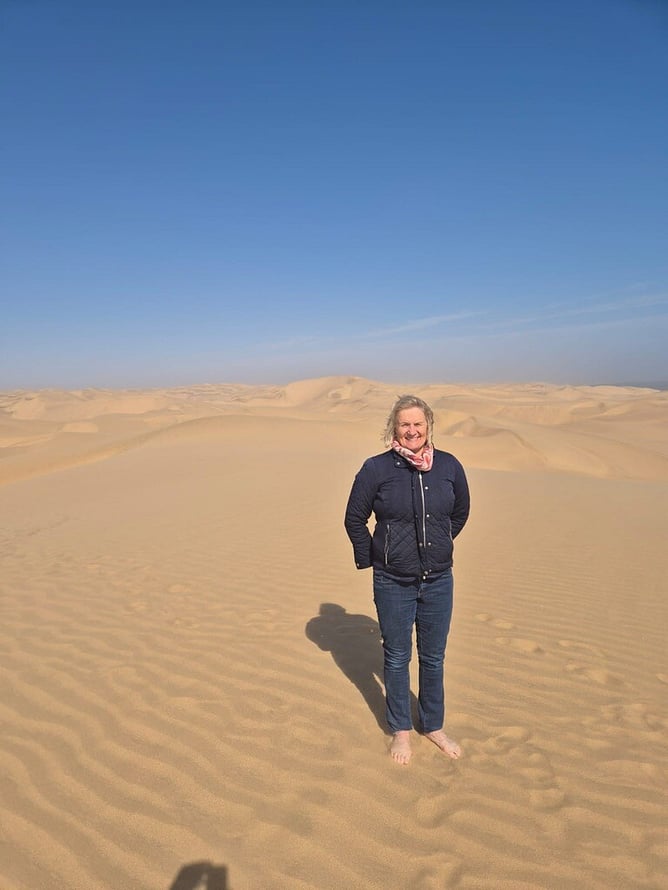
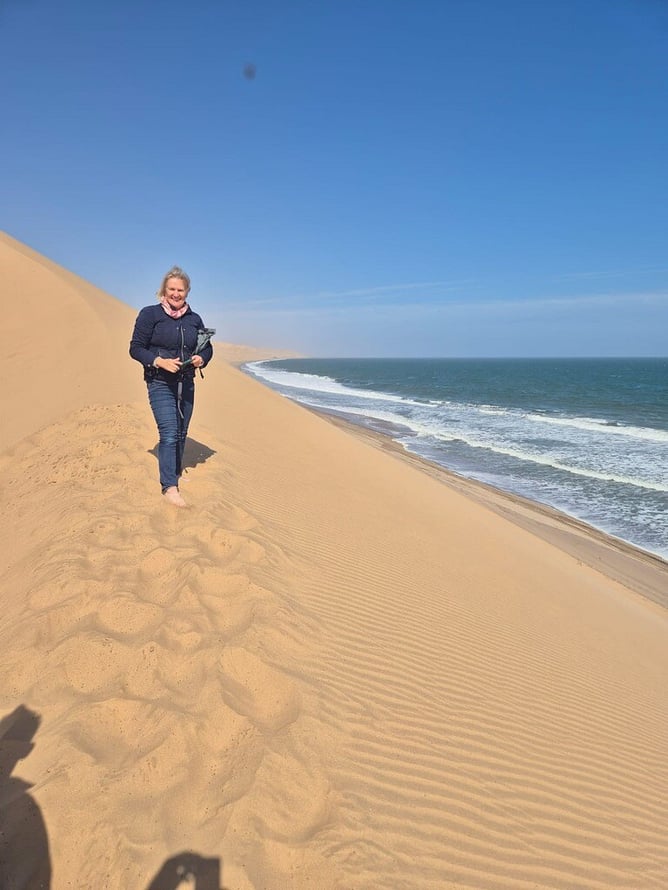
Bill's first selfie.
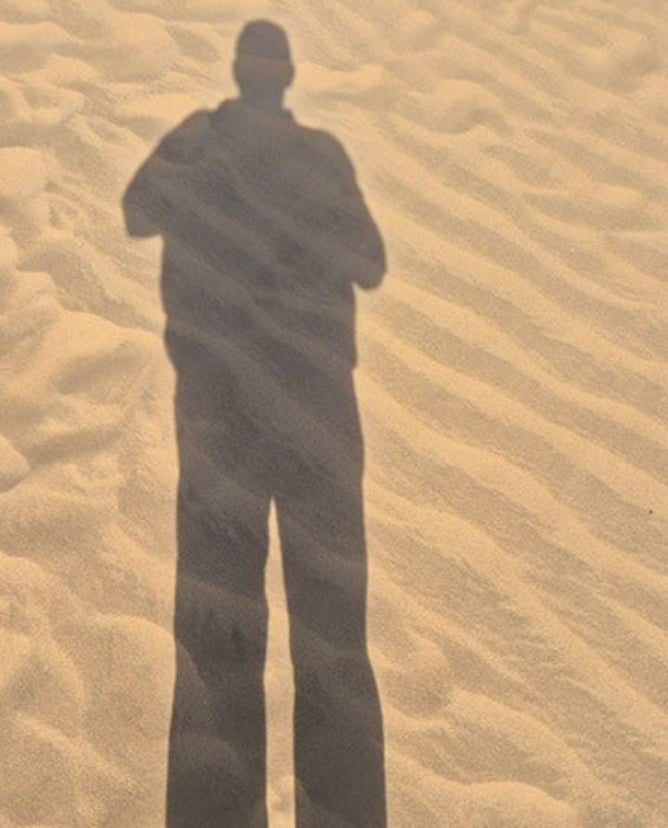
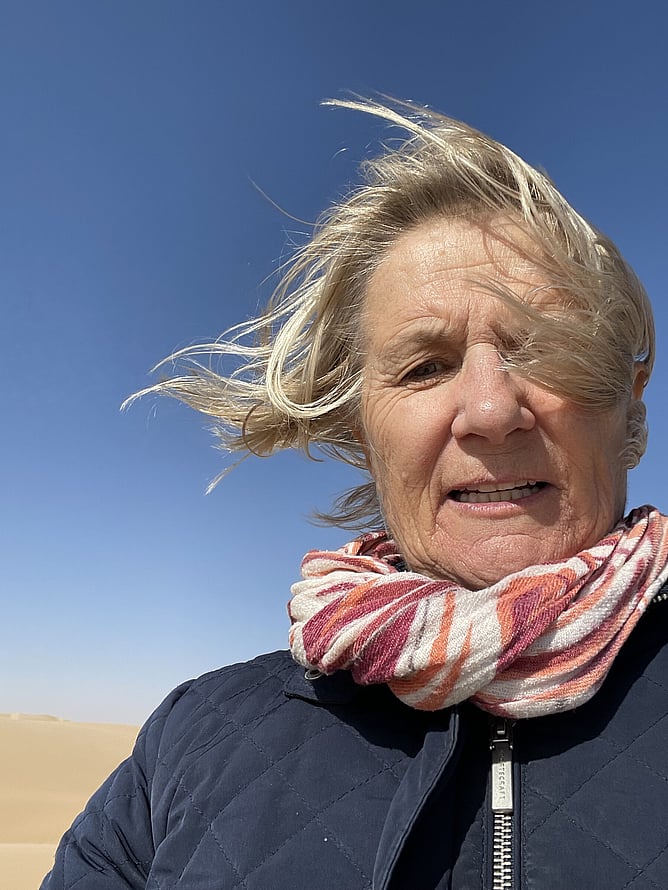
I do it differently.
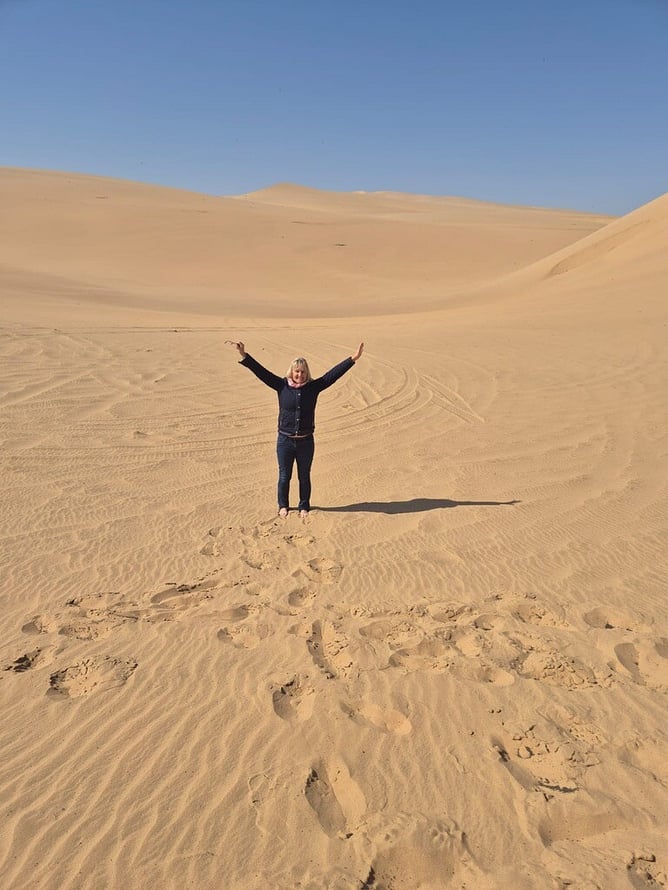
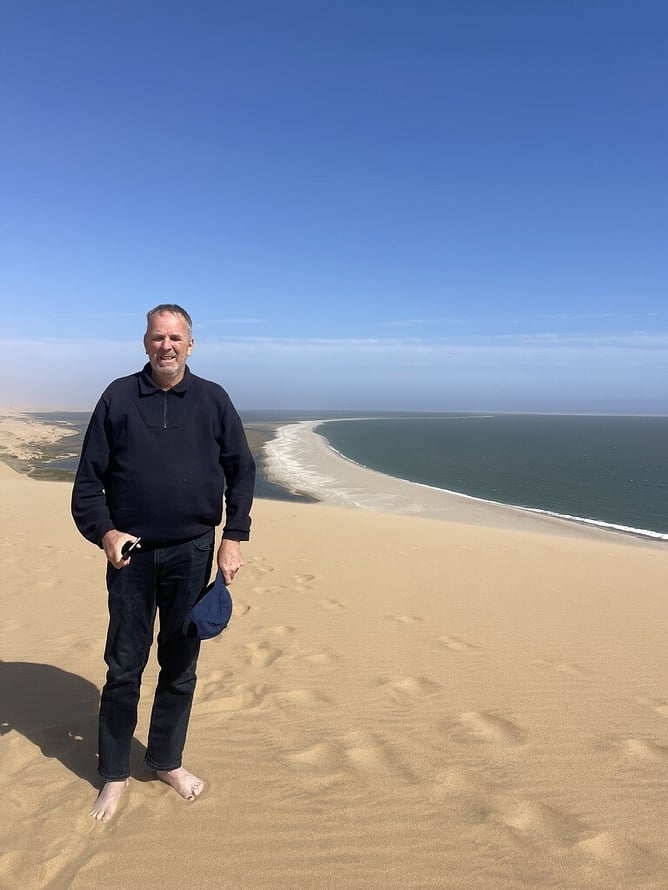
And another view.
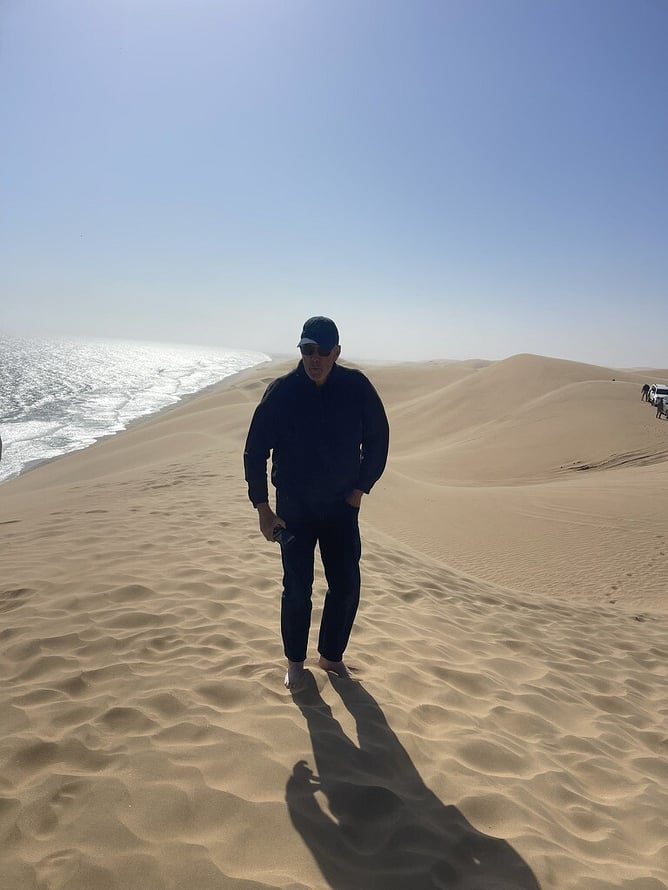
It was super windy.
Cruising on the dunes is quite scary on the hills. Peter loved it. It was comforting to know he was an ex-rally driver.
We stopped a few times. I will get those videos and photos from Michael when they arrive. He will have some better ones showing the heights of the dunes and the crazy driver you have to be. It was windy. Here are the two guides. We went in tandem. Peter and the other IVentures driver.
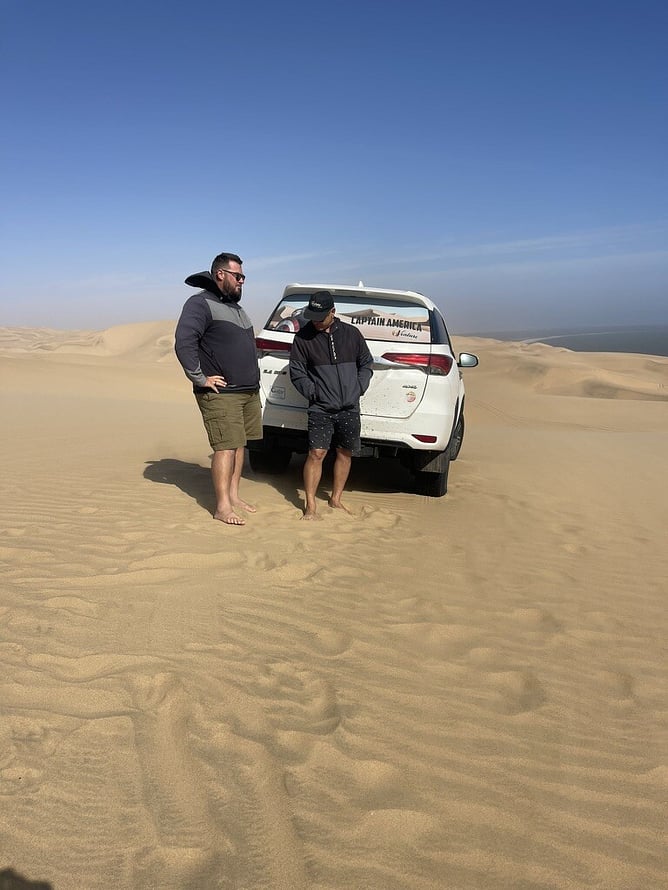
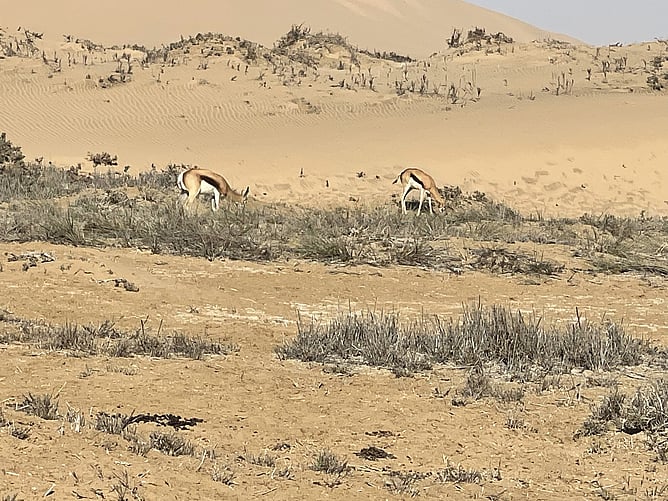
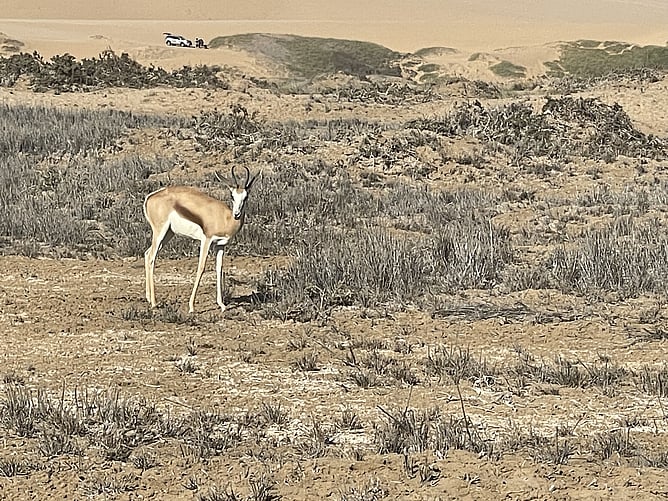
Then we headed down out of the dunes. We spotted springbok in the wetland area.
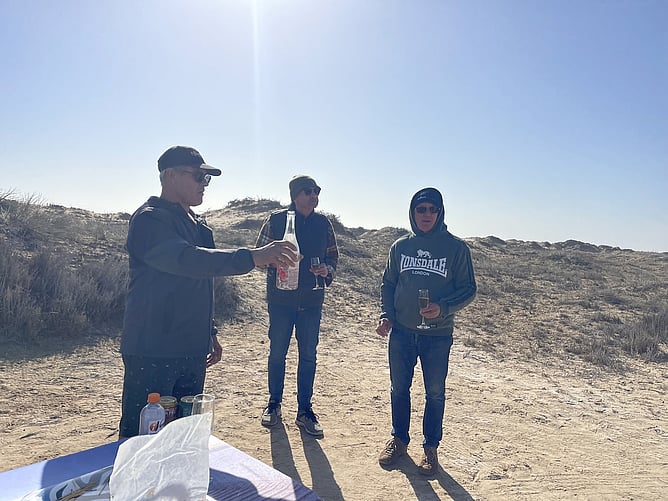
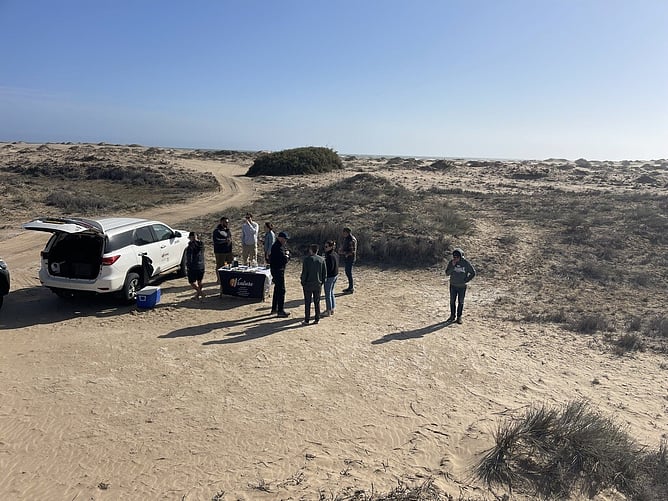
We stopped for champagne and platters at the end. We were out of the wind.
This wetland area, though not wet except after the rare rain, is between the dunes and the sea.
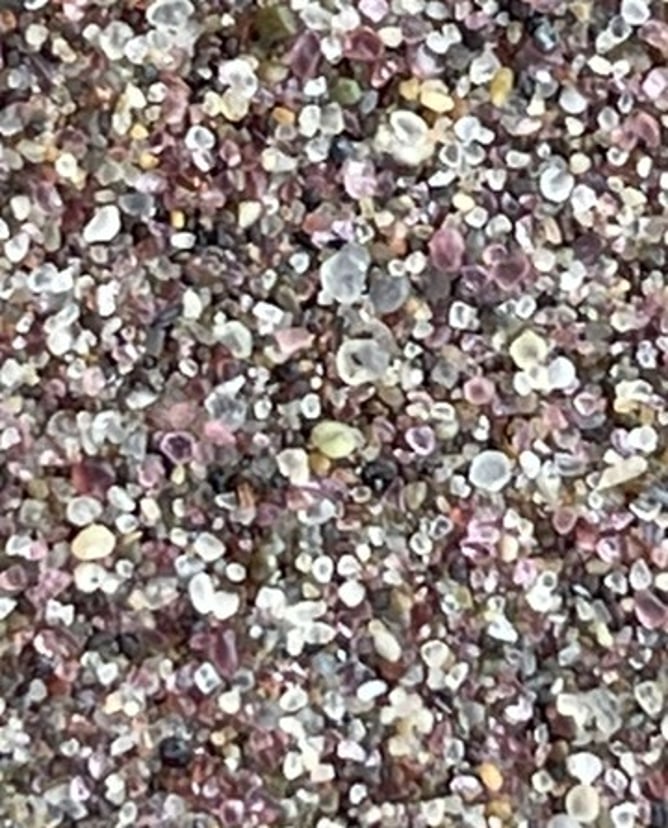
After food and drink, we stopped to study the sand for a bit. Lots of minerals.
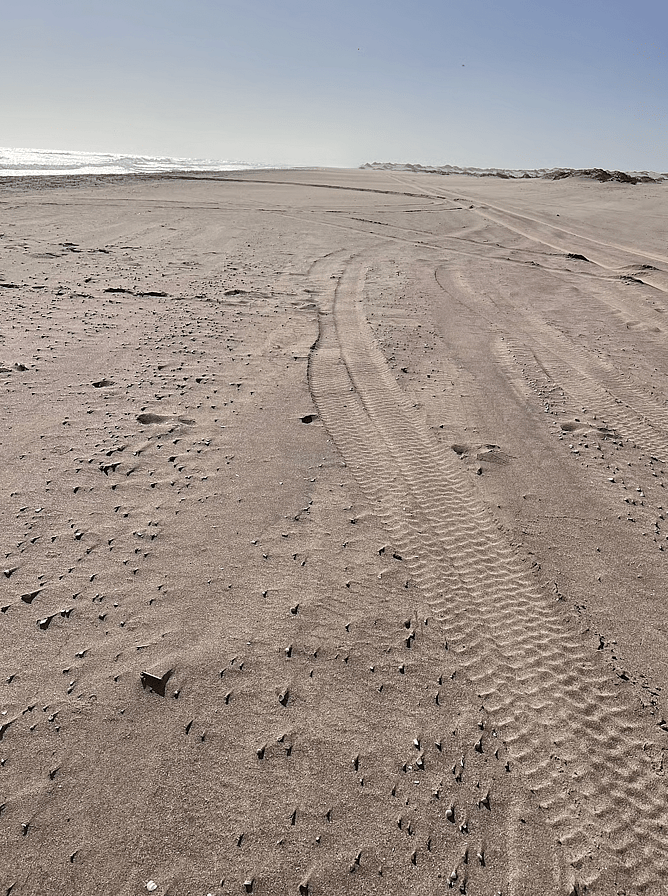
Then it was the drive back.
We saw flamingos at a distance. Usually, they are closer, Peter told us. The wind kept them where they were,
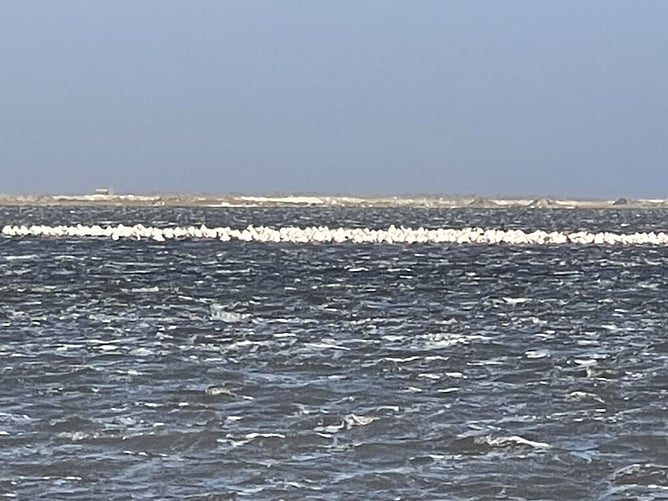
What we could have seen. We didn't. I found this on the internet. It had been a full and exciting day. I was pleased to get back to our apartment too.