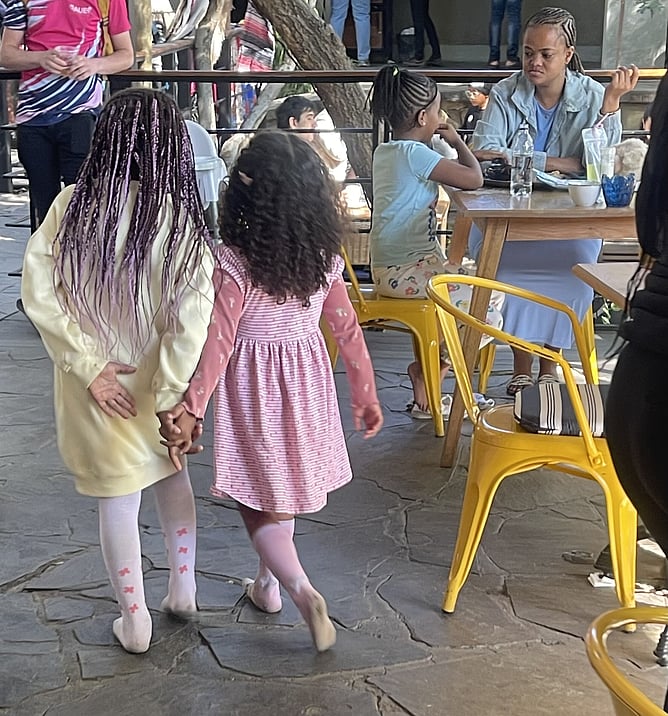
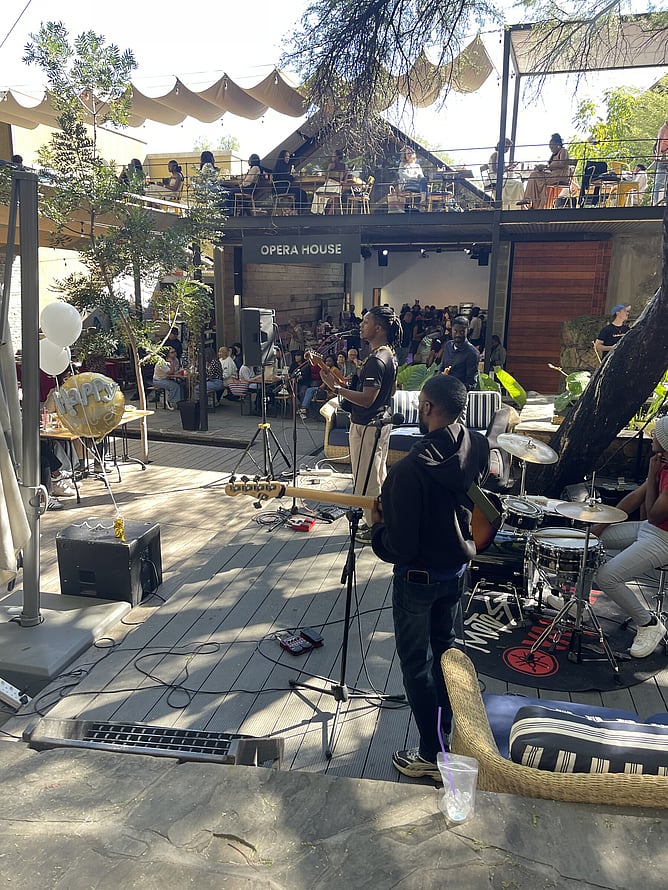
We saw that a Sunday market was 5 minutes from where we were staying. We chose to spend most of the morning there and enjoyed the stalls and the music. As well, we both worked at our fulfillments (Bill calls it work, I call it our inspiring commitments.)
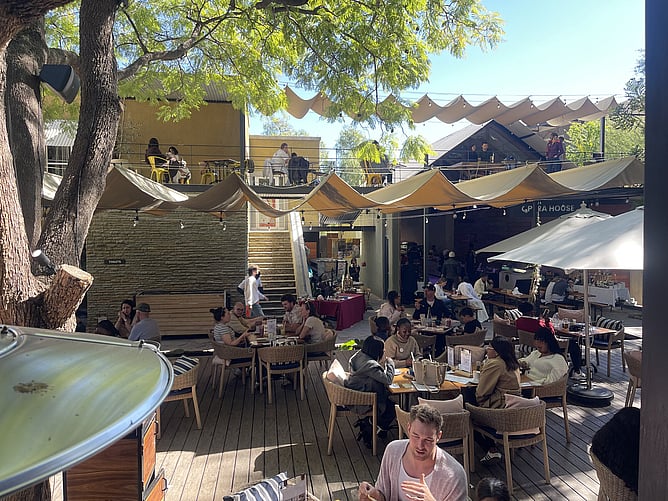
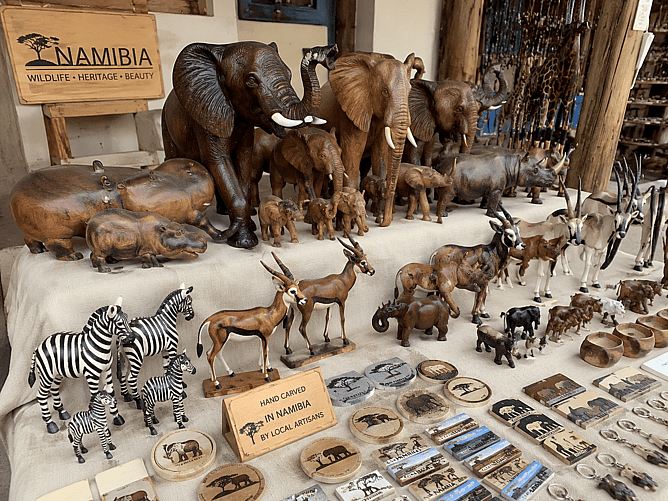
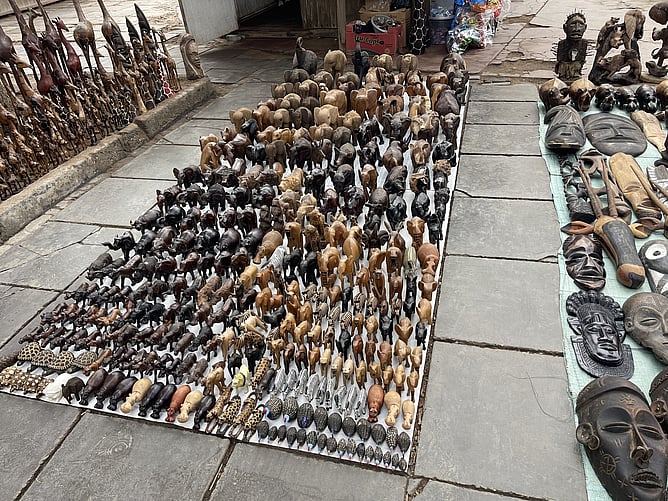
It was the best. I am still looking for some small elephants for my programme. You know, for the elephant in the room exercise. I think I just need to buy one. I didn't. Everyone is having a great time here. The elephants are either too big or don't stand up, or I have to buy the family, I will keep looking.
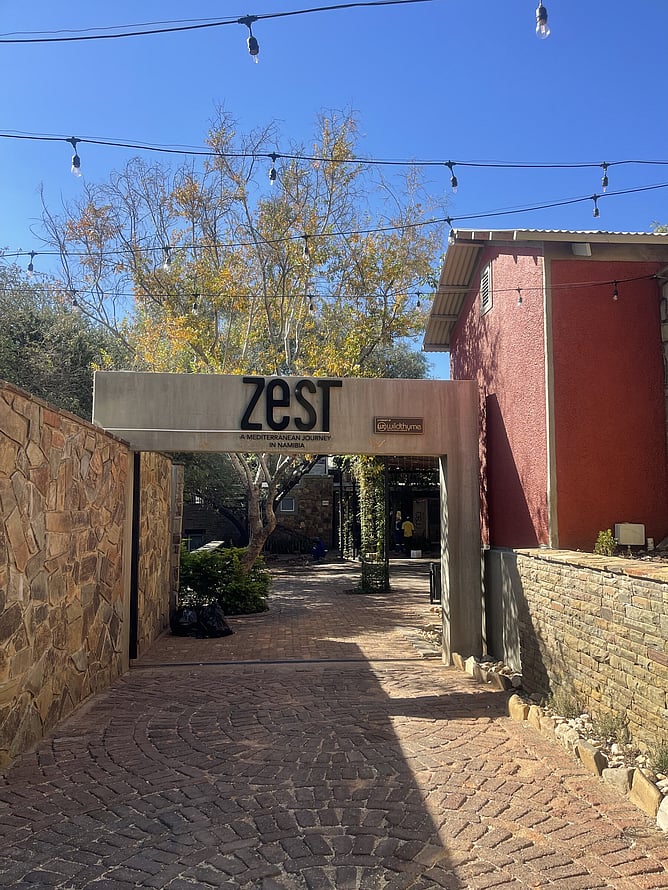
We loved Zest so much that we went there for a dinner, and the next day for a coffee. It was less than 5 minutes walk up the road back to Villa Vista.
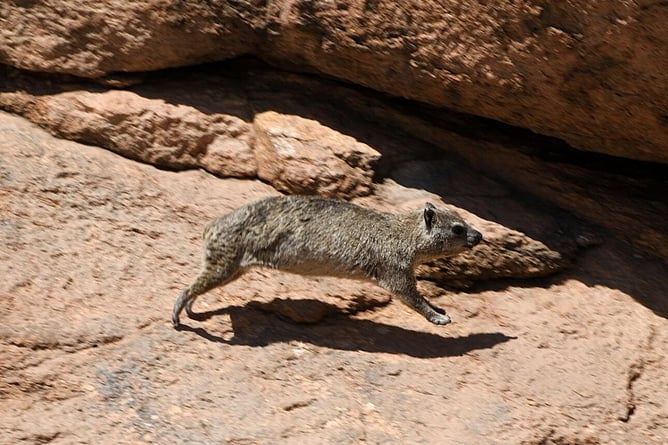
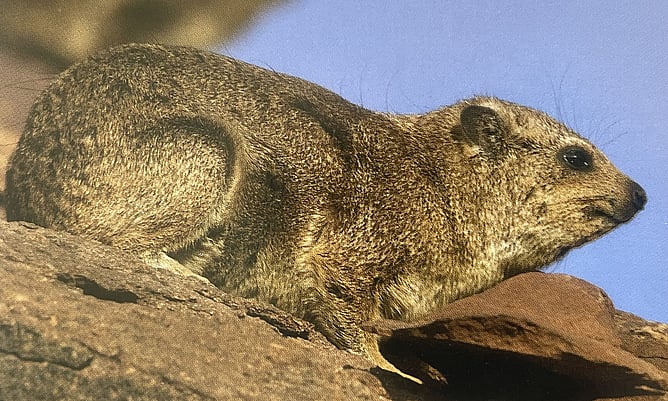
I spotted this below running across the road as fast as its legs could carry it. It is a rock hyrax - five fun facts I found:
Rock hyraxes spend hours sunbathing to warm up.
They live in colonies that may contain dozens of animals.
A lookout hyrax will whistle loudly if danger approaches.
Leopards, eagles, jackals, and caracals hunt them.
Despite their small size, they are one of the elephant's closest living relatives.
Apparently a leopard was recently seen around Windhoek too.
The next day, we packed up and took the shuttle bus to Swakopmund. Gee, those two names are difficult for my WSAW to remember! Bye-bye to our lovely sunsets from where we had breakfast. I went up at the end of the day and got a few shots.
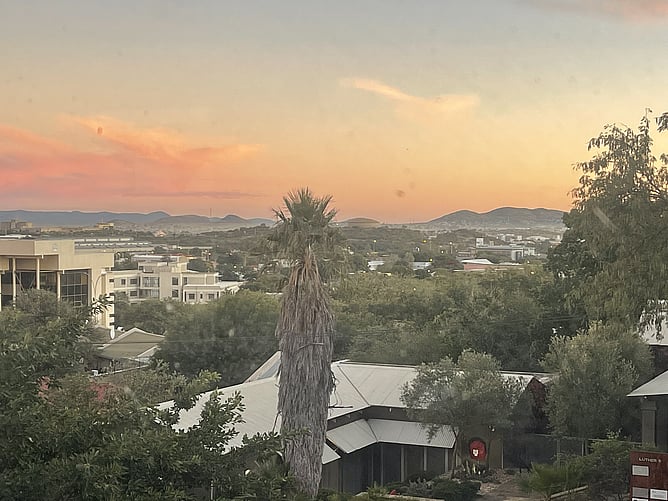
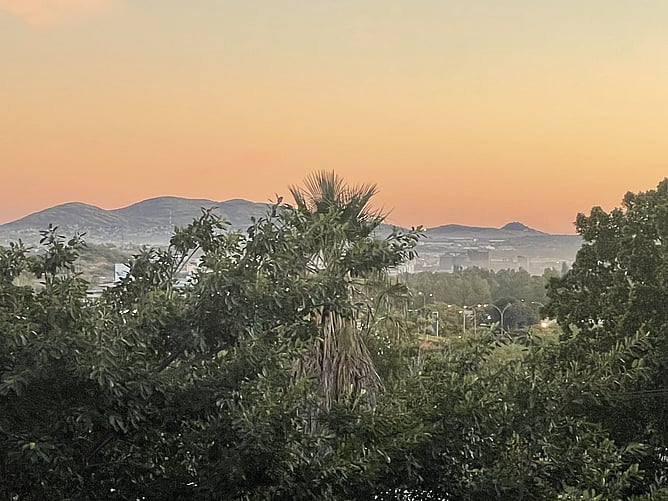
The road trip from Windhoek to Swakopmund was 4 1/2 hours. Bill and I sat in the back seats. No hanky panky in these back seats, Bill worked all the way. I enjoyed the scenery and dozed. We had a few loo stops.
We travelled from a bit of grass . . .
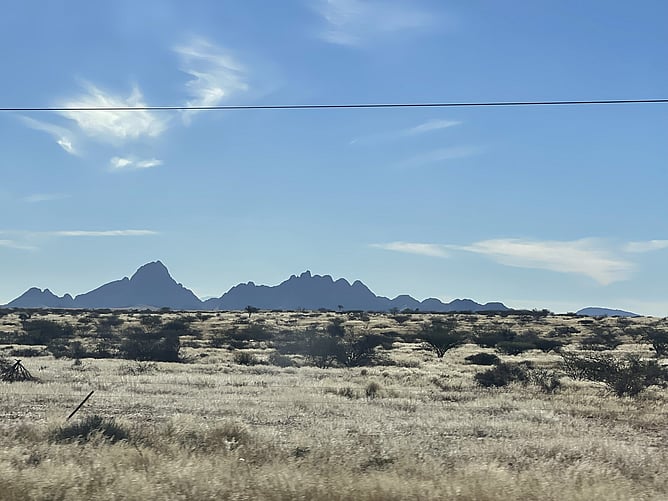
. . . to less grass . . .
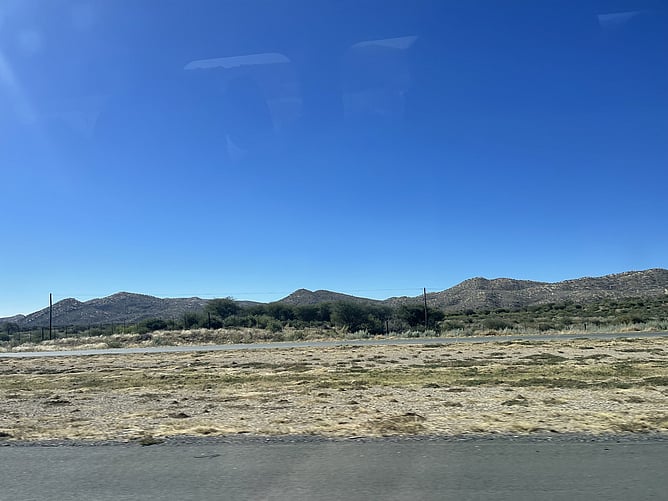
. . . to no grass - dirt.
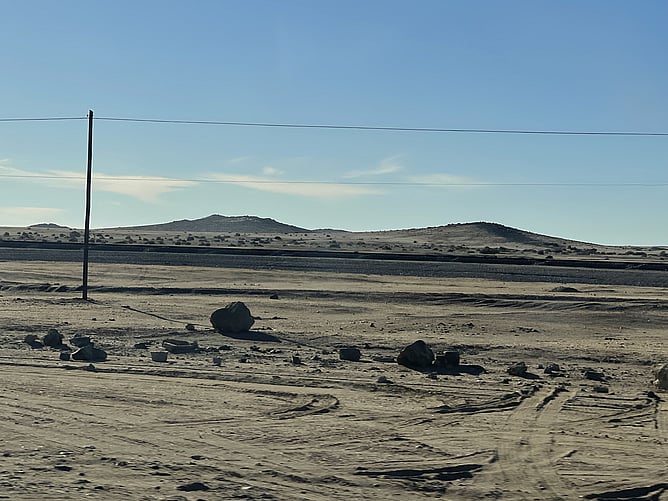
Then to shacks as we neared Swakopmund.
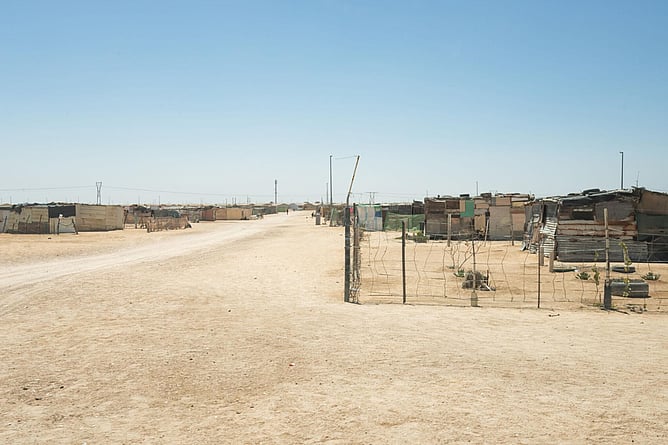
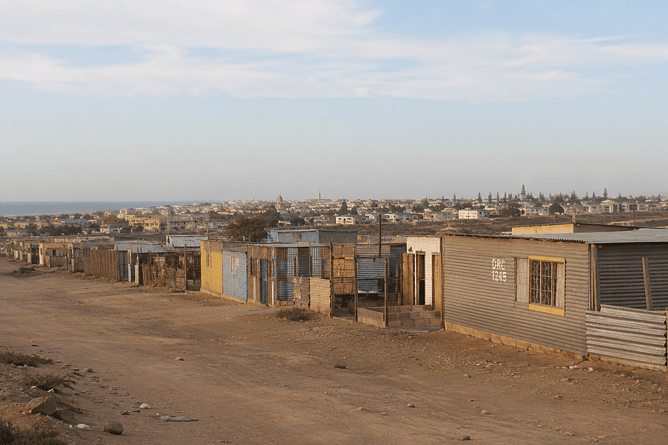
We later found out this is the DRC - the Democratic Resettlement Community - on the edge of Swakopmund. The publicity says the DRC "is far more than a collection of corrugated iron houses. It is a vibrant and growing community built by people who came from across Namibia in search of opportunity in tourism, fishing, construction, mining, and other industries. Many homes have been lovingly built by families themselves, often improving them bit by bit as resources allow. Today, as housing, roads, water, and electricity services continue to improve, the DRC stands as a powerful example of determination, community spirit, and people working together to build a better future for themselves and the generations that follow."
Others we spoke to were not so uplifted about it. It is the Swakopmund version of the Windhoek ghettos.
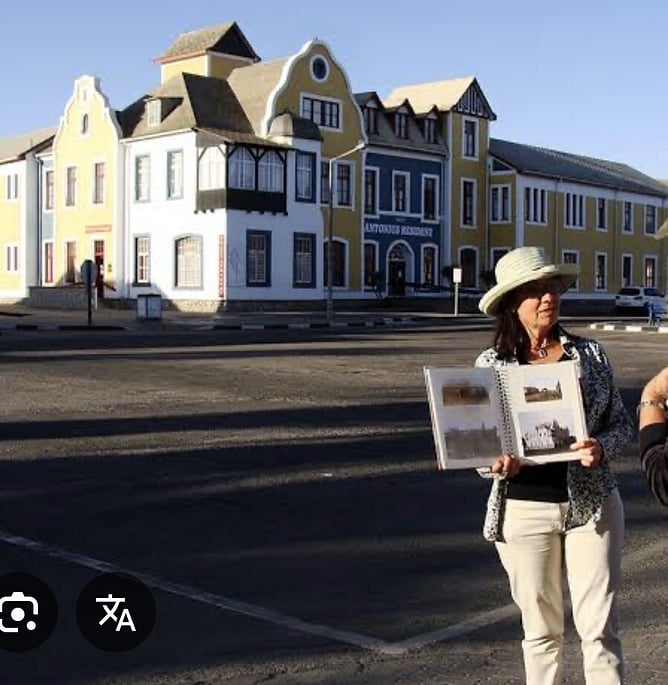
Bill had organised what turned out to be a wonderful walking tour with Nikola the next day. We had her to ourselves. She was so fun. She was raised in Swakopmund, spoke Afrikaans, German and English. Gee, she knew a lot. I was trying to keep up. She was really interesting, though.
But the best thing all the way through was that she was so playful and passionate. Her full name Nikola Fahrbach. Look out for her hat, and she carries a photo album. She said with her hat and album all the locals know who she is, and when she didn't have them, she was incognito. I thought this was a good idea as a classroom teacher - have a recognised teaching persona, and then when you want to be private, no one recognises you.
Stand-out fun facts in some shots from Nikola's album below.
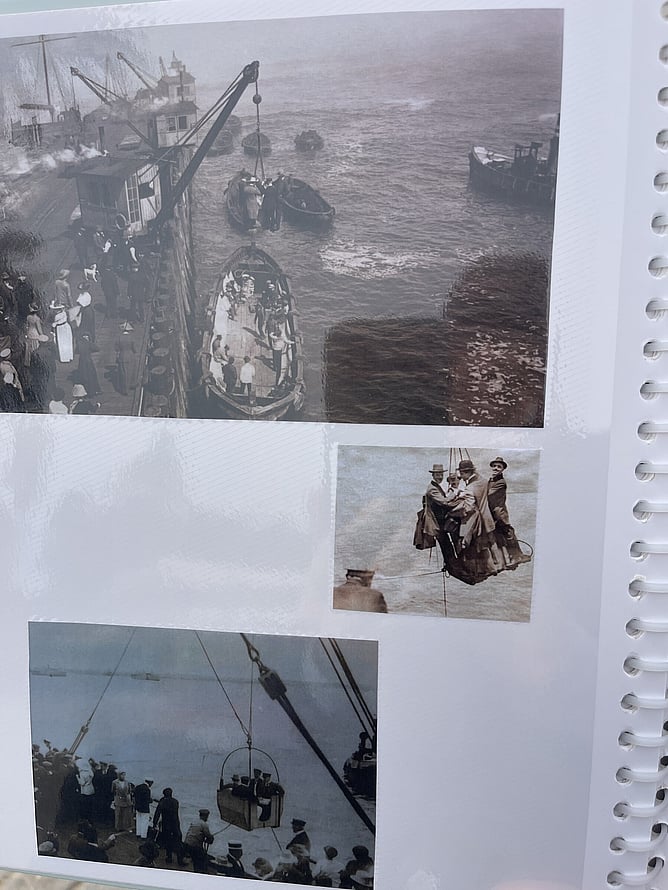
In 1880, the Germans were looking for a harbour-like place to settle. This place had no harbour, but it did have inland water, so they tried to build a harbour. They built a pier, and people were lifted from small boats as a ship had to be anchored 100 m from shore. Everything was brought in, including animals.
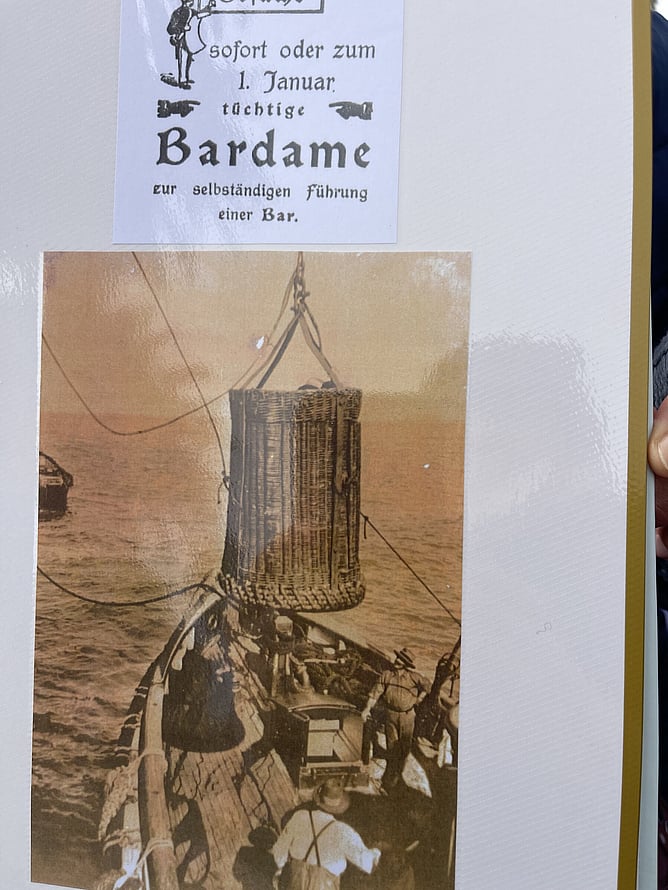
This below reads "A capable barmaid is required immediately, or from 1 January, to independently manage a bar." The basket was for the women in their dresses (or maybe I thought, for the fearful so they couldn't see down).
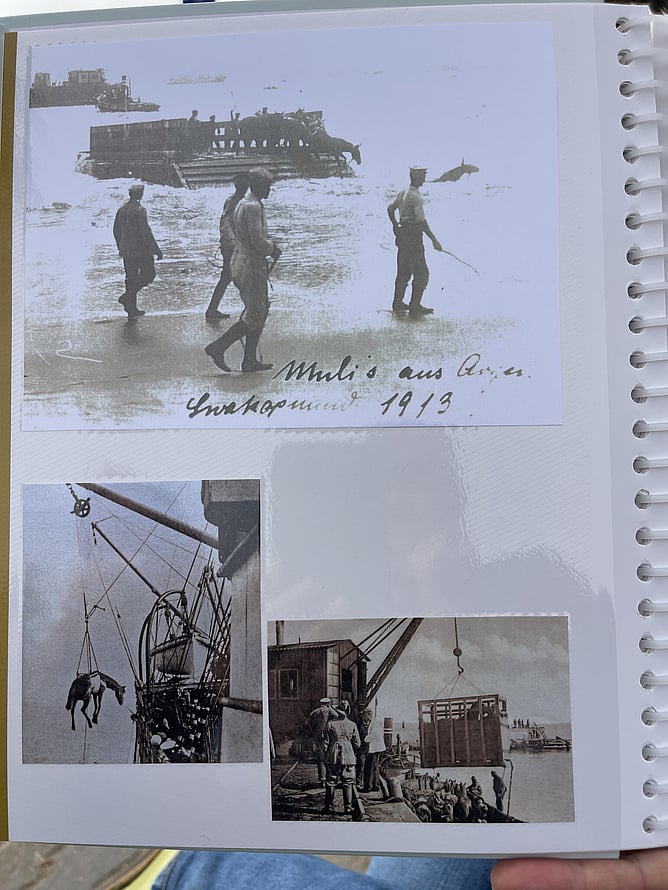
Horses and oxen also travelled, then got barged, then swam the last bit.
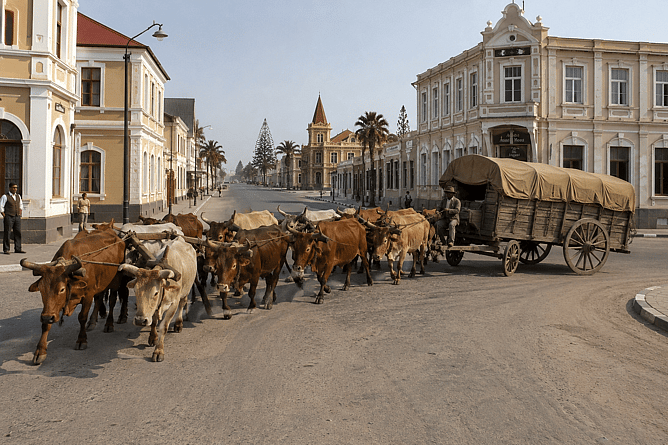
The streets are very wide and there is a reason . . .
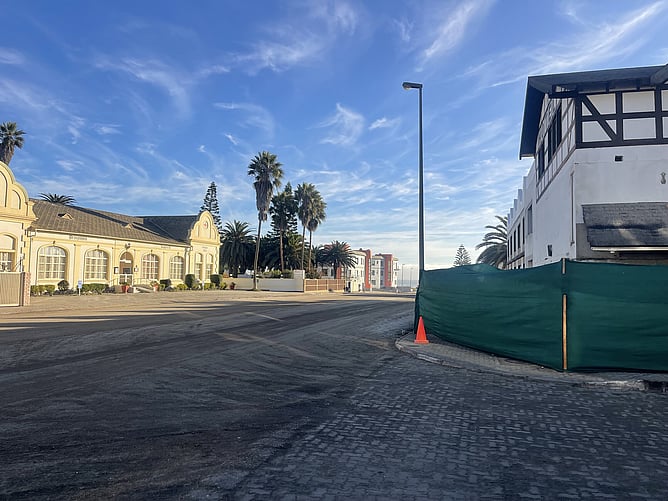
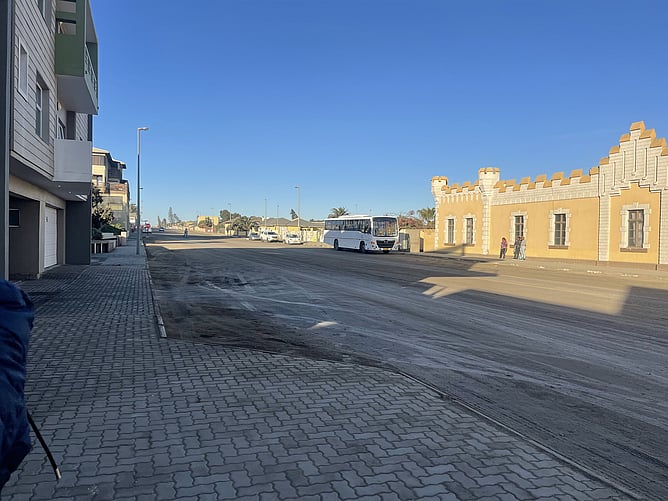
. . . it was so the oxen (before cars were invented) that were pulling all the building materials in wagons, and were 12 or 16 together, were able to turn around in the streets.
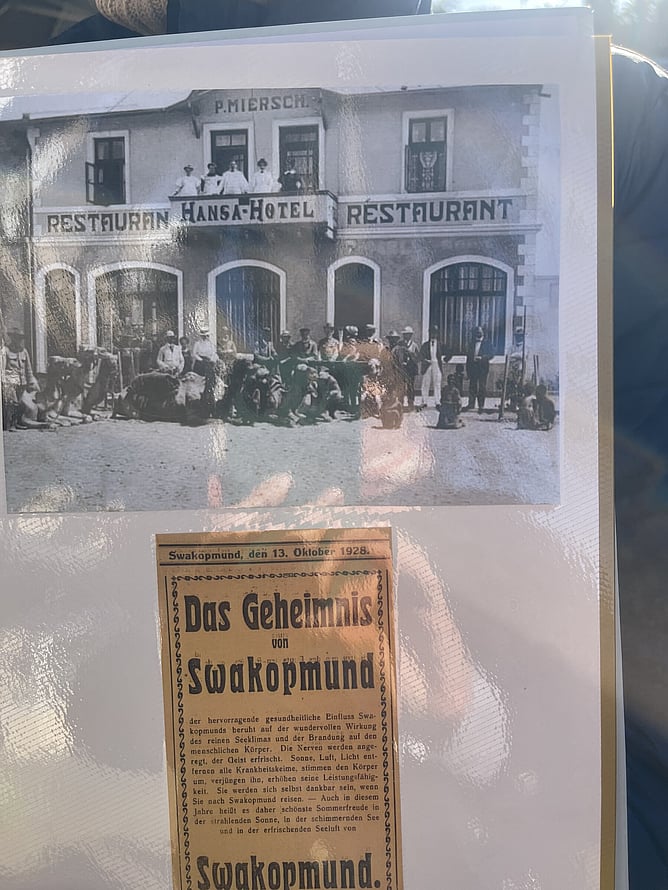
The tour was 2 1/2 hours. This building below still stands today. It was originally a hairdresser's, and the hairdresser opened rooms as people wanted a place to stay. Then he built a restaurant next door too.
The words below mean - "Swakopmund's secret is its healthy ocean climate. The fresh sea air, sunshine, and waves refresh the body and mind, restore health, increase energy, and make visitors feel younger and stronger. Come and enjoy a wonderful seaside holiday in Swakopmund."
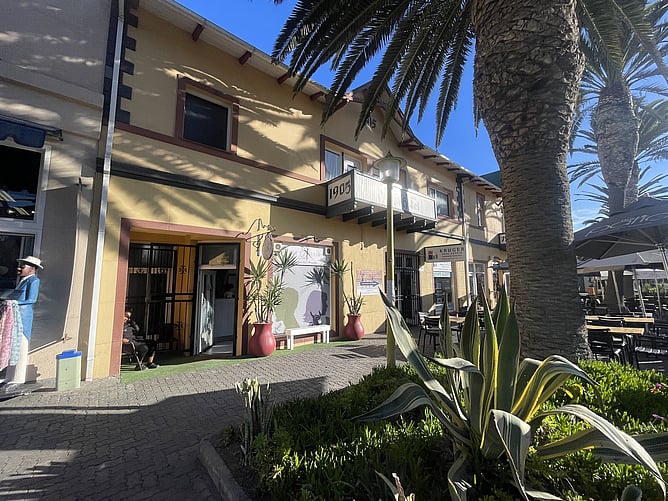
I am writing this from the cafe in this building (as it is today).
Otto Günther, below, was Nikola's great-grandfather. The business is now owned by one of her cousins, and the grandfather's name continues.
Nikola's connection to Swakopmund stretches back more than 125 years. Her great-grandfather arrived in 1898 to help build the town's pier and later founded the Otto Günther business in 1908. "Through five generations, her family witnessed Swakopmund's transformation from a small colonial harbour into one of Namibia's most distinctive coastal towns. Inspired by family stories, photographs, and local history, Nikola returned to Swakopmund in 2019 and took over the historic walking tours in 2021."
We got her life history. Maybe I asked the questions. She has worked in finance in London and Germany. Been a CFO, and now guides. Today, she brings the town's past to life by combining historical research with personal family memories. Her unique perspective on the people, events, and changes that have shaped Swakopmund from its earliest days to the present was a great gift to us, we thought.
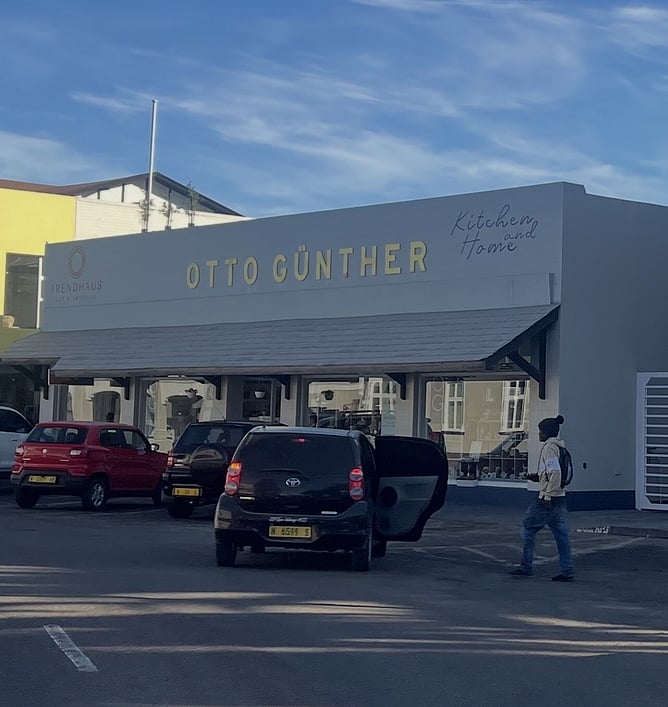
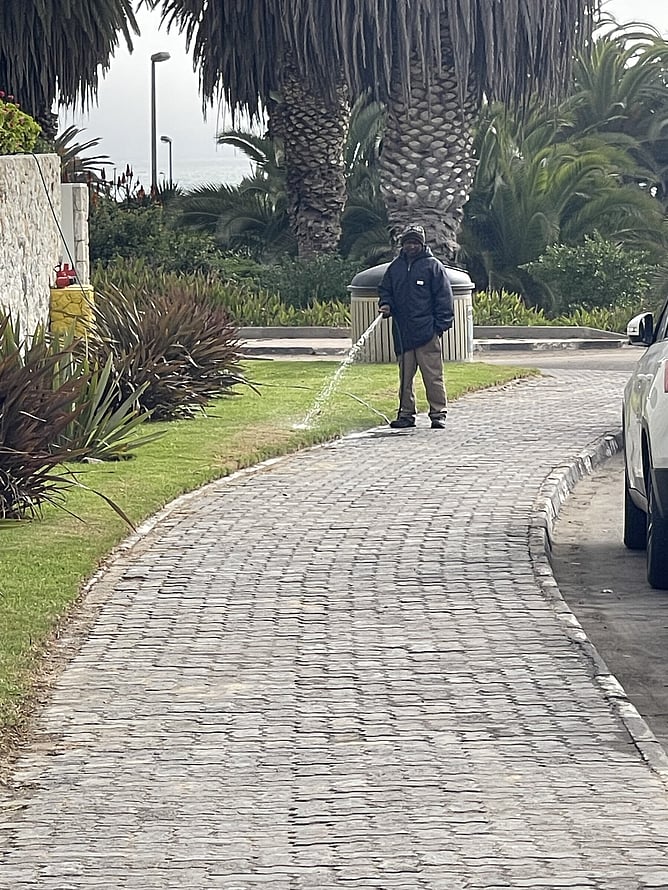
Here is a guy watering the grass. Nikola says he does the same lawn every day. You see a lot of these sorts of guys, and also Nikola said hotels don't have (machine) dishwashers. These are all so there can be more jobs for the locals.
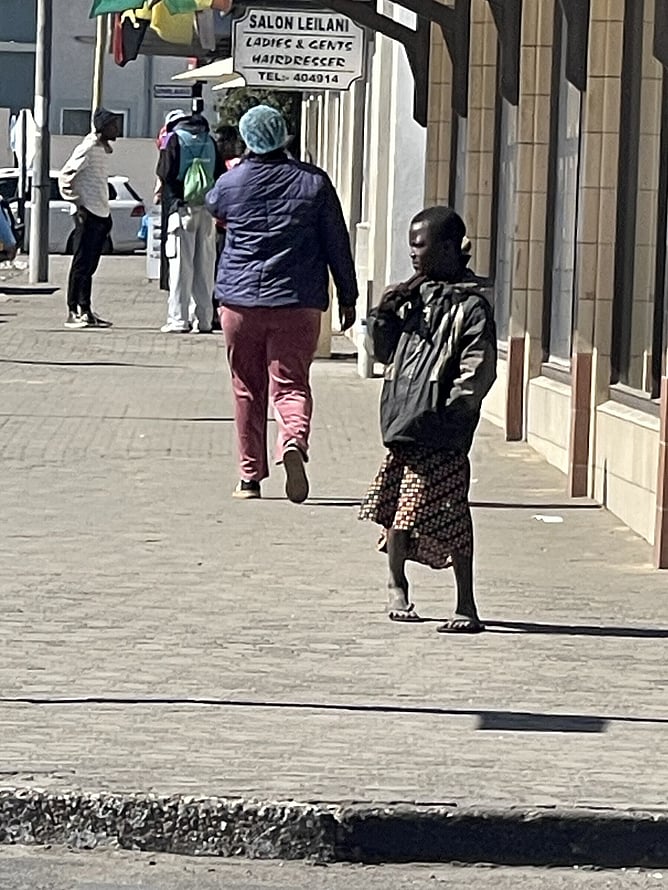
These young people have been child-trafficked from Angola Nikola says, it is horrible. They are selling sticks and begging for money and live on the street.
Some things don't change - this in the 1900's and the lighthouse was significant for the boats but also for seeing people coming from the desert with wagons.
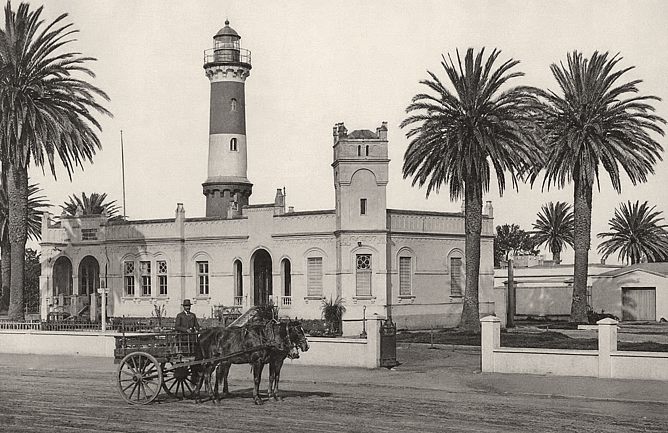
And the same view today.
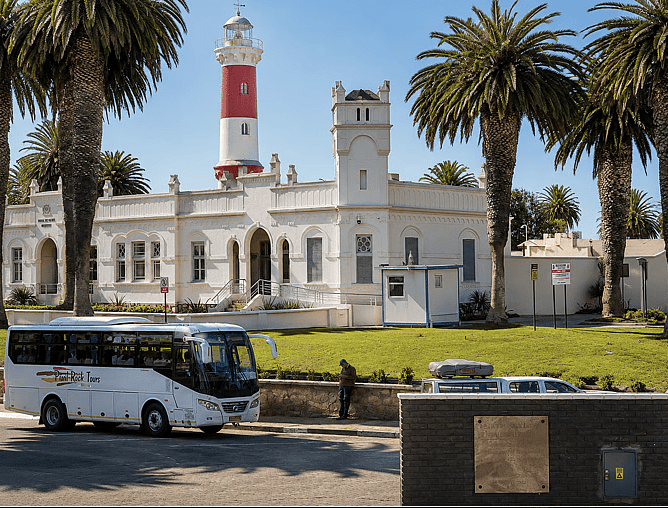
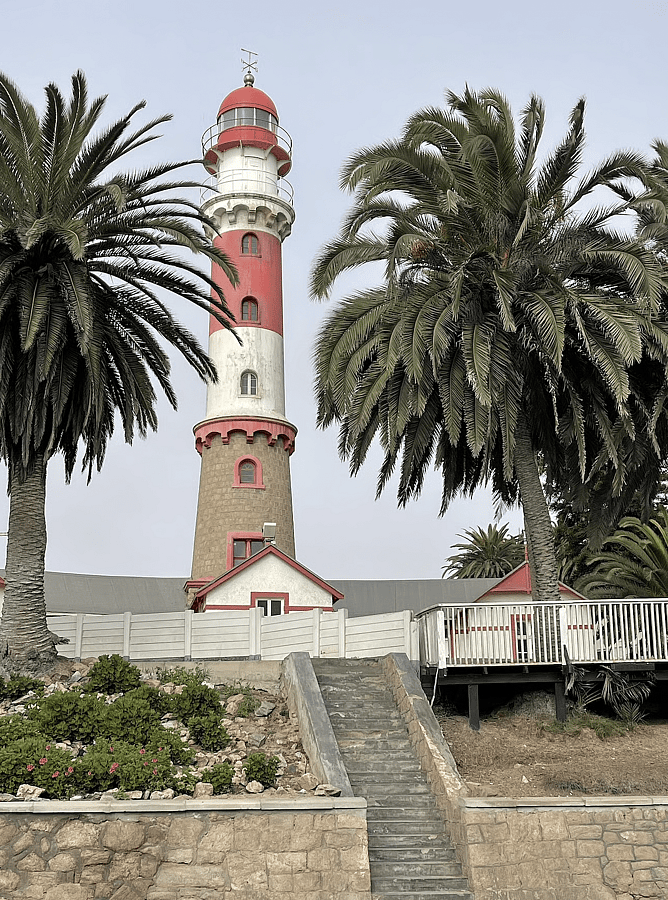
"The Swakopmund Lighthouse was built by the German colonial government in 1902 to guide ships into Germany's main harbour in South West Africa. Originally only 11 metres high, it was enlarged in 1910 and has watched over the Atlantic coast ever since. Coming from the desert, it was a sign you had reached the coast. Today it remains an active lighthouse owned by Namibia's port authority, standing as one of the country's most enduring historical landmarks."
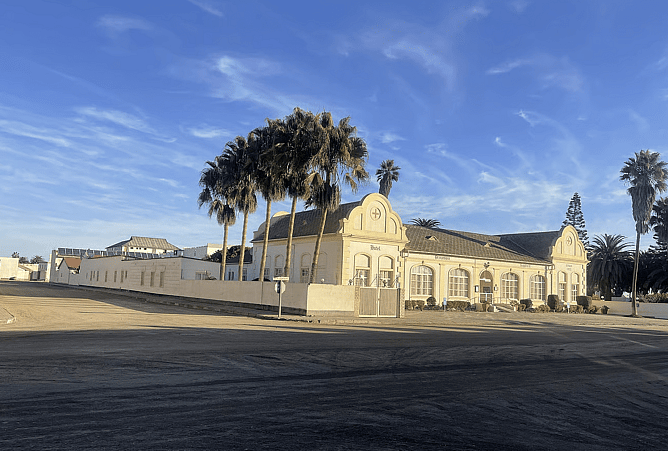
This last pic is a Namibian full circle. It was originally a birth centre at the back and an aged care facility in the front. The birth centre no longer exists. Nikola's brothers were born there. Now babies are born in hospitals. Nikola says grandparents in aged care held the younger generation in a courtyard at the back. Nowadays, it seems a lovely story. Maybe Nikola will end up here.
Note the extra-wide streets. There was so much more, and that is enough. Nikola pointed out many cafes and restaurants she frequents. Bill diligently wrote them down. We both love a good cafe. We are here for a few more days after we visit a few tourist spots. I will keep you posted about the ones we go to.
The next day, we walked from our apartment to the Mole. Bill on the way to a cafe office.
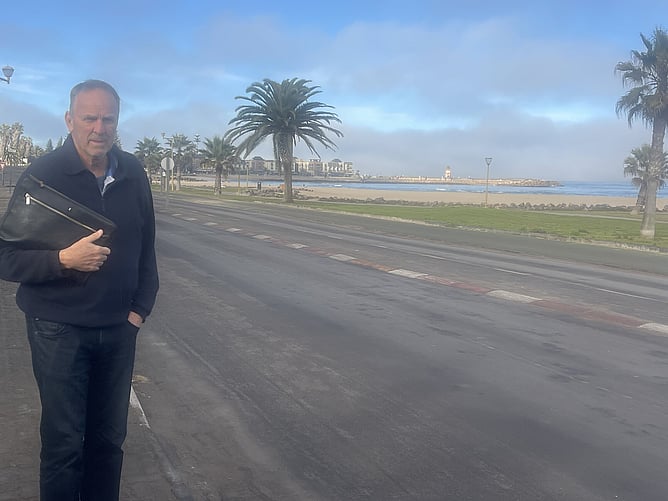
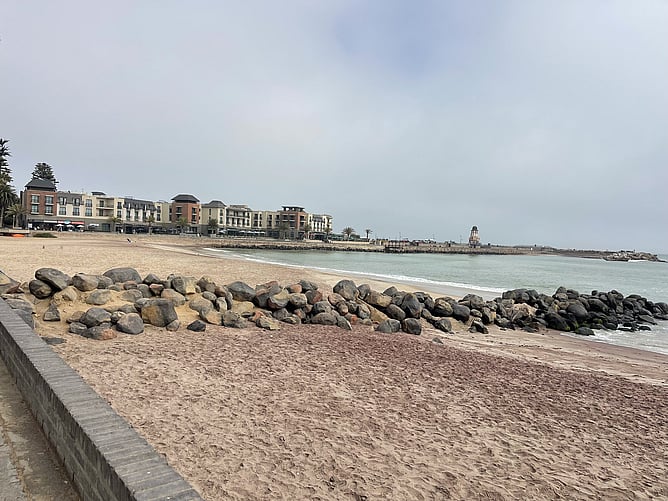
It reminded us of Portrush in Northern Ireland. (Hi to Rich and Pip!)
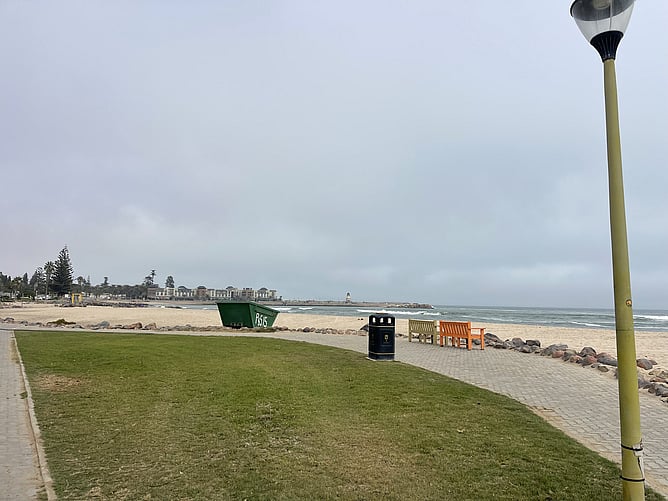
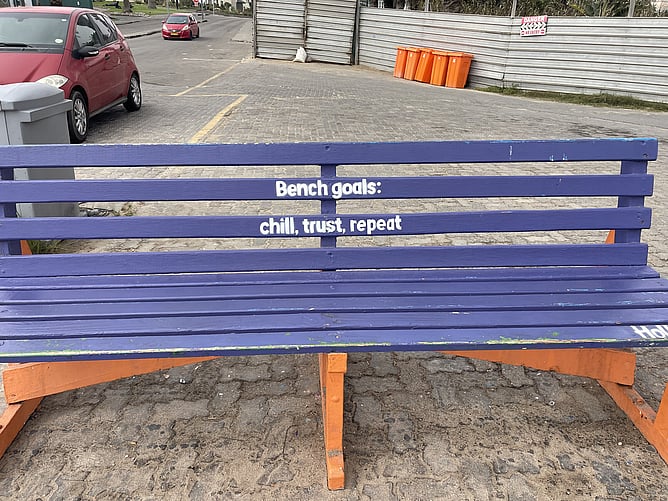
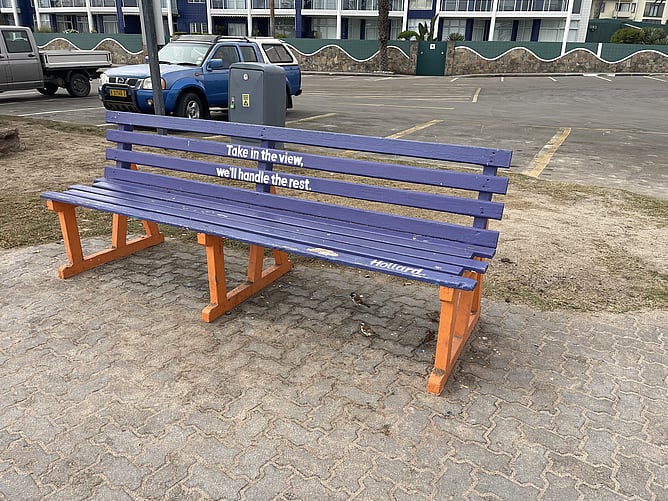
Here are some seats that were quite fun.
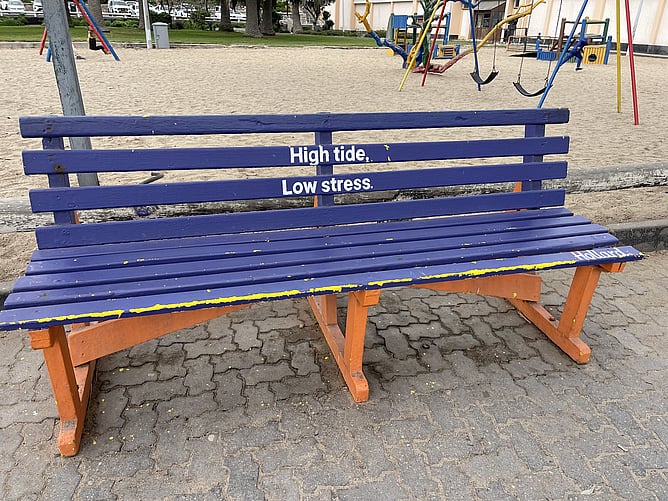
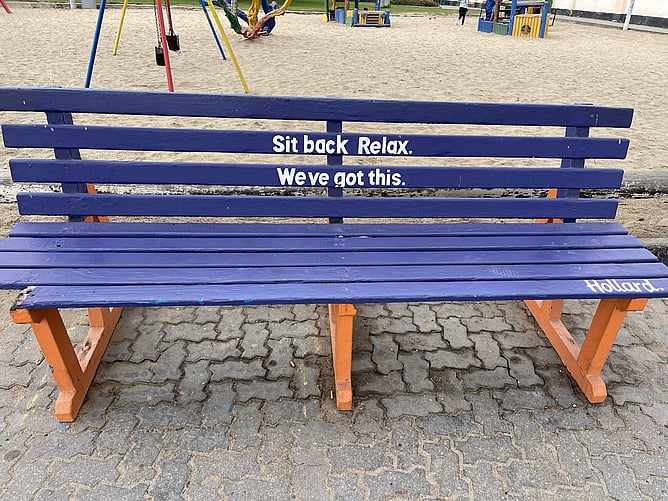
I looked for more elephants. They were too big.
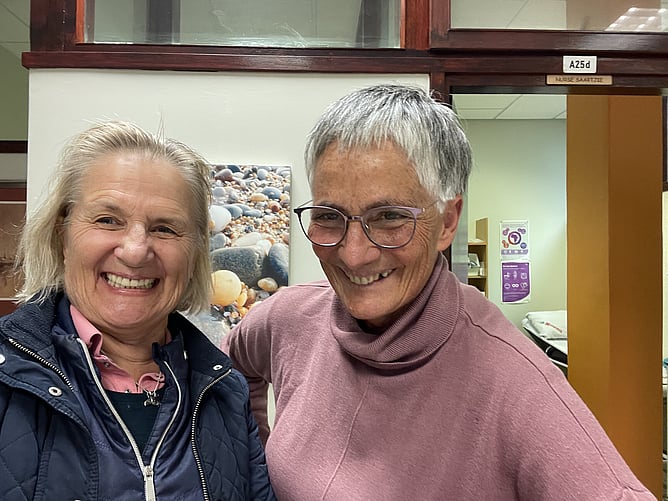
I went to see Dr Maya (recommended by our apartment owner Ana). It turns out Ana bought her place from Maya's cousin (small town connections). I was seeing her to have a mole checked out. It turns out to be fine. Good photo though.
We spent the rest of the morning catching up, Bill with his work and me fulfilling my commitments, like this blog.
After lunch, we went to the Kristall Gallerie after Nikola recommended it.
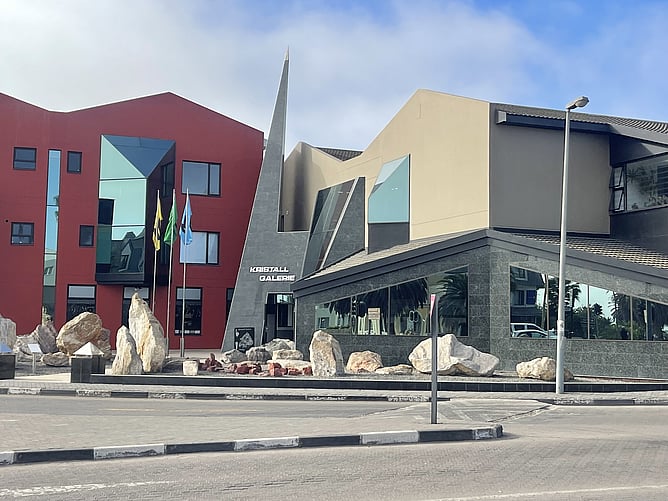
It was fascinating. The history of the Kristall Galerie in Swakopmund is closely tied to one man: Johannes Adolf Kleynhans, a Namibian gemstone enthusiast and collector. What began as his hobby of collecting crystals and gemstones gradually grew into a lifelong passion for showcasing Namibia's remarkable mineral treasures.
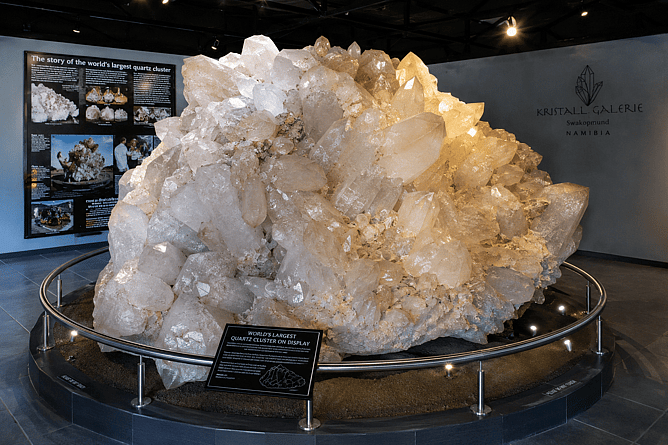
The gallery itself was founded in 1998 and was designed to allow visitors to experience some of the Earth's most spectacular crystals, gemstones, and mineral formations. A major reason the gallery was created was to display an extraordinary quartz crystal cluster that became the inspiration for the entire project. This giant crystal was discovered in August 1985 on a farm near Karibib in Namibia's Erongo Region. The crystal weighs approximately 14.1 tonnes, measures about 3 metres by 3 metres, and is regarded as the largest known quartz crystal cluster on public display anywhere in the world.
And then there is this meteorite.
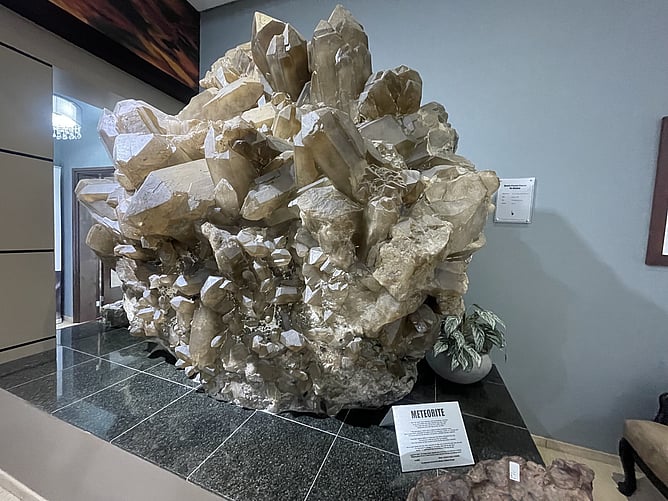
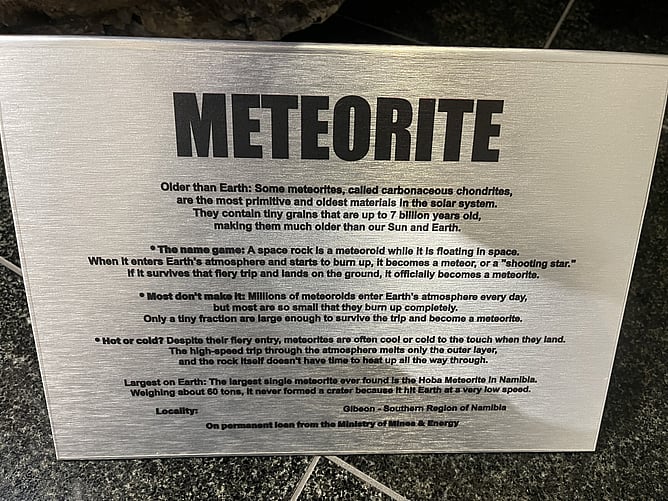
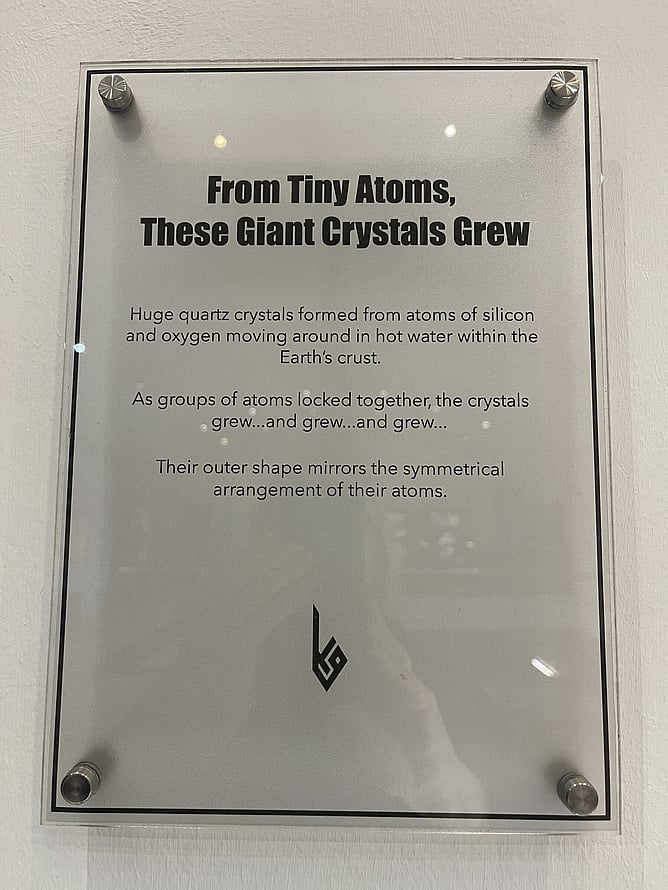
The minerals in this museum I had never seen before. Here are some of the displays. Bill, a former chemistry scholar, was looking at the rocks for How pure is it? Are there traces of iron, titanium, lithium, or other elements? What impurities caused any colour variations? (Or possibly he was just enjoying the colours, Ed.)
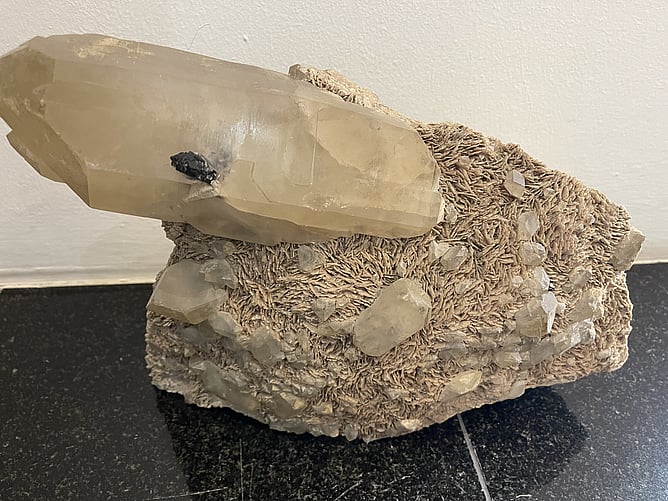
I was looking at the colours. I love this colour. (Yes, not obvious which colour . . . welcome to my life, Ed.)
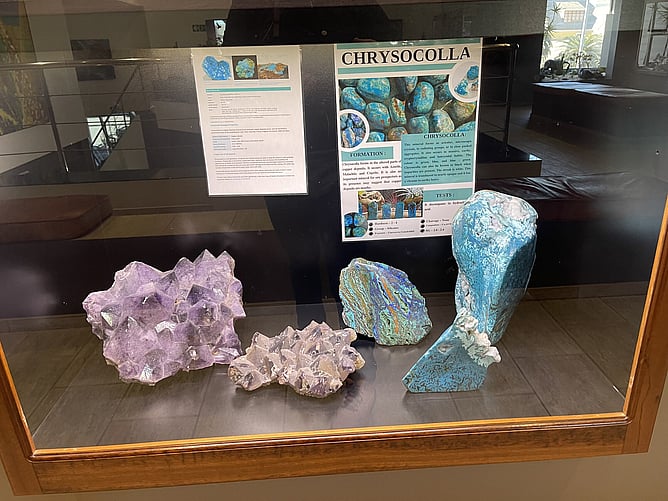
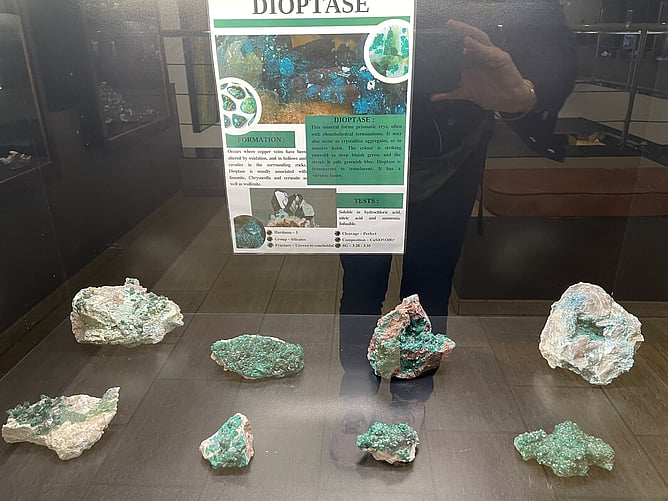
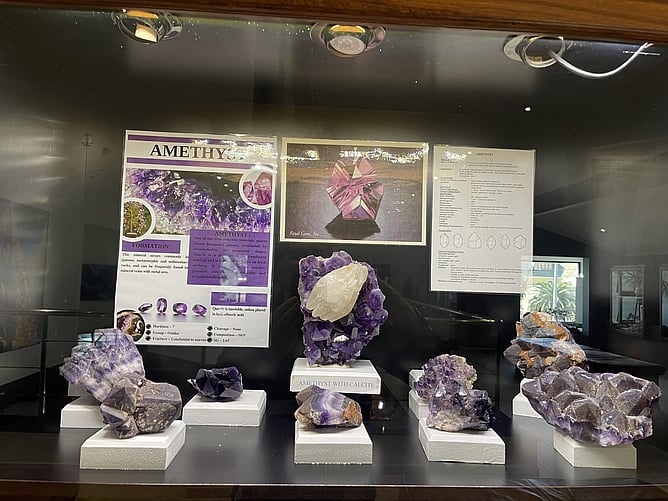
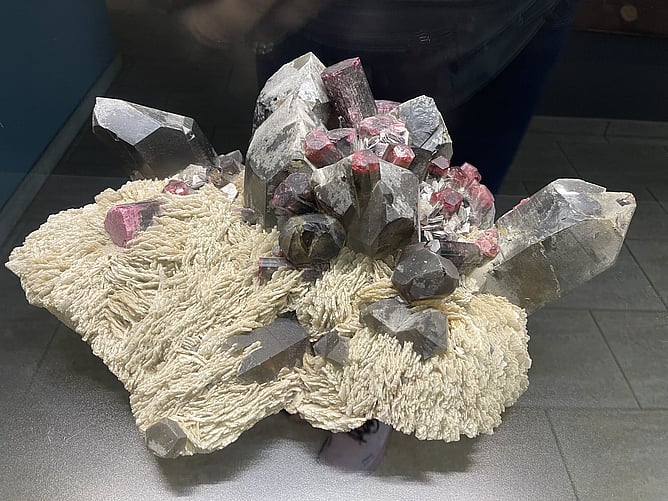
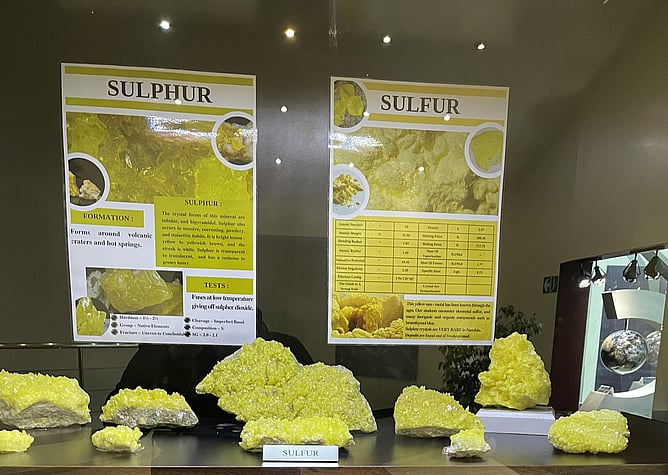
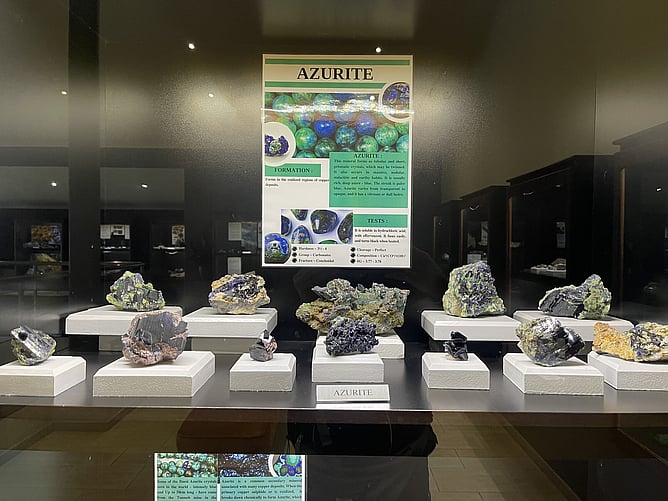
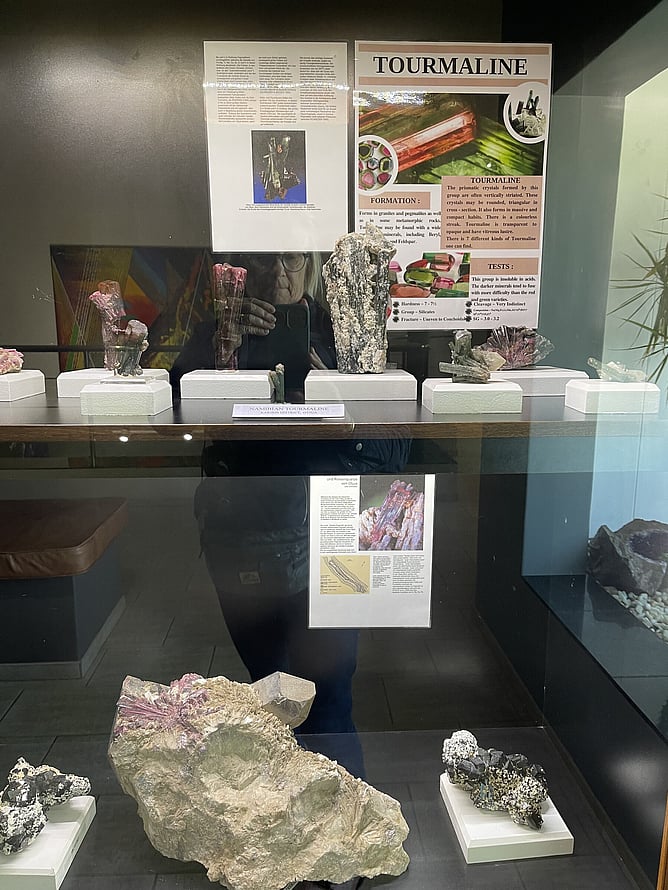
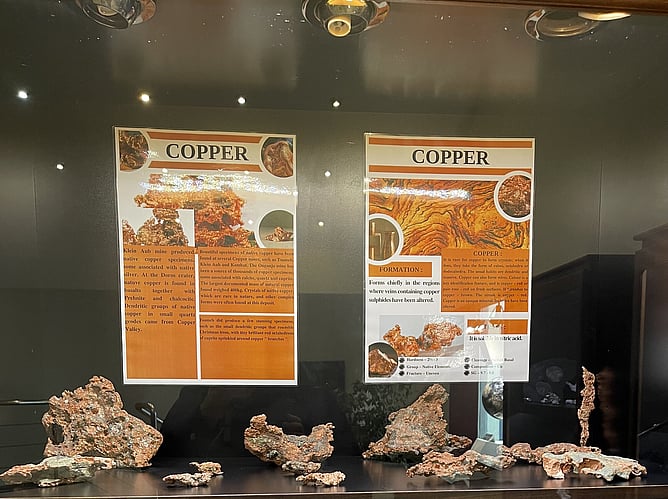
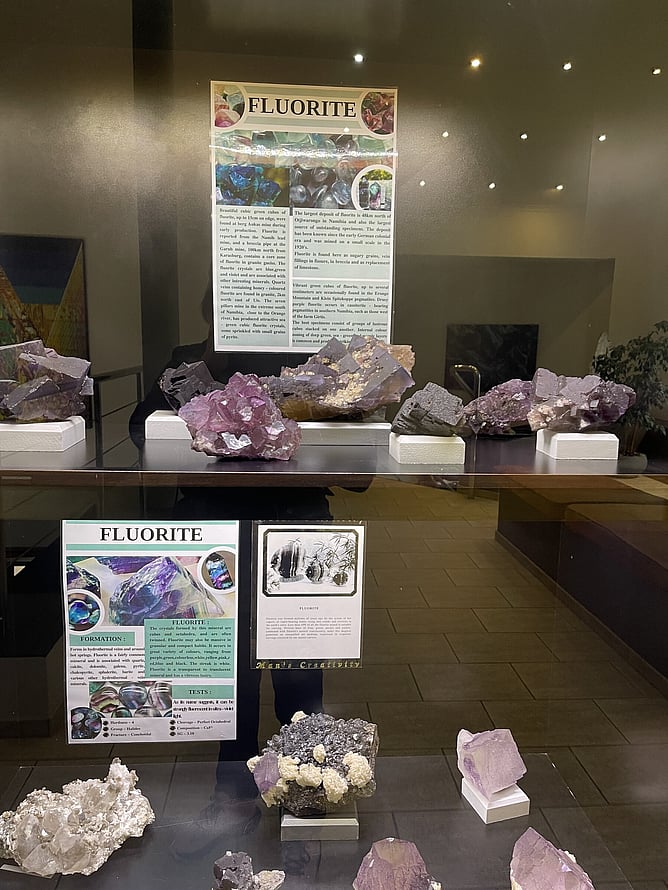
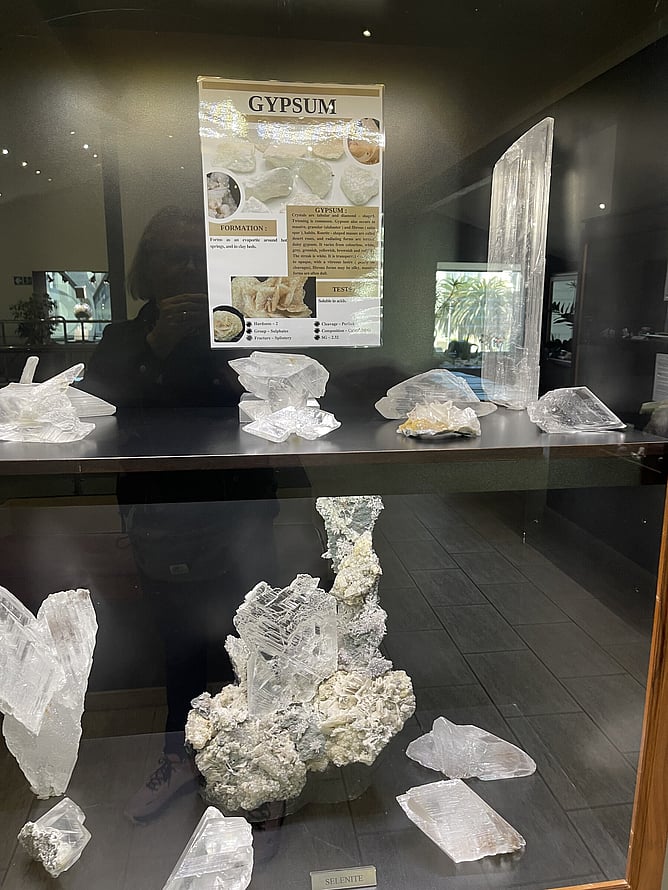
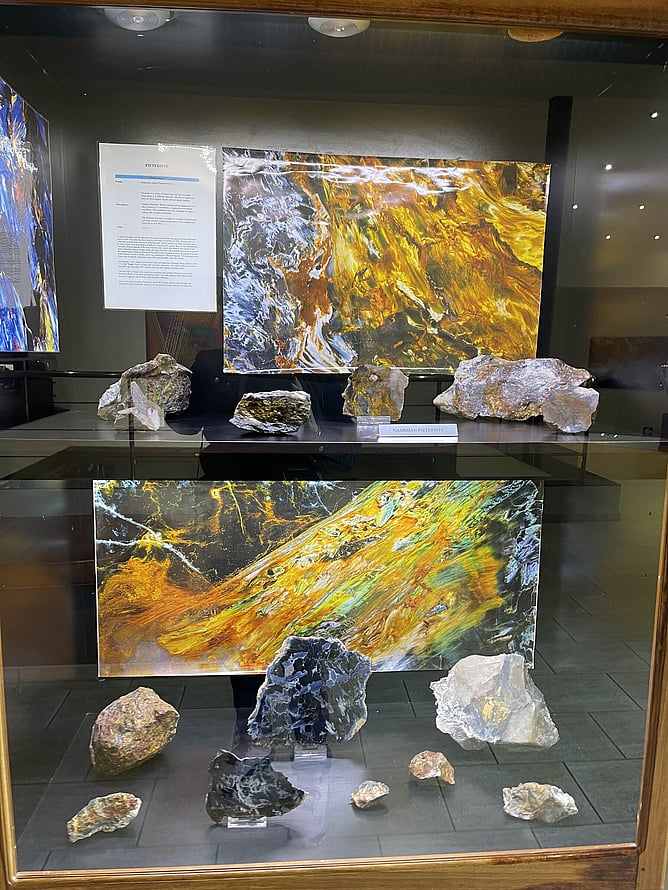
This is Pietersite, found only in Namibia. It is called the "tempest stone" because of its swirling storm-like patterns.
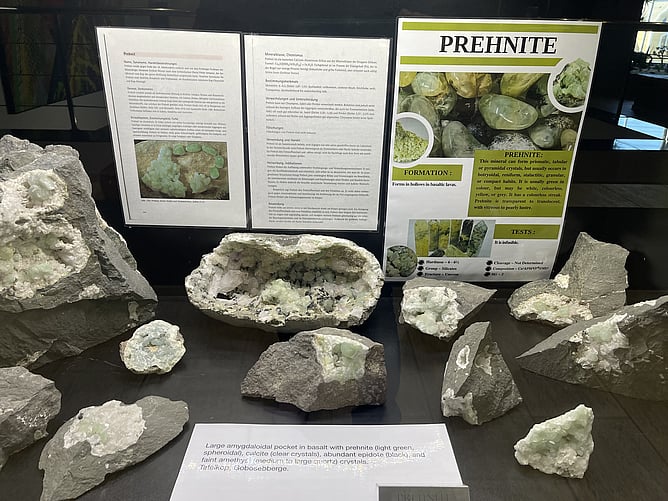
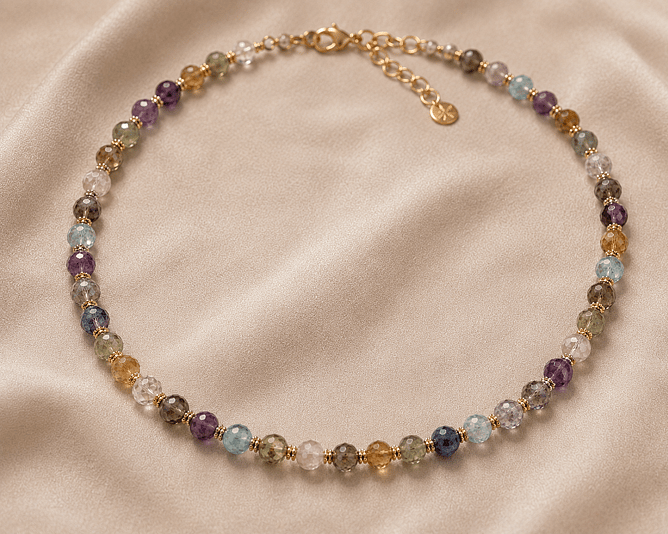
There was so much more, and that is enough for a day. I did reflect on a necklace I saw. It was like one I have of Mum's, with all these different-coloured crystals. I wore it once, and it was prickly. I still have it. I looked at the cost of a similar one here. I won't tell my sister what the crystal necklace I have of Mum's is worth.