Can’t wait to share our African travels with everyone!
Here we are again for another epic travel adventure. For those of you who have not read the blog before, Robin is the writer, and Bill is Ed (editor). Sometimes he will come in as Ed (but not very often, Ed.)
We arrived in Johannesburg late on the afternoon of Wednesday, June 4. It felt a little strange to leave Auckland at 6am on June 4, and then arrive on the same day nearly 24hrs later. The flight was 3 1/2 hours from Auckland to Sydney and then 14 hours from Sydney to Johannesburg. The Qantas flight went swimmingly. I especially liked the magnum like chocolate iceblock we were given between meals. Yum- great touch.
We stayed the first night at the City Lodge Hotel at the airport. We just walked there from the airport. After checking in, we grabbed a quick bite to eat and then enjoyed a much-needed long sleep.
We did have one little hiccup. Last time we came to Johannesburg, my camera was stolen from my bag, so this time I made sure every bag had a lock. Unfortunately, the code I thought would unlock my bag didn’t work! I had set the code, and Jemma watched me set it, so I sent her a text to check the code. As it turned out, she was not noting it. And why should she? Note to self: write these codes down! I was just so sure I knew it. WSAW- https://docs.google.com/document/d/1aZ87v9RzytjuL_j7nYZ-jEMKVS8Kksyc7_WTtX_qlcw/edit?usp=sharing
After a lot of jiggling, twisting, and hopeful button-pressing, the lock still refused to open. In the end, the hotel concierge came to the rescue with a pair of wire cutters. Not exactly the solution I had hoped for, but at least I can still use the lock as a bag tracker. Every travel story needs a little drama!
The next morning, I was repacking my bag to send resources to Theo in Uganda. Since we were no longer travelling to Rwanda and Uganda due to the ebola situation and I had been going to do teaching sessions there, I chose to send all the teaching resources and materials, and then see if we could do something over Zoom. Here’s a photo of them.
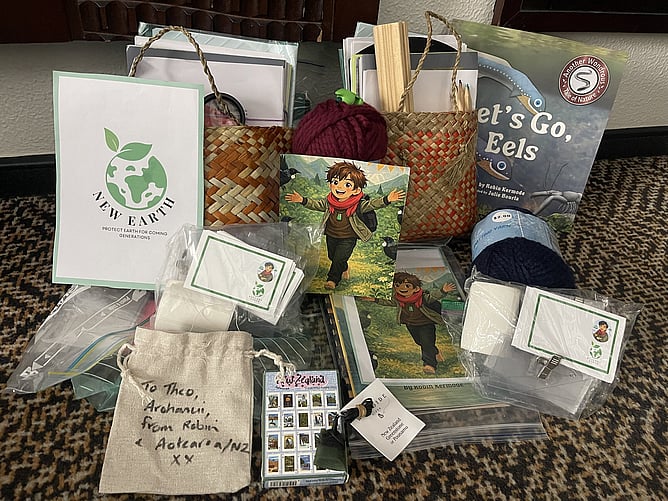
A close up of the kete.
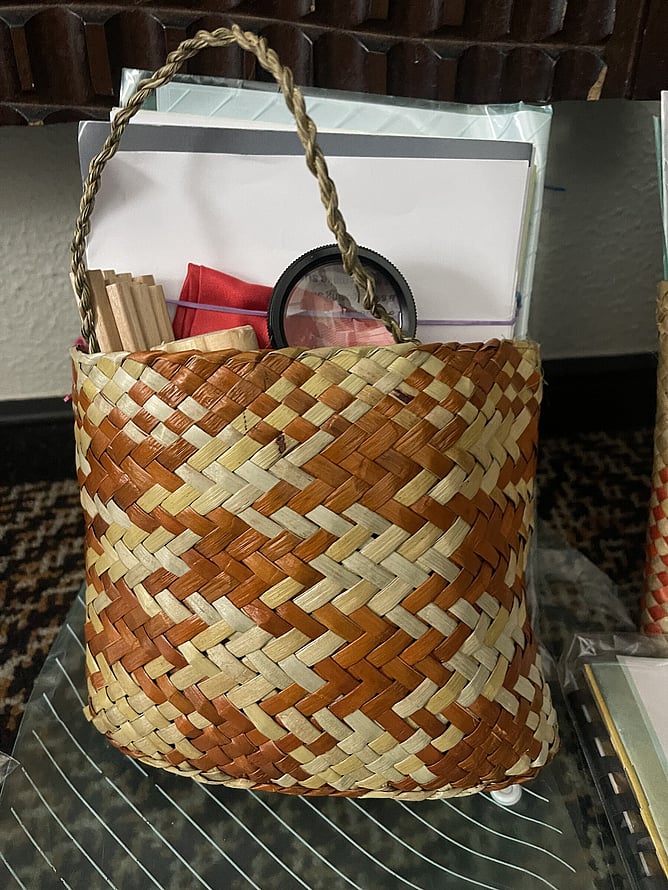
My bag is definitely lighter now, although I still can’t seem to pack it properly! I also tucked in a small gift for Theo—a pounamu and a pack of New Zealand cards.
I’m genuinely disappointed that I won’t be working alongside Theo. I think we would have had a lot of fun together. Still, I’ll keep everyone posted on how we manage the teaching from afar. At the moment, I have absolutely no idea how we’re going to make it all work—but somehow, these things work out. One way or another, we’ll figure it out together.
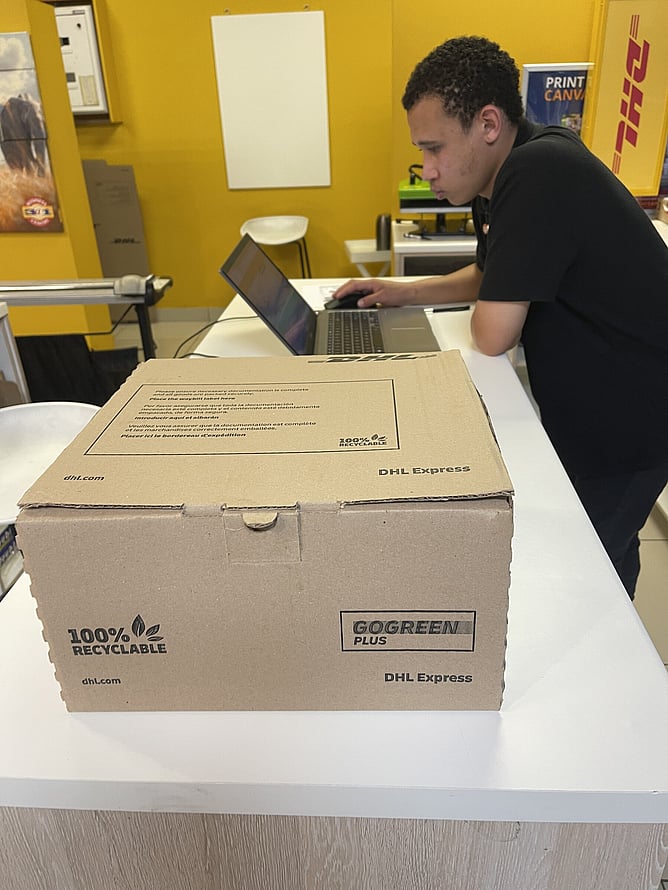
I was at the Post Office for a good hour getting the resources couriered, and it was pretty costly. When you make a promise, I thought you had to find a way to keep it. The box of resources was going to the young people of Uganda, to the young people of Mbarara and to the street children of Kampala. Theo, a lecturer in the Department of Health Sciences, works in both places. And packed, ready to go, Josh helped me. The blog will let you know when it arrives.
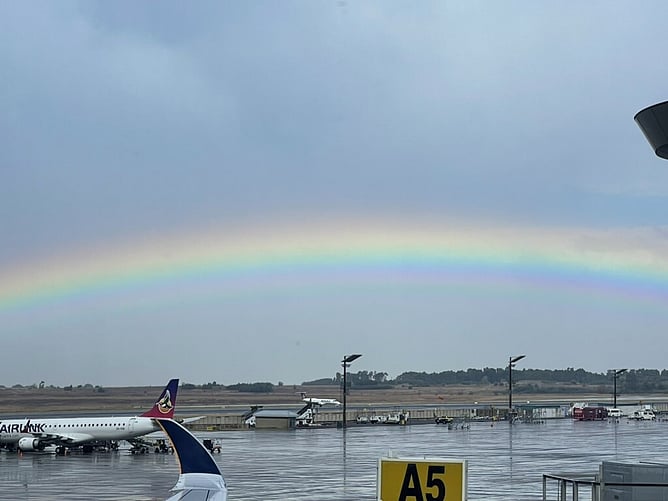
Then it was a two-hour flight from Johannesburg to Windhoek on Airlink. A rainbow caught my eye when we were having lunch at the airport. That Airlink plane might be ours.
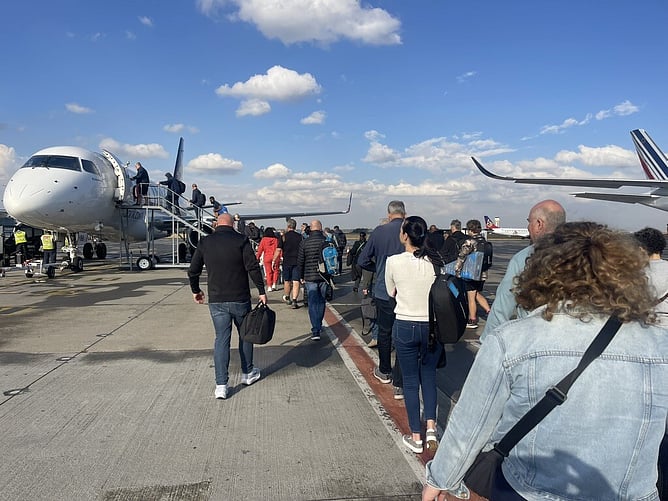
Can you spot Bill getting on the plane?
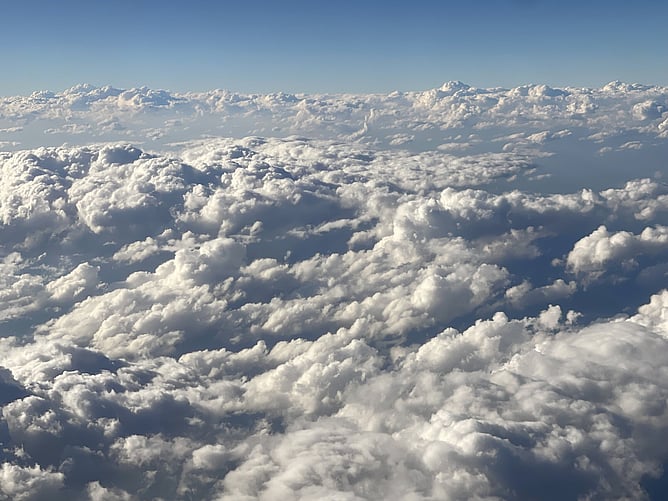
I thought the clouds were beautiful on our flight to Windhoek. Clouds contain about 500,000 litres (roughly 500 tonnes) of water. That’s enough to fill about 200 Olympic-sized swimming pools if all the water were condensed into liquid. Why doesn’t a cloud fall? Even though a cloud contains hundreds of tonnes of water, the water is spread among billions of tiny droplets. Each droplet is so small that air currents keep it suspended, much like dust floating in sunlight.
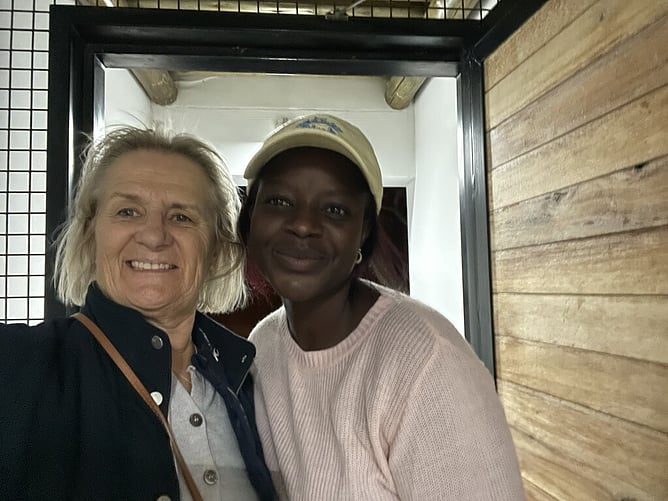
Our taxi ride was 45 minutes from the airport to Windhoek. Eva was our taxi driver. I sat in the front. She has two children and, at 40, wants two more. Wow. She was lovely, saving up to have another two children, and she herself was the youngest of eight children. Yes, some of you say I asked a lot of questions 😘 Bill also gave her a good tip.
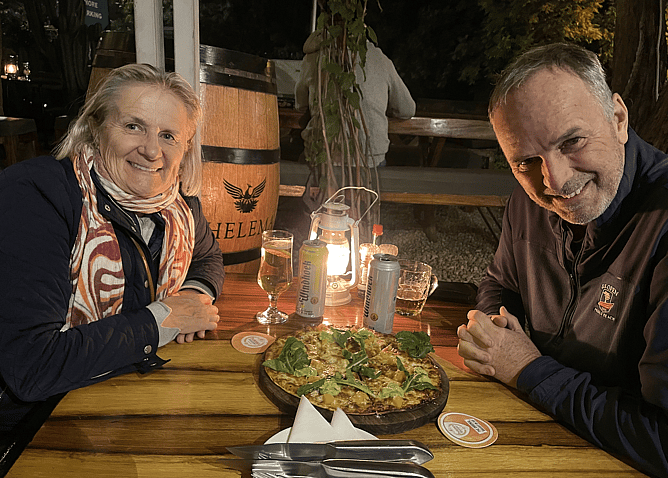
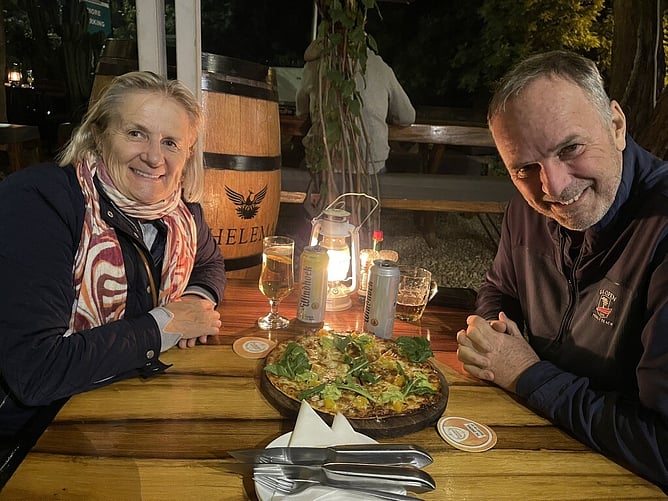
We are staying at Villa Vista Guesthouse in the suburb of Eros, and there are great restaurants just down the road. On the first night, we went to Goodfellas Restaurant. Perhaps we are the good fellas. They definitely were. The pizza was yum.
The next day, we went on a walking and driving tour of Windhoek with six others. The global drive, walk tour - Julie was from Sydney, a Swiss couple, a Canadian woman, and us. I was quite inspired by two women travelling on their own. Our tour guide was Julio. Julie sat in the front. It was easy for me to remember Julie and Julio’s names (Julio corrected from Gulia in first draft, Ed.) I thought I wouldn't remember everything in detail, so I switched on my notes and recorded Julio (spelt Giulia this time, Ed.) It was just as well I did. As I fell asleep for a bit, it turns out I didn't miss anything because I recorded Julio (Gulia) in my phone notes.
Julio was a passionate guide, and the two things I do remember about him are that he said "Let me tell you!" a lot, and he reminded us often about how the Germans built things to last. And they also believed they could build anything in three years. From my notes, I put them in ChatGPT, here is more detail.
The history of Windhoek in brief.
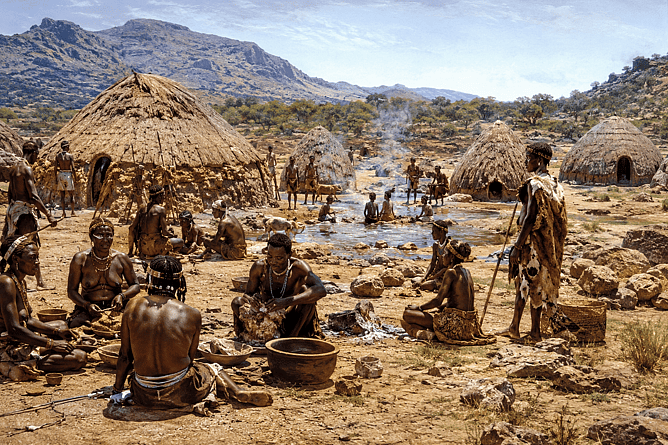
Pre 1840, there were 12 tribes living in the area. The area was called Damara/Nama — “hot springs” or “fire water.” This was because it was a very volcanic area for a long time, and there was plenty of water for everyone. They called it Otjomuise (Herero) — “place of steam.”
An AI generated picture below.
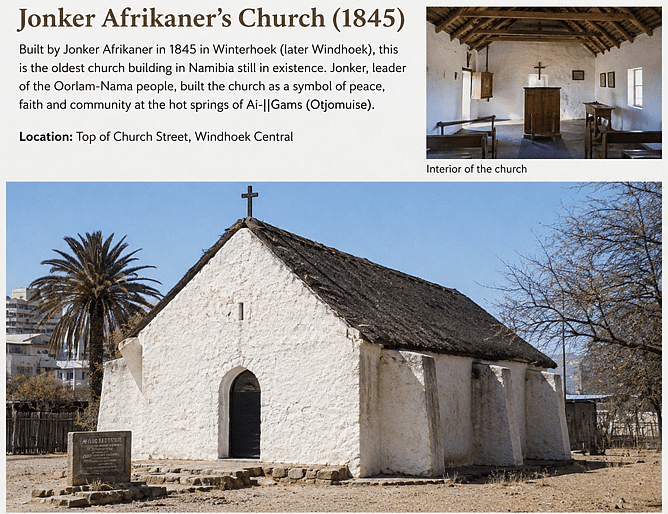
Then, in 1840, Jonker Afrikaner around 1840 named it Winterhoek after the Winterhoek Mountains (or Winterhoek region) in the Cape Colony, where he and his followers had connections before moving north. He built a church, traded far and wide, and turned the settlement into a regional capital. Over time, the name evolved into Windhoek. Windhoek means 'windy corner', and that fitted.
After Jonker died, his sons, Christian and Jan Jonker Afrikaner, struggled to hold power. Meanwhile, the powerful Herero chief Maharero rose to prominence. Fighting between groups left Windhoek largely abandoned.
1890–1915 – The Germans arrived - German officer Curt von François rebuilt the settlement and constructed the famous Alte Feste fort. Windhoek became the capital of German South West Africa.
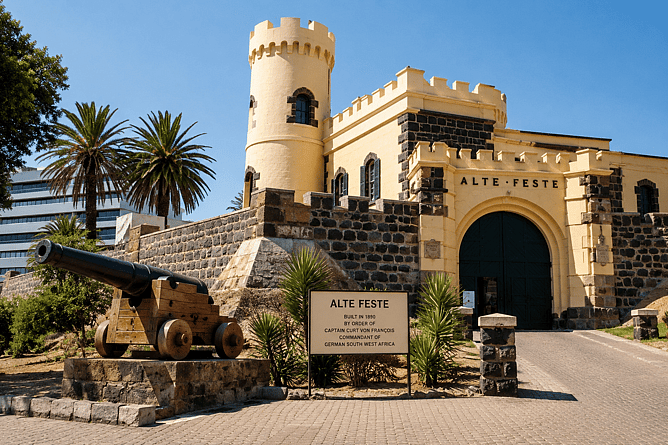
Germany transformed Windhoek from the ruins of Jonker Afrikaner's settlement into a colonial capital. They built forts, churches, railways, and government buildings—but their rule also brought war, dispossession, and the devastating Herero and Nama genocide.
"Windhoek changed from a town of hot springs, cattle, and African traders into a town of stone forts, railway whistles, and German government buildings." And from my notes from Julio - everything they built took no more than three years! They also built things to last.
Here is Christuskirche (completed 1910), the best known building in Windhoek - it looked 15 years old, not 115.
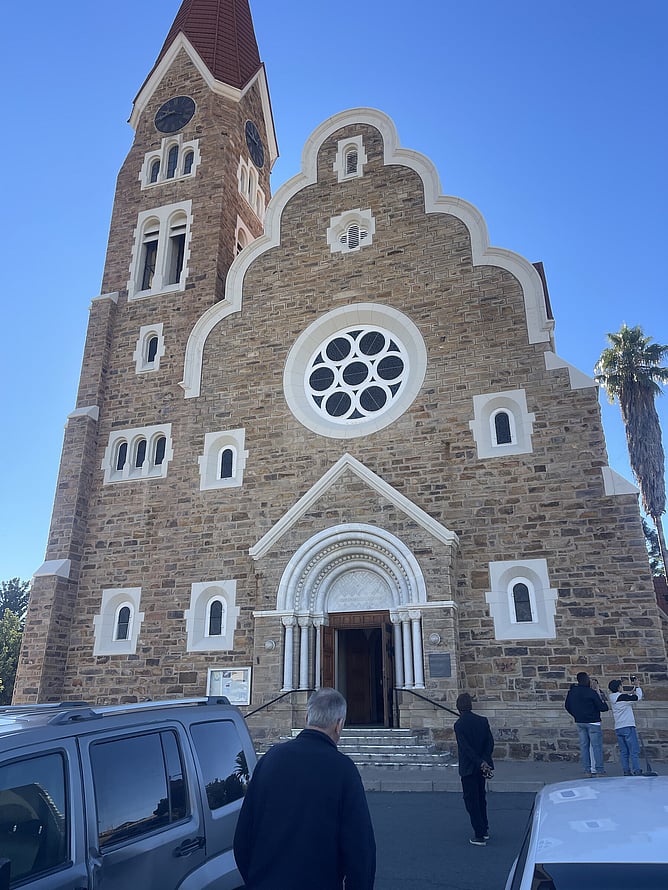
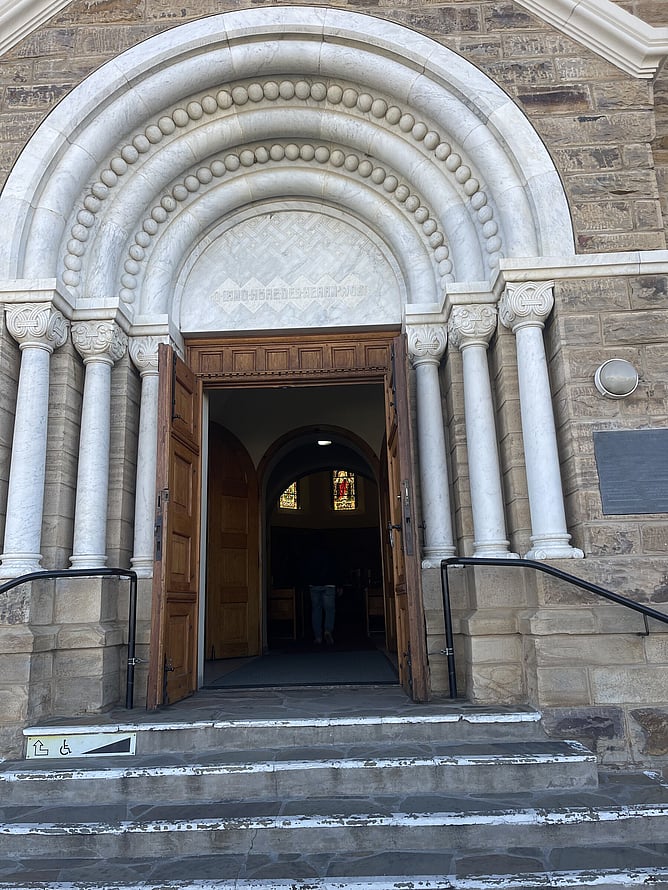
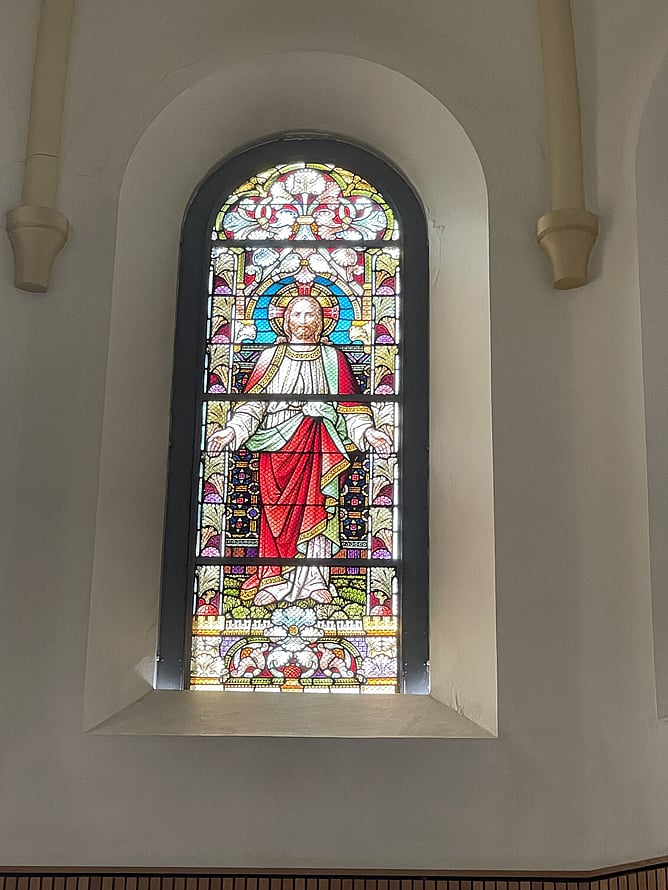
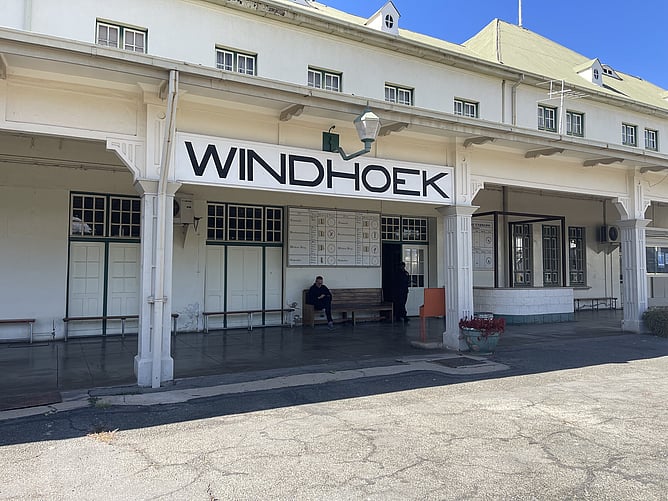
The railway station - it is no longer in use, their one train needed a new engine, not the efficiency story of the German buildings.
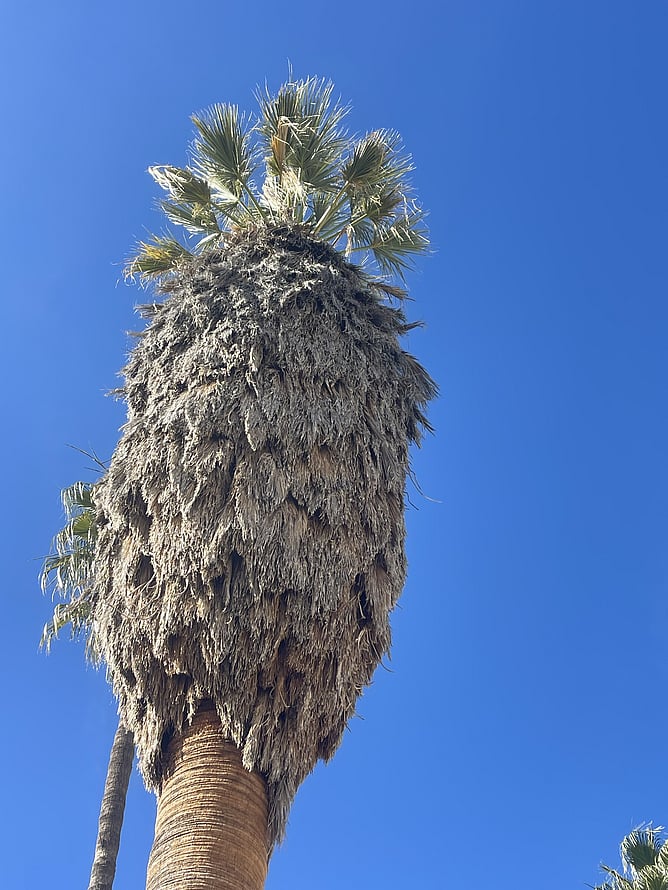
It was outside the church that I was sold a key ring made from a makalani palm tree. Here is the tree.
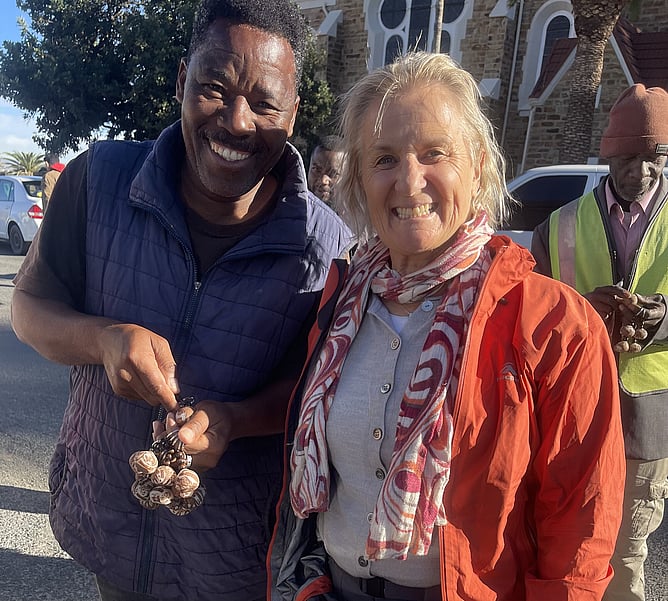
The key ring artist with me.
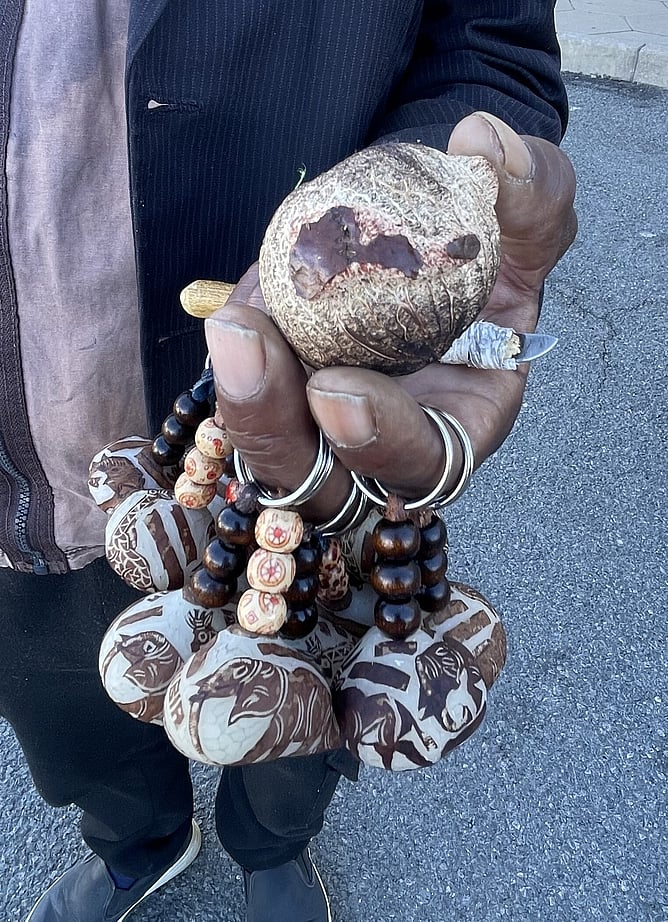
The makalani bulb he uses to make his art.
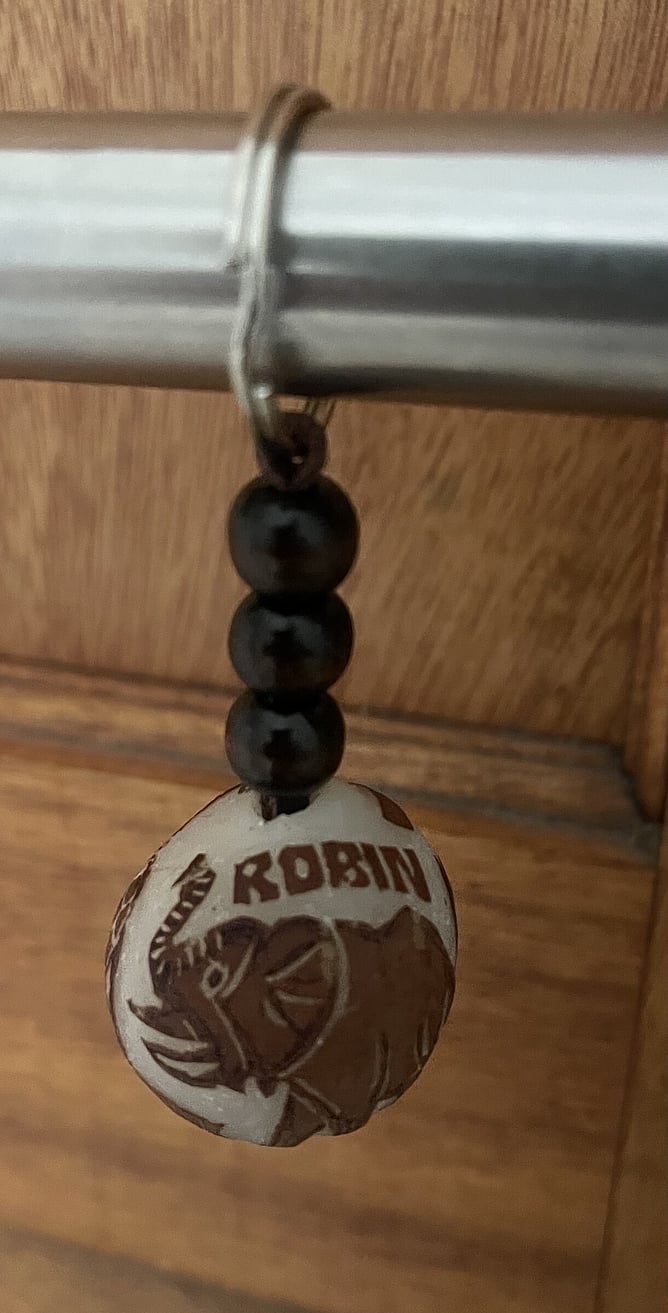
The artist engraved my name on it.
Continuing history in brief 1915–1990 – South African rule. South Africa took control of Namibia during World War I and governed it for 75 years. After taking control of Windhoek in 1915, South Africa divided the city by race. Black Namibians were moved into a separate area called the Old Location, while white residents lived closer to the city centre. Despite hardship, the Old Location became a lively community with schools, churches, markets, sports teams, and future leaders of independence.
In 1959, South Africa tried to force residents to move to a new township called Katutura ("The place where we do not want to live"). People protested, but police opened fire, killing several residents. The tragedy became a powerful symbol of resistance and helped fuel Namibia's independence movement.
Afterwards, many residents were moved to Katutura, creating a divided city:
White suburbs near the centre
Industrial areas as buffers
Katutura for black residents
This segregation shaped Windhoek for decades and left a lasting mark on the city's layout, helping inspire the struggle that eventually led to Namibia's independence in 1990.
We went to Katutura. Thank you, Julie and Bill, for some of these photos. My battery ran out.
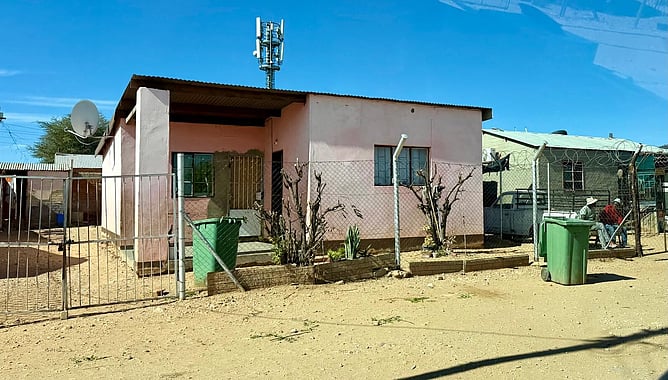
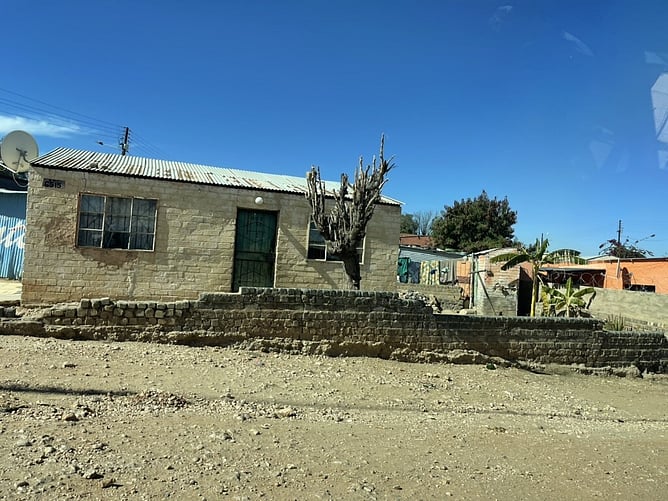
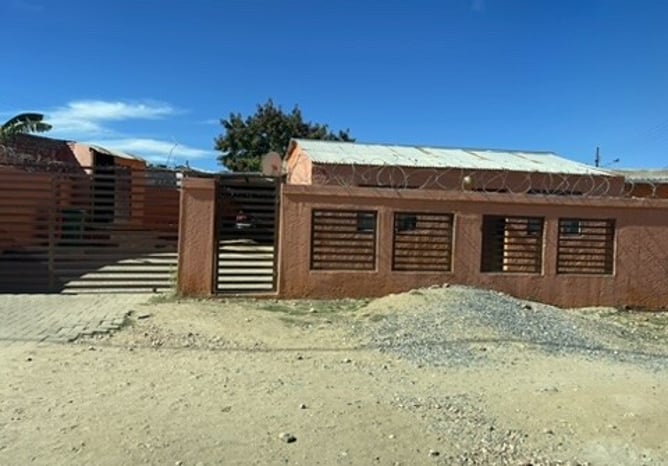
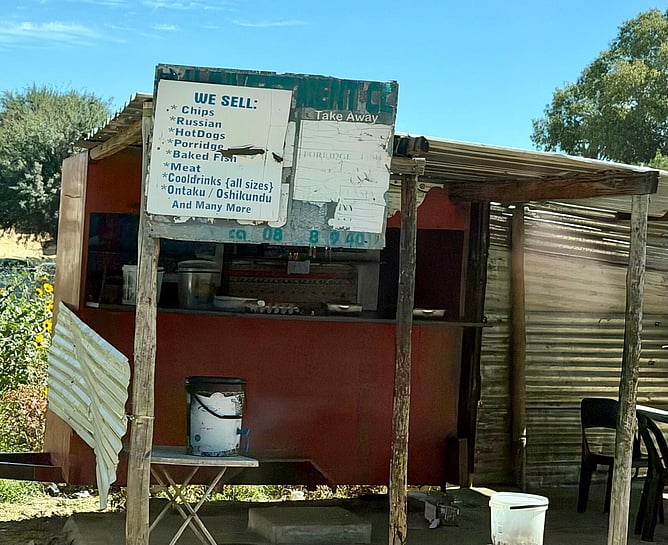
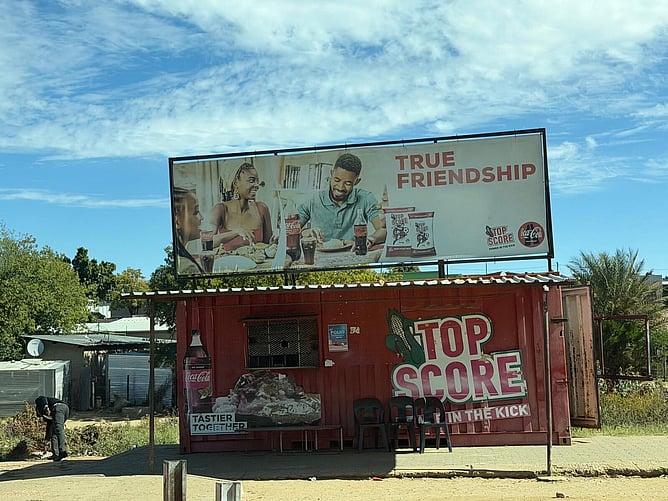
The "ghettos" of Windhoek were primarily the result of forced racial segregation. They were next-level down from Katutura, through the removal of residents from the Old Location in the late 1950s and 1960s.
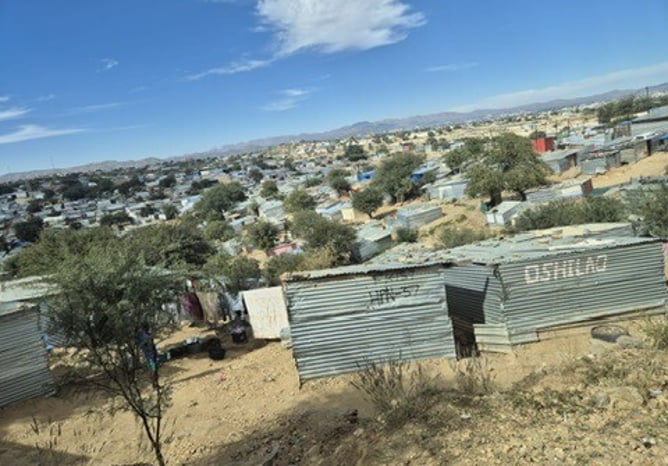
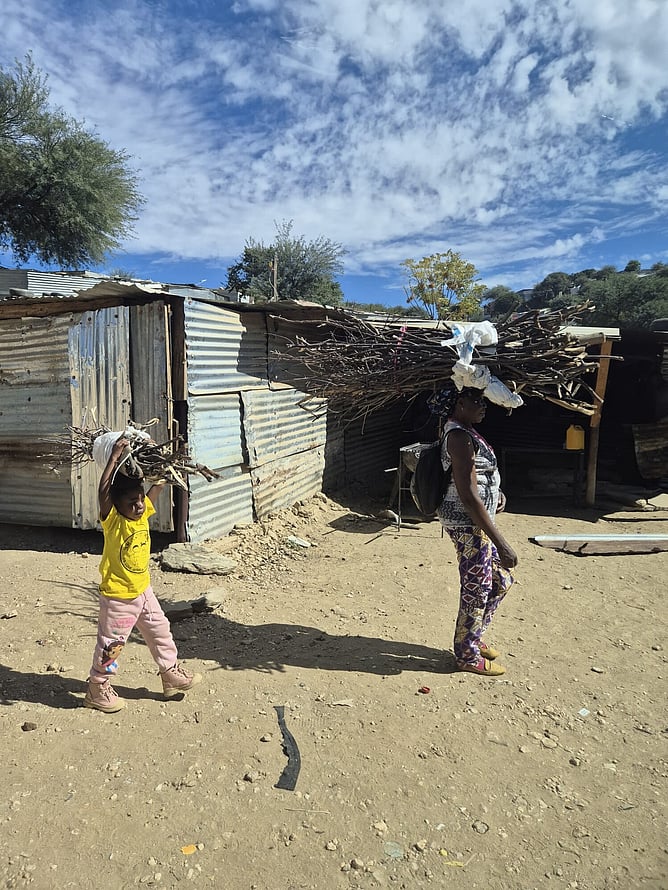
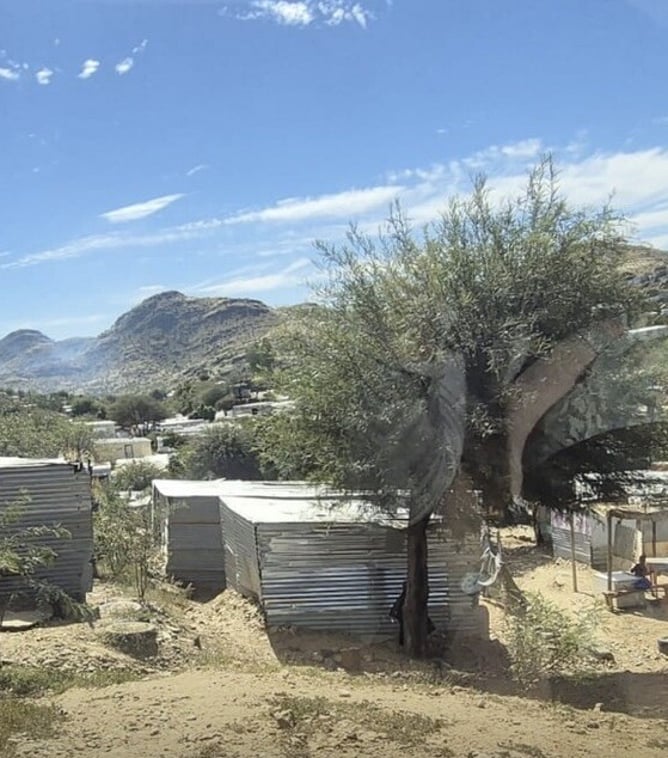
1990–Today – Independent Namibia. Namibia gained independence, and Windhoek became the capital of a free nation.
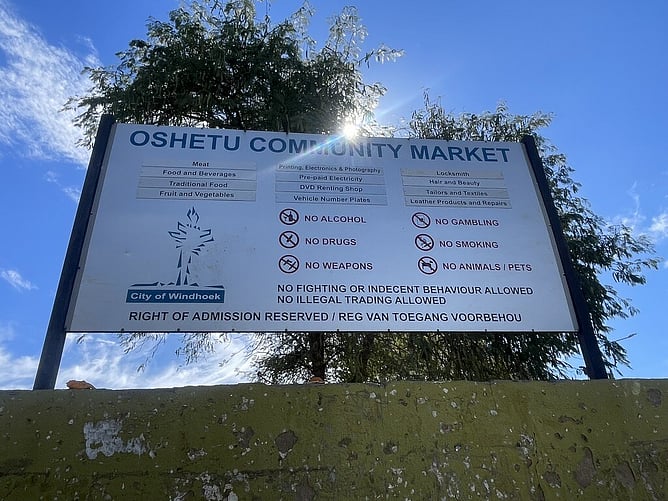
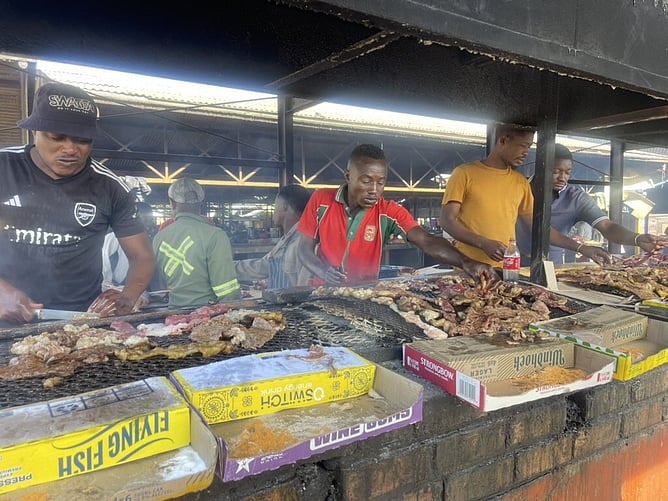
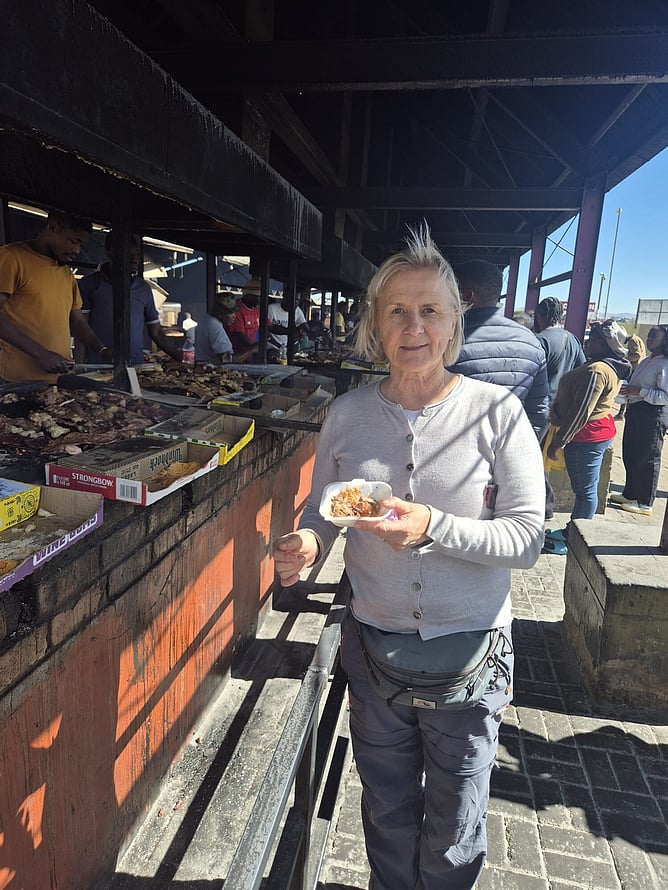
We went to a market in Katutura. Julio was a popular man there, because they knew he was going to get a braai (barbeque) tasting for us. While you might go there by yourself, and Windhoek safe, there is 38 per cent unemployment, so there are plenty of Namibians looking out to you for a Namibian dollar.
This is Julio.
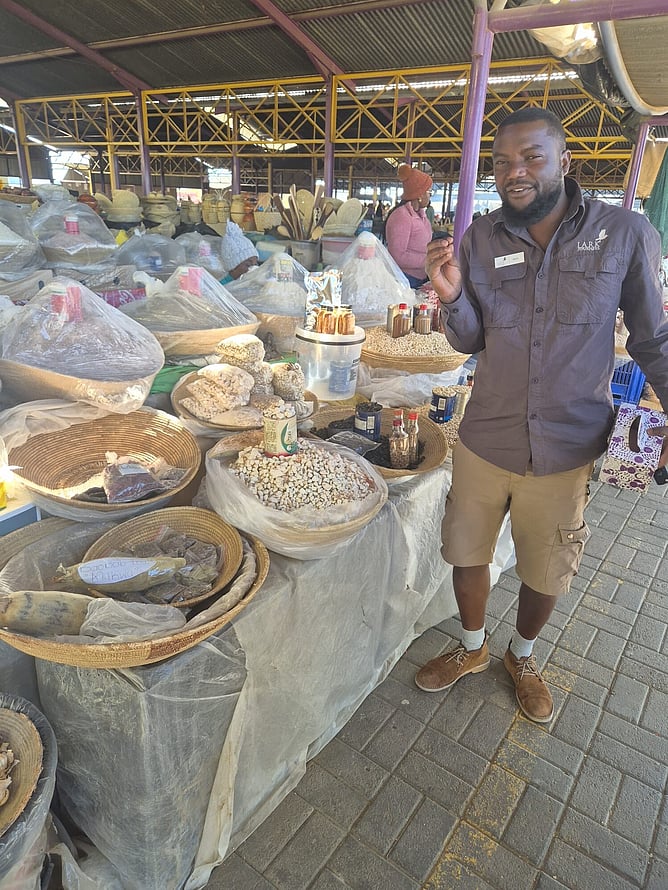
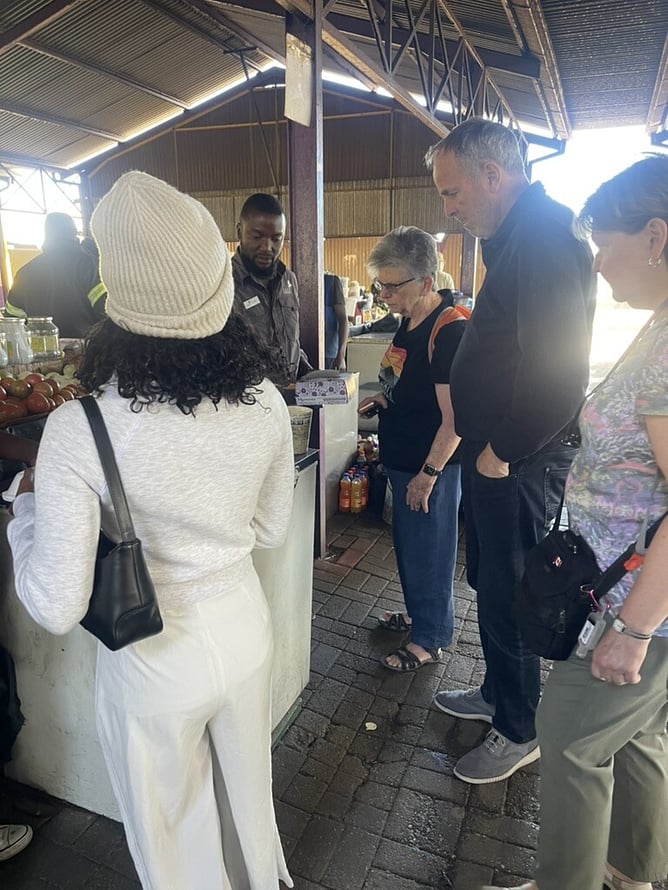
Bill is looking to buy (not - Ed.)
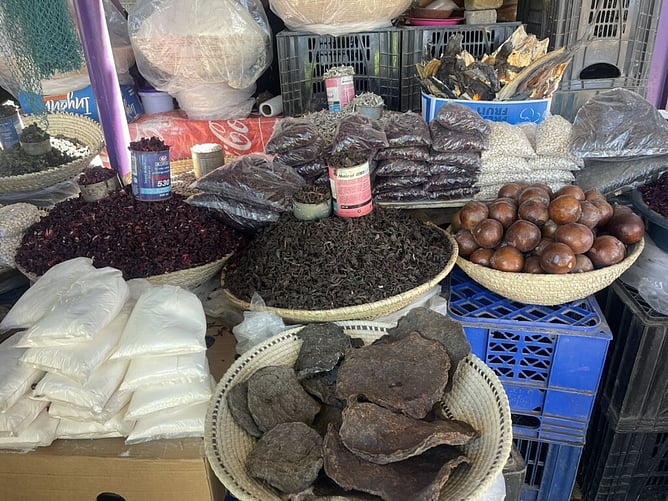
Dried spinach and flavourings.
All the meat was beef.
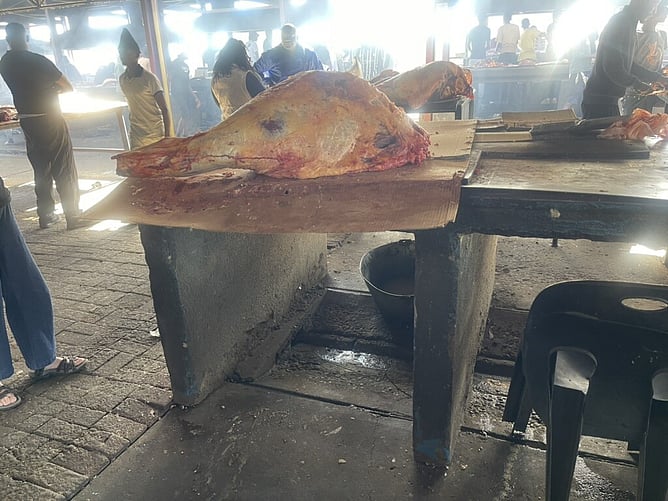
And we had some with spices. It was yum. There was a restaurant in the market too. It was well organised. We chose to stand and eat though.
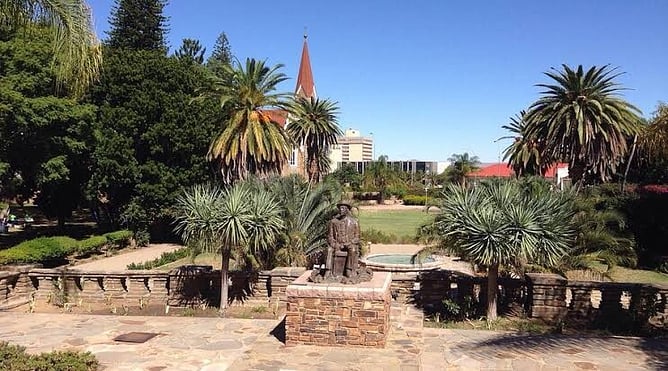
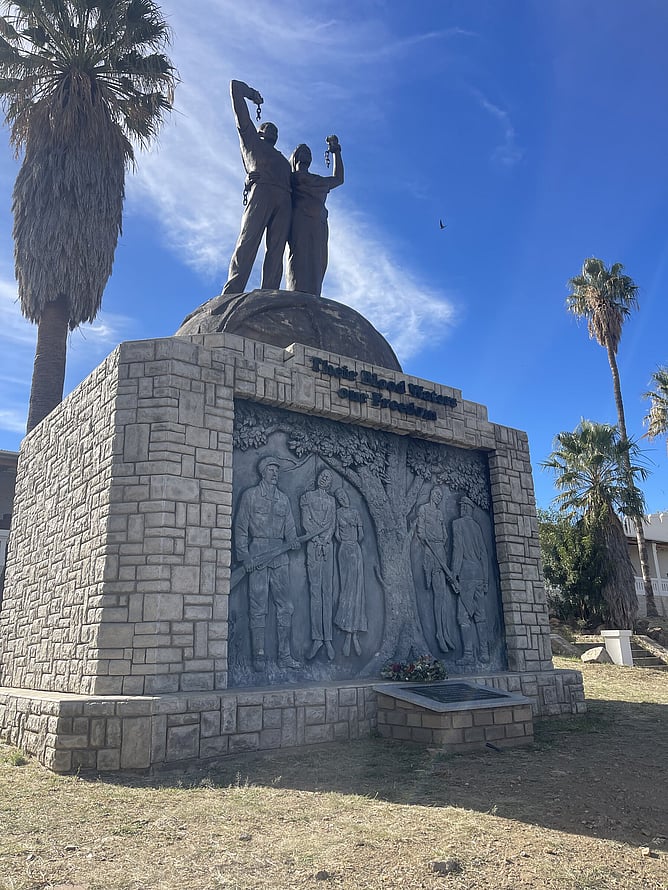
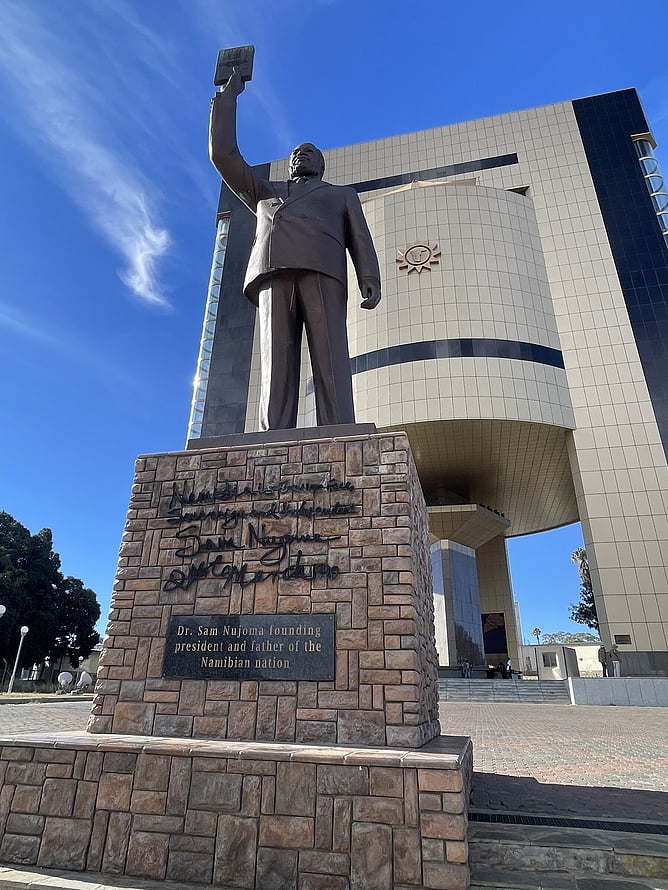
During 75 years of South African rule, three famous Africans who stood up and resisted and left legacies have sculptures in Parliament Gardens.
Reverend Theophilus Hamutumbangela (1917–1990)
Anglican priest and anti-apartheid activist.
One of the founders of early nationalist movements in northern Namibia.
Spoke out against racial discrimination and South African rule.
He hid letters to the people who mattered in his Bible to smuggle them out of Namibia, risking his life
Was arrested by the South Africans when found out, and poisoned, leaving him paralysed for many years before his death.
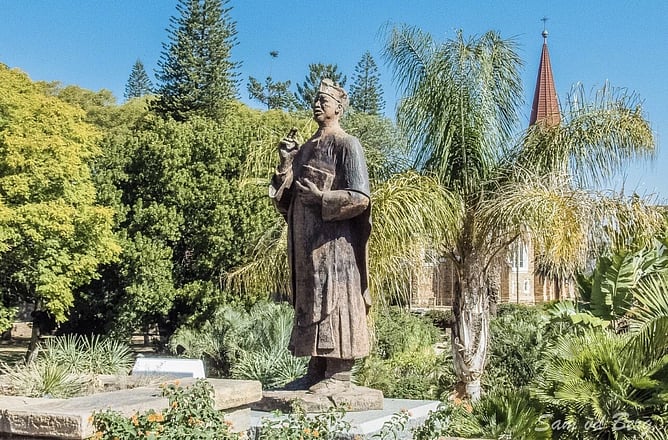
Hosea Kutako (1900's). He was the Paramount Chief of the Herero people. He became famous for peacefully resisting South African rule. Rather than fighting with weapons, he wrote petitions and appeals to the League of Nations, the United Nations, and International leaders. He argued that Namibia should not remain under South African control and that Namibians should govern themselves. Many Namibians regard him as one of the fathers of the independence movement because he kept the issue of Namibian freedom alive internationally for decades.
(Two out of three ain't bad, Ed.)
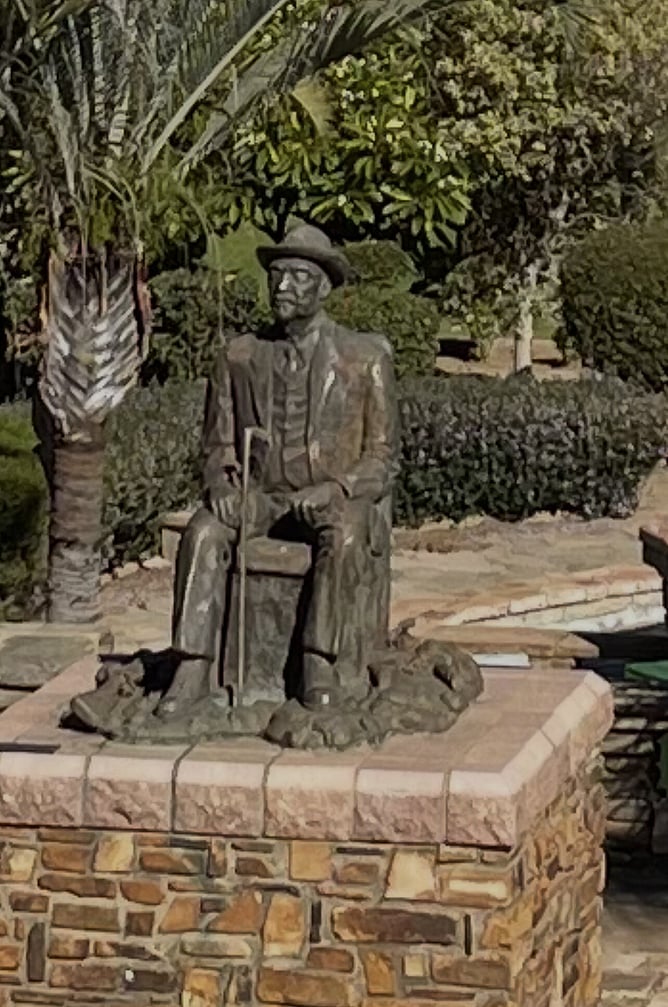
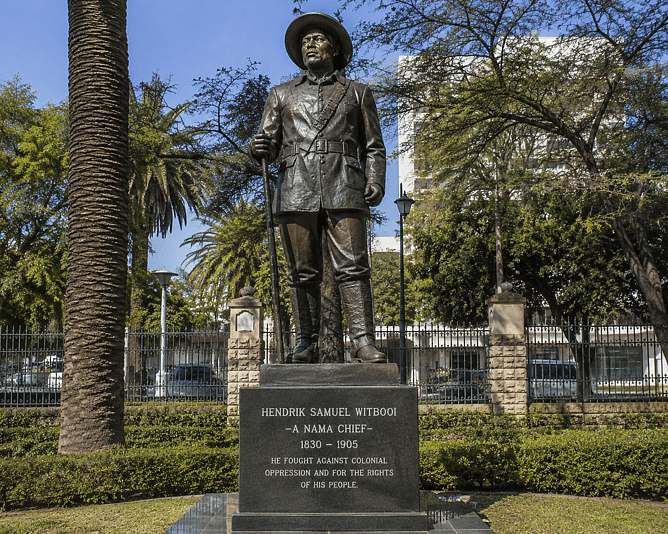
Hendrik Samuel Witbooi - A Nama chief
If Hosea Kutako was the diplomat, Hendrik Samuel Witbooi was the bridge-builder who helped unite Namibia’s peoples into one nation. In 1947, he helped petition the United Nations, arguing that Namibians should have the right to govern themselves. He believed all Namibians—Nama, Herero, Ovambo, and others—should work together for freedom. Today, he is remembered as a unifier who helped lay the foundations for Namibia’s independence. His famous saying, "We are one country and should have one future.”
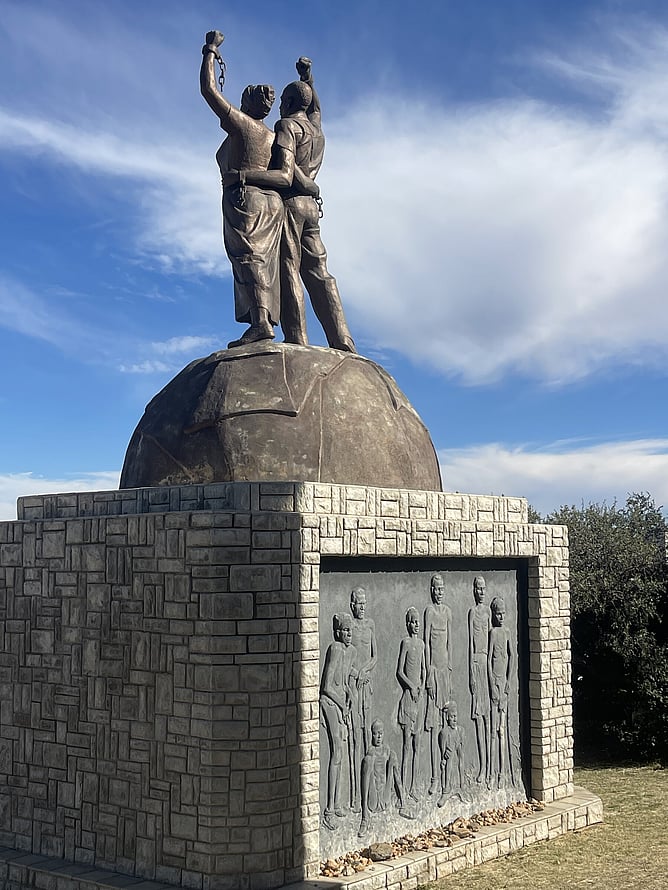
And today's Namibia. Freedom for all and working together.
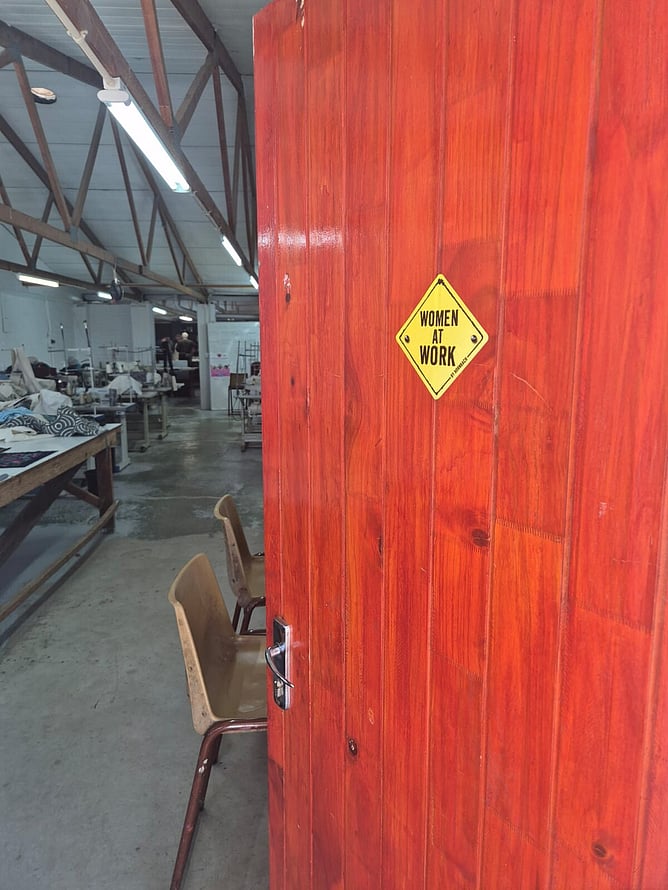
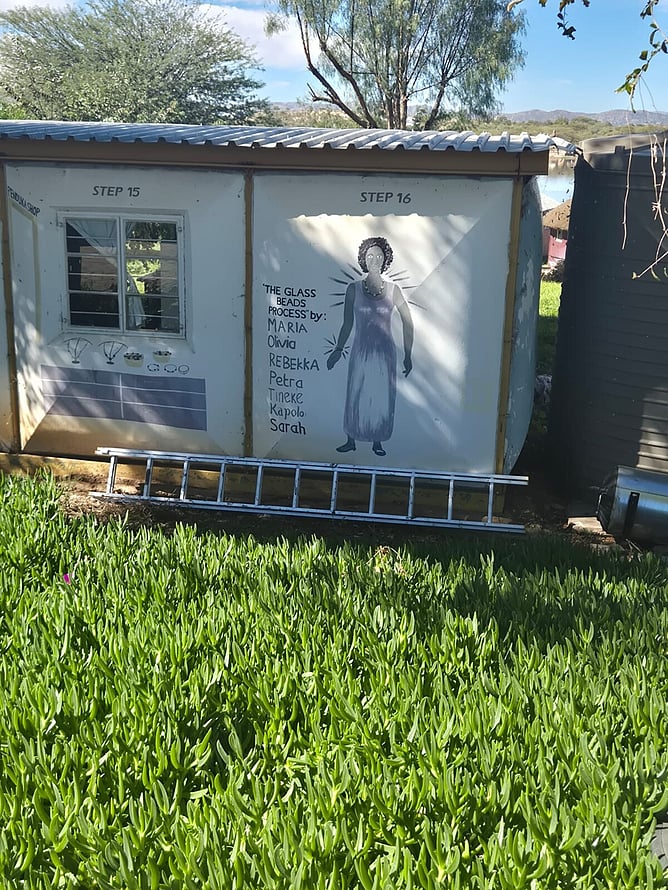
Then we went to Penduka, a women's refuge, where they make cloth art.
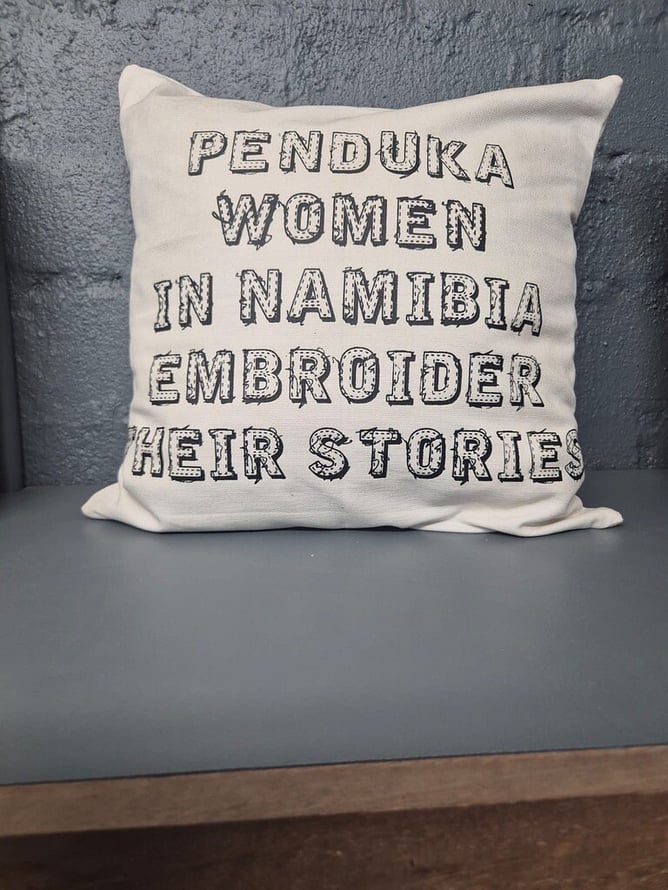
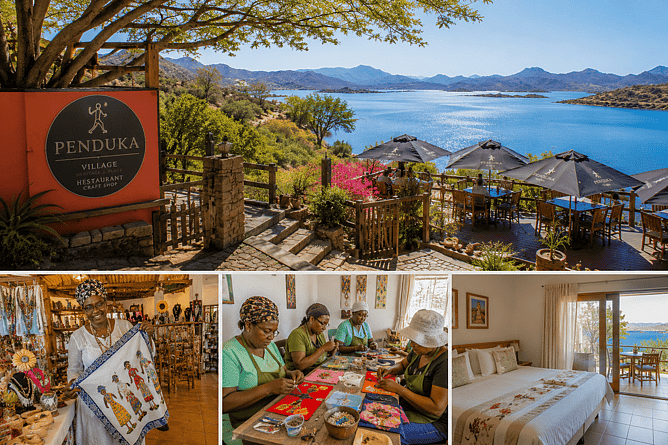
Penduka is a community-based social enterprise on the shores of the Goreangab Reservoir in Windhoek, founded in 1992 to empower women through skills training, employment, and entrepreneurship. Its name means "Wake up!" and reflects its mission of helping women, particularly those facing poverty, disability, or social disadvantage, gain confidence and economic independence. Penduka provides training in crafts such as embroidery, sewing, pottery, and jewellery making, while also operating a restaurant, accommodation, and tourism activities that create jobs and generate income. Today, it is recognised as one of Namibia's leading examples of social entrepreneurship, combining cultural tourism with sustainable community development and women's empowerment.
While this looks picturesque, the Goreangab Reservoir is very polluted (by an Indian chemicals company that operates nearby), and the government is taking steps to clean it up. There is a cafe here, and people can stay. I think I will wait until the reservoir is cleaned up. The accommodation looks like a good sell here.
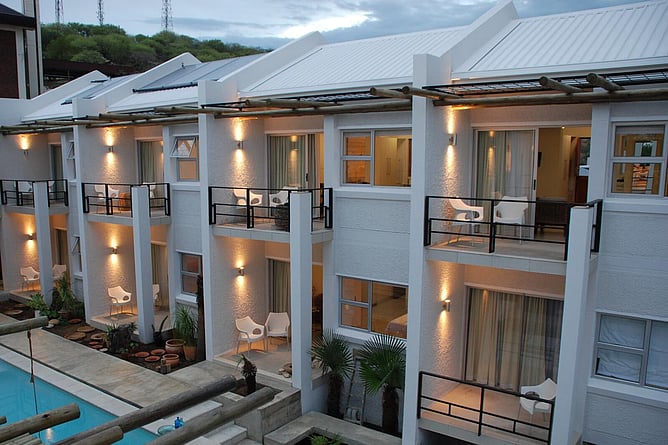
Then it was back to our Villa Vista Guesthouse, 5 Luther Street. It was another 2-minute walk to another restaurant. There are 4 at the end of our street. Bottom left is our room.
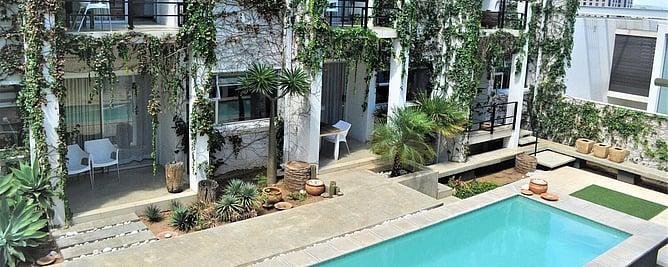
At night it is 1 degree Celsius, and during the day it gets to 24 degrees Celsius. I haven't swum yet. The pool is small, and the water is very cold.
Windhoek is located near the country's geographic centre in the Khomas Highlands.
⛰️ Elevation: about 1,650 m (5,400 ft) above sea level
🌍 Region: Khomas Region, central Namibia
🏔️ Setting: Surrounded by hills and mountains, including the Auas Mountains to the south.
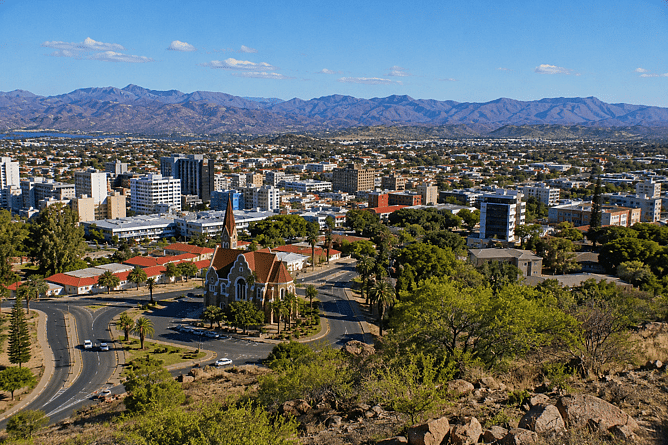
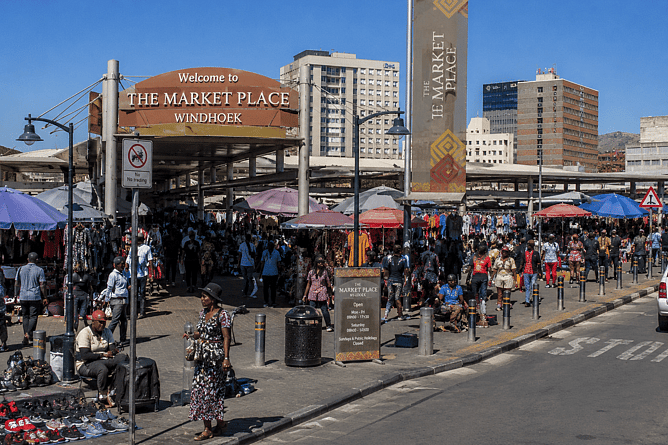
The next day, we walked into the central city. We had coffee at the craft market. I was looking for little elephants for my programme. I want them for the Elephant in the Room Inquiry conversation I have with young people - you know, Climate restoration, Climate change, Loss of biodiversity and keystone species. I am still looking for the perfect size and type (elephant, Ed.) We then walked back to Villa Vista. We both did our respective exercises - me yoga and Pilates, Bill TRX.
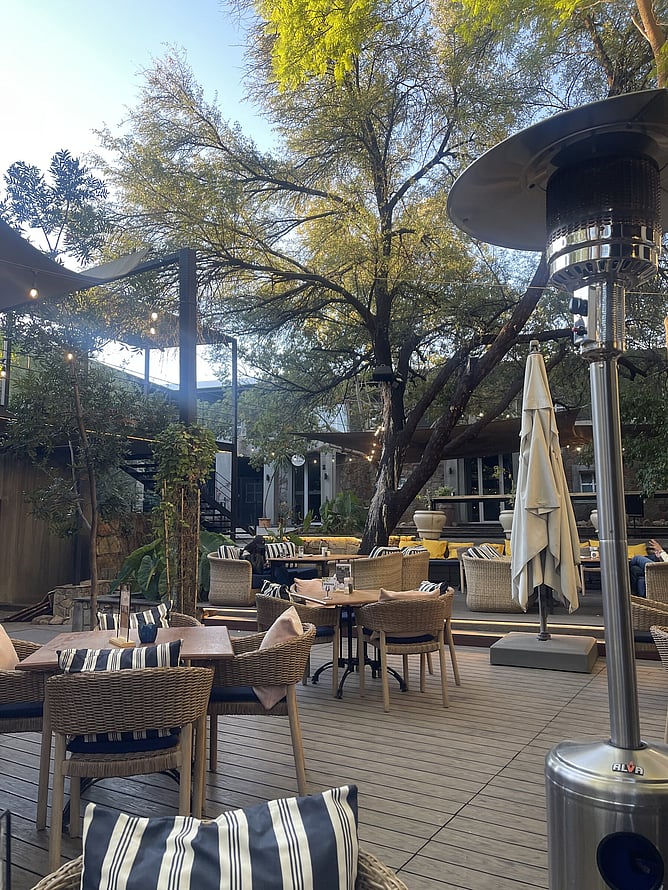
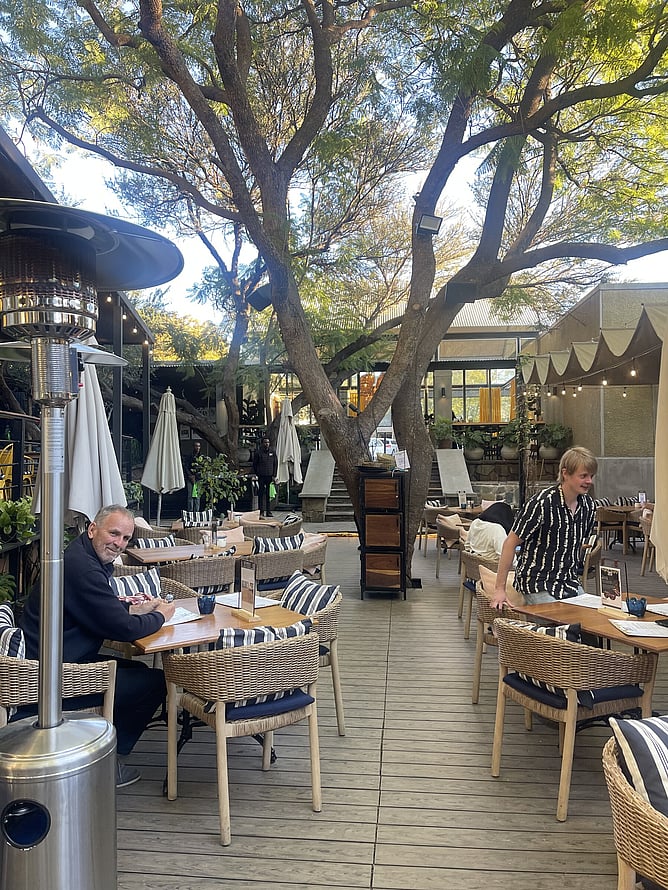
Then to Zest restaurant, another 2mins walk, for dinner. Phoebe and Chris would love - it seemed they built the restaurant around the native blue jacaranda trees.